What wastewater profile should drive the Decherd equipment decision?
EV and automotive factories in Decherd should choose DAF when wastewater contains floatable oils, FOG, suspended solids or light contaminants; a lamella clarifier is generally more appropriate when conditioned solids are predominantly denser and must settle. DAF uses 30–50 micron microbubbles to carry solids to the surface for skimming, while clarifiers separate floc through sedimentation and inclined plates. Neither unit determines the complete treatment train. Chemical conditioning, screening, equalization, sludge handling and downstream biological or polishing steps may still be required, so the final choice should follow factory-specific wastewater analysis and permit criteria.
Start with matched composite samples from every production area that discharges to the industrial system. For an EV or automotive operation, these areas may include body-shop washwater, coolant discharge, painting or coating operations, floor cleaning, equipment cleaning, battery or powertrain washing, and any sanitary flow that enters the same collection system. Test suspended solids, oil and grease, FOG, colloids, pH, and soluble organic indicators selected against the receiving sewer or reuse target. The Ontario Environmental Registry’s Lactalis Winchester approval illustrates the separation between pretreatment and final treatment: its DAF removes suspended solids, FOG and other floatable matter before the clarified effluent enters a downstream bioreactor.
Do not size from an average daily flow alone. Record production-shift discharge, batch dumps, tank cleanouts, storm contributions, and first-flush conditions. Define whether the objective is floatables removal, bulk-solids removal, reuse pretreatment, or loading reduction before biological treatment. A useful discussion of automotive paint-shop treatment is available in automotive paint shop wastewater treatment.
| Observed wastewater condition | Initial separator direction | Information still required |
|---|---|---|
| Substantial oil, grease, FOG, wax, or other light floatables | Favor DAF | Representative concentrations, flow variability, required effluent endpoint |
| Predominantly denser, well-conditioned settled solids with limited floatables | Favor lamella clarification | Solids-loading basis, settling characteristics, sludge route |
| Both floatables and a high settled-solids load | Evaluate DAF plus lamella clarification | Stage-by-stage hydraulic and solids balance |
For another transportation-equipment application, see the transportation equipment wastewater comparison.
How DAF and lamella clarification separate factory wastewater
A dissolved-air flotation clarifier separates floatable material by attaching microbubbles to conditioned solids and moving them to the surface, whereas a lamella sedimentation tank separates floc by settling through inclined plates. Clearwater Industries describes DAF microbubbles of 30–50 microns that lift suspended solids, oils, and fats to the surface for removal by a paddle skimmer (Clearwater Industries, 2026-04-27).
DAF does not mean that every captured solid floats. Clearwater Industries states that heavier solids settle into a bottom collection zone and leave through an auger. The same source says chemical coagulation and flocculation increase particle size and improve contact with DAF microbubbles; conditioning may use serpentine flocculator mix tubes or chemical mix tanks (Clearwater Industries, 2026-04-27). That dependency belongs in the performance guarantee and operating-cost comparison, not as an accessory line item.
A lamella clarifier relies on flocculation, sludge recirculation, and inclined-plate settling. The lamella clarifier for heavier conditioned solids specifies surface-loading rates of 20–40 m/h. Those values describe the referenced equipment design, not a universal Decherd sizing criterion.
Keep the process functions distinct. In the Lactalis Winchester approval, a 40 μm disc filter is replaced by a 10 μm filter, while clarification remains upstream; the approval also adds downstream clarification and filtration (Ontario Environmental Registry, 2026-10-07). Fine filtration addresses a different specification from bulk separation.
| Comparison point | DAF | Lamella clarification |
|---|---|---|
| Primary mechanism | Microbubble attachment and surface flotation | Flocculation, settling, and inclined-plate separation |
| Best-supported stream tendency | Oil, grease, FOG, suspended solids, and other floatable matter | Conditioned solids that can settle |
| Conditioning dependency | Coagulation and flocculation improve bubble contact | Flocculation and sludge handling support separation |
| Residual unit scope | Does not provide complete biological, membrane, or disinfection treatment | Does not provide complete biological, membrane, or disinfection treatment |
An industrial DAF system for EV factory wastewater should therefore be evaluated as a flotation separator within a broader train, not as the train itself.
Which separator fits each EV and automotive wastewater stream?
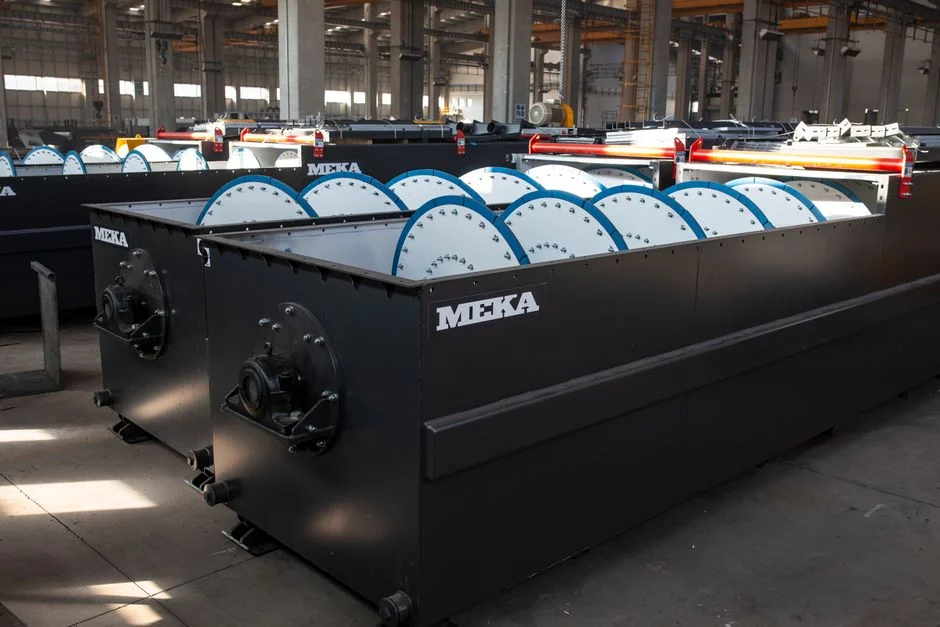
Favor DAF for streams containing meaningful oil, grease, FOG, waxes, light floatables, or solids that can be conditioned into buoyant floc. Favor lamella clarification when the main objective is removal of heavier, well-conditioned settled solids and the wastewater does not contain enough floatable material to justify DAF. This is a stream-by-stream decision because paint, machining, wash, and cooling discharges can behave differently within the same factory.
Use DAF before biological treatment when the goal is to remove floatables and reduce suspended-solids and organic loading. The Lactalis Winchester DAF is explicitly described in the Ontario Environmental Registry approval as serving that function; its clarified effluent flows to a downstream bioreactor (Ontario Environmental Registry, 2026-10-07).
Consider a DAF-plus-lamella sequence when both floatables and a high settled-solids load must be removed. Require the designer to define the hydraulic split, solids capture, intermediate storage, sludge concentration, and downstream route for each stage. Otherwise, the second unit may duplicate capacity without a clear mass balance.
Neither separator is equivalent to membrane filtration, disinfection, or full organic removal. Determine whether biological treatment, fine filtration, disinfection, or reuse equipment is needed from the treated-water objective and receiving requirements. Chemical dosing must also be included in the comparison; a PLC-controlled chemical dosing system should be specified around the selected conditioning strategy rather than treated as an optional accessory.
| Decision branch | Preferred approach | Required design check |
|---|---|---|
| Floatables dominate | DAF | Oil and grease removal, skimming, sludge capture, and downstream loading |
| Dense conditioned solids dominate | Lamella clarification | Solids loading, plate settling performance, recirculation, and sludge withdrawal |
| Both pollutant groups are significant | DAF followed by lamella clarification, if justified by the solids balance | Stage flow split, residual solids, intermediate equalization, and sludge handling |
| Organic removal or pathogen control is required | Separator followed by appropriate biological, filtration, or disinfection steps | Final effluent objective and applicable permit criteria |
What inputs are needed to size DAF or a clarifier for a Decherd factory?
A defensible size requires the factory’s design flow, peak-hour flow, operating profile, wastewater temperature, and proposed duty cycle; the supplied research contains no EV or automotive factory values for Decherd, so these fields must come from project data. Collect representative TSS, oil and grease, FOG, and other relevant concentrations across shifts and production batches. A bid based only on average daily flow does not show how the unit will handle batch dumps, tank cleanouts, or first-flush events.
Require each supplier to disclose its hydraulic-loading basis, solids-loading calculation, flotation or settling assumptions, and turndown strategy. The selected design should also state how equalization, controlled feed, chemical dose, and sludge withdrawal operate together.
The Lactalis Winchester DAF approval provides a useful scope benchmark rather than a Decherd design template. It lists 2,400 m³/d treatment capacity, a 100 m³/h DAF tank, polymer and coagulant dosing, white-water generation, mechanical skimming, sludge pumps, screening, and a maintenance bypass (Ontario Environmental Registry, 2026-10-07). It also shows why a complete scope description is useful: screening, feed control, conditioning, flotation, and sludge management are connected responsibilities.
Do not transfer Clearwater Industries’ skid division to another supplier’s system: its COMPACT DAF uses one skid at 66 GPM or less and two skids above 66 GPM (Clearwater Industries, 2026-04-27). Vessel selection must also match the actual chemistry and cleaning regime. Clearwater Industries states that its standard DAF uses 304SS and offers 316SS, polypropylene, and other materials by request.
| Bid item | Information the buyer must obtain | Reason |
|---|---|---|
| Flow and operating profile | Average, peak-hour, batch, dump, cleanout, and first-flush data | Establishes hydraulic and turndown requirements |
| Wastewater characterization | Representative TSS, oil and grease, FOG, colloids, pH, and relevant organic data | Links separator performance to wastewater properties |
| Design calculations | Hydraulic and solids-loading basis, separation assumptions, and redundancy | Makes competing bids technically comparable |
| Materials and interfaces | Wetted materials, coating requirements, utilities, controls, and included accessories | Defines compatibility and lifecycle obligations |
Include upstream protection in the sizing request. A rotary bar screen for wastewater pretreatment addresses fibrous and solid debris before it reaches pumps or separator internals. Further context on EV-plant capacity calculation appears in EV plant DAF capacity calculation.
What pretreatment, controls and sludge-handling risks should be priced into the project?
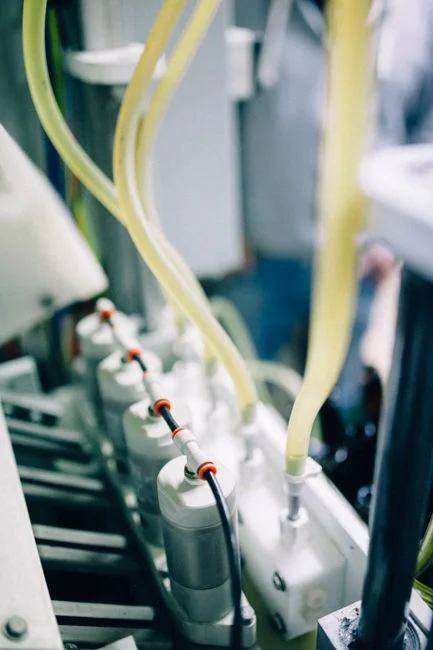
Equipment-only comparisons omit several failure points that affect reliability and operating cost. Upstream screening should be included where rags, plastics, or fibrous debris can foul pumps and treatment equipment; the rotary bar screen for wastewater pretreatment is intended to protect downstream industrial and municipal equipment.
Equalization and controlled feed are particularly important for automotive production, where line starts, batch dumps, and cleaning operations can create short-term loads. Chemical storage, metering, mixers, and flocculation must also be priced because conditioning controls the capture performance of both flotation and clarification. Include utilities, control interlocks, instrument ranges, cleaning access, odor controls, and standby provisions in the lifecycle comparison.
Neither DAF nor a lamella clarifier eliminates the solids-management obligation. Define collection, transfer, storage, thickening, and dewatering for float sludge and settled sludge. The plate-frame filter press for separated sludge dewatering illustrates the type of downstream step that must be considered separately from the separator.
The Lactalis Winchester approval identifies a DAF bypass for maintenance and operational outages (Ontario Environmental Registry, 2026-10-07). It also identifies enclosed sludge trailers and treated exhaust air, showing that odor and storage controls belong in the project scope rather than being deferred until commissioning.
- Screen and remove large debris.
- Equalize variable production discharge.
- Condition the wastewater with controlled chemicals and mixing.
- Remove floatables or settled solids with the selected separator.
- Route separated solids to storage and dewatering.
- Send clarified effluent to biological, filtration, disinfection, discharge, or reuse steps as required.
How should a factory compare bids and select an equipment supplier?
Require a guaranteed process basis tied to representative factory wastewater and a stated treatment objective. A vendor should show why the proposed separator can meet that basis under peak and batch conditions, rather than merely list a vessel and a nominal flow.
Request a complete train concept covering pretreatment, equalization, chemical conditioning, DAF or clarification, sludge handling, controls, utilities, and downstream treatment. Each bid should identify operating ranges, wetted materials, included accessories, maintenance tasks, control strategy, and accessory exclusions. This prevents an apparently complete separator price from hiding pumps, screens, mixers, sludge equipment, or downstream steps.
Compare lifecycle requirements as well as purchase price: chemical consumption, aeration for white-water generation where applicable, sludge removal, operator attention, cleaning, standby operation, and bypass provisions. Ask suppliers to identify performance tests and acceptance criteria. The EV plant DAF capacity calculation provides a useful structure for reviewing the hydraulic basis.
Compliance review must be project-specific. The supplied research contains no Decherd discharge limits, so the applicable permit, industrial-user requirements, and the receiving utility’s written pretreatment criteria should control the specification. Obtain those documents before defining guaranteed effluent values or final polishing steps.
- Representative wastewater data and peak-flow profile
- Written treatment objective and compliance basis
- Documented hydraulic and solids calculations
- Complete equipment and train scope
- Materials, controls, utilities, and maintenance assumptions
- Performance test and acceptance method
- Sludge route and downstream treatment basis
Frequently Asked Questions
Should a Decherd EV or automotive factory choose DAF or a lamella clarifier?
Choose DAF where oil, grease, FOG, waxes, light floatables, or conditionable buoyant solids are significant; choose lamella clarification where denser conditioned solids dominate and floatables are limited. For mixed streams, evaluate a combined train against a documented hydraulic and solids balance. Neither separator substitutes for biological treatment, fine filtration, disinfection, or reuse treatment when those functions are required.
What information should be requested before sizing the equipment?
Provide average and peak-hour flow, production and batch-discharge profiles, wastewater temperature, duty cycle, and representative TSS, oil and grease, FOG, pH, and other relevant pollutant results. Do not rely on the supplied research for Decherd factory values; those inputs must come from the factory’s sampling program and production records. The industrial DAF system for EV factory wastewater should be evaluated against that documented basis.
How should suppliers be compared when equipment pricing differs?
Compare the complete scope and lifecycle inputs rather than separator price alone: pretreatment, equalization, chemical systems, controls, sludge handling, utilities, operator attention, cleaning, redundancy, and downstream treatment. Request the supplier’s hydraulic and solids-loading calculations, operating ranges, materials, included accessories, maintenance tasks, and performance-test method. This makes bid differences visible rather than shifting them into later change orders.
What is the main compliance risk when selecting pretreatment equipment?
The main risk is specifying a separator without confirming the legal and site-specific effluent basis. The supplied research provides no Decherd discharge limits, so obtain the applicable permit, receiving-sewer or pretreatment requirements, and any reuse criteria in writing. Use those requirements to determine whether chemical conditioning, biological polishing, filtration, disinfection, monitoring, or diversion provisions are needed; neither DAF nor clarification alone establishes compliance.