What Regulatory Limits Apply to Domestic Sewage Treatment?
Domestic sewage treatment in Argentina must satisfy the applicable national and provincial limits, then match the equipment to the site’s flow, land, receiving water and operating conditions. HydropureWater’s 2026 guide cites Law 25.688 limits of ≤30 mg/L BOD, ≤30 mg/L TSS, ≤10 mg/L NH₄-N and ≤1,000 CFU/100 mL E. coli, with stricter requirements possible under provincial rules. For small communities, the same source reports 2024 cost benchmarks of USD 1.2–2.5M CAPEX per 1,000 m³/day for conventional systems and USD 2.0–3.5M for package MBR. The WSZ package plant offers an automated A/O, sedimentation and disinfection train from 1–80 m³/h.
Law 25.688 establishes the national floor, but it does not determine the complete treatment train for every project. The receiving-water classification, discharge point and intended reuse can change the required process, and the buyer must obtain the applicable national limit, the provincial permit or decree, and any environmental-impact-assessment condition before comparing equipment. These layers should be documented separately rather than compressed into one statement that a package is “compliant.”
| Control layer | Evidence or requirement to obtain | Procurement consequence |
|---|---|---|
| National floor | Law 25.688: ≤30 mg/L BOD, ≤30 mg/L TSS, ≤10 mg/L NH₄-N and ≤1,000 CFU/100 mL E. coli for discharges to water bodies of national jurisdiction, as cited by HydropureWater’s 2026 guide. | Use these values as a minimum screening basis, not as a substitute for the permit. |
| Provincial requirement | Buenos Aires Province Decree 3395/96 may impose stricter limits for sensitive receiving waters; HydropureWater’s 2026 guide gives ≤20 mg/L BOD/TSS as an example. | Specify the required process against the applicable provincial value. |
| Environmental assessment | HydropureWater’s 2026 guide identifies an EIA as mandatory through the provincial environmental agency for projects classified as having significant impact. | Make approval conditions part of the supplier’s design and acceptance scope. |
| Site-specific acceptance | Discharge point, receiving-water class and reuse objective. | Require sampling methods, test frequency and a named acceptance-testing party. |
The San Justo, Santa Fe study is relevant for a different reason: its physicochemical parameters were within the mandatory local disposal limits, while chlorination was evaluated before river discharge (Springer, 2022). That does not establish a universal performance value for any plant. It shows why the receiving authority’s test protocol and acceptance decision must be incorporated into the contract rather than treated as an administrative formality.
Build the Design Basis Before Choosing Equipment
Equipment sizing follows from the design basis, not the other way around. HydropureWater’s 2026 guide notes that the U.S. EPA defines a small community system as serving no more than 10,000 residents with average daily flow below 1 MGD, while identifying 500–5,000 m³/day as a practical Argentine working band. That framework is a starting point for planning; the supplier must size against documented local flows and loads.
Require average and peak domestic flow, current and forecast population, occupancy or operating schedule, and any industrial contribution before selecting a biological process. For tourism, resort and hospital clusters, HydropureWater’s 2026 guide identifies 1.8–2.5× seasonal peaks; upstream equalization should therefore be included in the package scope where that duty applies.
The site assessment must also establish available land, burial conditions, noise limits, maintenance access, power reliability, operator competence and sludge-removal arrangements. Ask bidders to state which design inputs are measured, which are assumed and which remain to be verified by site testing. A quotation based on an average daily flow alone cannot demonstrate compliance during peak periods.
Ask for a complete process flow rather than an equipment-only price. It should identify pretreatment, equalization where required, biological treatment, solids separation, disinfection, effluent testing and sludge handling. For inlet protection, define whether the rotary mechanical bar screen is required, based on the wastewater characteristics and the selected treatment process.
| Design-basis item | Information required from the buyer | Why it changes the proposal |
|---|---|---|
| Hydraulic duty | Average flow, peak flow, current and forecast population, occupancy schedule and industrial inputs | Defines equalization, biological capacity, solids separation and disinfection duties. |
| Effluent objective | National, provincial and receiving-water limits; reuse requirements | Determines whether secondary treatment is sufficient or additional nitrification, filtration and disinfection are required. |
| Site constraints | Land, geology, burial depth, noise, access and usable surface area | Controls package configuration, civil work and maintenance arrangements. |
| Operating conditions | Power reliability, operator availability, remote monitoring and service access | Determines controls, staffing and maintenance assumptions. |
| Residuals route | Sludge generation, dewatering, storage, transport and disposal arrangements | Prevents treatment from being evaluated without a compliant residual-management route. |
Compare Package A/O, MBR and Conventional Treatment
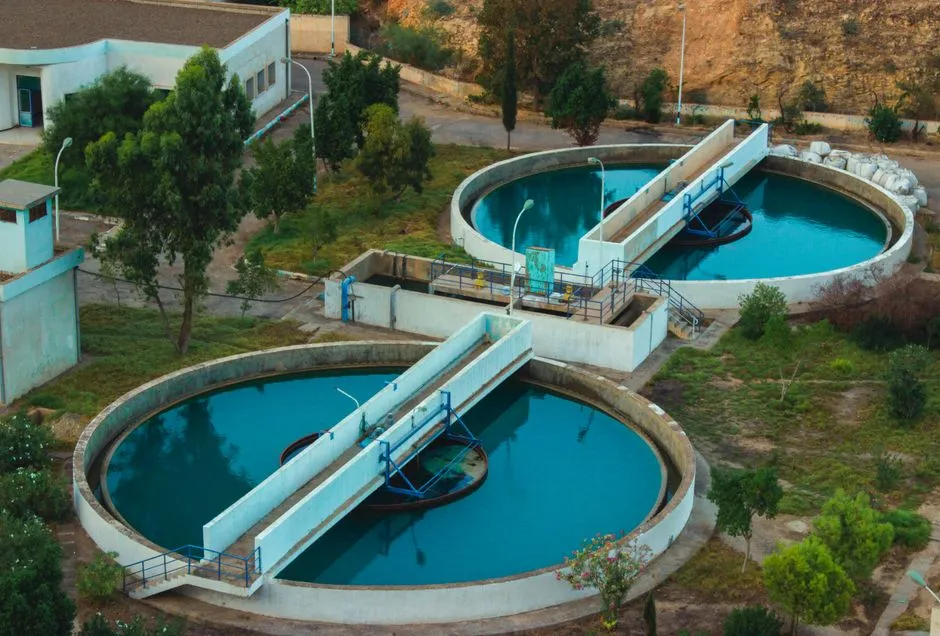
The binding constraint is the site: land, receiving-water sensitivity, reuse target and municipal operating capacity determine the process. No package should be selected solely because it is described as compact, automated or low-maintenance.
The verified underground WSZ package sewage treatment plant combines anoxic/aerobic biological contact oxidation, sedimentation and disinfection in a buried unit. Its catalogued range is 1–80 m³/h. It is fully automated, requires no dedicated operator and can be installed below grade or mounted on a trailer. This configuration suits a site where the surface must remain usable and where burial conditions permit installation.
The submerged PVDF MBR wastewater treatment system combines activated-sludge treatment with submerged membrane filtration. The 2026 guide records a 10–2,000 m³/day range, filtration below 1 μm and a footprint approximately 60% smaller than conventional systems at the same flow. It also records higher package-MBR CAPEX and energy use, as well as the need for effective pretreatment and fouling control.
Conventional activated sludge remains relevant where land and budget favor established civil works and municipal teams can operate the process. Its selection must still address applicable effluent limits, nitrification, solids separation, disinfection and sludge handling. Constructed wetlands offer another route, but HydropureWater’s 2026 guide associates them with substantial land requirements and seasonal ammonia-performance swings.
| Selection variable | Package A/O | Package MBR | Conventional treatment |
|---|---|---|---|
| Catalogued or stated capacity | 1–80 m³/h for the WSZ package plant | 10–2,000 m³/day | Not established by a single supplied catalog range |
| Core process | A/O biological contact oxidation, sedimentation and disinfection | Activated sludge with submerged PVDF membrane filtration below 1 μm | Established activated-sludge and civil-works options |
| Site footprint | Buried configuration preserves surface use | Approximately 60% smaller than conventional systems at the same flow | Generally requires more land than compact package options |
| Operating implication | Fully automated; no dedicated operator required | Requires membrane cleaning, fouling control and energy management | Depends on civil configuration and municipal operating capacity |
| Main commercial risk | Burial, soil, access and disposal conditions must be verified | Higher CAPEX and energy use; pretreatment omissions increase fouling risk | Land, civil-work cost and sludge route can dominate the decision |
| Best fit to test first | No-sewer site where the surface must remain usable | Tight site, sensitive receiving water or advanced treatment/reuse objective | Adequate land, conventional operating capacity and lifecycle budget |
Size the Treatment Train for Peak Flow and Effluent Quality
Preliminary biological sizing must reconcile the design peak with the required effluent, while final equipment selection remains conditional on project data. HydropureWater’s 2026 guide presents 150–250 mg/L BOD for purely domestic sewage, roughly 1.0–1.3× BOD for TSS and 20–40 mg/L for ammonia as preliminary inputs, identified as HydropureWater field data for 2024–2025. Replace assumed values with site testing before final design.
The same guide calculates at least 88% BOD removal from 250 to 30 mg/L and at least 67% nitrification from 30 to 10 mg/L NH₄-N as baseline requirements. These are design checks against the stated concentrations, not guaranteed plant-removal percentages. The aeration process must therefore provide full nitrification rather than carbonaceous BOD removal alone, and biological sizing must reflect low winter temperatures.
Apply the flow logic in sequence: hydraulic pretreatment and equalization first; biological capacity for the applicable peak; solids separation matched to the process; and disinfection validated against the permit. No equipment model should be assigned without project flow, influent and permit data. For seasonal facilities, document whether equalization attenuates the peak or merely redistributes it.
| Design check | Preliminary basis | Final verification required |
|---|---|---|
| Domestic BOD | 150–250 mg/L, identified as HydropureWater field data for 2024–2025 | Representative site sampling and contribution analysis |
| TSS | Roughly 1.0–1.3× BOD, identified as HydropureWater field data for 2024–2025 | Measured suspended-solids concentration |
| Ammonia | 20–40 mg/L, identified as HydropureWater field data for 2024–2025 | Measured influent and seasonal variation |
| Carbonaceous removal | At least 88% from 250 mg/L BOD to ≤30 mg/L | Mass balance using the final design flow and influent |
| Nitrification | At least 67% from 30 mg/L NH₄-N to ≤10 mg/L | Aeration and solids-retention design at the applicable low temperature |
Budget for Capital, Operating and Sludge Costs
Installed price alone does not permit a defensible comparison of treatment options. HydropureWater’s 2026 guide cites Argentine Ministry of Public Works 2024 benchmarks: conventional-system CAPEX of USD 1.2–2.5M per 1,000 m³/day and package-MBR CAPEX of USD 2.0–3.5M per 1,000 m³/day. These are reference bands, not quotations.
Reported conventional OPEX is USD 0.20–0.40/m³, compared with USD 0.30–0.60/m³ for package MBR; HydropureWater’s 2026 guide identifies electricity as 40–60% of OPEX. The comparison should therefore include power demand, operator time, membrane cleaning or replacement, maintenance and residual handling.
Normalize every quotation for flow, duty, civil work, equalization, pretreatment, disinfection, controls, commissioning, sludge handling and site-specific installation. A price that omits one of these items is not comparable with a complete installation.
The guide’s worked example for a 500 m³/day project places conventional CAPEX at USD 0.6–1.25M and annual OPEX at USD 0.10–0.20M. Equivalent package-MBR figures are USD 1.0–1.75M CAPEX and USD 0.15–0.30M annually. Treat these as source benchmarks for comparison planning, subject to project-specific pricing.
Sludge must be budgeted as a regulated workstream. HydropureWater’s 2026 guide identifies Decree 831/93 as governing sludge generation, handling, transport and disposal. Require dewatering, cake storage, transport and licensed disposal in the offer. Where a plate-and-frame filter press is proposed, define sludge characteristics, operating cycle and cake-disposal route rather than accepting the equipment name as the solution.
| Cost item | Conventional reference | Package-MBR reference | Scope qualification |
|---|---|---|---|
| CAPEX per 1,000 m³/day | USD 1.2–2.5M | USD 2.0–3.5M | Argentine Ministry of Public Works 2024 benchmarks cited by HydropureWater’s 2026 guide. |
| OPEX | USD 0.20–0.40/m³ | USD 0.30–0.60/m³ | Electricity identified as 40–60% of OPEX. |
| 500 m³/day project CAPEX | USD 0.6–1.25M | USD 1.0–1.75M | Worked example in HydropureWater’s 2026 guide. |
| 500 m³/day annual OPEX | USD 0.10–0.20M | USD 0.15–0.30M | Worked example; requires project-specific validation. |
Choose the System by Project Scenario
Scenario matching is more reliable than a universal technology ranking. A rural cooperative with abundant land and a less sensitive receiving water can assess a lagoon or conventional primary-treatment route followed by polishing, provided the full train and seasonal ammonia performance are demonstrated. A peri-urban community discharging to a sensitive lake or the Río de la Plata basin should test compact MBR and underground package solutions against the stricter applicable discharge conditions.
Where there is no sewer and the surface must remain usable, assess the underground WSZ package sewage treatment plant. Its catalogued process is integrated and automated, operates without a dedicated operator and can be trailer-mounted where mobile deployment is relevant. Installation still depends on soil, groundwater, access and disposal conditions.
For tourism and hospital clusters, require equalization and assess the WSZ or the submerged PVDF MBR wastewater treatment system against the documented peak condition rather than average demand. HydropureWater’s 2026 guide identifies 1.8–2.5× seasonal peaks for this project profile.
For a budget-constrained community, compare conventional activated sludge with compact alternatives over 20 years, including energy, operator time, maintenance, sludge and replacement costs. HydropureWater’s 2026 guide recommends that lifecycle basis rather than installed price alone.
| Project scenario | Initial option to assess | Mandatory condition |
|---|---|---|
| Rural cooperative, land available | Lagoon or conventional primary treatment with polishing | Demonstrate the complete train and seasonal ammonia performance. |
| Peri-urban community or sensitive receiving water | Compact MBR or underground package solution | Test against the stricter applicable discharge conditions. |
| No sewer and usable surface required | Buried WSZ configuration | Verify soil, groundwater, access and installation conditions. |
| Tourism or hospital cluster | WSZ or MBR with equalization | Size for the documented 1.8–2.5× seasonal peak. |
| Budget-constrained community | Conventional activated sludge versus compact alternatives | Compare a 20-year lifecycle, including sludge and replacement costs. |
Questions to Include in a Supplier Request for Proposal
A comparable RFP begins with guaranteed performance and an auditable design basis. Require guaranteed effluent values tied to the identified national, provincial and receiving-water limits. State the sampling method, test frequency, sample location and legally responsible acceptance-testing party. A supplier’s general statement of “compliance” is not an enforceable guarantee.
Require the guaranteed design flow, peak-flow strategy, equalization calculation, biological-loading basis and treatment-stage mass balance. Ask for the operating assumptions behind each number, including seasonal temperature, occupational loading and power interruptions.
For MBR proposals, require membrane material, pore size, fouling controls, cleaning requirements, expected membrane life, spare-parts strategy and energy consumption. For package A/O, require the biological design basis, aeration-control philosophy, solids separation and disinfection performance.
Define civil work, installation, power, controls, commissioning, training, preventive maintenance, remote monitoring, operator attendance and sludge-disposal responsibilities. Identify exclusions explicitly rather than allowing them to remain buried in general commercial conditions.
Ask for references on comparable flow, seasonal duty, receiving-water class and regulatory jurisdiction. The final equipment proposal and site tests should verify preliminary influent values; for project planning, the small community wastewater system engineering guide for Argentina provides the stated regulatory and budgeting framework, but it does not replace project-specific design.
Frequently Asked Questions
How much does domestic sewage treatment cost in Argentina?
HydropureWater’s 2026 guide cites 2024 Argentine Ministry of Public Works benchmarks of USD 1.2–2.5M CAPEX per 1,000 m³/day for conventional systems and USD 2.0–3.5M for package MBR. Reported OPEX is USD 0.20–0.40/m³ for conventional treatment and USD 0.30–0.60/m³ for MBR. These are comparative reference bands. Request a project-specific quotation stating flow, duty, civil work, equalization, pretreatment, disinfection, controls, commissioning, installation and sludge handling.
Should a small community in Argentina choose WSZ, MBR or conventional treatment?
Choose based on land, receiving-water sensitivity, treatment or reuse target, seasonal peaks and municipal operating capacity. Assess WSZ where burial and surface availability are decisive; MBR where compact treatment and higher-quality separation are required; conventional treatment where adequate land, proven operating capacity and the available lifecycle budget justify the civil-works solution. Compare each option against the same permit and design basis.
What flow can an underground WSZ sewage treatment plant handle?
The verified HydropureWater product catalog gives the WSZ underground package sewage treatment plant a range of 1–80 m³/h. That is a catalogued equipment range, not confirmation that every site within it has adequate hydraulic, biological and disposal capacity. Equalization may be required for seasonal facilities, and the final proposal must use project flow data.
Which Argentine sewage treatment option fits a hotel or hospital with seasonal demand?
Assess WSZ or MBR with upstream equalization, using the documented peak rather than average demand. HydropureWater’s 2026 guide identifies 1.8–2.5× seasonal peaks for tourism and hospital clusters. Confirm whether equalization provides sufficient hydraulic and biological capacity, then include the duty, controls, maintenance response and acceptance-testing requirements in the offer.
What should an Argentine supplier guarantee for effluent compliance?
Require guarantees against the applicable national and provincial limits, including any stricter receiving-water condition. Specify the sampling protocol, test frequency and responsible acceptance-testing party, and identify which authority approves the result. In San Justo, Santa Fe, the academic study found physicochemical parameters within mandatory local disposal limits and evaluated chlorination before river discharge (Springer, 2022), illustrating why site-specific acceptance matters.