What Rural Sewage Treatment in Chile Must Solve
Rural sewage treatment in Chile must address infrastructure and long-term operation, not just nominal treatment capacity. A 2025 study by Inżynieria Mineralna reports that around 13% of rural communities have sewage or treatment, compared with urban coverage close to 99.98%; it also finds that only 27% of rural wastewater treatment plants operate without significant problems. The remaining close to 73% have operational or infrastructure failures, and 30% of that failing segment is in a critical state. Since Law N° 20.998 entered force in November 2020, technology selection must consider geography, climate, population density, maintenance capacity and service sustainability—not merely installed capacity.
The coverage figures describe the scale of the service gap, but they do not mean every rural property lacks an onsite sanitation solution. The 2025 study reports that the remaining rural population discharges wastewater into septic tanks, systems meeting Decree N° 236/26 and, to a lesser extent, cesspools. Those arrangements may provide a service, but they do not necessarily deliver the collection, treatment, monitoring and environmental protection required for a rural sanitation system.
The practical objective under Law N° 20.998 is therefore to close the access gap while avoiding the social, environmental and public-health impacts associated with inadequate treatment and operation. Equipment selection is only one part of that objective. A municipality must also establish who will inspect the plant, respond to alarms, maintain equipment, manage solids, monitor performance and fund services over time.
For a broader view of decentralized equipment applications, see the 2026 guide to decentralized domestic sewage treatment equipment. The transferable principle is straightforward: geography, climate, population density, operating capacity and service sustainability must be assessed together.
Coverage Is Only the First Milestone
Only 27% of Chile’s rural wastewater treatment plants function without significant problems, while close to 73% show operational and infrastructure failures, according to Inżynieria Mineralna (2025). Within that failing segment, 30% are in a critical state requiring urgent intervention. The central procurement lesson is that adding a treatment unit does not, by itself, establish a dependable sanitation service.
The 2025 study identifies lack of maintenance, missing essential equipment, rainwater infiltration, unforeseen population growth, deficient engineering design, difficulty operating complex systems in remote locations, and economic constraints on rural sanitation services. Each deficiency should become a design, documentation or contractual requirement.
| Documented deficiency | Procurement requirement |
|---|---|
| Lack of maintenance | Fund preventive maintenance, inspections, consumables and a named response responsibility. |
| Missing essential equipment | Require a complete equipment schedule, redundancy assessment and documented spare-parts strategy. |
| Rainwater infiltration | Document the collection and infiltration basis and identify how wet-weather flow affects treatment and hydraulics. |
| Unforeseen population growth | Require the design basis to address growth rather than rely on installation-day demand alone. |
| Deficient engineering design or complex operation | Require site-specific process design, operator competence and support for the intended operating model. |
| Economic problems sustaining operations | Price the full lifecycle scope, including monitoring, maintenance, power, chemicals and technical support. |
A manufacturer’s installation date and nominal capacity are not evidence of demonstrated operational reliability. The supplied research provides neither service-life data nor product-specific failure rates, so buyers should request comparable evidence for the proposed configuration. Installation reference sites may help, but they should not substitute for site-specific design, commissioning tests, training and a funded maintenance plan.
Choose a Treatment Architecture That Fits the Site
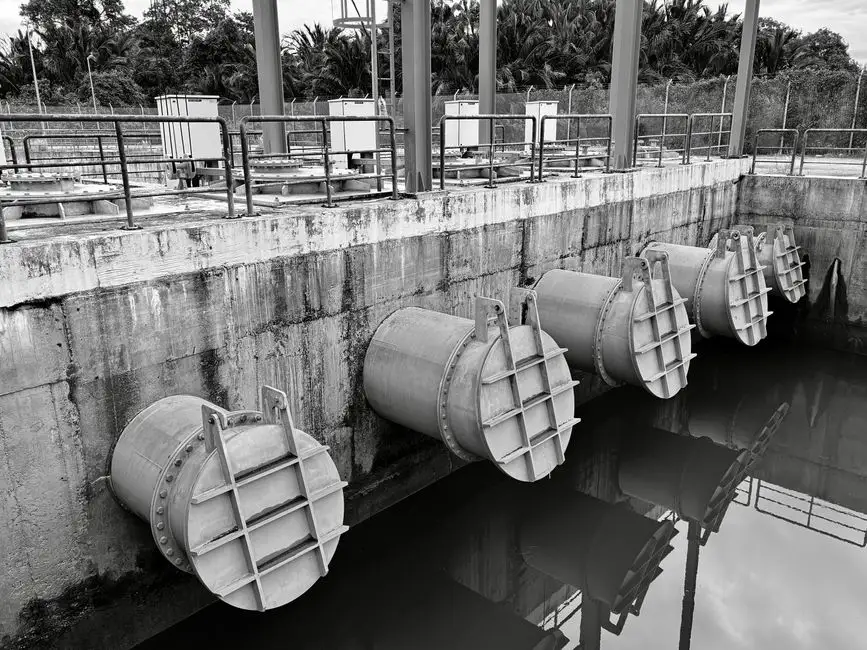
A package treatment plant is a factory-integrated treatment train; decentralization is an operating model that distributes collection and treatment assets; nature-based treatment uses engineered ecological processes. These categories can overlap, but they impose different procurement obligations.
The integrated WSZ package sewage treatment plant combines anoxic/aerobic biological contact oxidation, sedimentation and disinfection in one buried unit. The manufacturer specifies a 1–80 m³/h capacity range and offers below-grade installation with landscaping above or trailer mounting for mobile deployment. That range is a product-selection input, not a sizing conclusion: the selected unit must correspond to project flow, peak demand and local conditions.
| Architecture | Potential application | Buyer checks |
|---|---|---|
| Package plant | A defined flow route with an integrated biological, solids-separation and disinfection train. | Verify flow basis, treatment objective, peak capacity, installation method, utilities, control system, maintenance access and commissioning scope. |
| Decentralized service model | Distributed treatment assets serving remote communities or settlement clusters. | Define monitoring, communications, alarm response, trained support, spare parts and cost responsibility for each asset. |
| Nature-based system | A candidate where land, climate, hydraulic loading and local maintenance conditions support it. | Require site-specific evaluation of land, groundwater, seasonal conditions, loading, odor, solids management and long-term upkeep. |
Decentralization does not remove the need for operation. It moves more responsibility across dispersed assets, increasing the importance of remote monitoring, maintenance access and qualified local support. The manufacturer describes the WSZ Series as fully automated and requiring no operator, but automation still requires periodic inspection, maintenance, alarm response and defined responsibility for compliance monitoring.
Inżynieria Mineralna (2025) identifies nature-based and renewable systems as candidates for improving rural sanitation, while warning that technology should fit local reality. The process comparison in package, MBR and decentralized sewage systems provides a useful cross-market reference, but it does not replace a Chilean site assessment.
Every route should address the same process sequence: collection and pretreatment, biological treatment, solids separation and disinfection. The exact train depends on wastewater characteristics and the client’s treatment objectives. Where higher-quality effluent is required and justified by the discharge context, an MBR wastewater treatment system for higher-quality effluent should be evaluated as a specific process option rather than assumed superior.
Build the Equipment Specification Around Service Reliability
The bidder should define the treatment objective and process train before selecting equipment. A package configuration should not be treated as universally suitable merely because it combines biological treatment, settling and disinfection in one unit.
The technical brief should require suppliers to document collection and infiltration assumptions because rainwater infiltration is identified as a common deficiency in Chilean rural plants by Inżynieria Mineralna (2025). It should also require a design basis that addresses unforeseen population growth, engineering deficiencies and the difficulty of operating complex systems in remote locations.
| Parameter | Information required from bidders |
|---|---|
| Hydraulic basis | Average and peak flow, flow variation, collection configuration and infiltration assumptions. |
| Wastewater | Wastewater characterization, solids characteristics and any industrial or institutional inputs. |
| Treatment | Required treatment train, treatment objective and applicable discharge requirements identified by the buyer. |
| Site | Soil, groundwater, available land, rainfall exposure, installation method and maintenance access. |
| Operations | Automation, alarms, remote communications, monitoring, operator training, service response and preventive maintenance. |
| Residuals | Sludge or solids generation, storage, removal, transport and final management requirements. |
For the WSZ Series, the verifiable product attributes are A/O contact oxidation, sedimentation, disinfection, full automation, buried or trailer-mounted configurations and the manufacturer’s 1–80 m³/h range. Buyers should verify these attributes in the proposal rather than infer them from a brochure. If screening requires alternative solids or pretreatment equipment, relevant technical options include the rotary mechanical bar screen and chlorine dioxide generator, but their suitability depends on the project train and treatment objective.
Remote supervision and a local maintenance plan belong in the commercial scope. “No operator required” does not mean no maintenance. The owner must still identify who inspects the equipment, performs routine servicing, responds to alarms, replenishes chemicals, removes solids and verifies the required records.
Plan for Operation, Monitoring and Energy Recovery

Close to 73% of Chile’s rural plants have significant operational or infrastructure problems, making lifecycle support more important than nominal treatment capacity alone, according to Inżynieria Mineralna (2025). The study recommends operator training, professional technical support, continuous monitoring and preventive maintenance. Those measures should be converted into named responsibilities, funded schedules and measurable service commitments.
The procurement plan should also cover remote communications, spare-parts availability, support response times and operator training. A treatment train is only as reliable as its ability to remain accessible, monitored and maintainable after handover. Solids management belongs in this scope; plate-and-frame filter presses and RO/UF membrane filter elements may enter the design only when the selected process and residual-handling requirements justify them.
Sludge and energy recovery should be assessed only after collection, biological treatment, solids separation, disinfection and maintenance are credible. International Plasma Technology Center reports that biosolids from 16,000 US publicly owned wastewater treatment plants have a calorific value of about 12 MJ/kg. That figure concerns a US sludge inventory and does not establish the energy content of a Chilean rural plant’s residuals.
The same source models thermal efficiency approaching 85% for its most efficient plasma-assisted configuration. This is modeled configuration performance, not guaranteed project performance; the supplied research contains no Chilean site-specific efficiency, feedstock or energy-price assumptions. Energy recovery therefore remains a separate feasibility exercise, not a basis for selecting the core treatment system.
Use a Risk-Based Procurement Decision Framework
A defensible rural sanitation procurement starts with mandatory site inputs and then compares candidate architectures against service risks. It should not begin with a preferred package or a headline capacity.
- Establish average and peak flows, wastewater characteristics, treatment objectives, discharge location, land and soil conditions, rainfall exposure, maintenance access, local operator capacity and the lifecycle-support budget.
- Screen package, decentralized and nature-based options for maintainability, equipment completeness, infiltration resilience, capacity for population growth, operational simplicity, technical support and affordability—the service criteria identified by Inżynieria Mineralna (2025).
- Issue the same design basis, flow assumptions, site conditions and commercial scope to every shortlisted supplier.
- Compare installation, commissioning, warranty, monitoring, training, spare parts and maintenance commitments on a like-for-like basis.
- Verify compliance against the applicable authority and site-specific discharge conditions before award.
| Evaluation area | Evidence to require |
|---|---|
| Technical | Site-specific design basis, process description, capacity justification, treatment objective and installation method. |
| Operational | Maintenance plan, operator competence, remote supervision, alarm response, spares and service commitments. |
| Commercial | Complete lifecycle price covering equipment, civil works, installation, utilities, monitoring, support and maintenance. |
| Risk | Resilience review for rainfall infiltration, site access, electrical and mechanical requirements, population growth and residual management. |
Compliance must be verified site by site. The supplied research does not provide Chilean effluent limits or permit conditions, so buyers must obtain the applicable requirements from the relevant authority rather than infer them from equipment literature.
A scored matrix can support the decision, but weights should reflect the community’s geography, climate and density rather than a universal template. Before award, verify local electrical and mechanical requirements, installation method, commissioning support, operator competency and a funded preventive-maintenance schedule. The regulatory context in pretreatment-limit planning illustrates the need to anchor treatment selection in applicable requirements, while facility-specific treatment planning reinforces the need for a defined project basis.
Frequently Asked Questions
What size sewage treatment plant does a rural community in Chile need?
The WSZ Series spans 1–80 m³/h, but that range alone cannot select a model. The buyer must provide average and peak flow, wastewater characteristics, treatment objectives, site constraints and discharge requirements, then verify that the proposed unit remains suitable under those conditions.
Is a packaged treatment plant cheaper than a conventional rural system?
The supplied research provides no Chilean equipment-cost comparison. Require a lifecycle comparison covering capital equipment, installation, civil works, power, chemicals, monitoring, operator support, maintenance and expected service performance. A lower equipment quotation is not equivalent to a lower total service cost.
How should a buyer compare rural wastewater suppliers in Chile?
Require comparable technical scopes and design bases, then verify installation assumptions, commissioning evidence, operator training, remote monitoring, warranties, spare-parts support and maintenance-response commitments. Also require each bidder to price the same operating and residual-management assumptions.
Can rural sewage plants be operated without local staff?
HydropureWater describes the WSZ Series as fully automated and requiring no operator. Periodic inspection, maintenance, alarm response and compliance monitoring still need assigned responsibility. Automation reduces routine attendance; it does not create a maintenance and accountability plan.
Does Chile have a single rural wastewater technology that works everywhere?
No. Inżynieria Mineralna (2025) supports conventional, unconventional, nature-based and renewable solutions, but recommends matching technology to geography, climate and population density. Site data and service objectives must determine the process before equipment is selected.