What Changes When Hyundai Acquires a German Auto Plant?
Ownership transfer does not reset the site's wastewater obligations: the permit holder remains responsible for lawful treatment and discharge after closing, while the buyer must establish whether existing authorizations can continue in use. Before signing, identify the legal operator and permit holder, allocate legacy liabilities contractually, and confirm the German industrial discharge authorization or indirect industrial discharge requirements with the competent authority and receiving wastewater operator. Segregate industrial wastewater from sanitary sewage and uncontaminated stormwater, characterize each production stream, equalize batch flows, and validate pretreatment with representative wastewater. Hyundai's Georgia episode shows the transition risk: Savannah found copper above six times the allowable limit, zinc above twice the limit, and conductivity-monitoring gaps reaching 19 hours, according to The Current GA (2025-03).
The executive decision is not whether the inherited plant appears operational. It is whether the legal, physical and contractual controls support uninterrupted production without creating a new discharge violation. Before closing, compile all wastewater permits, sewer agreements, stormwater and fire-water approvals, hazardous-substance records, soil and groundwater files, monitoring reports, notices and enforcement correspondence.
Residual contamination, historical exceedances, incomplete monitoring and pending remediation should be treated as potential legacy liabilities. The purchase agreement should allocate them through indemnities, escrow, retention, completion conditions or another enforceable mechanism. A condition precedent should prevent production transfer until the relevant approvals, receiving-system arrangements and treatment-performance evidence are verified.
Hyundai's Georgia experience is a warning about interface risk, not a German legal standard. The Current GA (2025-03) reported that HMGMA was the legal entity responsible for manufacturing and permitting at the Georgia site and that Savannah and the Georgia Environmental Protection Division had issued notices concerning permit parameters, monitoring gaps and disposal routing. For a German acquisition, the equivalent diligence must establish whether waste goes through an indirect industrial discharge arrangement or a direct discharge authorization, and which authority and receiving works control acceptance.
Set four handover gates: verified legal authority to operate, a reconciled environmental-liability allocation, a representative-wastewater performance test and an approved contingency route. Further context on connected sewer-limit assessment is available in this review of sewer limits affecting industrial plants near Evanston.
Build the Wastewater Baseline Before Closing
The baseline must describe stream composition, flow variability, permit compliance and production linkage; a single daily composite cannot establish all four. Build an industrial wastewater mass balance by collecting representative samples from body-shop and paint pretreatment, machining and metalworking rinses, cooling-water blowdown, floor washing, oily runoff, domestic sewage, stormwater and laboratory drains.
Sample across production stages, shifts, batch releases and operating conditions. The preliminary process audit should determine which parameters are relevant, including metals, pH, conductivity, suspended solids, oil and grease and plant-specific process pollutants. Do not copy Georgia parameters into the German design basis without evidence from the acquired plant.
| Baseline item | Evidence required | Decision supported |
|---|---|---|
| Wastewater source inventory | Process maps, piping records, production sampling and flow metering | Stream segregation and collection design |
| Representative wastewater | Samples across stage, shift, batch and production conditions | Pollutant profile and unit-process selection |
| Flow mass balance | Average, peak and batch flows reconciled with production forecasts | Equalization and equipment capacity |
| Permit baseline | Current authorization, sewer agreement and written acceptance criteria | Treatment objectives, monitoring and discharge route |
| Compliance history | Monitoring reports, exceedances, notices, deviations and corrective actions | Legacy liability and handover conditions |
The Current GA (2026-10) reported that Hyundai's Georgia plant expanded permitted wastewater output by about half a million gallons per day in connection with production of 200,000 vehicles in 2026. That figure illustrates why permitted output and production forecasts must be reconciled, but it is not a German capacity assumption.
Review monitoring continuity as well as concentrations. The Current GA (2025-03) reported that Georgia conductivity-monitoring gaps sometimes reached 19 hours. In Germany, determine the required sampling frequency, averaging basis and record continuity from the current permit and receiving works.
Obtain written clarification from the competent authority and receiving operator for direct discharge versus indirect industrial discharge, discharge points, contaminant limits, monitoring obligations, self-reporting, emergency procedures and any restrictions arising from production changes. Separate analysis methods for industrial sewer compliance near San Jose and sewer limits affecting mining plants near Malvern can inform the diligence questions, but the German authority's written requirements control.
Segregate and Pretreat the Industrial Streams
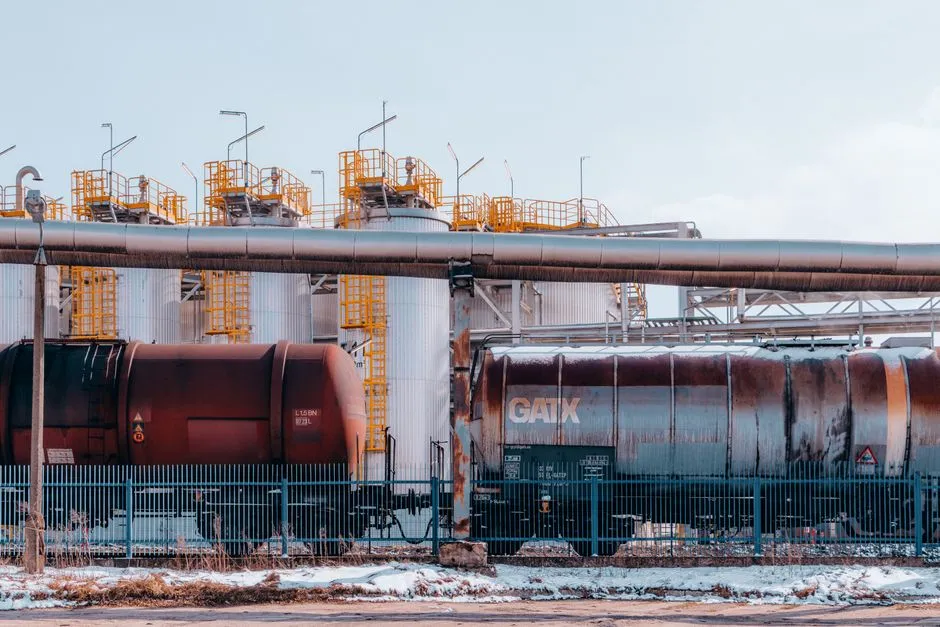
Stream segregation determines whether pollutants can be identified, pretreated and monitored before they enter a municipal sewer or another authorized treatment route. Keep industrial wastewater separate from sanitary sewage and uncontaminated stormwater; mixing those flows can dilute poor industrial pretreatment and obscure the source of exceedances.
Use equalization and pH control before the selected solids, oil or heavy-metal removal stage. Equalization must accommodate variable batch flows and production peaks, not only average discharge. The treatment decision should follow the contaminant and the receiving route, with source control considered before selecting equipment.
| Plant stream or condition | Required treatment function | Equipment decision | Verification required |
|---|---|---|---|
| Metalworking rinse water containing suspended solids, oil, grease or colloids | Source control, equalization, pH balancing, then physical separation | A DAF system for automotive industrial pretreatment may be relevant; it does not replace pH control or biological treatment | Representative-metal, oil, solids and pH performance across batch conditions |
| Biologically treatable industrial wastewater requiring membrane solids separation | Biological treatment followed by membrane separation | An MBR membrane bioreactor for industrial wastewater may be applicable | Biodegradability, solids separation, permit targets and receiving-works acceptance |
| Oily floor washing or stormwater runoff | Segregation, solids control and oil removal before the permitted route | DAF or another approved physical treatment process | Free and emulsified oil behavior, solids carryover and discharge route |
| Domestic sewage | Treatment in the applicable sewer or approved biological route | Do not use the industrial pretreatment train to compensate for sanitary dilution | Separate flow, permit and local-acceptance checks |
| Uncontaminated stormwater | Segregation and inspection before any authorized discharge or reuse | Treatment depends on water quality and permit conditions | Representative wet-weather and dry-weather characterization |
Heavy-metal pretreatment should start at the source. In the Georgia case, The Current GA (2025-03) reported that elevated zinc was found in onsite pretreatment piping, affecting industrial and domestic discharge. Inspect source pipes, tanks, pumps and treatment equipment rather than focusing only on final effluent.
Before procurement, characterize the resulting sludge and confirm its disposal route. Equipment that meets the water target can still create an unresolved residual-handling problem. The treatment supplier should state whether waste is concentrated, dewatered or removed as a defined stream, and the owner should obtain approval for that route before acceptance.
Use a Proof-Based Treatment and Handover Plan
Operational handover should be conditional on verifiable performance, because clean-water testing does not demonstrate that the plant can treat production wastewater. Prepare a process-flow and control narrative covering segregation, collection, equalization, pretreatment, final treatment, monitoring, sludge handling and the permitted discharge or transfer point.
Define fail-safe responses for high conductivity, abnormal pH, excessive tank level, flow imbalance and analytical-limit exceedances. Each alarm should have an identified action, responsible operator and escalation path. Evaluate automatic diversion to an approved contingency route where required, but do not include diversion until the receiving route, waste classification, transport and authorizations are verified.
Commission the installation in stages:
- Complete static checks of piping, valves, instruments, controls and safety systems.
- Test the system with water and verify flow, level, pH, alarms and diversion logic.
- Introduce representative production wastewater and confirm removal performance.
- Run load tests across the verified flow and batch-discharge envelope.
- Complete continuous monitoring and formal site acceptance against written criteria.
- Release the production ramp only after the receiving authority or operator accepts the applicable results where required.
Preserve an auditable record: sample chain of custody, laboratory reports, calibration certificates, operator logs, deviations, corrective actions and permit correspondence. The German industrial pretreatment monitoring file should demonstrate that every required sample was collected at the correct point and that exceedances triggered the prescribed response.
Maintain lawful contingency treatment while the permanent facility is unavailable or cannot meet its limits. The Current GA (2025-03) reported that HMGMA sent more than 5.2 million gallons to private treatment plants during the final four months of 2024 after difficulties with the permitted route required alternate disposal. For the German transaction, the owner should contract and permit the contingency route before relying on it.
Independent receiving-water or receiving-works verification can be a closure condition. In 2026, Ogeechee Riverkeeper monitored temperature, pH, oxygen and conductivity and collected PFAS samples while Bryan County's membrane bioreactor facility entered full operation, according to The Current GA (2026-03). The European capacity assessment for a Hungarian EV plant's wastewater capacity provides a useful method for converting stream data into treatment decisions.
Acquisition Checklist for Procurement and Plant Engineering
Equipment procurement should follow the verified wastewater mass balance, permit baseline and representative-wastewater results. A bidder should not size a train from vehicle-production targets or headcount alone. Request average and peak flows, batch-discharge assumptions, stormwater, domestic sewage, water reuse, future production scenarios and the operating envelope supported by each data source.
Require each bidder to identify its design basis, treatment objectives, performance guarantees, test protocol, chemical and energy consumption, sludge output, controls, alarms, maintenance intervals and spare-parts strategy. Separate supplier performance from regulatory interpretation: the supplier demonstrates performance against project-specific written criteria, while the owner confirms those criteria with the competent authority and receiving operator.
| Procurement check | Required supplier response | Buyer verification |
|---|---|---|
| Design basis | Stream-by-stream mass balance with average, peak and batch flows | Reconcile with production forecast and measured site data |
| Treatment guarantee | Defined parameters, test method, loading condition and acceptance period | Match the guarantee to written German permit and receiving-works criteria |
| Compliance routing | Describe the direct-discharge or indirect-discharge pathway for each stream | Confirm authority, receiving operator, sampling points and legal responsibility |
| Ownership cost | Price pretreatment, final treatment, monitoring, laboratory support, sludge disposal, backup power, standby, training and reporting | Compare complete life-cycle duties rather than equipment price alone |
| Handover | Provide acceptance protocol, O&M manuals, training, spares and records | Make acceptance conditional on test results and complete documentation |
Price the complete duty of ownership. Depending on the treatment route, this may include equalization, physical or biological pretreatment, flow monitoring, analytical services, sludge handling, standby power, contingency disposal, operator competence and compliance reporting. The sedimentation tank and plate-frame filter press may enter the solids-management scope, but neither should be selected before residual characterization and disposal approval.
Confirm that external routing is lawful. The Current GA (2025-03) reported that the Georgia EPD issued HMGMA a Letter of Concern regarding disposal at a government-owned facility and requested a list of receiving plants. Transport does not remove permitting responsibility, so a German contingency route needs documented acceptance and transport controls.
For DAF capacity, use the method described in the DAF capacity calculation for a German EV plant, but populate it from the acquired plant's verified stream data. Condition handover on a verified permit baseline, successful representative-wastewater acceptance test, trained operators, complete O&M records and an approved contingency route.
Frequently Asked Questions
How much will the wastewater treatment upgrade cost during the acquisition?
No defensible price can be calculated from the supplied research because it contains no German acquisition flow, wastewater characterization, site condition or equipment budget. Ask bidders for a complete cost split covering treatment equipment, installation, utilities, chemicals, monitoring, sludge disposal, standby, training and lifecycle operation. Compare those complete bids against the verified German permit conditions and contingency obligations.
What data should determine treatment-equipment size?
Size the train from a stream-by-stream industrial wastewater mass balance that captures average and peak flows, batch discharges, domestic sewage, stormwater, reuse and future production. Add representative analytical results and the written receiving-system criteria. Neither vehicle targets nor a single daily composite is an adequate basis.
Which supplier qualification is most important?
Require demonstrated performance against project-specific written acceptance criteria using representative plant wastewater. The supplier must document the test protocol, loading conditions, controls, alarms, sludge output, maintenance requirements and transferable guarantees. Confirm the resulting acceptance criteria independently with the German authority and receiving operator.
Can production transfer before the treatment upgrade is accepted?
Use a written handover gate: no production ramp until the applicable approvals are verified, representative-wastewater testing has passed, operators are trained, monitoring and sludge routes are operational, and contingency disposal has been approved and contracted. The Georgia case reported by The Current GA (2025-03) shows that an interim treatment arrangement can fail before the permanent receiving route is operational.