Which wastewater system should a Rabat hotel choose in 2026?
A Rabat hotel or resort normally needs a segregated treatment train: screening and equalization for domestic sewage, source control for kitchen, laundry and pool water, biological treatment, clarification or membrane filtration, and final disinfection. A packaged A/O plant is practical for smaller, land-constrained properties; SBR offers flexible sequencing; MBR is preferable where a compact footprint, high-quality effluent or water reuse is required. The correct 2026 choice depends on peak flow, hotel occupancy, seasonal loading, available land, reuse targets and the receiving authority's current conditions. No verified Rabat-specific flow or discharge-limit values were supplied, so final sizing must use site data rather than generic assumptions.
Use this shortlist: choose a packaged A/O sewage treatment plant when the duty is conventional domestic sewage, the hydraulic flow falls within the manufacturer’s stated range and below-grade installation is practical; consider an SBR where variable biological loading and cyclic operation justify more flexible sequencing; select an integrated MBR membrane bioreactor where high-quality effluent, reuse potential or a compact footprint has priority.
The supplied WSZ scope is 1–80 m³/h for a buried anoxic/aerobic biological contact-oxidation package, while the integrated MBR scope is 10–2,000 m³/day. These are equipment boundaries, not evidence that either system matches a particular hotel. The packaged A/O sewage treatment plant and integrated MBR membrane bioreactor should therefore be evaluated only after the hotel’s peak flows and effluent destination are established.
For a structured comparison, use the hotel wastewater technology comparison, then replace assumptions with Rabat site data. Occupancy, restaurant service, laundry operation, pool backwash, available land, expansion plans and the authority’s current conditions must all influence the decision.
Map every wastewater stream before selecting equipment
Hotel wastewater must be separated into domestic sewage, kitchen and food-service wastewater, laundry effluent, pool and spa backwash, and any other utility or process stream before equipment is specified. Combining these streams hides their different contaminant loads and makes both hydraulic and biological sizing less reliable.
Kitchen wastewater requires attention to fats, oils and grease (FOG) and high-solids material. Laundry effluent requires checks for detergents and chemical compatibility with the proposed treatment process. Pool backwash requires a documented discharge frequency, anticipated water quality and a defined disinfection route. None of these streams should be assumed to be “domestic sewage” simply because it originates inside the hotel.
| Stream | Design issue | Information to request before quotation |
|---|---|---|
| Domestic sewage | Hydraulic and biological variability | Occupancy-based flow records, peak-hour and peak-day data, COD/BOD, TSS, pH and any measured flow data |
| Kitchen and food service | FOG and high-solids loading | FOG concentrations, discharge intervals, grease-trap performance, solids control and cleaning frequency |
| Laundry | Detergent and chemical compatibility | Detergent types, laundry cycles, discharge timing, COD/BOD, TSS, pH and chemical concentration |
| Pool and spa backwash | Backwash frequency and disinfection | Backwash volume, frequency, water chemistry, residual disinfectant and intended discharge or reuse route |
Require operating records rather than estimates where possible. For every stream, ask for flow, COD/BOD, TSS, fats and oils, pH and peak-period data. A rotary mechanical bar screen can protect downstream equipment from suspended solids, rags, plastics and fibrous debris. For oil-bearing kitchen flow, evaluate a DAF pretreatment system as part of a supplier-defined train rather than as an automatic requirement.
Seasonality must remain in the design brief. Springer’s 2026 Moroccan hotel study collected data during May–July 2023 and reported that peak tourism periods increase waste-generation intensity; however, that study examined solid waste, not wastewater, so it cannot supply a wastewater flow factor (Springer, 2026). The same study sampled 69 hotels: 48% were four-star, 34% three-star and 18% five-star properties. Those operating categories, occupancy patterns and service levels justify separate present and peak scenarios (Springer, 2026).
Build a pretreatment and biological treatment train
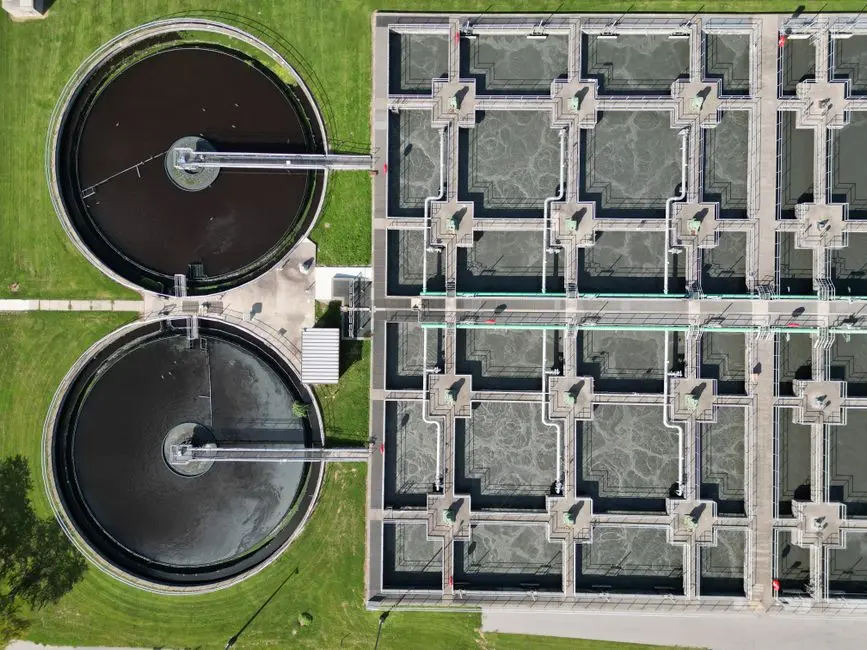
A stable treatment train begins with headworks, equalization and biological treatment designed for the hotel’s actual peak conditions. The sequence should remove rags and solids, balance hydraulic and contaminant loads, remove the pollutants assigned to the biological stage, and provide the clarification or membrane separation needed before disinfection.
- Screen and remove fibrous material before pumps, valves and biological equipment.
- Equalize variable flows and loads arising from occupancy, restaurants and laundry cycles.
- Apply biological treatment appropriate to the confirmed influent and available footprint.
- Provide clarification, membrane filtration or both, according to the required effluent specification.
- Disinfect the final stream and route it to the authorized destination.
| Equipment scope | Supplied configuration | Buyer must verify |
|---|---|---|
| WSZ packaged A/O plant | Integrated anoxic/aerobic biological contact-oxidation process with sedimentation and disinfection in a buried package; stated capacity 1–80 m³/h | Hotel design flow and load, treatment scope, burial depth, access, odor control, sludge removal, power and redundancy |
| Integrated MBR system | Biological treatment integrated with submerged PVDF membrane filtration; stated capacity 10–2,000 m³/day and filtration below 1 μm | Peak hydraulic and organic loading, pretreatment, membrane design, cleaning, redundancy and the final reuse or discharge specification |
The WSZ package offers a relatively straightforward route for conventional domestic-sewage duty within its stated hydraulic range. A sequencing batch reactor (SBR) is an alternative where cyclic biological treatment suits variable loading and fewer continuously operating treatment components are valuable; the supplier should demonstrate peak-load performance and verify the hydraulic, biological and control design.
The MBR route combines biological treatment with submerged PVDF membrane filtration. The supplied specification is 10–2,000 m³/day with filtration below 1 μm. The claimed 60% footprint reduction is a HydropureWater manufacturer claim, not independently verified field evidence. For an engineered review, ask the supplier to identify the treatment and cleaning boundaries; the DF MBR membrane bioreactor module specification should be considered alongside, not detached from, the complete plant.
Compare A/O, SBR and MBR for a Rabat resort
No treatment platform is universally best for a hotel; the correct comparison links process configuration to the property’s hydraulic variability, footprint, reuse route and operating capability. A packaged A/O system is the simplest option for conventional domestic sewage, SBR provides sequencing flexibility, and MBR provides membrane separation for projects prioritizing compactness or high-quality effluent.
| Criterion | Packaged A/O | SBR | MBR |
|---|---|---|---|
| Process configuration | Anoxic and aerobic contact oxidation with sedimentation and disinfection | Cyclic biological treatment with controlled process phases | Biological treatment integrated with submerged membrane filtration |
| Footprint | Potentially compact when installed below grade | Can reduce continuous civil works, subject to supplier design | Compact membrane footprint is a central project objective |
| Loading flexibility | Suited to conventional domestic-sewage duty when equalized | Useful where cyclic operation supports variable loading | Requires membrane-compatible loading and effective pretreatment |
| Effluent quality | Clarified and disinfected output within the specified package scope | Performance depends on cycle design and process control | Supplied specification identifies filtration below 1 μm |
| Reuse readiness | Depends on final quality and the intended reuse application | Depends on final quality and the intended reuse application | Stronger platform for high-quality treatment, but reuse still needs a defined regulatory and engineering basis |
| Mechanical complexity and operation | Lower relative complexity for a packaged plant | Requires sequencing and control-system management | Adds membrane monitoring, cleaning, replacement and specialist maintenance |
Position the WSZ A/O treatment package for conventional domestic sewage when the verified hydraulic design falls within 1–80 m³/h and burial conditions are suitable. Position SBR where variable hotel loads justify flexible sequencing; its final hydraulic, biological and control design must be verified by the supplier.
Position the integrated MBR membrane bioreactor for compact installations and reuse-oriented projects. A further decision framework is available in the Surabaya hotel wastewater technology comparison.
MBR is a treatment platform, not a substitute for pretreatment. FOG, grit, fibrous material and incompatible chemicals must be controlled before the biological and membrane stages. Nor should the below-1-μm filtration specification be treated as proof that the effluent is directly suitable for every irrigation, cooling, pool-makeup or human-contact application.
Decide where treated water will go

The destination of treated water determines the acceptance criteria that the plant must meet. A municipal sewer discharge, authorized reuse within the property and another regulated outlet are different compliance routes, even when the same biological treatment platform is used.
For sewer discharge, request the current connection and discharge conditions from the receiving authority. For reuse, define the application—irrigation, landscape maintenance, toilet flushing, cooling or another use—and establish the required water quality, monitoring, storage and distribution arrangements. The supplied Morocco guide descriptions identify Law 36-15 for water reuse, Decree 3-2-99 in the discharge context and Law 10-95 within the regulatory landscape. They do not provide a verified current Rabat numerical limit or a project-specific reuse approval, so the buyer must obtain the current text and written authority decision (HydropureWater Morocco guide, 2026).
The MBR specification of filtration below 1 μm and near-reuse-quality output is a product description, not proof of suitability for a particular reuse application. For chlorine-sensitive or high-quality disinfection duties, assess an on-site chlorine dioxide disinfection system and a UV-C wastewater sterilizer. The supplied chlorine dioxide equipment range is 50–20,000 g/h. The UV product description emphasizes chemical-free disinfection without by-products or taste change, but final selection still requires hydraulic, dose and regulatory verification.
If reuse is central, require the supplier to quote the complete train: membrane pretreatment, biological treatment, filtration, disinfection, storage, distribution, monitoring and the regulatory basis for the proposed use. Where additional demineralization is required, the RO and UF membrane treatment scope should be evaluated as a separate quality barrier rather than assumed to be part of MBR.
Size and specify the system for peak occupancy
A defensible hotel wastewater flow calculation must cover both flow and contaminant load during peak operating conditions. Average daily flow alone can conceal the coincidence of full occupancy, restaurant service, laundry cycles and pool backwash, leaving the biological process or equalization system undersized.
Collect guest-room occupancy, restaurant covers, laundry cycles, pool backwash frequency, staff numbers, seasonal events and known future expansion. Require the designer to document average flow, peak-hour factor, peak-day load, biological loading, equalization and redundancy. No verified hotel wastewater flow or loading values were supplied in the research, so the design must not be filled with assumed occupancy factors.
| Design input | Evidence to submit | Acceptance check |
|---|---|---|
| Hydraulic demand | Measured flow where available, occupancy and service schedules | Proposed capacity is compared with verified average, peak-hour and peak-day conditions |
| Organic and solids load | Representative COD/BOD, TSS, FOG and pH data | Biological capacity and pretreatment are based on measured or defensible site data |
| Equipment capacity | WSZ scope of 1–80 m³/h; integrated MBR scope of 10–2,000 m³/day | Nominal equipment range is not treated as proof of design adequacy |
| MBR module design | DF configurations of 80–225 m² producing 32–135 m³/day | Membrane area, flux, cleaning, redundancy and treatment train are documented |
| Site constraints | Survey, utility information and construction constraints | Excavation depth, groundwater, access, sludge removal, odor, noise, power and backup power are resolved |
The capacity comparison is a screening exercise only: the WSZ range is expressed in m³/h, while the integrated MBR range and DF module outputs are expressed in m³/day. Neither can be assigned to the hotel without a verified design flow and operating profile.
For the MBR calculation, require membrane-area, flux, cleaning and redundancy calculations—not merely nominal module output. Also include excavation depth, groundwater conditions, access for sludge removal, odor control, noise, power, backup power and any irrigation or landscaping integration in the supplier specification. The packaged sewage treatment options and hotel wastewater sizing comparison provide additional decision context, but the site brief remains the controlling input.
Create a 2026 compliance and supplier checklist
The buyer should identify the competent authority and receiving authority before finalizing the process, because the outlet determines the applicable conditions, monitoring and documentation. Confirm in writing whether the treated water will enter a municipal sewer, a storm-water system, an approved reuse system or another regulated destination.
- Identify the competent Rabat authority and the receiving sewer, storm-water or reuse authority.
- Request current discharge, connection, reuse and monitoring conditions for the selected outlet.
- Obtain the supplier’s stated compliance basis and map each process guarantee to the authority’s requirements.
- Check hydraulic, biological, pretreatment, disinfection and reuse calculations against site data.
- Review references for comparable hotel or resort installations, including operation during peak occupancy.
- Define start-up, training, maintenance, membrane or media replacement, spare parts, sludge management and emergency response.
Request the supplier’s compliance basis rather than accepting a generic statement that the equipment is compliant. The supplied sources identify Decree 3-2-99, Law 10-95 and Law 36-15, but they do not provide the numerical discharge limits needed for a permit design (HydropureWater Morocco guide, 2026). No verified Rabat-specific numerical limit was supplied in the research.
Require measurable guarantees for hydraulic capacity, process performance, start-up, operator training, membrane or media replacement, routine maintenance and emergency response. Comparable hotel references should demonstrate operation under relevant occupancy and seasonal conditions, not merely installation of the same equipment model.
Environmental certification can support due diligence but cannot replace a wastewater specification. Springer’s 2026 study found certification rates of 11.00% on Morocco’s Mediterranean coast and 22.00% on the Atlantic coast, and identifies ISO 14001 and Green Key among relevant hotel certifications. These findings concern the sampled hotels’ environmental management context; they do not establish a wastewater discharge standard (Springer, 2026).
Before issuing the tender, compare replies against the Medan hotel wastewater procurement checklist and the Jakarta hotel sizing and pretreatment guide, then require each bidder to answer the same site-specific evidence schedule.
Frequently Asked Questions
What is the best wastewater treatment system for a hotel or resort in Rabat in 2026?
Choose a packaged A/O system for conventional domestic sewage within a verified 1–80 m³/h hydraulic design; consider an SBR for variable loading and flexible sequencing; or select MBR where compact installation or high-quality treatment has priority. The outlet and reuse target must be confirmed before choosing. The supplied integrated MBR scope is 10–2,000 m³/day, but no supplied data establish which system matches a particular Rabat hotel.
How much does a hotel wastewater treatment system cost in Rabat?
The supplied research contains no verified Rabat hotel wastewater CAPEX range. Request itemized quotations covering verified peak flow and load, treatment scope, pretreatment, disinfection, reuse equipment, civil works, installation, commissioning, training, maintenance and site conditions. Compare those quotations against the same engineering scope so that differences in treatment boundaries are visible.
Is an MBR system suitable for hotel wastewater reuse?
MBR may form the core of a reuse train, but it does not determine reuse acceptability by itself. The supplied DF module configurations are 80–225 m², producing 32–135 m³/day; nominal output is not the same as required design capacity. Require membrane-area, flux, cleaning and redundancy calculations, plus the quality standard and authority approval for the intended reuse application.
How should a buyer select a wastewater treatment supplier?
Require process-specific evidence rather than relying on a general performance claim. Ask for capacity calculations, treatment-process details, compliance support for the proposed outlet, commissioning records, comparable hotel references, training, maintenance scope and replacement commitments. Include the integrated MBR membrane bioreactor and packaged A/O sewage treatment plant only as bid alternatives if their supplied scopes match the verified design.
What discharge limits should a Rabat hotel comply with?
Confirm the current numerical conditions directly with the competent Rabat authority and the receiving sewer, storm-water or reuse authority. The supplied sources identify Decree 3-2-99, Law 10-95 and Law 36-15, but the research does not supply a verified Rabat-specific numerical discharge limit. The authority’s current written conditions must therefore control the final treatment and monitoring specification.