Why Battery Wastewater COD Removal Is Unusually Complex
Battery manufacturing wastewater COD removal requires a treatment train designed for variable wastewater rather than a single universal process. For lithium-ion battery recycling effluent, reported COD ranged from 397 to 60,500 mg/L, so characterization and stream segregation are essential. High-strength organic loads may require advanced oxidation before biological treatment, while solids, oil and colloids should be removed upstream. Research evaluated electrochemical oxidation at 25 mA/cm² with 70% COD removal and 32.8 kWh/kg COD removed over 22.9 minutes for a cited 800 mg/L sewer target. The final train must reflect discharge route, wastewater variability and permit requirements.
Characterize and Segregate Before Choosing Equipment
COD is a bulk measure of oxidizable pollution, not a compound-specific measurement, so a high result does not identify whether the source is solvent, electrolyte, coating material, cleaning chemistry or suspended organics. The US EPA describes battery-manufacturing water use in electrode production, reactive-material and electrolyte preparation, charging, impurity removal, finished-cell washing, equipment washing, floor washing, laboratory washing and wet scrubbers. These sources create different treatment demands even when they enter a common collection system.
For lithium-ion battery recycling effluents, the Applied Water Science study reported COD from 397 to 60,500 mg/L and measured one sample at 108,000 mg/L. That range is evidence for segregation and representative sampling, not a design curve. The EPA’s Battery Manufacturing Effluent Guidelines, promulgated in 1984 and amended in 1986, cover direct dischargers and indirect dischargers. Regulated parameters vary by battery-manufacturing subcategory, and some subcategories include zero-discharge requirements.
Request COD and TOC results for each wastewater-generating operation, then add pH, suspended solids, oil and grease, turbidity, conductivity, metals, toxicity and flow variation. COD and TOC should be considered together: the battery-recycling study found that COD removal could stagnate near 70% while TOC was almost completely degraded in a highly inorganically contaminated sample. TOC may therefore provide a more appropriate indicator of organic load in that matrix.
Segregate electrolyte, solvent, coating and cleaning streams from washdown, cooling and scrubber water where collection permits. The bagasse-biochar battery study examined lead rather than COD and reported maximum adsorption efficiency of 12.741 mg/g at pH 5, 140 minutes’ contact time and a 5 g adsorbent dose. It illustrates why contaminants may need a separate treatment route instead of being evaluated through COD alone.
| Profile input | Decision supported | Evidence or required qualification |
|---|---|---|
| COD and TOC by operation | Distinguishes oxidizable bulk load from organic-carbon response | Applied Water Science found a COD/TOC divergence in highly inorganically contaminated sample wastewater. |
| Suspended solids, oil and grease, turbidity | Determines need for solids or oil removal before oxidation or biological treatment | Request representative results for each source stream. |
| Conductivity, metals and toxicity | Tests whether the matrix may inhibit biological treatment or affect oxidation | No supplied research establishes a universal battery-wastewater acceptance range. |
| Flow and production events | Defines equalization, peak-load and upset-control requirements | Sample normal production, cleaning cycles, upsets and clean-in-place events. |
Build the Treatment Train from Solids to Final Polishing
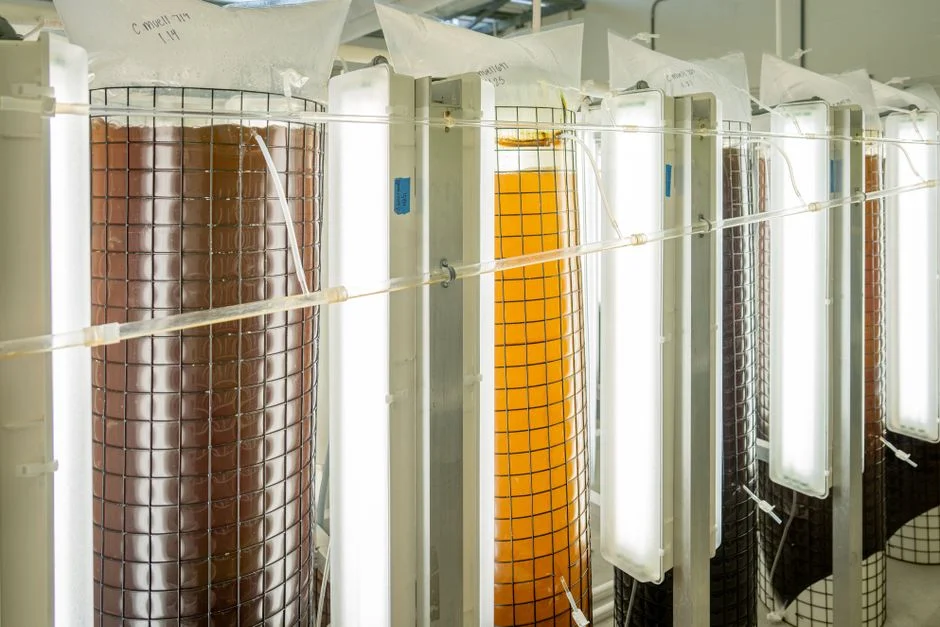
The most defensible sequence starts with source control, screening and equalization, followed by physical pretreatment, COD destruction when justified, biological treatment where appropriate, and final separation or polishing. Not every site needs every unit. The discharge objective and wastewater matrix determine which steps are mandatory.
- Screen and equalize. These duties protect downstream pumps, oxidation equipment and biological systems from rags, suspended solids and flow shocks. The available mechanical bar screen addresses the physical screening function, but source segregation remains upstream of it.
- Remove oil, solids and colloids. Where these fractions could interfere with oxidation or biological treatment, consider a DAF system for battery manufacturing wastewater pretreatment. Chemical coagulation, flocculation and pH adjustment should follow jar testing rather than be added by default.
- Control chemical addition. The available PLC-controlled chemical dosing system is designed for coagulants, flocculants, pH adjusters and specialty chemicals; setpoints still require site-specific dosing trials.
- Apply oxidation selectively. Advanced oxidation process options include UV/H₂O₂, Fenton oxidation and electrochemical oxidation. In the battery-recycling study, electrochemical oxidation at 25 mA/cm² produced 70% COD removal. Higher current and longer treatment were required for the study’s stricter direct-discharge target.
- Use biological treatment when the matrix supports it. First remove oil and inhibitory solids, then establish biodegradability through pilot testing. Temperature, flow, residual COD and treatment-objective data are needed before committing to biological capacity.
- Polish and monitor. An MBR system for biological COD removal and membrane polishing combines activated sludge with submerged PVDF membrane filtration and is specified for 10 to 2,000 m³/day. Track COD, TOC, flow, pH, conductivity and solids; control dosing, current density, aeration and sludge wasting as applicable.
| Process stage | Principal equipment or method | Selection condition |
|---|---|---|
| Physical protection | Bar screening and equalization | Required when debris or flow variation could affect downstream equipment. |
| Oil, solids and colloid removal | DAF with chemically supported coagulation and flocculation | Select when physical fractions threaten oxidation or biological treatment; establish reagents by jar test. |
| Organic-load destruction | UV/H₂O₂, Fenton or electrochemical oxidation | Select from wastewater characteristics and target COD; do not transfer a generic removal percentage. |
| Biological treatment | Activated sludge with membrane separation where required | Proceed only after oil and inhibitory solids removal and biodegradability verification. |
| Final control | COD, TOC, solids, flow, pH and conductivity monitoring | Align instruments and control actions with the legally relevant permit parameters. |
Compare Advanced Oxidation and Electrochemical Options
The Applied Water Science battery-recycling study compared UV/H₂O₂, Fenton and electrochemical oxidation against two cited German discharge scenarios: 800 mg/L COD for sewer discharge and 200 mg/L COD for direct discharge to surface waters. These values are research targets, not U.S. permit limits or universal guarantees.
For the cited sewer target, UV/H₂O₂ required 56.3 kWh/kg COD removed, or 43.3 kWh/m³, and 158 minutes. Electrochemical oxidation at 25 mA/cm² required 32.8 kWh/kg COD removed and 22.9 minutes. For the cited direct-discharge target, electrochemical oxidation at 50 mA/cm² required 95.3 kWh/kg COD removed and 58.7 minutes. The study reported that electrochemical oxidation used 41.7% less energy than UV/H₂O₂ for the same stated COD-removal result.
The distinction between COD and TOC remains important. In the highly inorganically contaminated sample, COD removal stagnated around 70% even as TOC approached complete degradation. Residual compliance must therefore be assessed against the legally relevant parameter using representative matrices, not inferred from a bulk removal percentage alone.
A separate Wasit University study used electrocoagulation on oil-rich petroleum wastewater and reported 99.5% COD removal and 94.2% oil removal. Its best reported condition used four aluminium and four iron electrodes, 2 cm spacing, 12 cm submergence, pH 7, 50 minutes and 10.5 V, with estimated energy consumption of 12 kWh/m³. That evidence does not establish battery-plant performance: the starting matrix contained 710 mg/L COD, 95 mg/L oil, 73 mg/L TSS and 0.5 g/L sodium chloride in a 2 L cell.
| Study and matrix | Reported result | Energy or operating condition | Application limit |
|---|---|---|---|
| Applied Water Science: direct physical lithium-ion battery recycling effluent | Electrochemical oxidation at 25 mA/cm²: 70% COD removal; 32.8 kWh/kg COD removed in 22.9 minutes for the cited 800 mg/L sewer target | 25 mA/cm² | Matrix-specific study result; not a universal equipment guarantee. |
| Applied Water Science: same battery-recycling context | UV/H₂O₂: 56.3 kWh/kg COD removed; 43.3 kWh/m³; 158 minutes for the cited sewer target | Hydrogen-peroxide-based UV oxidation | Use as an early comparison point pending representative testing. |
| Applied Water Science: same battery-recycling context | Electrochemical oxidation at 50 mA/cm²: 95.3 kWh/kg COD removed in 58.7 minutes for the cited direct-discharge target | 50 mA/cm² | Not a U.S. permit basis. |
| Wasit University: oil-rich petroleum wastewater | 99.5% COD removal and 94.2% oil removal | 12 kWh/m³; four aluminium and four iron electrodes; 2 cm spacing; 12 cm submergence; pH 7; 50 minutes; 10.5 V | Supporting evidence only; petroleum matrix differs from battery wastewater. |
Match the System to the Discharge and Reuse Objective
The discharge route changes the acceptance criteria and therefore the equipment train. For US indirect dischargers, verify the applicable pretreatment permit, local sewer-authority limits and EPA categorical requirements. The research values of 800 mg/L and 200 mg/L COD were drawn from a German framework and must not be used as US limits.
For direct discharge, verify whether 40 CFR Part 461 applies, identify the battery-manufacturing subcategory and its regulated parameters, and review NPDES conditions and any category-specific zero-discharge requirement identified by the EPA. For sewer discharge compliance, the same pretreatment principle applies: treatment must address locally enforceable limits and discharge restrictions, not simply match the battery study’s German target.
Choose a DAF-centered train when oil, grease, colloids or suspended solids are the principal risks to oxidation or biological systems. Select an MBR-centered train when biological COD removal, solids separation and reuse-quality clarification are priorities, but validate membrane flux and wastewater chemistry through pilot testing. The DAF system for battery manufacturing wastewater pretreatment addresses the physical-separation step; it does not by itself establish COD compliance.
For a zero-liquid-discharge objective, evaluate concentrate and residual-solids handling alongside COD removal. The supplied research does not establish a universal battery-wastewater zero-liquid-discharge performance figure. An MBR system for biological COD removal and membrane polishing may form part of a reuse train, but the permit, product-water specification and residual-management route determine the final configuration.
Plan Equipment Sizing, Validation and Operating Costs
No supplied source establishes a universal COD-to-flow sizing ratio for battery manufacturing. Specify average and peak flow, duty cycle, wastewater ranges, target COD, discharge route, footprint, automation, utilities and sludge-handling requirements. Pollutant load, hydraulic variation and constituent concentrations must be reconciled before final equipment sizing.
Request a performance guarantee tied to a defined wastewater matrix, sampling method, operating conditions and acceptance period. An unqualified removal percentage is weak procurement language because it does not identify the matrix, endpoint or test period behind the promise.
Use the cited battery-recycling benchmarks—32.8 kWh/kg COD removed for electrochemical oxidation at 25 mA/cm² and 56.3 kWh/kg COD removed for UV/H₂O₂—as early screening references. Keep the separate petroleum electrocoagulation figure of 12 kWh/m³ out of the same cost calculation because its wastewater matrix and process boundary differ.
Ask each supplier to price or explain electrode or consumable replacement, chemical consumption, sludge handling, membrane cleaning, controls and maintenance. Validate the train with representative wastewater, particularly where conductivity, salts, metals or inhibitory organics could affect coagulation, oxidation or biological performance.
| Buyer check | Information to request | Why it matters |
|---|---|---|
| Design basis | Average flow, peak flow, duty cycle, COD/TOC ranges and discharge route | Prevents sizing from a single grab sample or an unsupported universal ratio. |
| Performance commitment | Defined matrix, sampling method, operating conditions and acceptance period | Makes the guarantee testable against the actual treatment objective. |
| Energy and consumables | Process energy, chemical use, electrode or membrane replacement and cleaning | Compares whole-system operating burden rather than COD removal alone. |
| Residual handling | Sludge quantity, characteristics, dewatering and disposal route | Prevents treatment from transferring the pollutant burden to residual solids. |
| Validation | Representative-matrix pilot test for critical assumptions | Tests interference, biodegradability and flux assumptions before full-scale commitment. |
Frequently Asked Questions
What is the best COD-removal train for battery manufacturing wastewater?
No single source supports one universal train. The defensible sequence is physical pretreatment, a justified COD-destruction step and polishing or biological treatment where the matrix supports it. Select the final configuration from wastewater variability, discharge route, permit requirements and reuse objectives.
Which energy benchmark should be used for initial equipment screening?
Use 32.8 kWh/kg COD removed for electrochemical oxidation at 25 mA/cm² and 56.3 kWh/kg COD removed for UV/H₂O₂ only as early references. Both values came from one Applied Water Science lithium-ion battery-recycling study, so matrix-specific pilot data must replace them for final sizing.
How should a supplier guarantee COD-removal performance?
Request representative wastewater, defined COD and TOC methods, specified operating conditions and a defined acceptance period. Require the guarantee to identify the starting matrix and endpoint rather than rely on a removal percentage alone.
What should a buyer request when sizing and selecting a treatment system?
Provide sampled average and peak flows, pollutant loads, wastewater ranges, target COD, discharge route, utilities, automation and residual-handling requirements. The supplied research provides no universal battery-wastewater flow-to-equipment ratio, so validate critical assumptions through pilot testing.
How should competing systems be compared on cost and supplier risk?
Compare whole-system compliance risk: pretreatment, energy, chemicals, electrode or membrane replacement, sludge, monitoring and permit conditions. A supplier that provides a defined test basis, process guarantees, controls documentation and consumable assumptions offers a more auditable scope than one offering only an unqualified COD-removal percentage.