Which Treatment Should a Louisville Pulp and Paper Factory Choose?
For Louisville pulp and paper factories, choose DAF when the wastewater contains floatable solids, oils, greases, fibrous material, or conditioned floc that benefits from microbubble flotation; choose a lamella clarifier when suspended solids are predominantly settleable and the plant prioritizes compact, gravity-assisted separation. DAF uses 30–50 micron microbubbles and should be paired with coagulation and flocculation. The final choice should follow representative wastewater testing, hydraulic and solids profiling, permit review, and treatment-train compatibility—not equipment type alone.
The dissolved air flotation clarifier is the better starting point when the mill’s material to be removed has low settling velocity or a meaningful floatable fraction. Clearwater Industries describes DAF as a separator that uses 30–50 micron microbubbles to lift suspended solids, oils, and fats to the surface for removal by skimming, while chemical conditioning enlarges particles and improves their contact with the bubbles (Clearwater Industries, 2026-04-27). A lamella sedimentation tank is more logical when the removable fraction is mainly settleable suspended solids and the objective is gravity-assisted separation in an inclined-plate package.
Four inputs should control the decision: average and peak flow, pollutant characterization, the downstream treatment or discharge target, and available footprint and utilities. This avoids choosing a technology from a generic feature list. An industrial DAF system for pulp and paper wastewater and a high-efficiency lamella clarifier solve different separation problems, and either may need to precede biological treatment or another clarification step.
Louisville facilities must also verify their indirect-discharge authorization, sewer-agency rules, or permit conditions with the applicable authority. The supplied research provides no Louisville-specific concentration or mass limits, so the equipment basis of design must use confirmed site requirements rather than an assumed regional threshold. The broader pulp and paper DAF-versus-clarifier comparison provides a useful technical starting point, but the final selection remains a mill-specific engineering decision.
Why Pulp and Paper Wastewater Makes the Decision Stream-Specific
A blended mill sample can conceal the stream that governs equipment loading. Paper-machine white water, coating or converting wash water, fiber-recycle streams, pulp-mill wastewater, cooling and seal water, and stormwater may differ substantially in flow, solids, chemistry, and production contribution. Each stream that enters the common treatment system should therefore be characterized separately before capacities are assigned.
The sampling program should cover TSS, FOG, suspended-fiber characteristics, particle buoyancy, pH, temperature, and COD/BOD indicators. It should also capture variability across production rather than rely on one grab sample. Those measurements are necessary because an apparently low-solids stream may carry fibers, while a high-flow dilute stream may create the hydraulic peak. If stormwater can enter the treatment train, its contributing drainage area and discharge conditions need to be defined separately.
Recycle is a second reason to model the present and planned mill. Returning clarified process water can alter the solids loading and chemistry entering the next production step, while changes in paper grades or chemical-intensive production can shift wastewater characteristics. The basis of design should therefore reflect current operating data, production schedules, and planned product changes. This is especially important when process water reuse is part of the project objective, because a clarification target may be dictated by downstream equipment rather than by the pretreatment unit alone.
Several conditions can swing the preliminary selection. A dilute stream with a short, high-solids peak may favor a machine organized for hydraulic variability; a variable recycle stream may require additional operating control; low-solids wastewater containing fibrous material may be better suited to flotation after conditioning; and a chemical-intensive production change can invalidate both the chemical dose and the selected equipment configuration.
The supplied research establishes DAF applicability in pulp and paper treatment, but it does not provide pulp-and-paper-specific removal percentages for either DAF or lamella clarification. It would therefore be unsound to insert generic removal rates into a Louisville sizing calculation. The missing evidence is stream-level loading, settling or flotation behavior, production variability, and confirmed downstream water quality. Those inputs should be obtained through representative sampling and bench testing before vendors commit to a guaranteed performance level.
How DAF and Lamella Clarification Work in a Pulp Mill Treatment Train
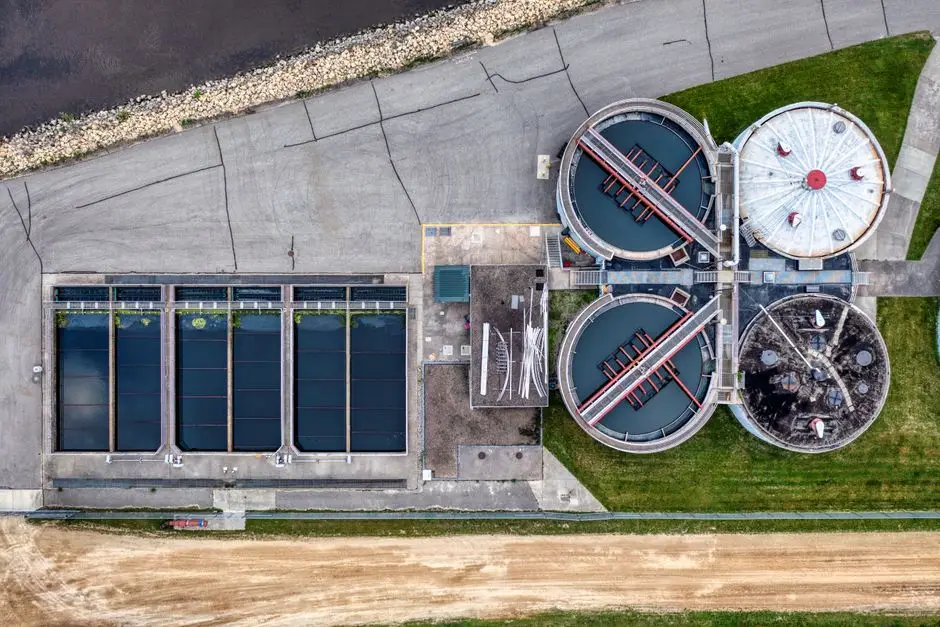
DAF separates material by flotation, while lamella clarification separates it by settling; the process sequence determines how each technology fits into the mill treatment train. The difference matters when a wastewater contains both light material and heavy solids.
The DAF sequence begins with clean-water startup. A recirculation pump draws clarified water into a pressurization and saturation system, where compressed air dissolves under pressure. Pressurized saturated water then enters the flotation tank and depressurizes, forming 30–50 micron microbubbles. Those bubbles attach to conditioned particles, which rise to the surface and form a floating sludge blanket that a paddle skimmer removes. Clarified water is recovered below the floating blanket (Clearwater Industries, 2026-04-27).
DAF does not eliminate gravity separation. Heavier solids can settle into a bottom collection zone and are removed separately, so the auxiliary sludge system must address both floated and settled material. Chemical conditioning is also part of the process, not an accessory. Clearwater Industries states that DAF should be paired with proper coagulation and flocculation for optimal performance. Its two identified conditioning formats are serpentine flocculation tubes with 15–45 seconds of flash mixing and agitated mix tanks with variable contact time determined through jar testing (Clearwater Industries, 2026-04-27).
The lamella process uses sludge recirculation, flocculation, and inclined-plate separation in a compact structure (HydropureWater verified product catalog, 2026). The verified catalog specifies surface loading of 20–40 m/h and claims up to 30% lower chemical consumption; both are product-specific claims and should not be generalized to every pulp mill.
| Process element | DAF | Lamella clarifier |
|---|---|---|
| Primary separation mechanism | Microbubble-assisted flotation followed by surface skimming | Settling and sludge recirculation through inclined plates |
| Conditioning requirement | Coagulation and flocculation should support particle attachment to bubbles | Flocculation supports settling and sludge recirculation |
| Conditioning formats described by Clearwater Industries | Serpentine tubes with 15–45 seconds of flash mixing, or agitated mix tanks with jar-tested contact time | Not quantified in the supplied research |
| Sludge interface | Floated sludge is skimmed; heavier solids can collect at the bottom | Settled sludge is removed through the clarifier’s sludge-handling arrangement |
| Verified catalog specifications | HydropureWater lists 4–300 m³/h across 13 standard models | HydropureWater lists 20–40 m/h surface loading and claims up to 30% lower chemical consumption |
DAF Versus Clarifier: Selection Matrix for Louisville Mills
DAF is the stronger candidate when floatable material or floc-driven separation is central; a lamella clarifier is stronger when removable solids are mainly settleable. The matrix below is a preliminary screening tool, not a substitute for stream testing.
| Decision factor | DAF | Lamella clarifier |
|---|---|---|
| Treatment mechanism | 30–50 micron microbubbles attach to conditioned particles, which float and are skimmed (Clearwater Industries, 2026-04-27) | Sludge recirculation, flocculation, and inclined-plate settling (HydropureWater verified product catalog, 2026) |
| Strongest candidate wastewater | Floatable solids, oils, fats, low-buoyancy material, and suitable conditioned floc | Wastewater whose removable suspended solids are predominantly settleable |
| Floatable material | Directly collected from the surface by automatic skimming | Not the principal separation mechanism |
| Settleable material | Heavier particles may collect in the bottom zone and require separate removal | Primary separation mechanism |
| Chemical-conditioning dependency | High: coagulation and flocculation support bubble attachment | Flocculation supports settling; the HydropureWater catalog claims up to 30% lower chemical consumption |
| Hydraulic implication | Requires clarification-tank area, recycle saturation, air supply, and skimming | Compact inclined-plate package; the catalog specifies 20–40 m/h surface loading |
| Sludge-handling interface | Separate floating and settled sludge streams must be considered | Clarifier sludge removal and downstream dewatering must be defined |
| Process-water reuse potential | Clarified water may be reused or discharged, subject to mill chemistry, reuse specifications, and downstream compatibility | Clarified water may support reuse where its settled-solids separation meets the specified water quality |
The footprint comparison remains qualitative because the supplied research does not provide verified unit areas or Louisville installation dimensions. The same limitation applies to removal efficiency, operating cost, and payback. Vendors should not fill those gaps with generic ranges; they should calculate them from the mill’s actual flow, solids, chemistry, and selected configuration.
For a PLC-controlled chemical dosing system, both routes can require coordinated reagent control, but DAF’s bubble-contact function makes conditioning a more explicit part of the separation train. The industrial sludge dewatering filter press is downstream of either route only after the selected clarifier’s sludge characteristics and dewatering demand have been tested.
The qualified recommendation is therefore: use DAF for floatable or floc-driven separation; use lamella clarification for mainly settleable solids; and use jar testing or pilot work when both mechanisms are material. That sequence prevents a preliminary preference from becoming an unsupported purchase.
Match the Equipment Configuration to Flow and Solids Loading
Equipment family is not a model selection. The applicable configuration must match average flow, peak flow, solids loading, operating redundancy, and installation constraints. Clearwater Industries identifies four DAF configurations with materially different operating scopes (Clearwater Industries, 2026-04-27).
| Configuration | Documented scope | Selection question for a Louisville mill |
|---|---|---|
| FPAC | Low-profile cross-flow separator for small-to-medium flow rates with very high solids loads | Does the mill have a compact flow envelope but a high TSS or FOG peak that requires a large floated-solids accumulation area? |
| FPBC | High-profile separator for low-to-medium solids loads, including low-buoyancy particles, using lamella-pack technology | Can conditioned low-buoyancy material be separated effectively within the available installation height? |
| FPHF | High-flow configuration for low-to-large solids loads, combining cross-flow and countercurrent flow | Does the hydraulic peak, rather than solids concentration alone, govern the required treatment area? |
| COMPACT DAF | Pre-assembled turnkey package with conditioning equipment, sensors, instruments, and a PLC control panel | Does a packaged skid arrangement reduce installation complexity while meeting peak-flow and redundancy requirements? |
Clearwater Industries states that COMPACT DAF uses one skid for flows of 66 GPM or less and a modular two-skid system for larger flows (Clearwater Industries, 2026-04-27). Separately, the HydropureWater verified product catalog lists 4–300 m³/h across 13 standard DAF models. Those scopes are useful for initial market screening, but they do not establish capacity for a particular mill.
The selected model still requires verification against average and peak hydraulic loading, solids capacity, chemical demand, and available footprint. Operating redundancy must also be explicit: a nominal flow range alone does not show whether one unit can be maintained without losing the plant’s required treatment capability. Vendors should document the design basis behind each proposed train rather than selecting the largest catalog flow that fits the space.
Build a Louisville Factory Basis of Design Before Requesting Quotes
A comparable basis of design lets vendors price the same mill problem instead of filling gaps with assumptions. Begin with a stream-by-stream flow and pollutant inventory, then carry those inputs through laboratory testing, treatment selection, and equipment configuration.
- Document average flow, peak flow, minimum flow, diurnal and production-cycle variation, and future production or paper-grade changes.
- Compile representative results for TSS, FOG, fiber characteristics, COD/BOD indicators, pH, temperature, and particle settling or flotation behavior.
- Define the downstream objective, including the permitted discharge pathway, sewer-authority requirements, process water reuse specifications, and the next process step.
- Run jar testing for coagulant, pH adjustment, polymer flocculant, mixing sequence, contact time, and sludge settleability. Clearwater Industries specifically identifies jar testing as the method for determining proper mixing time (Clearwater Industries, 2026-04-27).
- Issue a common bid basis requiring design flow, peak-flow treatment method, solids-loading basis, material of construction, chemical requirement, skid arrangement, controls, and sludge-removal method.
- Compare installation interfaces for electrical service, compressed air, recycle pumping, chemical storage, sludge handling, maintenance access, and footprint.
Do not ask vendors to guarantee unsupported removal rates before the plant has established the wastewater profile and downstream target. Instead, require each bid to identify the assumptions that drive its price, the guarantees it can substantiate, and the additional testing or pilot work needed to validate performance. That approach separates equipment scope from unresolved process risk.
The same discipline applies to auxiliary systems. If DAF is selected, chemical delivery and control become part of the operating concept, so the treatment train must interface with a properly specified PLC-controlled chemical dosing system. If sludge dewatering is required, evaluate the combined route rather than assuming that either clarification technology produces the same sludge volume or conditioning state. An industrial sludge dewatering filter press should be selected against measured or accepted sludge characteristics.
Local utility conditions also remain an open input. Confirm electrical service, air supply, chemical storage, drainage routing, and maintenance access at the actual site. The research contains no Louisville-specific utility capacities or installation dimensions, so those items must be verified rather than assumed in a bid comparison.
Frequently Asked Questions
What will DAF or a clarifier cost for pulp and paper wastewater in Louisville?
The supplied research contains no Louisville equipment prices, so a defensible budget requires like-for-like installed scopes. Compare chemical-conditioning equipment, utilities, controls, sludge removal and dewatering, maintenance provisions, and whether the proposed arrangement uses one skid or multiple trains. Ask each bidder to list the assumptions that drive price and identify costs excluded from the quotation; do not compare headline equipment prices alone.
Which DAF model should be selected for a Louisville mill?
Start with the HydropureWater catalog range of 4–300 m³/h across 13 standard models, then check the proposed unit against mill average flow, peak flow, solids loading, footprint, and operating-redundancy requirements (HydropureWater verified product catalog, 2026). The catalog range is not a sizing rule. Request the design flow, peak-flow method, solids basis, and operating assumptions for the specific model, and use representative wastewater testing to validate them.
What should a pulp and paper wastewater supplier document before selection?
Request project-specific references, the proposed flow and solids basis, guarantee conditions, drawings, controls information, material construction, chemical-consumption assumptions, sludge-removal method, commissioning support, and operating documentation. Also require the supplier to state which conclusions depend on additional sampling, jar testing, or pilot work. For DAF, specifically, confirm how conditioning, bubble generation, skimming, and settled-solids removal are integrated.
Does choosing DAF or a lamella clarifier establish permit compliance?
No. Equipment selection and permit compliance are separate engineering decisions. Confirm the applicable Louisville discharge authorization, sewer-agency requirements, and any process water reuse specifications with the authority having jurisdiction before defining the treatment target. Neither the supplied research nor an equipment catalog establishes a Louisville-specific permit limit, so compliance must be based on confirmed site requirements and documented process performance.