Which Tokyo Hotel Wastewater Treatment System Fits?
A Tokyo hotel or resort in 2026 should select treatment around the wastewater’s final destination, composition, available footprint and reuse objectives—not simply its category. A packaged A/O plant is suitable for conventional domestic sewage where a buried, low-operator unit is practical. An MBR system is stronger when compactness or high-quality reuse is important. Kitchen, spa and laundry flows containing grease or solids may need pretreatment before biological treatment. Final sizing and compliance require site-specific flow, sewer, reuse and permit data.
Begin by separating four wastewater streams during design: guestrooms and public toilets; kitchens and restaurants; laundry; and spa, pool and landscape-irrigation streams where present. Each stream has a different contaminant profile, flow pattern and treatment objective. Combining them at the entry point can dilute a high-strength kitchen flow, overload a biological process or introduce materials that interfere with membranes and pumps.
Three practical paths then follow:
- Packaged biological treatment: use for conventional domestic sewage where sewer discharge or permitted on-site treatment is the objective and a compact, largely automated installation is advantageous.
- MBR: consider where footprint is constrained or the reuse objective requires a more demanding separation process.
- Pretreatment followed by biological treatment: evaluate where kitchen grease, food solids, fibrous laundry material or atypical flows could impair downstream equipment.
Water conservation provides a current market signal rather than a universal legal requirement. The hotel wastewater system selection guide provides a broader decision structure. In addition, 1 Hotel Tokyo’s sustainability page, accessed in 2026, reports low-flow faucets and showerheads, rainwater reuse, automated irrigation and systematic tracking of water usage. These measures show that water management is integrated into hotel operations; they do not specify a wastewater treatment process or discharge standard.
The Institute of Electrical Engineers of Japan record identifies its 2016 ICEMS conference location as APA Hotel & Resort Tokyo Bay Makuhari in Chiba. It supplies no hotel wastewater design standard and should not be used to infer Tokyo permit limits.
| Selected destination or objective | First decision | Principal risk if selection starts too early |
|---|---|---|
| Municipal sewer | Confirm connection eligibility, required pretreatment and acceptance conditions. | Buying equipment without confirming the sewer route or wastewater character. |
| On-site discharge | Obtain the authority’s written process, monitoring and construction requirements. | Assuming that a packaged treatment catalog is sufficient for permitting. |
| Treated-wastewater reuse | Define the reuse quality, end use, seasonal demand, storage and distribution system. | Claiming reuse without a verified treatment and demand basis. |
| Conventional domestic sewage | Compare a packaged A/O route with an MBR route at the required site duty. | Selecting by nominal catalog capacity rather than measured flow and conditions. |
| Kitchen, laundry, spa or pool flows | Segregate streams and define the necessary pretreatment. | Sending high grease, solids or fibrous material directly into biological treatment. |
Build the Tokyo Hotel Wastewater Profile Before Sizing Equipment
Hotel wastewater sizing must begin with measured and forecast flows because the supplied research provides no universal wastewater generation factor per guest, room, restaurant cover or laundry cycle. A provisional per-guest rate would conceal the effects of occupancy, meal periods, laundry scheduling, events and seasonal demand. Obtain those operating inputs from the property before requesting equipment quotations.
The pre-design data request should include daily guest occupancy, seasonal occupancy patterns, restaurant and event covers, laundry loads, pool or spa discharge, and irrigation demand. It should also establish whether water-efficient fixtures have reduced flows and whether rainwater or other non-potable water already supplies part of the demand. Obtain actual meter records where available, but use them to construct a documented design basis rather than treating historic consumption as a permanent operating condition.
Identify average and peak wastewater flows separately, including the timing of meal-service, morning-shower and laundry peaks. Check whether these peaks coincide with irrigation demand or a planned reuse-storage drawdown. Flow measurement at the property boundary or relevant collection points is preferable to an unverified calculation when the two disagree.
| Input to obtain | Question the data must answer | Why it affects selection |
|---|---|---|
| Seasonal flow records and forecasts | What are average and peak daily flows, and when do they occur? | Defines hydraulic loading and equalization or storage needs. |
| Occupancy and event schedule | How do guests, restaurant covers and functions affect demand? | Separates seasonal and short-duration loading from daily totals. |
| Laundry, pool and spa data | Which streams are continuous, intermittent or chemically distinctive? | Identifies separate treatment or equalization requirements. |
| Wastewater analyses | What are suspended solids, oil and grease, food-waste indicators and relevant chemical conditions? | Determines pretreatment and biological-process suitability. |
| Reuse and irrigation demand | Where will treated water go, in which seasons, and with what storage? | Links treatment quality to a real demand and distribution route. |
Characterize kitchen wastewater separately. The DAF pretreatment catalog lists a capacity range of 4–300 m³/h across 13 standard models and identifies removal of suspended solids, FOG, oil and grease, and colloidal matter. It does not establish which unit a specific hotel requires; flow, loading and local acceptance conditions must do that work.
Map the sewer-connection route, available footprint, burial depth, vehicle access, power reliability, odor constraints, noise limits, sludge-removal route and access to local operators. Mechanical screening requirements should also be reviewed. The GX rotary bar screen specification identifies pretreatment for rags, plastics, suspended solids and fibrous debris.
Ask the authority having jurisdiction whether the property may discharge to sewer, must obtain an on-site treatment permit, or intends to reuse treated wastewater. The supplied research states no Tokyo-specific discharge limits or reuse criteria, so none should be invented or inferred from generic product specifications.
Compare Packaged A/O, MBR and Pretreatment Options
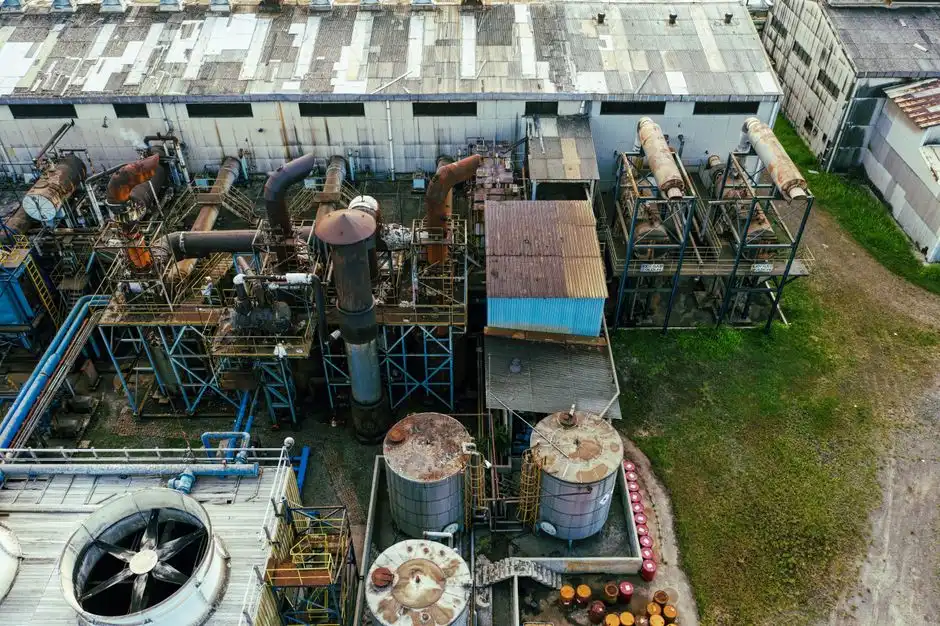
The WSZ packaged A/O plant, the MBR system and DAF pretreatment solve different parts of the problem, so the comparison must be made at the treatment-train level rather than as a contest between three complete plants. The WSZ route is a packaged biological treatment option; the MBR route combines biological treatment with membrane separation; DAF is a pretreatment step for qualifying high-load streams rather than a substitute for biological treatment or disinfection.
| Parameter | WSZ packaged A/O sewage treatment | MBR wastewater treatment system | DAF pretreatment |
|---|---|---|---|
| Catalog capacity boundary | 1–80 m³/h | 10–2,000 m³/day | 4–300 m³/h across 13 standard models |
| Treatment role | Biological treatment for conventional domestic sewage | Activated sludge combined with submerged membrane filtration | Removal of suspended solids, FOG, oil and grease, and colloidal matter |
| Process features | Anoxic/aerobic A/O contact oxidation, sedimentation and disinfection | Submerged PVDF membrane filtration stated below 1 μm | Micro-bubble flotation with automatic skimming |
| Installation or footprint statement | Installable below grade, with landscaping above, or on a trailer for mobile deployment | Stated footprint is 60% smaller than conventional systems | Must be integrated with the selected treatment train |
| Operational consideration | Fully automated and described as requiring no operator | Requires evaluation of aeration energy, controls and membrane replacement | Requires a defined sludge or skimmings route |
These figures are product-capacity boundaries, not recommended capacities for a Tokyo hotel. The WSZ specification states 80 m³/h, while the MBR specification states 2,000 m³/day; neither value demonstrates that a particular hotel has sufficient peak flow, process loading, site area or acceptable lifecycle cost.
For a conventional domestic-sewage route, compare the packaged A/O sewage treatment plant with the MBR wastewater treatment system. MBR should not be treated automatically as the lowest-cost option. Its quoted footprint advantage must be weighed against membrane replacement, aeration energy, controls, sludge handling, site work and maintenance. The WSZ route also needs a whole-life comparison covering its pretreatment, residual sludge and service requirements.
Packaged A/O does not remove the need to assess kitchen grease, disinfectants, fibrous debris or atypical flows before those streams enter the biological process. A hotel with only domestic sewage may not require the same pretreatment train as a property operating kitchens, laundry, spas or pools. The correct comparison is therefore: selected source flows, required pretreatment, final treatment objective, physical constraints and verified site duty.
Design the Treatment and Reuse Train
A practical hotel treatment train follows the wastewater sources rather than applying one process to every incoming flow. The normal sequence is source segregation and flow measurement, rotary bar screening, equalization where peaks require it, DAF or another approved grease-removal step for qualifying kitchen flows, biological treatment, solids separation, disinfection and the selected discharge or reuse destination.
Position the GX rotary bar screen ahead of downstream equipment to capture rags, plastics, suspended solids and fibrous debris that could burden pumps, valves and biological processes. Equalization should be checked against meal-service, shower and laundry peaks, including storm or inflow conditions where relevant to the collection system.
For MBR installations, the biological stage and submerged membrane filtration are integrated, but sludge still needs a planned removal and disposal route. The plate-and-frame filter press catalog covers filtration areas from 1 m² to 500 m². Select a dewatering method from actual sludge generation, moisture characteristics, removal frequency and operator access rather than from filtration area alone.
Disinfection is objective-dependent. The UV sterilizer range includes open-channel and outdoor rainproof configurations, while the associated chlorine-dioxide generator range extends from 50 g/h manual units to 20,000 g/h automated systems. Neither range establishes a required dose for a Tokyo hotel. The design must follow the approved reuse or discharge objective, contact conditions, monitoring requirements and local authority requirements.
Reuse should be connected to a defined demand. The 1 Hotel Tokyo sustainability page, accessed in 2026, reports rainwater reuse and automated irrigation, along with low-flow fixtures and systematic water-use tracking. Rainwater reuse is not the same as treated-wastewater reuse. Before a wastewater-reuse claim is made, verify the required quality, storage, distribution, seasonal irrigation demand and permitted end uses.
- Segregate and measure the relevant streams.
- Remove rags, solids and fibrous material before biological treatment.
- Apply the required grease or solids removal to qualifying kitchen flows.
- Provide equalization where the measured peak pattern requires it.
- Select biological treatment and solids separation against the final objective.
- Add the required disinfection and verify reuse storage and distribution.
Plan Procurement, Installation and Compliance in 2026
Procurement should start with the authority’s written requirements and the property’s measured wastewater basis, not with a packaged-plant catalogue. The pre-design package should cover seasonal flows, wastewater analyses, sewer or reuse route, utilities, available footprint and construction requirements. It should also resolve the sludge route, odor controls, access requirements and future membrane or media replacement before equipment is ordered.
Use a sanitary sewer or sewer-acceptance application where a public sewer is available. Request separate confirmation for any on-site effluent discharge or reuse because the supplied research does not identify Tokyo’s applicable permit conditions. A sewer connection and an on-site reuse system are separate approval questions and should not be assumed to share the same route.
Prepare a coordinated civil and mechanical, electrical and controls scope covering screening, equalization, treatment, automation, sludge withdrawal, drainage, odor control, maintenance access and replacement space. The prefabricated wastewater plant selection process provides a useful structure for separating equipment selection from site design.
Require each supplier to submit the selected design flow, process basis, guaranteed duty point, drawings, automation description, O&M manual, spare-parts list and commissioning plan. Product capacity is not proof of adequate site sizing. Where the flow basis differs, the supplier should state the changes to equipment, pretreatment, civil works, power and controls.
Make acceptance testing traceable to the approved design basis. Confirm sampled water-quality results, automatic controls, alarms, sludge withdrawal and maintenance access. Record test methods, sample points, operating conditions and acceptance criteria so that acceptance is not dependent on ambiguous observations.
Frequently Asked Questions
How much does a wastewater treatment system cost for a Tokyo hotel?
The supplied research contains no Tokyo project price, so a reliable budget cannot be calculated from guestrooms or catalog capacity alone. Request itemized quotations covering treatment equipment, civil works, screening and grease pretreatment, controls, sludge handling, energy, maintenance, operator services and permit-related works. This separates capital cost from the operating and compliance commitments that determine the project’s total cost.
What capacity should a packaged A/O or MBR plant have?
A qualified supplier needs measured and forecast wastewater flows, wastewater composition, the reuse objective and site constraints before selecting capacity. The WSZ catalog covers 1–80 m³/h and the MBR catalog covers 10–2,000 m³/day, but these are selection boundaries rather than automatic recommendations. The selected duty must be supported by the property’s average and peak flow data.
How should a hotel evaluate and select a wastewater treatment supplier?
Request a site-specific design-flow basis, process drawings, duty verification, O&M information, reference experience, commissioning scope, spare-parts support and a clear sludge-disposal plan. Also ask the supplier to identify which assumptions drive the guarantee and what happens if the operating profile differs from the selected design.
What compliance conditions apply to Tokyo hotel wastewater?
Confirm discharge, construction and reuse conditions in writing with the authority having jurisdiction. The 2016 IEE Japan conference record contains no hotel wastewater design standard, while 1 Hotel Tokyo’s sustainability practices do not establish a legal effluent limit. Equipment selection should follow the authority’s applicable requirements and any written sewer-acceptance or reuse conditions.
Can a Tokyo hotel reuse treated wastewater for irrigation?
Potentially, but the supplied evidence only establishes examples of rainwater reuse and automated irrigation at 1 Hotel Tokyo; it does not establish treated-wastewater reuse approval. Confirm the permitted end use and required water quality, then verify storage, distribution and seasonal demand with the relevant authority.