What the Cuenca Data Center Must Decide First
A Cuenca data center needs a treatment train selected around three outcomes: reusing cooling-tower blowdown as makeup, meeting discharge requirements, or eliminating liquid waste. The engineering starting point is the cooling water balance, not a generic treatment unit. Genesis Water Technologies reports that a tower at 4 cycles of concentration can lose approximately 25–30% of makeup water as blowdown; reported blowdown may contain 1,200–6,000 mg/L TDS and 10–50 mg/L suspended solids. UF can protect downstream membranes, RO can remove 95–99% of dissolved solids, and MVC or ZLD may be justified where water scarcity or discharge restrictions make recovery more valuable than disposal. Cuenca permit limits and plant flows must be verified before final sizing.
Those outcomes require different treatment trains and economics. Genesis Water Technologies identifies cooling-tower makeup reuse, discharge compliance and zero liquid discharge as separate strategies. Cooling-tower makeup return offers the highest-value reuse application because it reduces freshwater demand while also reducing the volume requiring disposal. Discharge treatment instead targets whatever the applicable authorization requires; ZLD is justified where liquid discharge is prohibited or where alternative water supply and disposal costs make complete recovery economic.
Do not treat Cuenca’s requirements as established facts until the owner confirms them. The supplied research does not establish current discharge limits, sewer-acceptance conditions, freshwater tariffs, permitted receiving points or dry-season supply conditions. The engineer should obtain those items from the responsible authorities and the owner, then document the intended endpoint of each stream.
Keep cooling-tower blowdown separate from sanitary wastewater, process rinse water and other industrial drains. Each stream needs its own flow characterization, collection and equalization assessment; combining them before analysis can dilute contaminants and conceal an incompatible reuse or discharge profile.
Open-loop evaporative cooling also changes the water-risk case. North Carolina State University reported in 2026 that these systems withdraw and evaporate water continuously, and that discharged blowdown can carry salts, biocides and antiscalants into receiving waters. The site must therefore establish whether its cooling configuration creates a material continuous demand and whether the discharge route is sensitive to salinity, temperature or chemical residuals.
The same decision framework appears in the cooling-blowdown treatment guide for Gold Coast, which can support an initial treatment-train concept, but it does not replace Cuenca-specific verification.
Build the Cooling Water Balance
Design capacity should come from measured cooling-water flows, with separate treatment-flow and recovery-flow calculations. Collect monthly and peak evaporation, total makeup water, blowdown, cooling-tower count and capacity, cycles of concentration, operating hours and future cooling-load cases. Reconcile meter data before sizing UF, RO, storage or residual-management equipment.
- Establish the operating baseline from metered makeup, evaporation and blowdown data over representative operating periods.
- Calculate daily and peak blowdown from measured flows rather than adopting a fixed percentage.
- Size the treatment inlet for peak blowdown and the required recovery objective.
- Separate treatment capacity from permeate production, which depends on recovery and operating hours.
- Test future scenarios, including cooling-load expansion and AI workload growth, before fixing redundancy.
Genesis Water Technologies reports that at 4 cycles of concentration, approximately 25–30% of makeup water is lost as blowdown. Its example of a data center using 10 million gallons monthly at 4 cycles translates to approximately 2.5–3 million gallons discharged or wasted. Use that example as a scale check, not as Cuenca’s design flow.
The same source reports 60–85% recovery for blowdown treatment aimed at cooling-tower makeup reuse. A treatment train therefore has two distinct capacities: the feed flow it must accept and the permeate or recovered-water output it must produce over the operating period. Storage and blending must be checked against both.
North Carolina State University reported in 2026 that hyperscale AI workloads can create rapidly growing, highly localized water demand. Include plausible cooling scenarios rather than extrapolating from the initial occupancy alone. A method for structuring the site data is also discussed in this South Memphis data-center wastewater framework.
| Design input | Evidence or method | Decision use |
|---|---|---|
| Makeup, evaporation and blowdown | Collect monthly and peak operating data | Establish measured design flow |
| Cycles of concentration | 25–30% of makeup may become blowdown at 4 cycles, according to Genesis Water Technologies | Range check, not equipment sizing |
| Recovery objective | 60–85% for cooling-tower makeup reuse, according to Genesis Water Technologies | Estimate recovered-water production |
| Future demand | Include expansion and AI-driven cooling scenarios | Define operating and redundancy cases |
Characterize the Wastewater Before Selecting Equipment
The required water-quality profile depends on whether recovered water returns to the cooling tower, enters another process stream, requires discharge authorization or is destined for full ZLD. A reuse target and a discharge target may accept different salinity, turbidity, biological loading and chemical limits, so the analytical scope must follow the intended use.
Genesis Water Technologies reports typical blowdown TDS of 1,200–6,000 mg/L, equivalent to 4–8 times makeup-water TDS, and suspended solids of 10–50 mg/L. These are screening benchmarks, not Cuenca permit limits or evidence of the facility’s actual condition.
| Parameter | Why it matters | Required site evidence |
|---|---|---|
| Conductivity and TDS | Controls salinity, osmotic loading and blend potential | Measured blowdown and makeup-water profile |
| Calcium, magnesium, silica and alkalinity | Indicates scaling risk in membranes and cooling equipment | Range across operating and chemical conditions |
| Suspended solids and turbidity | Indicates particulate fouling and pretreatment demand | Representative samples, including variability |
| Temperature and organics | Affects biological growth and treatment performance | Cooling-water temperature and organic loading |
| Biocide and antiscalant inventory | Determines membrane compatibility and reuse chemistry | Product inventory, dosing records and residual concentrations |
Sampling should capture ordinary operation and known variability rather than a single clean-water sample. Investigate corrosion byproducts, accumulated treatment chemicals and biological content because each can affect membrane fouling, reuse safety and discharge compliance. Genesis Water Technologies notes that legacy chromate or high-phosphate programs may create additional reuse or discharge difficulties.
For comparison purposes, the data-center blowdown treatment in Ta'if provides another treatment-screening reference, not Cuenca operating data. The analytical suite should be finalized only after the owner and discharge route are confirmed.
Compare the Treatment Options
UF, NF, RO, MVC and ZLD perform different functions and should be selected sequentially against the required outcome. UF handles particulates and biological material; NF selectively reduces hardness and sulfate; RO provides broad dissolved-solids removal; MVC and thermal concentration manage the residual brine left by membranes; crystallization completes a ZLD train.
According to Genesis Water Technologies, UF membranes with 0.01–0.1 micron pore sizes remove suspended solids, bacteria and high-molecular-weight organics while allowing dissolved salts to pass. The reported operating range is 10–30 psi, recovery is 90–95%, and chemical cleaning is required every 1–3 months depending on feed quality. A hollow-fiber ultrafiltration pretreatment unit is therefore most appropriate where particulate or biological removal is required, including as protection for RO or NF.
Genesis Water Technologies reports 95–99% dissolved-solids removal, 10–50 mg/L permeate TDS, 150–400 psi operating pressure and 50–85% blowdown recovery for RO. This makes an industrial reverse osmosis system the principal option when low-TDS cooling makeup or strong dissolved-solids control is required. Scaling, concentration and permeate quality must still be verified for the site chemistry.
NF is the intermediate choice when hardness and sulfate, rather than total TDS, control the outcome. Genesis Water Technologies gives an operating range of 75–150 psi, recovery of 70–85%, and permeate TDS equal to 30–50% of feed-water concentration. It may support partial softening without full demineralization, but that conclusion requires site data.
| Technology | Primary role | Reported performance from Genesis Water Technologies | Main limitation |
|---|---|---|---|
| UF | Suspended-solids, bacteria and colloid removal | 0.01–0.1 micron pores; 10–30 psi; 90–95% recovery | Does not remove dissolved salts |
| NF | Partial hardness and sulfate removal | 75–150 psi; 70–85% recovery; permeate TDS at 30–50% of feed | Limited control over total dissolved solids |
| RO | High-quality cooling makeup and TDS control | 95–99% TDS removal; 10–50 mg/L permeate TDS; 150–400 psi; 50–85% recovery | Scaling and osmotic constraints |
| MVC | Recovery from membrane concentrate | 95–98% recovery from concentrate; distillate below 10 mg/L TDS; 15–25 kWh per 1,000 US gallons of distillate | Requires thermal and concentrate-management design |
| ZLD | Complete liquid-waste minimization | 95–99% overall recovery; $3–8 million capital; $5–15 per thousand gallons treated | Highest capital and operating burden |
For MVC, Genesis Water Technologies reports 95–98% recovery from concentrate, distillate below 10 mg/L TDS and energy consumption of 15–25 kWh per 1,000 US gallons of distillate. Its reported capital range is $1–3 million for systems processing 10,000–30,000 GPD. These figures support comparative screening only.
The source also gives a 50,000 GPD RO benchmark of $250,000–500,000 installed and $1.50–3.00 per thousand gallons treated, including energy, chemicals, membrane replacement and maintenance. Treat that as a preliminary international benchmark, not a Cuenca quotation. ZLD at $3–8 million capital and $5–15 per thousand gallons treated likewise requires a capacity- and feed-specific bid.
Choose a Pretreatment and Reuse Train
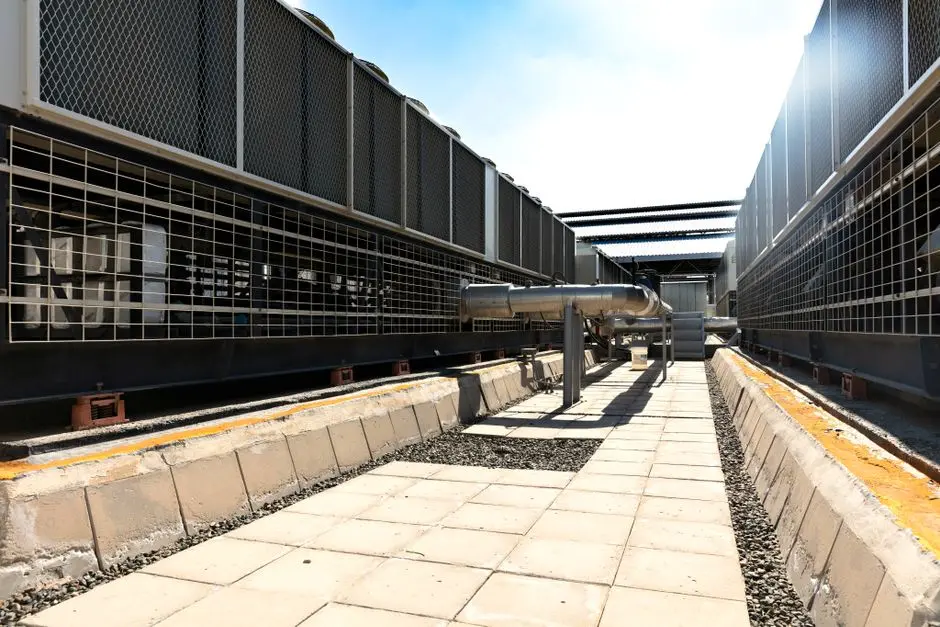
A reliable train begins with a solids-removal barrier before the selected membranes. Genesis Water Technologies supports side-stream filtration, depth filtration or equivalent pretreatment, followed by chemical conditioning, pH control and antiscalant where required by membrane design and water chemistry. The source recommends filtering membrane feed to less than 10–15 microns before high-recovery RO operation.
The multimedia pretreatment filter can form the solids-control stage, while an automatic chemical dosing system may support the required scaling-control program. Final configuration must follow the membrane manufacturer’s feed specification and site chemistry rather than generic dosing rates.
- Remove suspended solids and biological material with filtration and, where justified, UF.
- Control scaling through chemical conditioning, pH adjustment and antiscalant where required.
- Apply NF or RO for the specified dissolved-solids reduction.
- Route permeate to storage and controlled blending with cooling-tower makeup.
- Route concentrate to a verified disposal route, further concentration or crystallizer.
Genesis Water Technologies identifies cooling-tower makeup return as the highest-value reuse application. Verify compatibility with existing cooling chemistry, materials, heat exchangers and the owner’s control program before changing the chemical strategy. A membrane-compatible program may require coordinated changes to biocide, corrosion inhibitor, antiscalant and dispersant dosing.
Concentrate management is part of the treatment train, not an afterthought. Its flow, chemistry, temperature, scaling potential and final destination must be designed. If the selected endpoint is not confirmed, the RO recovery target should remain provisional rather than being optimized solely for the highest percentage.
Validate Cuenca Requirements and Build a Procurement Case
A defensible procurement case separates confirmed design inputs from items still requiring Cuenca verification. The supplied research does not establish the applicable discharge permit, sewer-acceptance rules, freshwater tariff, water-availability conditions, receiving point or intended disposal endpoint. Request those documents and written confirmations from the owner and responsible authorities before treating compliance or ZLD as a base-case requirement.
Complete the site water balance and run representative pilot work before finalizing capacity. Testing should validate flux, scaling tendency, achievable recovery, cleaning frequency, chemical demand and biological loading. Pilot results should be tied to measured feed conditions and the selected operating scenario rather than extrapolated from a generic feed specification.
Compare bids on guaranteed permeate quality, system recovery, availability, cleaning method, chemical consumption, energy use, redundant capacity, controls, membrane replacement, warranty and local service capability. Include the concentrate-management route and final waste handling in the same commercial comparison; a low membrane price is not comparable if residual disposal is omitted.
Evaluate partial recovery before committing to full ZLD. Genesis Water Technologies reports that concentrating blowdown to reduce discharge volume by 80–90% can capture much of the water benefit at substantially lower cost than full ZLD. The comparison should use local freshwater availability, discharge cost, energy and waste-management data once obtained.
Specify monitoring for flow, conductivity, pressure, turbidity, permeate quality, recovery, cleaning events and residual brine. Operator review should connect those measurements to the site-specific permit and cooling-chemical program. More detailed capacity planning is available in the ZLD capacity and recovery planning guide.
| Decision gate | Evidence required | Procurement consequence |
|---|---|---|
| Endpoint confirmed | Owner decision plus applicable Cuenca authorization or sewer conditions | Define reuse, compliance or ZLD basis of design |
| Water balance accepted | Metered baseline and future operating scenarios | Size feed, storage, recovery and redundancy |
| Feed characterization complete | Representative analytical campaign and chemical inventory | Select pretreatment, membranes and recovery target |
| Pilot validated | Flux, recovery, cleaning, fouling and energy observations | Set guarantees and acceptance tests |
| Residual route confirmed | Concentrate destination and handling conditions | Price MVC, crystallizer, disposal or partial recovery |
| Commercial comparison complete | Common flow, recovery, quality and operating-hour basis | Evaluate lifecycle cost and supplier risk |
Equipment commitments should follow those gates. Membrane elements, valves and filter media can be specified only after the water chemistry, recovery target and operating envelope are established; otherwise compatibility claims are not meaningful.
Frequently Asked Questions
How should wastewater treatment for a Cuenca data center be sized?
Size the system from measured peak blowdown and the selected recovery objective, then check verified redundancy and expansion scenarios. Keep feed capacity separate from recovered-water production. Genesis Water Technologies reports that 25–30% of makeup may become blowdown at 4 cycles and that cooling-tower reuse treatments commonly achieve 60–85% recovery, but neither percentage replaces the Cuenca site balance.
Should the project use UF, RO or ZLD?
Use UF alone when solids and biological removal are the main objectives; use UF plus RO when low-TDS cooling makeup is required; and add MVC or a brine concentrator when residual management is the deciding constraint. Full ZLD should follow confirmation that its capital, energy and waste-handling burden is justified for the site.
How much should the treatment system cost?
Request a site-specific quotation using measured peak flow, feed analysis, recovery, operating hours, residual route and local utility and service costs. As preliminary screening only, Genesis Water Technologies reports $250,000–500,000 installed and $1.50–3.00 per thousand gallons treated for a 50,000 GPD RO system, versus $3–8 million capital and $5–15 per thousand gallons treated for ZLD. These are not Cuenca prices.
Which requirements should be checked before selecting a supplier?
Obtain the applicable Cuenca permit, sewer-acceptance conditions, freshwater tariff, water-availability information and intended discharge or reuse endpoint. Require suppliers to guarantee permeate quality, recovery, availability, cleaning method, chemical demand, energy use, redundant capacity, controls, warranty, replacement parts and local service support. Also verify that the concentrate route is included in their proposal.