Build the treatment scope around three separate water streams
An Al Ahmadi data center needs separate treatment paths for domestic sewage and cooling-tower blowdown, plus pretreatment for any process wastewater. Blowdown should normally receive filtration, chemical control, and membrane treatment before reuse as cooling make-up or discharge polishing. Hardness, silica, chloride, biocide residues, BOD, TDS, and total phosphate require confirmation because they affect pretreatment, reuse quality, and compliance. The practical baseline is RO reuse with an authorized brine route; ZLD is reserved for sites where final brine cannot lawfully be discharged. Final flows, limits, and equipment capacity require Al Ahmadi utility and KEPA confirmation.
Define the equipment boundaries before comparing quotations. Split domestic sewage, cooling-tower blowdown, and any equipment-process or washdown wastewater into separate flow and chemistry datasets. Their treatment objectives differ, and combining them can dilute the blowdown stream, increase biological loading, or complicate reuse chemistry.
For domestic sewage, the Underground Package Sewage Treatment Plant combines anoxic and aerobic contact oxidation, sedimentation, and disinfection in a buried package. Its catalog capacity spans 1–80 m³/h; this is an equipment range, not an Al Ahmadi design duty. Confirm actual flow, peak factor, effluent objective, odor and site constraints, and required access for maintenance.
Do not route the entire cooling blowdown through a sewage treatment plant. ASCE states that cooling effluent is the larger wastewater share and that cyclic cooling concentrates pollutants including TDS and chloride, which are not normally targeted by municipal sewage treatment plants. The blowdown path should instead be defined around filtration, chemical control, and either RO-based reuse or discharge polishing.
Use a source-by-source flow diagram showing makeup water, evaporation, drift, blowdown, domestic sewage, process wastewater, recovered permeate, concentrate, and final discharge. Every proposed package should have a clear flow, quality, and destination for each stream.
Set the Al Ahmadi design basis from water balance and chemistry
The cooling-system water balance and measured feed chemistry must establish the Al Ahmadi design basis before selecting UF, RO, softening, or ZLD. ASCE specifically identifies pH, conductivity, TDS, chlorides, silica, hardness, alkalinity, and microbial counts as reclaimed-water characteristics that can affect corrosion, scaling, and microbiological growth.
Ask the mechanical team for the cooling-system configuration; number and capacity of cooling towers; operating cycles of concentration; makeup-water source; expected blowdown flow; evaporation rate; seasonal peak demand; drift losses; and planned future expansion. These inputs determine whether the treatment plant handles a continuous baseline stream, a peak-daily stream, or a short-duration event.
Sample the actual Al Ahmadi sources rather than transferring chemistry from another Gulf city. The test program should include pH, conductivity, TDS, chloride, silica as SiO₂, total hardness, alkalinity, suspended solids, oil and grease where applicable, biocide residuals, BOD, and total phosphate. Extend the program to microbial counts where reuse or stagnation creates a biological-growth concern.
| Design input | Required evidence | Decision affected |
|---|---|---|
| Peak cooling demand and blowdown flow | Mechanical water balance with seasonal operating cases | Filtration, RO, chemical dosing, storage, and redundancy |
| Cycles of concentration | Approved tower-chemistry operating basis | Feed concentration, reuse target, and residual blowdown |
| Raw blowdown chemistry | Site-specific analytical results | Filtration, softening, antiscalant, and membrane selection |
| Discharge route | Written utility and KEPA confirmation | RO concentrate management, polishing, or ZLD |
| Reuse destination | Cooling-loop chemistry acceptance criteria | Permeate quality and post-treatment requirements |
The Kuwait City guide gives a 1,200–6,000 mg/L TDS range at four cycles of concentration and a 3,000–10,000 mg/L blowdown benchmark. These are preliminary screening ranges, not Al Ahmadi design values. Resolve the difference through representative site sampling, tower chemistry, evaporation, and the selected operating cycles of concentration.
Before freezing the design, confirm the receiving sewer or other discharge route, current permit limits, sampling frequency, monitoring points, analytical methods, and future tightening with KEPA and the relevant utility. The water-treatment parts, valves, and filter media package should reflect those confirmed requirements rather than relying on generic permit assumptions.
Protect membranes with filtration, softening, and controlled chemistry
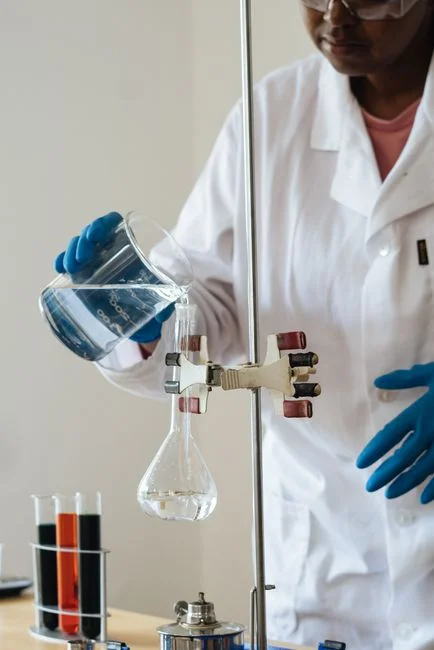
Membrane protection begins with removal of suspended solids and colloids, followed by chemistry control matched to the measured scaling risk. Do not select a complete pretreatment train from feed TDS alone; silica, hardness, alkalinity, biocide residuals, and concentration factors determine the actual fouling and oxidation exposure.
Begin with side-stream or dedicated filtration. Evaluate UF pretreatment for data center blowdown where higher-turbidity feed requires a barrier before RO. The stated UF specification is 0.03-micron PVDF membranes, 2,000–40,000 L/h capacity, automatic backwash, air scour, and feedwater turbidity up to 300 ppm. These catalog limits describe the offered configuration; they do not establish the required Al Ahmadi flow or prove suitability for the actual blowdown.
Where suspended solids, turbidity, and colloids must be removed before membrane treatment, evaluate the Multi-Media Filter. Its stated role is to produce an SDI suitable for membrane protection, but the required media configuration and final SDI need confirmation from feed and pilot data.
| Condition identified from analysis | Potential pretreatment step | Bidder evidence required |
|---|---|---|
| Suspended solids or colloidal fouling | Side-stream or dedicated filtration; UF where justified | Turbidity and solids duty, filtrate quality, backwash and waste handling |
| Hardness threatens scaling or exceeds reuse criteria | Industrial softening before RO or controlled make-up reuse | Resin sizing, working capacity, regeneration demand, effluent hardness |
| Biocide residual can oxidize membranes | Dechlorination or another validated residual-control step | Residual measurement, oxidant demand, validation at design flow |
| Scaling tendency in concentration | Antiscalant and controlled pH or alkalinity control | Dosing range, control logic, chemical consumption, residual limits |
The KJ-WT industrial water softener has a catalog capacity of 1–45 T/h. That is a product specification, not a recommended duty for Al Ahmadi. Size it from measured hardness, treated flow, resin working capacity, regeneration frequency, and downstream make-up requirements.
Use PLC-controlled chemical injection for coagulants, flocculants, pH adjusters, antiscalants, and specialty chemicals through the automatic chemical dosing system. Require interlocks, tank-level controls, calibration access, chemical audit records, and an operator-defined dose linked to measured conductivity, pH, or residual signals.
Treat residual chlorine and other oxidizing biocides as both membrane-protection and discharge issues. A chlorine dioxide generator should be used only where its application and dose have been validated for the specific stream; its presence alone does not establish compatibility with the membrane or receiving sewer.
Choose between cooling-water reuse, permitted discharge, and ZLD
RO reuse is the practical baseline when the objective is to reduce desalinated make-up demand, because recovered permeate returns to the cooling loop while the residual brine requires an authorized route. The choice is not automatically the lowest environmental burden. Open Engineering Inc’s 2026 preprint reports approximately twice the GWP for the wastewater scenario as for the freshwater case, with treatment energy explaining about 80% of the difference.
That LCA also found that UF plus RO increased wastewater energy use to more than five times the freshwater case, although improved cycles of concentration reduced blowdown and chemical consumption. It reports an indirect water penalty of approximately 0.93 L/m³ for reuse, less than 0.1% of the direct displacement benefit. Compare these impacts with site-specific freshwater savings, discharge costs, chemical consumption, and the grid energy source rather than treating reuse as automatically preferable.
The IDE source states that conventional brackish-water RO commonly reaches approximately 75–80% recovery before scaling becomes unmanageable. Its commercial application achieved about 95% recovery and reduced permeate silica to about 1 mg/L. That is a demonstrated application, not a guaranteed Al Ahmadi result. Higher recovery requires chemistry-aware design, not simply additional RO stages.
| Route | Selection condition | Principal design issue | Evidence to obtain |
|---|---|---|---|
| RO cooling-water reuse | Permeate is suitable for the cooling loop and brine has an authorized destination | Recovery limited by scaling and membrane fouling | Site pilot, recovery guarantee, brine balance, permeate quality |
| Permitted treated discharge | KEPA and the receiving utility accept the discharge route and specified quality | TDS, BOD, phosphate, biocide residual, flow, and monitoring compliance | Written limits, sampling plan, pretreatment acceptance criteria |
| Full ZLD | Final brine discharge is prohibited or substantially constrained | Thermal energy demand and crystallizer solids handling | Mass and energy balance, utility availability, residue destination, operator capability |
The Kuwait-focused sources provide initial screening benchmarks of 75–90% RO recovery and 99% or greater ZLD recovery. Confirm the actual recovery target through site chemistry, a pilot, or a performance guarantee. The Kuwait guide also describes tightening sewer TDS ceilings below 1,500 mg/L and site-specific targets often below 600 mg/L as Gulf context, not confirmed Al Ahmadi limits.
Use an industrial RO system for cooling blowdown recovery as the core recovery platform only where feed chemistry, recovery target, brine handling, and redundancy fit the validated design. Choose full ZLD when discharge of final brine is prohibited or land-constrained; the Kuwait-focused benchmark gives $3–8 million for full ZLD and $5–15/kgal OPEX as an indicative Gulf-MENA range, subject to quotation.
Size the recovery system from peak blowdown, not average water use
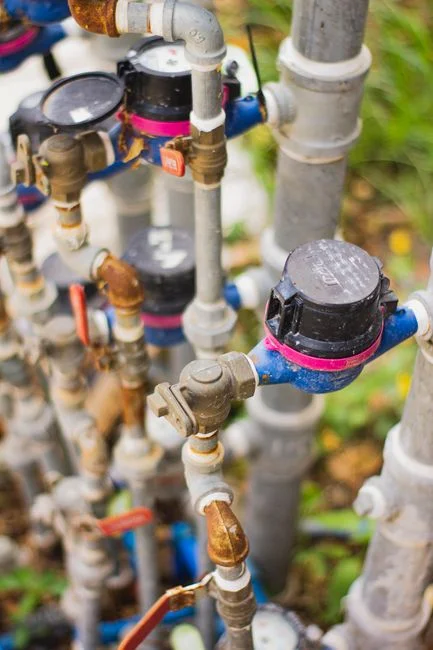
Size the recovery train from peak blowdown under the highest cooling-demand case and the approved operating cycles of concentration. The equipment design must reconcile raw blowdown, pretreatment losses, permeate production, concentrate generation, reuse return, and residual discharge. Average daily demand alone will not establish the required treatment flow.
Do not use the 50,000 GPD RO benchmark as an Al Ahmadi recommendation. It is a capital-cost reference point only. Require each bidder to size the system from actual peak flow, feed chemistry, recovery target, operating hours, fouling allowance, and required redundancy.
Request a recovery-rate guarantee, permeate-quality specification, membrane-fouling design basis, cleaning method, chemical-consumption estimate, and complete brine balance. The industrial RO platform has automated PLC control and a stated recovery rate of up to 95%; use those specifications only where validated feedwater and operating conditions support the target.
ASCE reports that only 51% of surveyed operators track water use and only 10% track it across all facilities. Meter each waste stream, treated flow, permeate, concentrate, reuse, and make-up water. The required valves, instrumentation, and treatment parts should form a coherent metering and control architecture rather than isolated components.
- Establish peak and seasonal raw blowdown.
- Calculate concentration and expected water quality at each process stage.
- Apply the validated recovery target and pretreatment losses.
- Size filtration, membranes, dosing, controls, and residual-management equipment.
- Check standby, bypass, fail-safe, and emergency-water provisions against campus criticality.
For a mission-critical campus, define how the system behaves during power loss, membrane failure, high turbidity, chemical interruption, or an unauthorized discharge. Redundancy and emergency storage should be justified from the mechanical risk analysis rather than added as unspecified contingency.
Build permit-ready monitoring and residual-management records
Compliance depends on a traceable water balance and defensible operating records, not only on treatment equipment performance. Install and calibrate flowmeters and online conductivity or TDS meters on raw blowdown, filtrate, permeate, concentrate, reuse, and final discharge streams. Define calibration frequencies, alarm setpoints, data ownership, and corrective-action triggers in the operating procedure.
Reconcile makeup water, evaporation, blowdown, reuse, and final discharge in one water-balance file. ASCE recommends beginning site evaluation with a water-balance study that considers source water, climate, cooling design, reclaimed water, treatment, reuse, and discharge. This file should be the basis for both permit reporting and commercial model updates.
Maintain records for cooling chemistry, antiscalant and biocide use, membrane cleaning, permeate quality, brine destination, monitoring results, deviations, and corrective actions. Record chemical inventory and consumption by operating mode; an average consumption figure alone will not explain fouling or permit excursions.
For solids removed from the recovery train, evaluate the plate and frame filter press for dewatering. Its catalog filtration-area range is 1–500 m², which is not an Al Ahmadi sizing recommendation. Confirm cake moisture, polymer demand, filtrate chemistry, solids destination, odor control, and container or truck-loading arrangements.
Do not adopt the Kuwait City guide’s TDS, BOD, phosphate, or reuse-water targets as permit values. Label them as preliminary benchmarks until Al Ahmadi requirements are confirmed in writing. Where the receiving utility imposes flow, concentration, or monitoring conditions, make those controls visible in the P&ID, cause-and-effect matrix, sampling plan, and operating budget.
Plan for future permit tightening by retaining a permitted discharge contingency where feasible and by testing the residual-management route against possible restrictions on brine disposal. The instrumentation and treatment-parts package should therefore support both routine operation and permit verification.
Compare budget, compliance risk, and operating complexity
Compare RO reuse, treated discharge, and ZLD using the same site-specific inputs rather than headline capital cost. The Kuwait guide’s 50,000 GPD RO estimate of $250,000–$500,000 installed and $1.50–$3.00/kgal OPEX is a Gulf-MENA screening benchmark only. Its MVC estimate of $1–3 million applies to a stated 10,000–30,000 GPD evaporation duty, while full ZLD is benchmarked at $3–8 million and $5–15/kgal OPEX.
Those figures do not include a verified Al Ahmadi offer. Require quotations that define pretreatment, flow basis, materials of construction, controls, redundancy, foundations or installation, energy, chemicals, maintenance, monitoring, commissioning, and residue disposal.
| Procurement comparison | RO reuse | Permitted treated discharge | Full ZLD |
|---|---|---|---|
| Capital benchmark | $250,000–$500,000 for the cited 50,000 GPD case | Requires a flow- and chemistry-based quotation | $3–8 million in the cited Gulf-MENA benchmark |
| Operating benchmark | $1.50–$3.00/kgal for the cited RO case | Must include electricity, chemicals, media, sludge, and monitoring | $5–15/kgal in the cited Gulf-MENA benchmark |
| Key compliance exposure | Permeate quality and concentrate destination | Flow, TDS, BOD, phosphate, residual, and receiving-sewer conditions | Residue quality, destination, energy, and operational reliability |
| Operator requirement | RO, controls, chemistry, membrane maintenance | Filtration, polishing, sampling, and permit reporting | RO, thermal systems, crystallizer, and residue handling |
| Resilience issue | Concentrate route and power/chemical availability | Continued acceptance by the receiving utility | Thermal-energy supply and high-complexity maintenance |
The Kuwait guide states that 60–85% blowdown reuse typically pays back an RO package within the first 2–4 years because of avoided discharge fees and desalinated make-up cost. Treat this as a benchmark requiring a site financial model, not an Al Ahmadi investment return.
Request an ROI worksheet separating verified utility tariffs, discharge charges, freshwater volumes, permit conditions, energy prices, chemical consumption, and residue costs from assumptions. Run low, base, and high freshwater-price scenarios and include the 2026 Open Engineering Inc finding that treatment energy can dominate the reuse scenario’s GWP difference. Use the financial model to compare three routes on freshwater displacement, permit exposure, land availability, energy use, chemical use, operator capability, and redundancy—not on recovery percentage alone.
Frequently Asked Questions
How much does a data center cooling-blowdown treatment system cost in Al Ahmadi?
The Kuwait guide gives an indicative $250,000–$500,000 installed cost and $1.50–$3.00/kgal OPEX for a 50,000 GPD RO unit. Do not budget from that benchmark alone. Request a flow- and chemistry-based quotation showing pretreatment, membranes, controls, installation, energy, chemicals, monitoring, maintenance, and the brine-disposal route.
What is the minimum treatment package for Kuwaiti cooling-tower blowdown?
The Kuwait guide identifies side-stream filtration, antiscalant and biocide control, and either RO reuse or NF softening plus discharge polishing as the minimum package. For Al Ahmadi, verify the actual sequence against site chemistry and written permit requirements; a softer or more complex pretreatment train may be necessary for silica, hardness, residual oxidant, or membrane-fouling control.
Should an Al Ahmadi data center choose RO reuse or full ZLD?
Choose RO reuse when the permeate suits the cooling loop and the final brine has an authorized destination. Choose ZLD when brine discharge is prohibited or materially constrained. Validate the decision with a water balance, feed analysis, pilot or performance guarantee, permit consultation, energy assessment, and a complete brine and solids balance.
Which supplier experience should be checked when selecting an industrial RO system?
Request Kuwait-relevant feedwater and brine-disposal references, a site-specific recovery guarantee, membrane-fouling data, cleaning methodology, chemical-consumption estimates, permeate guarantees, and service-response commitments. Also ask the supplier to identify which performance data come from the Al Ahmadi feedwater and which remain generic or transferred from other installations.
How much does the Open Engineering Inc 2026 analysis say about wastewater reuse?
The 2026 Open Engineering Inc preprint reports that the wastewater scenario had about twice the freshwater case’s GWP, with treatment energy explaining roughly 80% of the difference. It reports an indirect water penalty of approximately 0.93 L/m³ and notes that improved cooling cycles of concentration can reduce blowdown and chemical consumption. These findings support a comparative energy-and-water assessment, not a blanket conclusion that reuse is always preferable.