What wastewater system does a hotel or resort in Peru need?
Hotel and resort wastewater treatment in Peru should be selected by discharge route, reuse target, hydraulic load and operating conditions. A Lima hotel discharging to SEDAPAL must meet VMA limits under DS N° 010-2019-VIVIENDA at the discharge manhole, while planned irrigation reuse or sensitive coastal discharge may require ECA Agua limits under DS N° 004-2017-MINAM. A packaged A/O system generally suits sewer compliance; an MBR is the stronger candidate for higher-quality reuse. Remote resorts may need decentralized treatment, provided that local operation and maintenance conditions are addressed.
Start with three project facts: average daily wastewater flow, peak flow and the intended destination of the treated water. These determine the hydraulic basis, process capacity and level of treatment required before comparing equipment quotations.
For a Lima property connected to SEDAPAL, the commercial source “What Wastewater Treatment System a Lima, Peru Hotel Needs in 2026” identifies the VMA requirements of DS N° 010-2019-VIVIENDA as the binding discharge ceiling. The package plant must achieve the required quality at the connection, rather than relying only on sample results from the inlet tank.
If water will be reused, the buyer must identify the reuse category before selecting a process. ECA Agua under DS N° 004-2017-MINAM then becomes the governing reference and must be matched to that intended use.
The location also changes the answer. The academic study “Sustainable decentralised wastewater treatment schemes in the context of Lobitos, Peru” reports that biodigesters, septic tanks and treatment ponds can help rural or remote communities avoid connections to distant urban infrastructure. Those options are context-dependent, not automatic substitutes for an engineered hotel package plant.
A compliant sewer connection letter and a discharge authorization are separate requirements. A buyer should therefore review domestic sewage treatment options in Peru as one input, but obtain the connection, permit and site-specific design requirements before ordering equipment.
Match the treatment objective to the discharge route
Three discharge routes determine the treatment objective: public-sewer discharge, on-site reuse, and operation where no suitable public sewer is available.
For a Lima sewer discharge, the commercial source “What Wastewater Treatment System a Lima, Peru Hotel Needs in 2026” reports VMA ceilings of BOD ≤ 500 mg/L, TSS ≤ 350 mg/L, FOG (SSEE) ≤ 150 mg/L, pH 6.0–9.0 and temperature ≤ 35 °C under DS N° 010-2019-VIVIENDA. These values define the treatment target at the sewer connection.
For unrestricted landscape irrigation, ECA Agua Category 3 requires tighter treatment. The same source reports BOD ≤ 25 mg/L, TSS ≤ 35 mg/L and thermotolerant coliforms ≤ 1,000 NMP/100 mL under DS N° 004-2017-MINAM. A buyer planning reuse should confirm the category and sampling requirements with the responsible authority rather than infer suitability from the general ECA framework.
Properties near Costa Verde, San Bartolo or Punta Hermosa bathing beaches should ask ANA to confirm whether ECA Category 2 applies. The commercial source reports Category 2 values of BOD ≤ 5 mg/L and enterococci ≤ 200 NMP/100 mL.
| Project route | Governing reference identified in the research | Procurement consequence |
|---|---|---|
| Lima public-sewer discharge | VMA under DS N° 010-2019-VIVIENDA | Design for the applicable sewer-discharge ceiling and demonstrate performance at the manhole. |
| Unrestricted landscape irrigation | ECA Agua Category 3 under DS N° 004-2017-MINAM | Include the biological and disinfection performance needed for the intended reuse category. |
| Sensitive coastal discharge | Possible ECA Agua Category 2, subject to ANA confirmation | Do not select treatment from generic reuse assumptions; confirm the applicable category first. |
| Remote or unserved resort | Site-specific environmental and operating requirements | Evaluate a decentralized train with a defensible maintenance, sludge and power strategy. |
The Lobitos study warns that decentralized systems must be assessed within their geographical, social, cultural, political and economic context. Long-term effectiveness and ease of operation and maintenance determine whether they remain workable after commissioning.
Size the plant from occupancy, guests and daily peaks
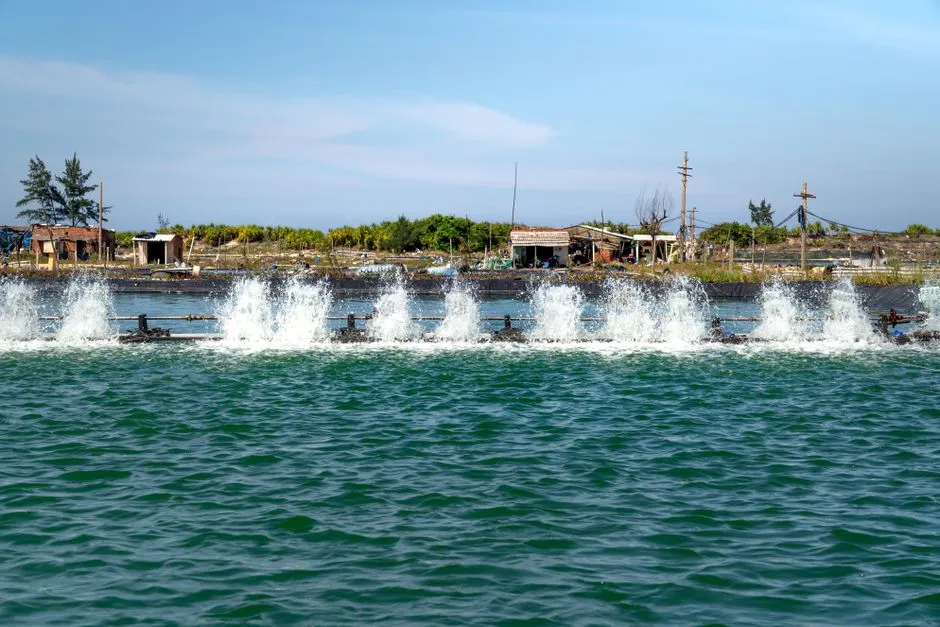
Average daily flow determines the pollutant and hydraulic loading basis, while peak flow determines equipment capacity; a plant sized only for average occupancy can be overloaded during concentrated hotel operations.
The commercial source “What Wastewater Treatment System a Lima, Peru Hotel Needs in 2026” reports typical Peruvian hospitality design guidance from 2024 of 150–300 L per guest-night for occupied rooms, 50–80 L per staff shift and 20–40 L per food-and-beverage cover. It also reports a diurnal peaking factor of 1.4–1.6 over daily average demand.
These are Lima design references, not universal assumptions for every Peruvian resort. The final hydraulic model must reflect occupied rooms, day-use guests, conferences, spa activity, restaurant covers, laundry, kitchen flows and seasonal occupancy.
| Design input | Lima reference reported by the commercial source | Use in procurement |
|---|---|---|
| Occupied room wastewater | 150–300 L per guest-night | Preliminary allowance for occupied rooms; confirm against site data. |
| Staff wastewater | 50–80 L per staff shift | Add according to operating shifts and service hours. |
| Food and beverage | 20–40 L per cover | Separate food-preparation and high-strength kitchen streams where relevant. |
| Diurnal variation | 1.4–1.6 times daily average | Apply to the agreed design-average flow when checking hydraulic capacity. |
| 200-room Lima example | Approximately 45 m³/day average, 65 m³/day peak and 80 m³/day weekend peak | Use as a worked reference, not as a substitute for project-specific analysis. |
The worked example is a 200-room resort in Cieneguilla at 75% occupancy. It produces approximately 45 m³/day average, 65 m³/day peak and 80 m³/day on weekends in the commercial source’s Lima scenario.
For preliminary process verification, the same source reports typical four-star Lima influent bands: BOD 250–400 mg/L, COD 500–800 mg/L, TSS 200–350 mg/L, FOG 50–150 mg/L and NH₃-N 20–40 mg/L. The equipment guarantee should use an agreed influent envelope. Before award, obtain site-specific wastewater sampling and require the vendor to reconcile its process design with the occupancy forecast and measured loads.
Compare WSZ A/O, MBR and decentralized treatment
WSZ A/O is the simpler sewer-compliance option, MBR is the stronger candidate where reuse or tighter effluent limits govern, and decentralized treatment is selected by remote-site context rather than by process sophistication.
The commercial source describes the WSZ as an underground integrated package combining coarse screening, anoxic and aerobic contact oxidation, integrated sedimentation and disinfection. Its stated capacity is 1–80 m³/h, and it can be installed below grade with landscaping above. The commercial source identifies it for properties of 20–100 m³/day without reuse.
The MBR combines activated sludge with submerged PVDF membrane filtration. The supplied catalog states capacity from 10–2,000 m³/day and near-reuse-quality output below 1 μm filtration. The commercial source reports an MBR footprint advantage of approximately 60% against conventional activated sludge and says submerged configurations use 10–20× less energy than older external cross-flow designs; those comparisons should be checked against the proposed duty envelope.
| Criterion | WSZ A/O | MBR | Decentralized system |
|---|---|---|---|
| Primary procurement position | Public-sewer compliance without a reuse target | Reuse, irrigation or a tighter ECA outcome | Remote resort without suitable sewer infrastructure |
| Stated capacity | 1–80 m³/h | 10–2,000 m³/day | No universal figure; depends on site and treatment objectives |
| Reported selection context | 20–100 m³/day without reuse | 50–300 m³/day with irrigation reuse or near-beach discharge | Selected after local infrastructure and O&M assessment |
| Process configuration | Integrated anoxic/aerobic contact oxidation, sedimentation and disinfection | Activated sludge with submerged PVDF membrane filtration | May include biodigesters, septic tanks or treatment ponds |
| Main procurement concern | Confirm final polishing where the reuse category requires it | Energy, membrane cleaning and replacement exposure | Sludge removal, odor control, power, operator access and service support |
The commercial source states that WSZ A/O generally needs UV or membrane polishing to comply with the ECA Category 3 coliform requirement. MBR is therefore normally stronger where reuse quality is central, although that conclusion still depends on the permit condition and guaranteed effluent.
The supplied catalog also offers submerged PVDF flat-sheet membrane modules with 0.1 μm pore size, integrated aeration and stated production of 32–135 m³/day per module configuration. The buyer should confirm how many modules, duty cycles and redundancy are required for the actual peak demand and maintenance strategy.
Review the underground WSZ integrated sewage treatment plant for sewer-discharge applications and the MBR membrane bioreactor wastewater treatment system where reuse or tighter discharge limits dominate. Neither is universally superior.
Build the process train around the site’s real constraints
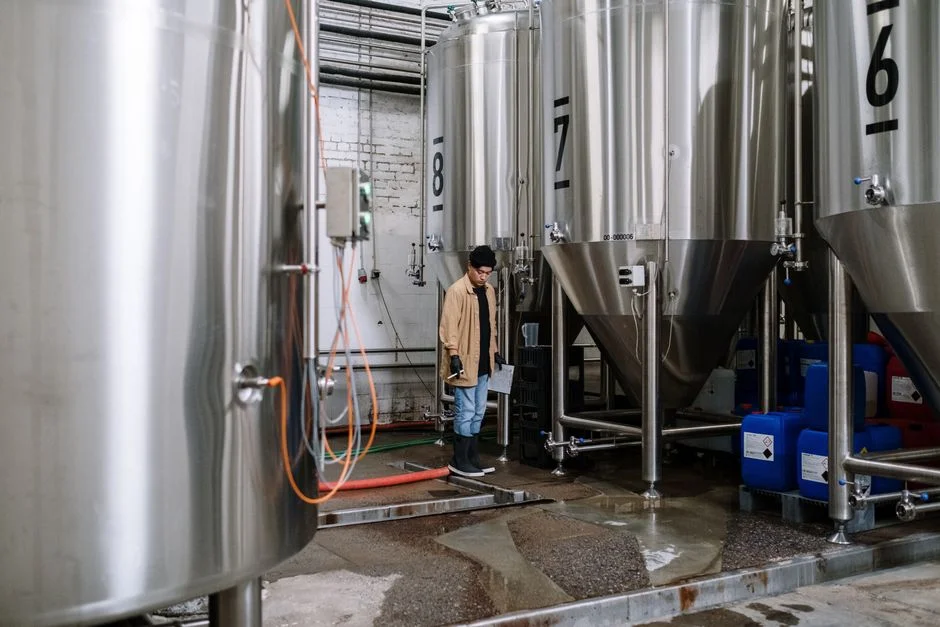
A package plant still requires a site-specific process train; kitchen strength, salinity, seismicity, burial conditions and maintenance access can change both equipment selection and civil design.
The commercial source reports coastal alluvial influent chloride of 250–500 mg/L in districts including Miraflores, Chorrillos and San Bartolo. It recommends corrosion-resistant equipment and vendor salt-water-tolerance data where chloride exceeds 300 mg/L. Chloride can also affect biological kinetics, so influent testing should determine whether pretreatment or process derating is necessary.
For coastal alluvial districts, the source recommends seismic-tied stainless or HDPE internals and accounting for NTE E.030 seismic Zone 4. Those statements are Lima design references and require confirmation against the site’s structural and geotechnical conditions.
High-strength kitchen and laundry flows should be characterized separately and routed through appropriate equalization and biological loading. The Lima influent bands provide a preliminary comparison basis, but they do not replace sampling. Where solids handling becomes material, DAF design for hotel wastewater can help evaluate whether kitchen pretreatment is necessary.
The preliminary process sequence is:
- Establish average and peak flow and characterize the influent.
- Provide screening and equalization.
- Apply biological treatment appropriate to the loading and reuse route.
- Separate solids and manage the resulting sludge.
- Disinfect to the applicable discharge or reuse requirement.
- Route water to reuse storage or the sewer discharge point.
For remote resorts, evaluate power reliability, maintenance access, sludge removal, operator training and the long-term operating context identified by the Lobitos study. A decentralized system without a credible service plan is not a complete treatment proposal.
Site-specific wastewater testing, permit conditions and the final vendor design must be completed before ordering equipment.
Plan permits, capital cost and operating cost
The available cost evidence is a 2026 Lima Metropolitana planning benchmark, not a national tariff; every quotation should be rebuilt from the site’s flow, treatment scope and permit conditions.
The commercial source reports installed and commissioned CAPEX of USD 35,000–65,000 for a 20–50 m³/day WSZ-A/O unit, USD 80,000–160,000 for a 50–150 m³/day MBR skid, and USD 180,000–280,000 for a 200–500 m³/day IFAS or larger MBR. These Lima figures exclude land, building permits and the sewer connection fee, so they should not be transferred directly to a regional or remote project.
The source reports OPEX of USD 0.18–0.35 per m³ for energy and consumables, plus 1–2 hours per day of operator attention for WSZ and MBR units. IFAS is placed at the upper end of the OPEX range because of its higher aeration demand.
| Lima Metropolitana planning benchmark | 2026 reported scope | Budget treatment |
|---|---|---|
| WSZ-A/O | 20–50 m³/day; USD 35,000–65,000 installed | Exclude land, building permits and sewer connection fee. |
| MBR skid | 50–150 m³/day; USD 80,000–160,000 installed | Confirm membrane performance guarantees and replacement exposure. |
| IFAS or larger MBR | 200–500 m³/day; USD 180,000–280,000 installed | Require a process-specific scope and civil-works breakdown. |
| Energy and consumables | USD 0.18–0.35 per m³ | Recalculate using the vendor’s stated energy demand and applicable tariffs. |
| Operator attention | 1–2 hours per day for WSZ and MBR | Price staffing, remote monitoring and local service access. |
For permitting, the commercial source gives a planning range of 90–150 days for DIGESA discharge authorization plus a separate SEDAPAL connection letter. The actual schedule depends on the site and authority, so the programme should not treat that range as a commitment.
Request an itemized quotation covering civil works, installation, electrical and controls, commissioning, analysis, operator training, maintenance, consumables and sludge disposal. Compare lifecycle cost using actual daily flow, peak demand, the value of reuse, energy assumptions, membrane replacement exposure and local service access.
Procurement checklist for a Peru resort wastewater plant
A defensible tender starts with the discharge route and site context, not with a packaged plant name.
- Confirm the regulatory route. Record the site location, sewer availability, receiving-water context, intended reuse category and responsible authorities.
- Establish the design basis. Obtain a defensible flow analysis and wastewater characterization instead of sizing from guest-night estimates alone.
- Define the required duty. State average flow, peak flow, influent envelope, effluent limit, reuse demand and operating availability.
- Issue a complete RFQ. Require a process schematic, average and peak duty, materials, guarantees, controls, testing, installation boundaries, commissioning, training, warranty and O&M support.
- Resolve site constraints. Address corrosion, seismic design, burial, access, power, drainage and site availability as project-specific inputs.
- Protect performance liability. Make guarantees conditional on the agreed influent and duty envelope, and define sampling, compliance testing and permit documentation.
- Check delivery capability. Confirm importer responsibilities, electrical requirements, spare-parts availability and service response before award.
For sludge handling, include sludge dewatering equipment for a resort treatment plant as one option to evaluate against the selected process, available space, moisture target and route for removing the dewatered cake.
Supplier selection should be based on demonstrated performance within the agreed duty envelope, verified references, a complete compliance package and a service plan that the owner can sustain. A lower equipment price can be outweighed by membrane replacement, chemical use, operator hours or difficult access to spare parts.
Frequently Asked Questions
What will hotel and resort wastewater treatment in Peru cost?
The commercial source reports 2026 Lima Metropolitana installed CAPEX of USD 35,000–65,000 for a 20–50 m³/day WSZ-A/O unit and USD 80,000–160,000 for a 50–150 m³/day MBR skid. It reports OPEX of USD 0.18–0.35 per m³ for energy and consumables. These figures exclude land, building permits and the sewer connection fee. Actual quotations require site-specific flow, civil scope, electrical requirements, permit conditions and sludge-management details.
How should a hotel wastewater plant be sized?
Use the commercial source’s Lima references of 150–300 L per guest-night, 50–80 L per staff shift and 20–40 L per food-and-beverage cover, then apply the reported 1.4–1.6 diurnal peaking factor to the agreed daily average. Its 200-room, 75%-occupancy example produces approximately 45 m³/day average, 65 m³/day peak and 80 m³/day weekend peak. These are worked Lima references; site data should determine the final capacity.
Should a resort choose WSZ A/O or an MBR?
Choose WSZ A/O when the objective is public-sewer compliance, reuse is outside the scope and burial is important. Choose an MBR when irrigation reuse or a tighter ECA outcome governs, because the commercial source says WSZ A/O generally requires UV or membrane polishing for the Category 3 coliform requirement. Verify the proposed effluent guarantee against the actual permit rather than treating either process as universally superior.
What should be checked for a remote Peruvian resort?
The Lobitos study identifies geographical, social, cultural, political and economic conditions, together with ease of long-term operation and maintenance, as central to decentralized treatment. For a resort tender, request a defined sludge-removal route, power-failure response, operator-access plan, spare-parts supply and local service responsibility. These checks distinguish a workable decentralized resort wastewater system from a collection of unmaintained treatment components.
Are DIGESA authorization and a SEDAPAL connection letter separate?
Yes. The commercial source identifies a DIGESA discharge authorization and a separate SEDAPAL connection letter, and gives 90–150 days only as a planning range for the authorization plus the letter. Buyers should confirm the current local requirements, responsible authority and site-specific schedule before including permitting assumptions in the construction programme.