Choose a Treatment Train Based on Wastewater Character and Reuse Goals
A Surat hotel or resort should select treatment from its verified wastewater profile and intended reuse, not from package capacity or headline price alone. Separate guestroom and toilet flows from kitchen, restaurant, laundry, housekeeping, swimming-pool and any commercial wastewater, then assess whether the existing system can be upgraded or must be replaced. Use FOG pretreatment where kitchen loading requires it, equalization for variable flows, biological treatment for biodegradable organics, solids separation and disinfection before discharge; add advanced treatment only where the reuse plan or discharge route justifies it. SSI Aeration’s hotel and resort guidance, published 2025-08, identifies peak and off-season flows, influent quality, local requirements, space, operating conditions, lifecycle cost and scalability as the core selection factors. Current Surat-specific effluent limits were not supplied in the research and must be confirmed for the property’s discharge route.
Keep three decisions separate. First, establish whether an existing plant can be rehabilitated. Second, identify the wastewater characteristics that can overload or impair it. Third, determine whether the project objective is compliant discharge, non-potable reuse or both. This sequence avoids selecting an MBR or packaged A/O system before the property’s actual constraints are known.
The equipment comparison in this article also distinguishes catalog attributes from project-specific guarantees. A more advanced process is not automatically the better procurement decision: its added controls, membranes, maintenance and residual handling must remain supportable throughout the operating period.
Build the Surat Hotel Design Basis Before Sizing Equipment
Accurate hotel wastewater flow design requires a property-specific operating record, because occupancy, events, laundry and tourism seasons can change the wastewater profile without changing room count. Collect occupancy by season, room inventory, restaurant and banquet usage, laundry load, pool or spa demand, freshwater-consumption records and planned expansion. Record hourly or daily variation, event peaks and off-season demand. SSI Aeration, in its 2025-08 hotel and resort guidance, specifically identifies average, peak and off-season flow assessment as necessary for capacity selection.
Commission wastewater characterization across relevant operating conditions. The supplier should receive measured flow, pH, suspended solids, oil and grease, COD and BOD where each parameter affects process selection. Kitchen and restaurant streams should be sampled separately where practical; a blended property average can conceal the FOG load that determines whether pretreatment is necessary. Do not insert generic influent limits into the sizing worksheet as though they were measurements from the hotel.
Map the site before selecting a package: available footprint, maintenance access, underground utilities, flood level, noise constraints and electrical supply. Identify who will operate the system and whether staff can perform routine sampling, control checks and sludge handling. Define reuse end uses—such as landscaping or housekeeping—and the required assurance for each use before asking vendors to compare treatment quality. SSI Aeration’s 2025-08 guidance associates reuse and sensitive discharge conditions with tertiary-treatment evaluation.
A domestic sewage treatment system comparison can help organise the decision, but the property data below must control the design.
| Design input | Property source | Design significance | Vendor evidence required |
|---|---|---|---|
| Occupancy by season | Property booking and occupancy records | Establishes seasonal and off-season operating cases | Calculated average and peak wastewater flows with stated basis |
| Guestroom, public and event usage | Room inventory and event schedule | Identifies diurnal and event-driven peaks | Flow-data sheet and hydraulic calculations |
| Kitchen and restaurant wastewater | Site sampling and kitchen equipment schedule | Defines FOG and solids pretreatment need | Separated kitchen wastewater flow and contaminant results |
| Laundry, housekeeping, pool and spa | Operating schedules and discharge estimates | Distinguishes continuous and batch flows | Included load and collection assumptions |
| Future reuse and expansion | Owner-approved reuse plan | Sets treatment objective and scalability | End-use quality basis, expansion provisions and assurance requirements |
| Site and operating constraints | Survey, utility records and maintenance plan | Controls layout, access, power and ownership | General arrangement drawings, utilities, controls and O&M responsibility |
Compare WSZ A/O, MBR and DAF for a Surat Resort
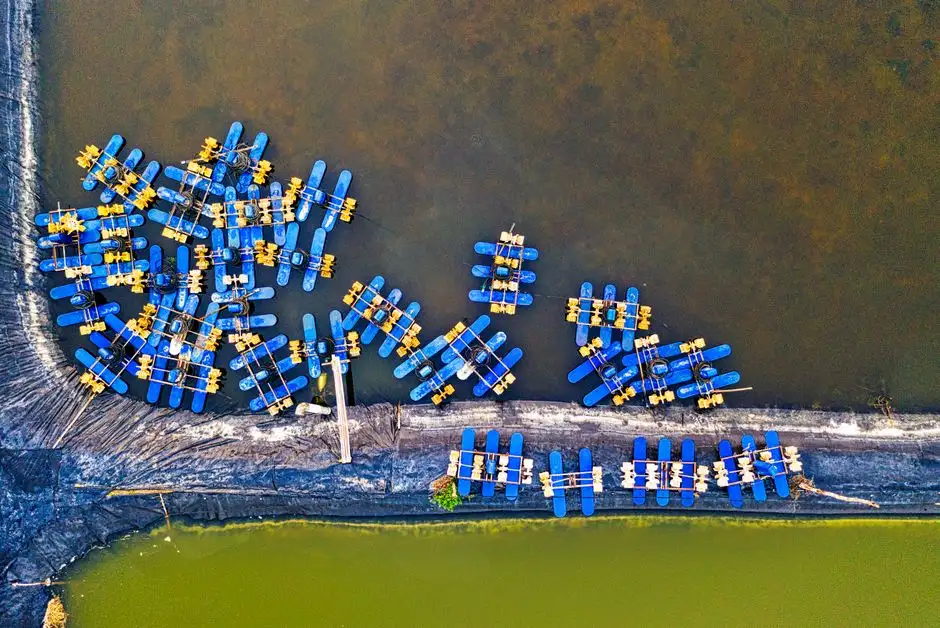
WSZ A/O, MBR and DAF perform different functions: WSZ and MBR provide biological treatment, while DAF is principally a solids-and-floatables pretreatment step. The product catalog states that the underground WSZ A/O package sewage treatment plant covers 1–80 m³/h and integrates anoxic/aerobic contact oxidation, sedimentation and disinfection in one buried unit; it is fully automated, requires no operator and can be installed below grade with landscaping above or mounted on a trailer. Treat these as catalog attributes, not guaranteed project performance.
The catalog gives the MBR wastewater treatment system a capacity range of 10–2,000 m³/day. It describes submerged membrane filtration below 1 μm and states that the system requires a footprint 60% smaller than conventional treatment for its catalog application. MBR combines activated-sludge treatment with submerged membrane filtration, making it an option where membrane solids separation, reuse potential or footprint control justify added operating complexity. The membrane retains solids; it should not be treated as a substitute for a separately specified disinfection process without project confirmation.
For FOG, the dissolved air flotation machine is catalogued in 13 standard models from 4–300 m³/h, using micro-bubble flotation and automatic skimming for suspended solids, FOG, oil and grease, and colloidal matter. Its relevance depends on measured kitchen loading and how grease-bearing wastewater is collected. DAF normally belongs upstream of biological treatment; it does not replace the biological and solids-separation stages.
| Option | Catalog basis | Most defensible project role | Key procurement check |
|---|---|---|---|
| WSZ underground A/O | 1–80 m³/h; integrated anoxic/aerobic contact oxidation, sedimentation and disinfection; fully automated; buried or trailer-mounted | Space-efficient baseline for conventional hotel sewage where the verified design basis supports biological treatment | Confirm package boundary, below-grade construction, hydraulic duty and project-specific effluent obligations |
| MBR | 10–2,000 m³/day; submerged filtration below 1 μm; catalog states 60% smaller footprint than conventional systems | Higher-quality or reuse-oriented option where membrane separation and footprint control are justified | Request membrane material, module arrangement, cleaning method, replacement philosophy and operating guarantees |
| DAF | 4–300 m³/h across 13 standard models; micro-bubble flotation and automatic skimming | Upstream removal of measured FOG, oil, floatables, suspended solids and colloidal matter | Define feed collection, skimmings removal, controls and downstream biological capacity |
SSI Aeration’s 2025-08 guidance also identifies MBBR as a biological option with potential space and maintenance advantages, and tertiary treatment as relevant to reuse or sensitive discharge. Those are evaluation options, not equivalents to the catalog products above. The buyer should compare them on the same design flow, wastewater basis, effluent objective and lifecycle scope.
Design the Hotel Wastewater Process Flow
A reliable hotel treatment train begins with protected influent collection, flow measurement and equalization before the selected biological process. Screenings and oversized solids should be removed at the inlet; a rotary mechanical bar screen may be considered where the wastewater assessment supports it. Equalization then manages peak and off-season demand and improves process consistency, consistent with SSI Aeration’s 2025-08 selection guidance.
Where kitchen testing shows significant FOG, route the collected kitchen flow through DAF or another separately specified pretreatment stage before biological treatment. For a conventional WSZ installation, the buried unit then integrates biological contact oxidation, sedimentation and disinfection; the vendor must nevertheless reconcile that catalog scope with the complete site flow diagram. For MBR, activated-sludge treatment precedes submerged membrane filtration, with solids separation occurring at the membrane stage. Disinfection remains a separately defined function unless the approved project specification assigns it to another unit.
Downstream solids handling must be explicit. A sedimentation tank may support clarification or solids concentration, while a plate-frame filter press can be evaluated for dewatering. Require drawings for sludge withdrawal, screenings removal, odour control, standby power, access, instrumentation and remote alarms. These are design and O&M requirements; the supplied research does not establish project-specific values for them.
Treated-water reuse is a conditional branch, not an automatic outlet. Define the receiving use and applicable treatment, public-health and site requirements before routing water to landscaping, housekeeping or another non-potable application. If those requirements cannot be demonstrated, the design must retain the approved discharge route.
Set Performance, Compliance and Procurement Requirements
Procurement becomes comparable when every supplier quotes against the same verified design basis and states the limits of its offer. The research does not establish current Gujarat or Surat effluent limits, so the specification must identify the applicable authority, discharge route and permit conditions as project-specific inputs rather than insert unverified numbers.
Require each quotation to state design and peak flow, incoming wastewater basis, treatment process, effluent guarantees, disinfection method, automation scope, calculated retention times or other hydraulic parameters, and drawing deliverables. SSI Aeration’s 2025-08 guidance identifies initial cost, operating expense, expected life, installation disruption, maintenance access and skilled-labour requirements as purchasing factors. A price without these boundaries is not a lifecycle comparison.
Separate catalog equipment from project-specific civil works, inlet and outlet works, power distribution, controls, chemicals, commissioning, training, spares and warranty. For MBR, request submerged PVDF membrane details, module arrangement, cleaning method, replacement philosophy and associated footprints; the catalog specifies PVDF membranes but not project-specific operating guarantees. For WSZ, require confirmation of the fully automated package boundary and below-grade installation requirements. For DAF, require the solids and floatables handling arrangement because automatic skimming does not by itself resolve end-to-end waste disposal.
| Bid requirement | Response needed for a fair comparison | Buyer acceptance check |
|---|---|---|
| Design basis | Average, peak and off-season flows; wastewater results; reuse and discharge objectives | Matches the property’s issued design brief without substituted assumptions |
| Technical performance | Process description, guarantees, operating parameters and exclusions | Guarantees are measurable and tied to stated feed and discharge conditions |
| Equipment scope | Mechanical package, civil works, power, controls, chemicals, sludge and odour systems | Interfaces and responsibilities are shown on the P&ID and battery limits |
| Installation and commissioning | Method, sequence, site disruption, testing, training and handover | Programme protects hotel operations and assigns approval responsibilities |
| O&M and lifecycle | Maintenance tasks, consumables, spares, skilled labour, warranty and exclusions | No critical maintenance responsibility is left unassigned |
| Compliance evidence | Applicable permit basis, monitoring plan and supporting calculations | Requirements are confirmed for the actual discharge route; no assumed local limits |
The SBR hotel wastewater cost and design guide provides a useful quotation checklist, while the prefabricated wastewater plant maintenance protocol helps identify unresolved O&M obligations. Neither should be treated as evidence of a current Surat price.
Plan Installation and Operation Without Disrupting Guests
Construction sequencing determines whether installation disrupts hotel operations. SSI Aeration’s 2025-08 guidance warns that installation can disrupt operations and requires careful planning. Where the hotel remains open, prepare a phased construction and commissioning plan, protected access routes, temporary wastewater arrangements and clear shutdown windows. SSI Aeration’s 2025-08 guidance also identifies maintenance access and skilled-labour requirements as selection factors, so an automated system should not be accepted without an accountable operator.
Assign responsibility for mechanical, electrical and civil works, drainage, PLC controls, alarms and remote operation. Training should cover sampling, routine checks, cleaning, sludge withdrawal, membrane or aeration maintenance, alarm response and spare-parts inventory. Define who receives alarms after hours and who authorises chemical, membrane or replacement-parts purchases.
The treatment plant should support the resort’s sustainability position through measured outcomes rather than an installation claim alone. The Kyiv National University of Culture and Arts study of Goro Mountain Resort, published 2025-07, identifies environmentally responsible hotel infrastructure and sustainable development as current priorities. A separate Lake Singkarak Resort Hotel green-architecture study from Universitas Sumatera Utara emphasizes conservation, energy efficiency, sustainability and harmony with the natural environment. For the Surat property, record actual non-potable reuse, avoided freshwater demand and verified effluent performance, then report those results consistently.
Frequently Asked Questions
How much does a hotel wastewater treatment system cost in Surat?
No Surat-specific price is supported by the supplied research, so a responsible quotation must be requested rather than estimated. Give suppliers the verified design and peak flows, wastewater characteristics, selected process, civil works, power, controls, reuse requirements, site conditions and maintenance scope. Compare itemized subtotals for equipment, installation, commissioning, annual O&M, chemicals, membrane or replacement parts, power and disposal. Ask which costs are excluded, then test the initial price against lifecycle obligations rather than accepting a package headline.
Should a Surat hotel choose MBR or a packaged A/O plant?
Choose MBR when the verified objective depends on submerged membrane filtration below 1 μm, reuse potential or tightly controlled footprint, and the property can support membrane cleaning and replacement. Choose the WSZ packaged A/O baseline when its catalog capacity of 1–80 m³/h and integrated anoxic/aerobic contact oxidation, sedimentation and disinfection fit the property’s design basis and reuse requirements. Make the decision using project-specific effluent and reuse obligations, not catalog language alone.
Does a hotel wastewater plant need DAF treatment?
DAF becomes more compelling where site testing shows significant kitchen FOG, oil and grease, suspended solids or colloidal matter that should be removed before biological treatment. The catalog identifies 4–300 m³/h across 13 DAF models, automatic skimming and removal of those contaminant groups. Confirm the kitchen collection arrangement, actual loading and floatables-disposal method; do not add DAF simply because a hotel has a kitchen.
Can the treatment system be installed below ground without losing the landscaped area?
The WSZ catalog states that the unit can be installed below grade with landscaping above or mounted on a trailer. That does not remove the need for site verification. The design must address excavation, groundwater, flood level, structural loading, ventilation, access and lifting arrangements. Obtain a site-specific civil and geotechnical assessment before accepting the below-grade proposal.
How do I compare wastewater-treatment suppliers in Surat?
Issue the same design brief, drawings and performance schedule to each supplier, then require technical, civil, installation, commissioning, O&M, spares, warranty and compliance submissions. Check whether proposed capacities match the verified peak and off-season basis; request the treatment calculation, effluent guarantee conditions, maintenance staffing plan and all exclusions. This also tests whether local service capability and delivery responsibilities are clear before award.