Choose the Right Treatment Route for a Medellín Site
Domestic sewage treatment in Medellín should begin with a verified sewer-connection assessment, not with a catalogue capacity. If a legal, technically suitable and feasible centralized connection cannot be confirmed, the principal routes are a buried packaged A/O plant, an MBR train, or a decentralized biological process. The underground WSZ integrated sewage treatment plant combines anoxic/aerobic biological contact oxidation, sedimentation and disinfection in one buried package rated from 1–80 m³/h by the HydropureWater verified product catalog. An integrated MBR membrane bioreactor is the relevant alternative where compactness or higher-quality reuse is a project objective.
Use a centralized sewer only after confirming access, legality, capacity and technical suitability. Kyriienko, Betin and Kuznetsova identified locations without centralized sewage networks as the principal use case for small treatment plants, with septic tanks and drainage wells proposed where space is limited (Environmental Safety and Natural Resources, 2018-09-28). That finding supports a connection test; it does not establish a Medellín-specific process or capacity.
Define three buyer routes before requesting quotations. A packaged A/O train suits conventional biological treatment where footprint can be allocated and landscaping above a buried unit is acceptable. MBR suits projects with tighter footprint constraints or more demanding reuse objectives. Decentralized processes warrant consideration where conventional package installation is impractical, subject to local approval, effluent criteria and site conditions.
Tie the treatment objective to the receiving environment, sewer discharge point, irrigation, toilet flushing or another identified reuse application. None of these routes should be presented as producing potable water without additional treatment and approval. Permit requirements, effluent limits, land constraints, sewer access and community integration belong in the preliminary engineering brief; the Journal of Geography and Geology review identifies technical, community-based and regulatory integration as critical to domestic-wastewater strategy.
Build a Medellín Design Basis Before Sizing Equipment
A Medellín equipment selection is defensible only when the wastewater, site, reuse destination, sludge route and approval basis are documented before nominal capacity is compared. The supplied research provides no universal flow allowance for Medellín, so per-capita estimates or vendor rules cannot replace measured project data. A site brief should instead expose the assumptions that control hydraulic and organic loading, installation and approval.
Request measured or defensibly estimated wastewater flows and the generation profile by time of day and day of week. Separate residential, hotel, hospital, school and food-service contributions where they occur, and distinguish average flow from peaks and commissioning allowances. Characterize sanitary sewage separately from stormwater, kitchen discharge, industrial process streams, grease, solids and cleaning chemicals entering the same system.
Document the available footprint, excavation and burial depth, access for maintenance and sludge withdrawal, electrical supply, gravity drainage, flood exposure and proposed effluent destination. Assign responsibility for biosolids. The Sustainability systematic review by Teymurazova and colleagues reports that wastewater treatment generates sludge with variable quantities and qualities that must be properly managed; it identifies anaerobic and aerobic digestion and composting as major stabilization strategies (2022).
Set reuse criteria with the authority, client and process designer. The Journal of Geography and Geology literature review reports that nutrient and pathogen contamination from untreated discharges can cause eutrophication, biodiversity loss and associated diseases. It therefore supports early confirmation of the receiving-water and reuse constraints, but it does not supply a Medellín effluent schedule.
| Design-basis input | Evidence or information required | Decision affected |
|---|---|---|
| Wastewater flow | Measured or defensibly estimated average flow, peak flow, timing and contributing uses | Unit selection, equalization and duty cycle |
| Wastewater characteristics | Solid, organic, grease and chemical inputs; stormwater separation | Process suitability and pretreatment |
| Site and installation | Footprint, burial depth, access, power, drainage, flood exposure and lifting | Package arrangement and civil works |
| Effluent destination | Discharge point or defined reuse application, with authority-confirmed criteria | Treatment objectives and monitoring |
| Sludge | Withdrawal route, stabilization method, conditioning, disposal and responsible party | Operating plan and environmental obligations |
| Approvals | Receiving body, discharge conditions, construction, reuse and monitoring requirements | Concept approval and procurement scope |
Use screening and solids-removal equipment only after confirming where those flows enter. A rotary mechanical bar screen may form part of the pretreatment review, while a plate-and-frame filter press requires sludge-compatibility and disposal confirmation. Neither product reference substitutes for the project design basis.
Understand the Treatment Process Before Comparing Equipment
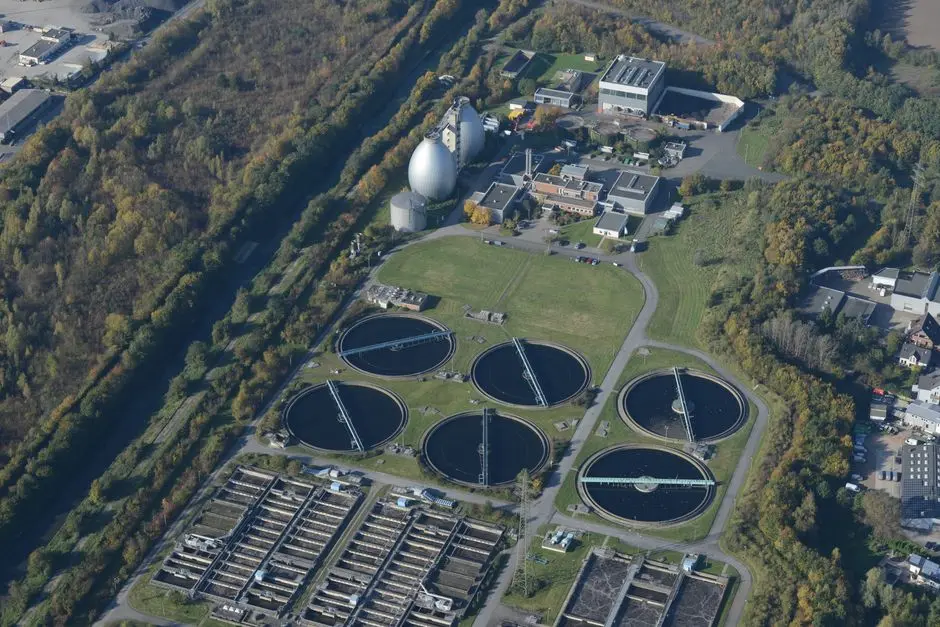
A complete treatment train normally progresses through inlet and screening, flow equalization where required, biological treatment, solids separation, disinfection, and monitored effluent discharge or reuse. The objective is not to maximize nominal treatment stages; it is to verify that each stage addresses the wastewater characteristics, hydraulic duty and receiving-environment requirements established in the design basis.
For the WSZ reference train, anoxic/aerobic biological contact oxidation is followed by sedimentation and disinfection within a single buried package, according to the HydropureWater verified product catalog. The anoxic and aerobic zones support different biological functions, but the supplied research does not establish a Medellín-specific removal efficiency for either zone. Any quoted performance therefore needs a defined influent basis, test method and operating condition.
For MBR, activated sludge is combined with submerged PVDF membrane filtration. The HydropureWater verified product catalog reports filtration below 1 μm for the MBR system; this is a filtration characteristic, not a complete reuse or discharge guarantee. Membrane separation also leaves biological solids-management requirements to be addressed rather than eliminating them.
Sludge removal, conditioning and disposal belong on the process diagram. The Sustainability systematic review identifies volatile fatty acids, volatile solids, carbon-to-nitrogen ratio, humic substances, total organic carbon and carbon dioxide evolution as indicators used in biological sludge stabilization (2022). These are design and monitoring inputs, not interchangeable performance guarantees.
- Screen incoming sewage and remove material that could damage downstream equipment.
- Equalize flow where the selected process requires attenuation.
- Apply biological treatment for soluble and particulate organic matter.
- Separate biological solids by sedimentation or membrane filtration.
- Disinfect according to the approved discharge or reuse basis.
- Withdraw, condition, stabilize and dispose of residual sludge.
- Monitor the agreed effluent and operating parameters.
The Journal of Geography and Geology review found both natural and advanced technologies in the literature, while concluding that technical selection must integrate community and regulatory considerations. That conclusion applies directly to a Medellín procurement decision: equipment performance alone does not establish acceptability.
Compare Packaged A/O, MBR and Decentralized Treatment
Packaged A/O, MBR and decentralized treatment differ in process configuration, documented capacity basis, physical arrangement and operating responsibilities. The comparison below separates manufacturer-documented capacities from project-specific sizing decisions; the two capacity ranges are not directly interchangeable without flow-basis conversion and hydraulic review.
| Criterion | Packaged A/O: WSZ | MBR | Decentralized route |
|---|---|---|---|
| Process | Anoxic/aerobic contact oxidation, sedimentation and disinfection in one buried package | Activated sludge with submerged PVDF membrane filtration | Examples include septic tanks with drainage wells or vermifiltration |
| Documented capacity | 1–80 m³/h, HydropureWater verified product catalog | 10–2,000 m³/day, HydropureWater verified product catalog | No common capacity is established by the supplied research |
| Footprint | Can be buried with landscaping above | HydropureWater reports 60% less footprint than conventional systems | Site-specific; S5 identifies septic tanks and drainage wells for limited-space applications |
| Deployment | Fully automated, no operator required, and can be mounted on a trailer | Integrated activated-sludge and membrane treatment train | Decentralized treatment can avoid dependence on a central sewer |
| Reuse potential | Depends on documented effluent quality and approval | Catalog filtration is reported below 1 μm; project reuse criteria still govern | Depends on the selected process and locally accepted effluent criteria |
| Maintenance | Automated package operation; media, aeration, controls and sludge access still require attention | Adds membrane cleaning, aeration and instrumentation management | Requires site-specific maintenance and acceptance |
| Key limitation | Catalog capacity is not a project design flow | Catalog capacity and footprint claim are not equivalent to a Medellín duty basis | Local approvals, effluent criteria and site conditions govern acceptance |
The capacity entries come from the HydropureWater verified product catalog, while the decentralized limitations reflect S3 and S5. S3 concludes that vermifiltration can be efficient, viable, less expertise-dependent and decentralized, but local approvals, effluent criteria and site conditions still determine whether it is accepted (InTechOpen, 2023).
For a conventional buried package, compare installation robustness, access and civil works rather than nominal capacity alone. For MBR, ask for membrane lifecycle, aeration and control requirements. The MBR domestic sewage process and buying guide provides a structured starting point for those technical questions.
Size the Treatment Train from Project Data
Correct sizing starts with the design flow required by the applicable authority or approved design basis and then tests whether the wastewater characteristics can be treated at that duty. The supplied research contains no universal Medellín flow value, so the calculation trail must connect measured generation data, contributing uses, peak conditions and the selected operating strategy.
| Step | Required check | Information to attach to the quotation |
|---|---|---|
| 1. Establish flow | Derive average and peak design flows from project data | Measured records, occupancy or use assumptions, contributing sources and peak profile |
| 2. Confirm hydraulic basis | Resolve rated-flow definition, equalization, peak attenuation and duty-cycle duration | Supplier sizing calculation and operating assumptions |
| 3. Check load | Assess organic and solids loading against the proposed process | Influent sampling results and selected biological-loading indicators |
| 4. Select the route | Compare the candidate against a consistent flow basis | WSZ: 1–80 m³/h or MBR: 10–2,000 m³/day, both from the HydropureWater verified product catalog |
| 5. Define performance | Specify approved effluent and reuse parameters and monitoring points | Applicable limits, test methods, sampling locations and reporting responsibilities |
| 6. Define operations | Address redundancy, sludge withdrawal, access and consumables | Maintenance schedule, sludge route, controls, alarms and backup strategy |
| 7. Audit commercial scope | Identify exclusions and assumptions | Civil works, power, startup, training, performance evidence and supplier obligations |
Check hydraulic loading only after confirming the supplier’s basis for rated capacity, equalization and peak attenuation. Check organic and solids loading using measured wastewater characteristics. The Sustainability review identifies volatile solids, total organic carbon, carbon-to-nitrogen ratio and carbon dioxide evolution as indicators associated with biological stabilization and sludge management (2022); it does not provide universal acceptance thresholds for a Medellín equipment train.
Match a WSZ against its documented 1–80 m³/h range or an MBR against its documented 10–2,000 m³/day range only after all project flows use consistent units and duty assumptions. Require the quotation to disclose exclusions, installation assumptions, power requirements, startup activities, operating inputs and evidence supporting every performance claim.
Plan Installation, Commissioning and Sludge Management
Buried equipment can create more project risk than the treatment process itself if excavation, groundwater, structural loading and maintenance access are left to assumptions. For a below-grade WSZ installation, verify the excavation, structural loading, waterproofing, access, ventilation, lifting and above-unit landscaping requirements as project-specific engineering inputs.
Plan collection by gravity where feasible. S5 describes small treatment constructions that collect sewage effluents by gravity without electricity and identifies septic tanks and drainage wells for locations with limited installation space (Environmental Safety and Natural Resources, 2018-09-28). That does not establish gravity drainage as feasible at every Medellín site; invert levels, incoming flow and route alignment still require engineering verification.
Sequence commissioning around biological acclimation, incoming wastewater characterization, control testing and operator training. Installation completion is not operational readiness. Define startup sampling, acceptance tests, alarm response, maintenance access and the transition to routine operation in the procurement schedule.
Reserve capacity and access for sludge withdrawal and treatment. The Sustainability review reports variable sludge quantities and qualities and treats proper management as a distinct requirement of wastewater treatment (2022). Where the objective requires solid-liquid separation before disposal or reuse, assess a plate-and-frame filter press and require the supplier to confirm compatibility with the actual sludge through the filter-press selection and compatibility review.
Coordinate mechanical pretreatment with the overall process. If screening is required, the mechanical screening engineering guide can inform the inquiry, but its inclusion must follow the wastewater characterization rather than a general equipment preference.
Ask Suppliers Questions That Expose Project Risk
A comparable quotation should expose the duty basis, engineering scope, operating obligations and local approval responsibilities rather than present a catalogue unit with an unexplained flow rating. Procurement should require each bidder to answer the same technical questions in the same sequence.
- Ask for the exact duty basis behind the quoted capacity, including influent characteristics, peak flow, operating hours, equalization and performance guarantees.
- Request the process flow, P&ID, installation envelope, civil-works list, electrical load, control philosophy, maintenance schedule and commissioning plan.
- Confirm whether the offer includes biological media or membranes, aeration, pumping, screening, disinfection, sludge removal, monitoring, startup and training.
- Ask how the supplier will support the Medellín approval process and which performance evidence can be provided without implying unverified local guarantees.
- Request sludge-production assumptions, removal frequency, conditioning, storage, final disposal and the responsible party for each task.
- For MBR, obtain membrane-cleaning methods, replacement planning, aeration requirements, instrumentation, controls and alarm provisions.
Compare lifecycle considerations qualitatively using footprint, automation, operator involvement, sludge production, membrane or media maintenance and reuse requirements. The supplied research contains no verified Medellín price, comparative maintenance-cost or local operating-cost dataset, so a purchase-price-only comparison would omit material obligations.
The packaged A/O, MBR and decentralized equipment comparison can support the route review, while the regional domestic sewage treatment guide offers a broader check on the decision framework. Neither replaces a Medellín-specific design basis.
Frequently Asked Questions
What capacity of domestic sewage treatment equipment should be selected for a Medellín project?
The WSZ package range is 1–80 m³/h, while the MBR range is 10–2,000 m³/day, according to the HydropureWater verified product catalog. Neither range establishes the required unit size. Selection requires project-specific average and peak flow, flow timing, equalization assumptions, wastewater characteristics and the duty basis used by the supplier.
How should a buyer select a domestic sewage treatment supplier?
Select against a controlled set of deliverables: process match, documented scope, hydraulic sizing basis, civil and electrical requirements, commissioning support, sludge handling, monitoring, maintenance and local compliance assistance. Compare offers using the same project inputs and require each supplier to state exclusions. Purchase price alone cannot reveal differences in operating responsibility or approval risk.
What inputs are needed to estimate the cost of domestic sewage treatment in Medellín?
Request quotations against the same project scope using measured flow, wastewater characteristics, chosen treatment route, excavation and civil works, footprint, power demand, control scope, reuse requirements, sludge removal, media or membrane lifecycle, monitoring, startup and operator training. The supplied research does not support a verified Medellín price range, so budget totals should be built from current supplier quotations rather than an unsupported generic allowance.
What compliance risks must be resolved before discharge or reuse?
Confirm the discharge and reuse requirements separately with the relevant authority. The review does not establish a Medellín effluent schedule, so obtain the applicable receiving-water, sewer-discharge, irrigation or toilet-flushing criteria, construction approvals, monitoring requirements and sludge-handling obligations. Engineering the process without confirming those conditions creates a substantial permitting risk.
How do packaged A/O and MBR systems differ in maintenance?
The HydropureWater verified product catalog describes the WSZ as fully automated and not requiring an operator, although biological media, aeration, controls, sludge withdrawal and site access still require planned attention. An MBR combines activated sludge with submerged membranes and therefore introduces explicit membrane-cleaning, aeration and instrumentation-management obligations. Obtain the supplier’s maintenance schedule, spare-parts assumptions, alarm response plan and training scope before comparing operating commitments.