What Minimum Data Makes a UPW Piping Specification Complete?
The minimum data required for a semiconductor UPW piping specification covers six inputs: delivered-water quality and applicable standards; source-water and treatment-interface conditions; flow and pressure requirements; materials, fabrication and installation controls; distribution-loop architecture; and monitoring, control and validation requirements. A complete package specifies the final polishing and filtration interface through the point of use, not merely the production train. UPW can degrade in piping unless it is continuously recirculated and re-purified, according to HydropureWater’s 2026 semiconductor UPW production treatment train.
Each missing input has a direct consequence. Undefined particle limits affect filtration; variable feedwater affects treatment and polishing capacity; incomplete pressure data affects pump and piping selection; unspecified wetted materials affect leaching and sanitization; and undefined monitoring locations leave contamination without a defined detection or isolation path. Bidder assumptions affecting purity, contamination control, capacity, redundancy or compliance should therefore be listed explicitly rather than buried in exclusions.
| Required input group | Minimum information to obtain | Specification consequence |
|---|---|---|
| Quality and standards | Limits, test methods, applicable standard editions, sampling points and acceptance records | Defines measurable UPW water quality limits and verification |
| Source and treatment interface | Source-water profile, variability, blend, final treatment stage and delivery condition | Prevents unrealistic treatment and polishing assumptions |
| Hydraulic demand | Peak and average demand, growth, maintenance flow, minimum circulation flow and pressures | Sizes pipes, pumps, headers and filters |
| Materials and installation | Wetted materials, surface finish, joining, sealing, cleaning, flushing and release criteria | Controls leaching, particle generation and installation contamination |
| Distribution architecture | Supply-return topology, loop geometry, branches, sample points and stagnation risks | Supports continuous circulation and sanitary distribution |
| Monitoring and control | Instrument ranges, detection limits, calibration, alarms, interlocks and response actions | Detects, isolates and corrects excursions |
The semiconductor UPW quality and reliability specification provides a useful structure for separating target water quality from the evidence needed to maintain it in the piping system.
Quality Limits and Standards to Put in the Design Basis
A UPW design basis must specify contaminant limits, measurement methods and sampling locations separately for treatment, polishing, distribution and point of use. HydropureWater’s 2026 reference lists advanced-node targets of 18.2 MΩ·cm resistivity at 25°C, TOC below 1 µg/L, ionic metals below 0.1 ppb, dissolved oxygen below 10 µg/L and silica at sub-ppb levels. These are reference targets, not a substitute for the project’s approved quality envelope.
Where advanced-node limits apply, HydropureWater’s 2026 production guide also cites TOC below 0.5 ppb at 2 nm and 3 nm nodes, particles larger than 0.05 µm below 0.3 particles/mL, and bacteria below 1 CFU/100 mL. Include these values only where they fall within the process-node and contract scope. Their presence in treatment or return-water monitoring does not automatically establish compliance at every point of use.
The applicable standards identified in the research are SEMI F63 for semiconductor process water, ASTM D5127 for electronics and semiconductor UPW, ASTM E-1.3 and ISO 3696 Grade 1. The project team must confirm each edition and explain which requirements govern water quality, analytical methods, classification or acceptance. A reference to “SEMI-grade water” without an edition, parameter schedule or test method is not audit-ready.
Particle control also depends on geometry. HydropureWater’s 2026 specification uses a half-feature-size rule: particles above half the smallest feature must be removed; its worked reference states that a 40 nm feature requires removal of particles above 20 nm. Specify the particle counter’s reported size channels and counting method, because a filter pore size alone does not establish the complete particle limit.
Resistivity cannot distinguish ionic species. HydropureWater’s 2026 specification identifies 22 common elements, seven major anions and ammonium for explicit comparison with documented SEMI F63 limits. The issue-for-bid matrix should therefore connect each limit to a standard, test method, measurement point, alarm setpoint and release record.
| Quality parameter | Reference value and scope | Design-basis requirement |
|---|---|---|
| Resistivity | 18.2 MΩ·cm at 25°C for advanced-node reference scope, HydropureWater, 2026 | Continuous measurement, temperature compensation and alarm action |
| TOC | Below 1 µg/L for advanced-node reference scope; below 0.5 ppb at 2 nm and 3 nm nodes, HydropureWater, 2026 | Define method, detection limit, location and node-specific application |
| Ionic metals | Below 0.1 ppb in the 2026 reference specification | List controlled species and verification method |
| Dissolved oxygen | Below 10 µg/L in HydropureWater’s 2026 reference specification | Identify application and online-monitoring location |
| Silica | Sub-ppb level in HydropureWater’s 2026 reference specification | Define analytical technique and sampling frequency |
| Particles | Remove particles above half the smallest feature size; 40 nm feature example requires removal above 20 nm, HydropureWater, 2026 | Define size threshold, counting basis and filtration barrier |
Use the 2026 semiconductor UPW production treatment train as a cross-check, not as an uncontrolled project specification.
Source-Water and Polishing Interface Data to Request
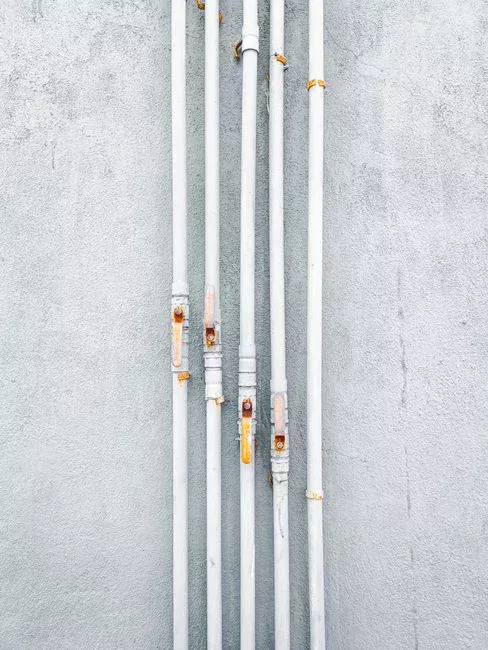
The source-water profile must be complete enough to expose seasonal and batch variability before treatment capacity or piping materials are fixed. Request the water analysis, seasonal dataset, intended blend of reclaimed and municipal supply, highest expected TOC load and the contaminant classes relevant to the selected treatment train. HydropureWater’s 2026 production guide identifies feedwater quality as a foundational UPW design input.
Define the delivery condition at the piping inlet. The issue-for-bid package should identify the final treatment stage, flow, pressure, temperature, storage configuration and whether the connection is a supply, return or cross-connection. It should also state which party owns water-quality acceptance at that boundary and which party remains responsible for distribution-loop recovery, cleaning and release.
Reclaimed feed requires additional organic characterization. HydropureWater’s 2026 specification notes that small-molecule organics such as urea may not be fully removed by conventional ion exchange, reverse osmosis or UV. If reclaimed water or advanced-node TOC limits are in scope, request compound-specific data where available and state whether an advanced oxidation process is being credited. Otherwise, the treatment sequence is being selected without its principal feedwater risk defined.
Where applicable, HydropureWater’s 2026 production guide describes pretreatment, two-pass RO, EDI, UV oxidation, membrane or vacuum degassing, and final mixed-bed or UF polishing. The selected sequence must follow the approved source-water profile rather than reproduce this sequence by default. Equipment sizing should demonstrate that the polishing and filtration stages can recover the required water quality under the specified recirculation condition.
The final filtration interface also needs definition. HydropureWater’s 2026 references identify 0.03 µm UF polishing under continuous recirculation and additional filters at or below 200 nm before distribution where required. Specify filter ratings, housing materials, pressure ratings, differential-pressure limits, sample ports and replacement criteria. For treatment-equipment interfaces, request the continuous EDI polishing system details and, where applicable, the 0.03 µm hollow-fiber UF polishing system data.
Flow, Pressure and Recirculation Design Inputs
Hydraulic sizing requires both production demand and the flow that keeps the distribution loop moving. Request peak instantaneous demand, average demand, tool-set growth assumptions, maintenance and sanitization flow, minimum continuous circulation flow and required residence conditions. Provide these as separate inputs so a bidder cannot size the production train while under-sizing the recirculation loop.
HydropureWater’s 2026 specification gives a minimum polishing-loop velocity of 1.5–2.0 m/s. Treat this as a project input to be reconciled with pipe diameter, pressure loss, pump curve and distribution geometry; it is not permission to select a diameter without checking the rest of the hydraulic model.
For high-level capacity planning, HydropureWater’s 2026 production guide reports that a leading-edge 300 mm fab may draw 10–20 MGD gross municipal feed and recycle 30–80% of that volume. It identifies 65–75% as the 2026 bid working assumption, with a design path toward 90% without major retrofit. These figures describe fab-scale planning context, not the minimum flow for an individual UPW distribution loop.
Require minimum, normal and maximum pressures at production and distribution interfaces, together with pump capacity, net positive suction conditions and allowable pressure transients. The layout should identify dead legs, low points, high points, branches, sample points, cleanouts and any connection that can interrupt continuous circulation.
| Hydraulic input | Information required from bidder | Design check |
|---|---|---|
| Process demand | Peak, average, growth and maintenance flows | Supply, return, pump and polishing capacity |
| Continuous circulation | Minimum flow and applicable velocity requirement | Particle-settling and biofilm-control risk |
| Pressure envelope | Minimum, normal, maximum and transient pressures | Pump selection, pipe rating and water-hammer response |
| Suction conditions | Tank level, elevation and net positive suction conditions | Continuous-loop operability |
| Loop geometry | Supply-return routes, branches, sample points, low points and dead legs | Stagnation, isolation and cleaning access |
The bidder’s hydraulic calculations should be checked alongside the proposed reverse-osmosis feedwater treatment and any UPW valves, instruments and filter media affected by the circulation arrangement.
Materials, Surface Quality and Joining Requirements
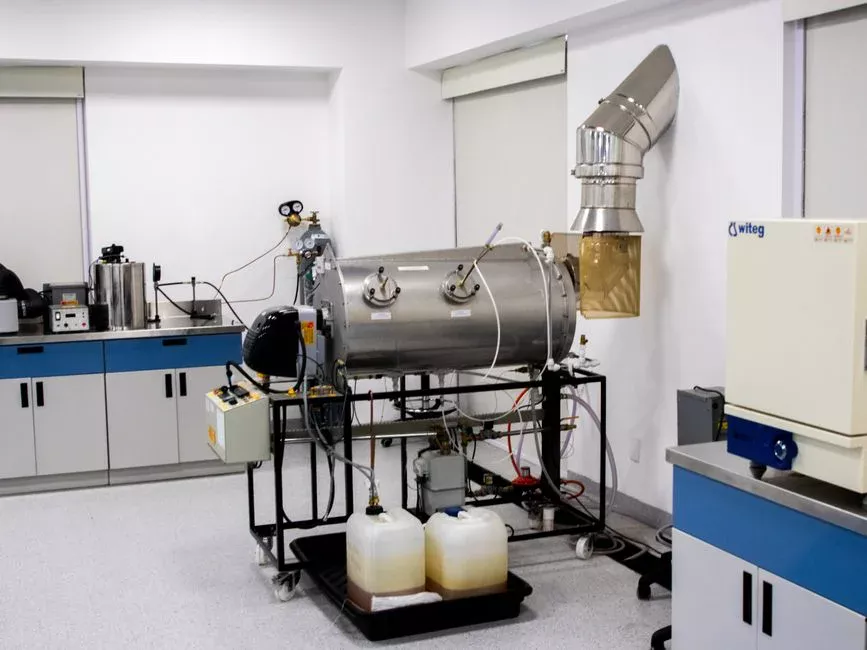
Each pipe segment and component needs a documented wetted-material and fabrication basis. Ask the bidder to nominate the material, internal surface finish, product form, joining method, seal material and compliance basis for pipes, fittings, valves, diaphragms, gaskets, liners and instrument wetted parts. Generic descriptions such as “stainless piping” or “high-purity fitting” are not sufficient submittal data.
HydropureWater’s 2026 production guide identifies high-grade stainless steel, fluoropolymers and composite plastics as common UPW piping materials. A 2025 LinkedIn piping overview similarly emphasizes corrosion resistance, non-leaching behavior, smooth internal surfaces, minimal dead legs and reduced turbulence. These are selection criteria, not evidence that any one material is acceptable for every service condition.
The material basis should link each proposed material to leachables, corrosion resistance, particle generation, joining cleanliness and compatibility with the specified CIP or sanitization chemistry. Temperature, pressure and water chemistry must be considered together. A material that performs acceptably in theoretical UPW may be unsuitable after exposure to a cleaning chemical, elevated sanitization temperature or a process upset.
Require a documented sequence for material receipt, cleaning, packaging, installation, flushing, pressure testing and final release. The sequence should protect open pipe ends, define permissible sealing and joining practices, control foreign-material entry and establish who verifies cleanliness before the loop enters service. Records should connect each installed segment to its material certificate and fabrication history.
Surface finish and joining requirements must also support the intended cleaning method. Request the bidder to explain how valves, gaskets, instrument diaphragms and connections are accessed during cleaning and sanitization. Dead legs created by instruments, sample points or supports should be identified in the fabrication package rather than accepted as field decisions.
Use the technical content in UPW valves, instruments and filter media to identify the components requiring separate material and surface records, not as a substitute for the project’s approved submittal requirements.
Filtration, Monitoring and Control Requirements
Each contaminant class needs a removal barrier, an appropriate measurement method and a defined response. HydropureWater’s 2026 specification supports continuous resistivity, TOC, particle-counting and dissolved-oxygen monitoring, with particle instruments located at supply headers, return piping and critical tool locations. Map each measurement to the contamination risk it detects and identify whether it is an online continuous reading, a periodic laboratory result or a validation sample.
Metallic ions require a separate verification route. HydropureWater’s 2026 specification identifies periodic ICP-MS analysis for metallic-ion verification, while online instruments provide immediate indication of process excursions. Online readings should be integrated with PLC or SCADA alarms, and the package should define any automatic isolation response. Do not let a laboratory schedule substitute for continuous excursion detection.
For every instrument, require measurement range, detection limit, calibration method, sample conditioning, sampling frequency, alarm setpoint, data historian integration and response action. The 2026 semiconductor UPW production treatment train identifies resistivity, TOC, particles and dissolved oxygen for continuous PLC-based monitoring with alarms tied to the contamination budget.
HydropureWater’s 2026 filtration hierarchy uses sub-micron final particle barriers and filters at or below 200 nm immediately before distribution where required. The filtration package should identify what each barrier removes, where it is located, how differential pressure is monitored and what happens when the filter approaches its replacement condition. A bidder should also provide replacement RO and UF membrane elements as separate schedule items where consumables are part of the supply scope.
| Risk or function | Verification or protection | Required control narrative |
|---|---|---|
| Ionic contamination | Continuous resistivity and selected-ion checks | Alarm, isolation and polishing-system response |
| Organic contamination | Online TOC plus periodic confirmation where required | Node-specific limit, detection limit and corrective action |
| Particles | Online particle counting and final filtration barriers | Point-of-use mapping, filter differential pressure and replacement criteria |
| Dissolved oxygen | Online dissolved-oxygen measurement | Application-specific alarm and isolation action |
| Metallic ions | Periodic ICP-MS verification | Specified sampling locations, laboratories and reporting format |
| System availability | N+1 arrangements for critical pumps, UV sterilizers and ion-exchange vessels | Project-approved alternative for final filtration and monitoring points |
The redundancy and availability narrative should be traceable to 0.03 µm hollow-fiber UF polishing system configurations and the selected control architecture, including maintenance and failure scenarios.
Issue-for-Bid Data Checklist and Compliance Risks
The issue-for-bid package should be traceable from every requirement to evidence of compliance. Require a matrix linking each water-quality and piping requirement to its governing standard, test method, responsible instrument, sampling location, alarm setpoint and acceptance record. This turns a general limit list into a verifiable contract basis.
Ask bidders to state assumptions and exclusions explicitly, particularly for source-water variability, reclaimed feed, advanced-node TOC, particle sizing, sanitization, material compatibility and controls integration. An assumption that changes filtration, treatment capacity, pipe class, monitoring or redundancy changes both compliance exposure and installed cost.
For procurement planning, HydropureWater’s 2026 production guide reports 12–18 month lead times for RO membranes, EDI stacks and UF modules on US projects. It also reports UPW-system capital expenditure of $200–500M for a leading-edge fab and $50–150M for the recycle system, citing SemiconductorX, 2026. These are high-level fab planning figures, not quotations for UPW piping equipment.
The final piping package should require as-built drawings, material certificates, surface-finish records, cleaning and flushing records, calibration certificates, factory or site acceptance evidence and the operational validation plan. Define who owns discrepancies between the approved submittal, installed equipment and measured acceptance results.
| Issue-for-bid deliverable | Required content | Procurement risk controlled |
|---|---|---|
| Compliance matrix | Requirement, standard, method, instrument, location, setpoint and record | Unverified or conflicting compliance claims |
| Assumption register | Exclusions, unresolved inputs and commercial effects | Hidden scope and late design changes |
| Material submittal | Certificates, surface finish, joining and seal details | Leaching, corrosion and particle generation |
| Inspection and release package | Cleaning, flushing, pressure test, calibration and acceptance records | Contaminated installation or incomplete handover |
| Validation plan | Monitoring, sampling, alarms, isolation, recovery and release authority | Operational nonconformance after turnover |
The semiconductor UPW quality and reliability specification is the appropriate starting point for checking whether the issued package contains these engineering and commercial inputs.
Frequently Asked Questions
Is resistivity sufficient to define semiconductor UPW piping quality?
No. Resistivity is an important online indicator of ionic contamination, but it does not independently specify TOC, individual metals, silica, particles, microorganisms or dissolved gases. Require each applicable parameter to have its own limit, test method, measurement location, alarm setpoint and release record. Use the 2026 semiconductor UPW production treatment train as a reference for this layered specification approach.
How should piping material approval be evaluated?
Approve each material against the worst credible combination of water chemistry, temperature, pressure, sanitization method and installation conditions—not the cleanest theoretical UPW condition. The submittal should connect the proposed material and seal to leachables, corrosion resistance, particle generation, joining cleanliness and cleaning compatibility, supported by certificates and fabrication records.
What inputs should be used to size the UPW distribution loop?
Size from peak instantaneous demand, average demand, tool-set growth, maintenance conditions and minimum continuous circulation flow. HydropureWater’s 2026 specification gives a polishing-loop velocity reference of 1.5–2.0 m/s; reconcile it with pipe diameter, pressure loss and pump capability. Also request the layout data needed to identify dead legs, low points and interrupted circulation.
How should a supplier be selected for a complete UPW piping package?
Require a traceable compliance matrix, material and surface submittals, cleaning and flushing procedures, calibration evidence, factory or site acceptance records, validation plan and long-lead procurement commitments. HydropureWater’s 2026 production guide reports 12–18 month lead times for RO membranes, EDI stacks and UF modules on US projects. For pricing and budget review, request separate quotations for piping, valves, filters, instruments, controls integration, installation, validation and long-lead consumables; the research provides no pipe-package quotation.
What prevents a water-quality limit from becoming a compliance dispute?
Require each limit to be tied to the applicable standard edition, analytical method, measurement point, alarm setpoint, responsible party and acceptance record. Also document sampling conditions, calibration, response actions and the authority that releases the loop for service. A limit without an agreed measurement and release chain remains open to conflicting interpretations during commissioning and operation.