Identify Which Limits Apply to the McCalla Sewer Connection
EV and automotive plants near McCalla meet sewer pretreatment limits by first identifying the receiving POTW or sewer authority, then mapping each process stream, characterizing its pollutants, and selecting treatment that satisfies the verified permit conditions. The design basis is the applicable categorical pretreatment standard, local discharge limit, individual industrial-user permit, and protection-of-POTW requirement. EPA’s Local Limits Development Guidance, published June 2021, states that an indirect discharger’s obligations are determined by its POTW industrial-user permit or other applicable requirements, and that a permit or regulation controls if guidance conflicts.
Start with the exact sewer connection—not a general assumption about McCalla. Confirm the receiving authority, discharge point, industrial-user status, and whether the plant is a significant industrial user. Then obtain the sewer rules, permit, discharge authorization, monitoring conditions, surcharge provisions, and any applicable 40 CFR categorical standards. Comparable decisions for mining and organic-chemical plants are discussed in how Bates City mining plants meet sewer pretreatment limits and how Geismar organic-chemical plants meet pretreatment limits.
Do not transfer numerical limits from another jurisdiction. The supplied Kentucky pH, oil, FOG, BOD, TSS, and ammonia values establish what one authority’s ordinance says; they do not establish McCalla requirements. Build a compliance register that links every permit condition to its evidence and operational consequence.
| Compliance register field | Engineer’s verification | Design or operating consequence |
|---|---|---|
| Controlling authority | POTW name, sewer rules, permit, and categorical standard | Defines the binding compliance basis |
| Discharge point | Approved sampling and connection location | Sets monitoring and flow-measurement boundaries |
| Limit basis | Concentration, mass loading, or production-based standard | Determines the required treatment and calculation method |
| Monitoring | Parameter, frequency, method, and reporting deadline | Defines instruments, laboratory work, and records |
| Contingency | Exceedance, bypass, and production-change instructions | Requires shutdown, diversion, and notification procedures |
Map EV and Auto Plant Wastewater by Source
A defensible pretreatment design begins with a process wastewater map because “automotive plant industrial sewer discharge” may combine streams with incompatible pH, oil content, solids, temperature, or production behavior. Separate body-shop and paint operations, component cleaning, degreasing, machining coolant, floor wash, oily runoff, battery or test laboratories, cooling-water blowdown, domestic sewage, and unauthorized storm-water entries before assigning treatment steps.
For each stream, document flow variability, connection to production, pH, oil characteristics, suspended solids, oxygen demand, toxicity indicators where applicable, sampling access, and the proposed discharge point. Keep streams segregated until the POTW rules and treatment performance justify combining them. A blended discharge can conceal the source of a failed concentration or create a mass-loading exceedance that is harder to diagnose.
EPA’s June 2021 guidance identifies sampling at the POTW, in the collection system, and at industrial users. That supports two linked datasets: source characterization to select treatment, and final verification at the authorized discharge point. Composite and grab samples should follow the permit instructions and the observed behavior of each stream; no sampling frequency should be assumed. For the wider decision sequence, see how transportation equipment plants meet sewer limits.
| Stream category | Characterization focus | Pre-treatment decision |
|---|---|---|
| Paint, body shop, degreasing, oily runoff | pH, oil and grease characteristics, suspended solids, flow variability | Determine whether segregation, equalization, oil removal, solids removal, and pH control are required |
| Component cleaning and machining coolant | Production linkage, pH, solids, oxygen demand, flow pattern | Assess dedicated treatment or controlled equalization before combining |
| Battery or test laboratories | Specific process chemistry, toxicity indicators where applicable | Do not mix with other streams until compatibility and permit coverage are established |
| Floor wash, oily runoff | Oil content, settleable solids, episodic flow | Evaluate collection segregation and removal requirements |
| Cooling-water blowdown | Additives, heat, concentration, authorization status | Confirm sewer eligibility; do not treat as an automatically authorized discharge |
| Storm-water entries | Contamination, drainage area, authorized destination | Exclude from sanitary sewer unless specifically authorized |
Select a Pretreatment Train from the Permit and Pollutant Profile
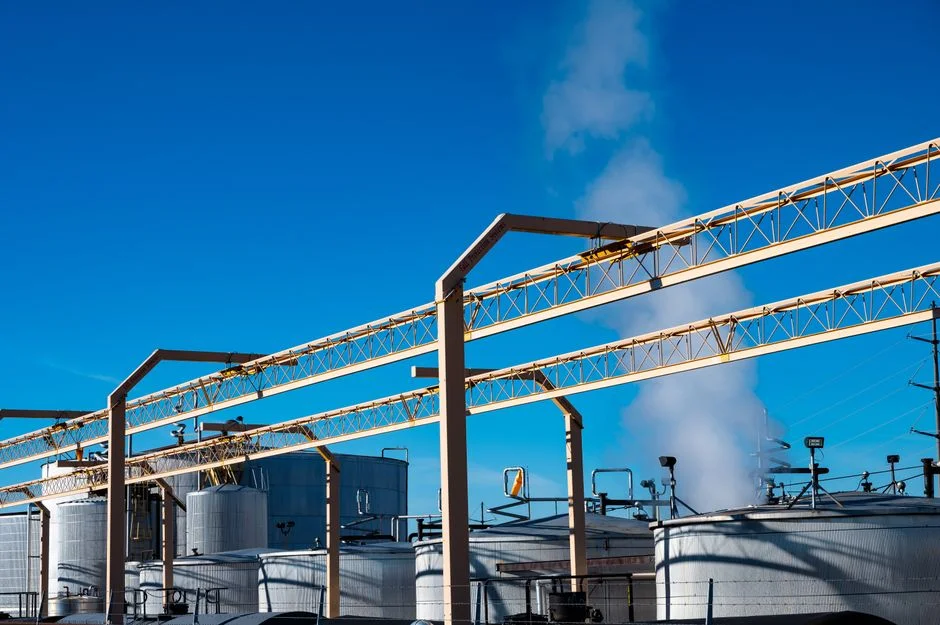
Select each treatment function from a verified permit condition and measured wastewater characteristic, not from a generic equipment list. Equalization normally comes first when flow or concentration variation would compromise treatment or compliance sampling. Determine usable working volume from measured flow, production variation, retention behavior, and available tank geometry; do not size it from a generic treatment ratio.
Suspended solids, oil and grease, or colloidal material may justify a DAF system for automotive wastewater pretreatment. The supplied product information describes a DAF range of 4–300 m³/h across 13 standard models with automatic skimming. That establishes an equipment range, not guaranteed performance for a McCalla plant. Require a wastewater-specific basis, peak-flow condition, test results, and exclusions.
Where pH or coagulation chemistry must be adjusted and recorded, evaluate a PLC-controlled chemical dosing system. The supplied information states that it supports coagulants, flocculants, pH adjusters, and specialty chemicals with PLC-controlled injection. Confirm tank capacity, duty cycle, control logic, calibration access, and compatibility with the sampling plan.
Fine screening is a protective function rather than proof of pollutant removal. The GX series described in the supplied research is intended for continuous-duty municipal and industrial headworks screening; suitability must be checked against rags, plastics, fibrous debris, actual flow, and downstream equipment.
If the plant seeks equivalent mass or concentration limits for a categorical-standard process, ask the POTW whether its local rules support that request. The June 2021 EPA guidance identifies treatment adequacy, water conservation, flow and production records, and notification when production changes as relevant considerations. The supplied Kentucky rule also shows how an authority may condition equivalent limits, but it is not McCalla law. Do not use dilution instead of treatment.
| Verified condition or pollutant profile | Required treatment function | Design check before purchase |
|---|---|---|
| Variable flow or concentration | Equalization | Usable working volume, mixing behavior, peak and low-flow cases |
| Oil, grease, suspended solids, or colloidal material | DAF or another POTW-acceptable process | Representative wastewater test, removal basis, sludge handling |
| pH outside the permit condition | pH adjustment with logged control | Control range, chemical demand, overfeed protection, verification method |
| Rags, plastics, or fibrous debris | Fine screening | Actual solids, duty, discharge route, maintenance access |
| Categorical standard without a suitable local concentration limit | POTW review of equivalent limitation | Written authority, treatment basis, production and flow records |
Build Monitoring and Documentation Around the Permit
Industrial wastewater monitoring becomes useful only when it reconstructs what the treatment system and plant were doing at the time of discharge. Continuously record parameters that the authorization makes relevant, including influent and treated flow, operating conditions, chemical use, alarms, bypass status, and production status. Preserve raw records and associate each sample with the corresponding production and operating period.
Calibrate or verify flow measurement, pH instruments, and required sampling equipment under a documented schedule. Retain the verification results, corrective actions, and instrument identifiers. EPA’s June 2021 guidance places sampling and flow data within the local-limit development framework; the plant’s permit determines its own monitoring obligations and methods.
Sample at the permit-defined or POTW-approved point, using the required method and sample handling. Retain chain-of-custody, laboratory reports, review sign-offs, and any noncompliance response. Evaluate concentration and mass loading separately where both apply. The EPA guidance includes conventional pollutants such as BOD and TSS in its allowable-headworks-loading framework, but it does not replace the plant’s permit.
Use the PLC-based automatic chemical dosing control guide to define control records, while treating it as an engineering reference rather than a permit requirement. Escalate a projected exceedance before it occurs: stop or reduce the affected discharge, apply the confirmed contingency instruction, notify the POTW as required, and document corrective action. A surcharge provision, where applicable, does not substitute for meeting a prohibition or avoiding interference.
| Evidence | Required record | Audit question |
|---|---|---|
| Flow | Continuous record with production correlation | Can treated mass loading be reconstructed? |
| pH and chemical dosing | Instrument verification, set points, alarms, chemical use | Was adjustment stable and reviewed? |
| Samples | Chain of custody, laboratory report, review record | Was the authorized method and location used? |
| Exceedance response | Alarm, shutdown or diversion, notification, corrective action | Was action taken before the condition worsened? |
Test the System Before Normal Production
Acceptance testing should demonstrate that the treatment train works under the plant’s operating envelope, not merely that each component starts. Begin with a dry commissioning check of interlocks, pumps, valves, instrumentation, alarms, automatic controls, and emergency power or shutdown functions where applicable.
Next, perform hydraulic testing with clean water, followed by process-water testing with representative wastewater. Verify treatment and compliance performance at the lowest, normal, and highest expected flows and under the production condition associated with the most demanding wastewater. Demonstrate that automatic controls maintain the required operating range without chemical overfeed, unstable solids removal, excessive carryover, or untreated bypass.
Use the plate-frame filter press only within its verified solids-handling role; sludge dewatering does not demonstrate sewer compliance. Obtain written acceptance from the manufacturer or process designer, retain commissioning records, and issue an operating plan covering chemical supply, sludge removal, maintenance, calibration, sampling, bypass prevention, and production changes.
| Acceptance stage | Evidence to retain | Pass condition |
|---|---|---|
| Dry commissioning | Interlock, alarm, control, and shutdown tests | All required sequences perform as designed |
| Clean-water hydraulic test | Flow, head, leakage, and routing results | Hydraulic behavior is stable and accessible |
| Representative process-water test | Removal, treated quality, chemical use, sludge generation | Verified performance covers the agreed wastewater basis |
| Low, normal, and peak-flow verification | Operating trends and treated results | No uncontrolled bypass, carryover, or unstable operation |
| Final acceptance | Signed acceptance and operating plan | Responsibilities, limits, records, and maintenance ownership are defined |
Choose Equipment by Compliance Risk and Lifecycle Cost
Equipment selection should rank compliance risk first because a low purchase price does not offset an inability to meet the permit at peak flow or during production change. Score each bid against permit compliance, peak-flow performance, redundancy, controls, monitoring compatibility, chemical and sludge handling, maintenance access, and footprint. Use the high-efficiency sedimentation tank as one evaluated option only where its process basis fits the wastewater and treatment train.
Separate capacity from verified performance. A supplier should identify the applicable wastewater, test conditions, treatment objectives, guarantees, operating assumptions, and exclusions. Ask how performance changes with production, oil characteristics, solids loading, chemical quality, and sludge withdrawal.
Compare lifecycle inputs: energy, chemicals, sludge handling, operator attention, replacement parts, monitoring, maintenance, and accommodation of future production changes. The research provides no McCalla-specific equipment price or lead-time data. Buyers must request written quotations that separate equipment, installation, utilities, controls, commissioning, spares, and recurring operating costs, plus a delivery schedule tied to construction and production milestones.
The design basis should reflect the most stringent applicable categorical, local, discharge-permit, and protection-of-POTW requirement. This also prevents an equipment proposal from silently treating one condition while creating another compliance exposure.
| Bid comparison area | Supplier information required | Risk if omitted |
|---|---|---|
| Compliance | Permit-condition traceability and wastewater-specific performance basis | Unproven treatment at actual plant conditions |
| Capacity | Peak-flow and production-change case, including treatment train performance | Under-treatment during demanding operation |
| Controls | Instrument list, PLC logic, alarms, calibration access, data export | Manual intervention and incomplete compliance records |
| Operations | Chemical demand, sludge yield, maintenance, spare parts, operator workload | Unstable performance or excessive operating cost |
| Commercial | Itemized quotation, delivery schedule, warranty, exclusions, acceptance conditions | Budget and schedule uncertainty |
Frequently Asked Questions
How should an EV or automotive plant size pretreatment equipment in the McCalla area?
Start with the controlling permit, source-characterization results, peak and low flows, production variability, and required treatment functions. Size the complete train for the verified peak and worst-case production condition; do not size from floor area or a generic treatment ratio alone.
What should a buyer require when selecting an industrial wastewater pretreatment supplier?
Require a wastewater-specific performance basis, control and instrumentation details, monitoring compatibility, commissioning and acceptance tests, control of operating assumptions, documentation, and lifecycle-cost information. Ask specifically which permit condition each unit satisfies and what the supplier excludes from its guarantee.
What McCalla-specific sewer limits apply to EV and automotive manufacturing wastewater?
The supplied research does not establish McCalla-specific pH, oil, FOG, BOD, TSS, ammonia, monitoring, or surcharge limits. Confirm them directly with the receiving POTW and applicable permit or regulation. EPA’s June 2021 guidance states that permits or regulations control when guidance conflicts.
How should pretreatment budget and pricing be compared?
Request comparable written quotations covering equipment, installation, utilities, chemicals, sludge disposal, maintenance, monitoring, and contingency capacity. No regional price figures are supported by the research, so compare vendor quotations and operating-cost assumptions rather than use an unsupported local estimate. Additional chemical demand also affects chemical sludge reduction from industrial pretreatment.
Related Equipment
- DAF system for automotive wastewater pretreatment — specifications, capacity range, and technical data