What treatment does a Maturin data center actually need?
A Maturin data center needs separate treatment concepts for sanitary wastewater, evaporative cooling-tower blowdown and liquid-cooling waste because their contaminants and disposal routes differ. Cooling blowdown should be characterized for total dissolved solids, hardness, silica, alkalinity, suspended solids, treatment chemicals and biological loading before selecting recovery equipment. The Congress Research Service identifies facility size, local climate, operating conditions and access to cooling water as cooling-selection factors, and defines water-use effectiveness as data-center water consumption divided by IT-equipment electricity demand. For Maturin, the treatment decision remains preliminary until source-water testing, utility confirmation and Venezuelan regulatory review are complete.
The practical first step is to identify where each stream originates, its flow variation, its final destination and the parameter that controls the decision. Sanitary wastewater requires biological treatment and disinfection. Evaporative cooling blowdown requires control of dissolved salts, scaling constituents, residuals and solids. Thermal discharge from a separate once-through cooling arrangement requires temperature assessment. Direct liquid or immersion cooling requires a coolant-specific disposal assessment. Combining these streams before characterization can produce an unnecessarily large and chemically incompatible treatment train.
The Congressional Research Service also reports that municipal systems supply an estimated 97% of water provided to U.S. data centers. That is a U.S. supply-chain reference, not evidence of Maturin’s water source or Venezuelan infrastructure. The Latin American data center wastewater treatment guide is useful as a regional engineering reference, but neither it nor a data center cooling blowdown treatment framework establishes Maturin permit limits.
| Facility stream | Primary treatment question | Potential outcome |
|---|---|---|
| Sanitary wastewater | Organic load, solids and disinfection requirements | Sanitary sewer, permitted discharge or separately managed reuse |
| Cooling-tower blowdown | TDS, hardness, silica, chemicals and suspended solids | Cooling makeup, process reuse, controlled discharge or concentration |
| Once-through thermal discharge | Temperature and heat-load impact | Heat management or confirmed receiving-water route |
| Direct liquid or immersion cooling waste | Coolant identity, degradation products and disposal instructions | Coolant-specific recovery, treatment or disposal |
Characterize each wastewater and blowdown stream
Cooling-tower recovery equipment must be sized from representative Maturin water chemistry, not from a generic blowdown specification. Request source-water and circulating-water analyses covering conductivity or TDS, calcium, magnesium, silica, alkalinity, suspended solids, pH and temperature, together with the complete inventory of biocides, corrosion inhibitors, scale inhibitors and dispersants. The sampling program should cover makeup water, concentrated circulating water and blowdown because treatment performance depends on their relationship.
Genesis Water Technology reports blowdown TDS of 1,200–6,000 mg/L, dissolved solids at four to eight times makeup-water levels and suspended solids of 10–50 mg/L in its 2026 analysis. These are source-qualified industry observations, not Maturin design values. Higher cycles of concentration reduce blowdown volume but increase the scaling and membrane-loading risks. Record evaporation, purge and blowdown rates, operating temperature, seasonal changes and expected facility load, then calculate a source-water mass balance before comparing recovery options.
| Parameter or input | Why it matters | Evidence required before sizing |
|---|---|---|
| TDS or conductivity | Controls salinity, osmotic pressure and concentrate generation | Makeup, circulating-water and blowdown results |
| Calcium, magnesium and alkalinity | Indicates carbonate-scale risk | Representative concentrations and temperature |
| Silica | Controls membrane and evaporation scaling limits | Source and treated-water analysis |
| Suspended solids | Drives filtration, UF and biological pretreatment | Particle concentration and filtration test data |
| Cooling chemicals | Determines membrane compatibility and residual-discharge treatment | Products, concentrations, injection points and legacy chemistry history |
| Flow profile | Sets hydraulic and membrane-recovery basis | Measured and design evaporation, purge and blowdown rates |
Potential scaling comes from calcium, magnesium, silica and alkalinity, while biocides, corrosion inhibitors, scale inhibitors and dispersants can accumulate in blowdown. Confirm whether legacy chromate or high-phosphate chemistry remains in service; its presence can change reuse and disposal decisions. If recovered water returns to the tower, the complete treatment program—not only the membranes—must be compatible with the recovered stream.
Characterize sanitary wastewater separately. Its flow, organic loading, solids and disinfection requirements must not be inferred from cooling-blowdown chemistry. For direct liquid or immersion cooling, obtain the coolant product name, concentration, degradation products, refrigerant information, PFAS information and supplier disposal instructions before selecting biological, membrane or destructive treatment. The Calumbo data center blowdown treatment approach provides another source-specific comparison framework, not Venezuelan authorization.
Match the treatment train to the discharge or reuse objective
The controlling contaminant and final destination determine the treatment train: controlled discharge, cooling-tower makeup reuse, lower-grade process reuse or zero liquid discharge. This ordering prevents a common specification error—installing reverse osmosis because the stream contains dissolved salts when the receiving route actually requires only solids removal, pH control or biocide neutralization.
For controlled discharge, obtain the current Maturin permit or receiving-sewer pretreatment requirements and test against each applicable limit. The required unit operations may include solids removal, pH adjustment, dechlorination, dissolved-solids reduction or chemical neutralization. No Venezuelan numerical limit is established by the supplied research, so none should be assumed. The approach follows the source-specific structure in the Latin American data center wastewater treatment guide.
For cooling-tower makeup reuse, control suspended solids, hardness, silica, scaling potential, biological content and incompatible treatment chemicals before blending with makeup. For process-water reuse, evaluate each washdown or process specification; suitability for a cooling tower does not establish suitability for another use. Ultrafiltration pretreatment for cooling blowdown can remove solids and biological material, but it does not remove dissolved salts. An industrial RO blowdown recovery system becomes relevant when dissolved solids, hardness, silica or treatment chemicals control reuse or discharge quality. A multi-media filter for membrane pretreatment addresses upstream particulate loading.
Genesis Water Technology’s 2026 analysis provides the following source-qualified benchmarks. They are not Maturin estimates:
| Option | Reported performance | Primary limitation |
|---|---|---|
| Side-stream filtration | Installed at 1–5% of total circulation flow; $50,000–$200,000 capital cost | Requires site flow and water-quality basis |
| UF | 0.01–0.1 micron pores; 10–30 psi; 90–95% recovery; removes suspended solids, bacteria, viruses and higher-molecular-weight organics | Does not solve dissolved-salts rejection |
| NF | 75–150 psi; 70–85% recovery; permeate TDS approximately 30–50% of feed concentration | Concentrate handling and compound-dependent removal |
| RO | 150–400 psi; 50–85% recovery; 95–99% removal of dissolved salts, hardness, silica and most treatment chemicals | Antiscalant, pretreatment and concentrate management |
| ZLD | 95–99% overall recovery; solid waste below 1% of original blowdown volume | Reported capital cost $3–$8 million and operating cost $5–$15 per thousand gallons treated |
These figures come from Genesis Water Technology’s 2026 analysis and describe the cited data-center application. They do not establish Maturin feasibility, pricing or equipment size. A ZLD decision requires a site mass and energy balance, available waste heat, brine destination and comparison with lower-complexity recovery.
Protect membranes and biological systems before they fail
Membrane and biological systems fail when pretreatment, chemical control and stream segregation are treated as secondary details. Genesis Water Technology’s 2026 analysis recommends filtering membrane feed below 10–15 microns, applying antiscalant control and adjusting pH. The applicable value must be confirmed through membrane-specific design, scaling calculations and representative site testing; it is not a universal Maturin specification.
Depth or multimedia filtration should remove suspended solids and colloids before UF, NF or RO. The pretreatment sequence then addresses chemistry: controlled chemical dosing, pH adjustment, antiscalant selection and confirmation of membrane compatibility. A chemical dosing system with defined control duty should operate from measured flow and water chemistry rather than an unverified generic concentration.
UF is appropriate when the duty is low-pressure solids and biological removal. Its backwash and air-scour requirements limit downstream membrane loading, but dissolved salts pass through. Genesis reports UF recovery of 90–95% and identifies suspended solids, bacteria, viruses and higher-molecular-weight organics as removed contaminants. That makes ultrafiltration pretreatment for cooling blowdown a credible stage, not a substitute for RO when salinity controls the outcome.
Keep high-temperature, high-TDS and chemically concentrated cooling streams separate from sanitary wastewater and lower-temperature process streams where practical. Segregation protects biological processes from biocides, corrosion inhibitors, scale inhibitors and dispersants that can accumulate in blowdown. It also prevents a clean process-reuse stream from inheriting sanitary contaminants.
Before reuse, review the entire cooling chemical program for membrane compatibility and the implications of recycled residuals. A product selected for cooling-system protection may foul membranes or create a discharge issue after concentration. Conversely, removing a conventional inhibitor merely to protect a membrane may compromise corrosion control in the tower. The design should reconcile both requirements through water chemistry, metallurgy, membrane warranties and operating procedures.
Separate sanitary wastewater from industrial cooling streams
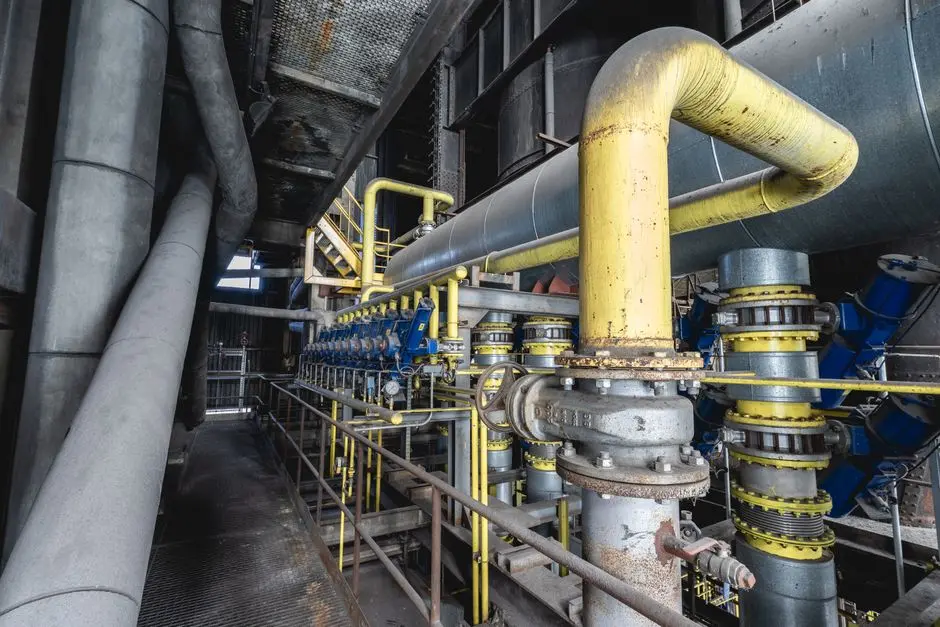
Sanitary wastewater needs biological treatment, solids separation and disinfection; cooling-tower equipment does not substitute for that process. An MBR system for data center sanitary wastewater can provide a compact automated biological treatment route when low suspended-solids effluent is required. The supplied product catalogue describes MBR capacities from 10 to 2,000 m³/day and filtration below 1 micron, but those specifications cannot be selected until sanitary flow and wastewater characteristics are established.
Where a packaged decentralized system fits the available footprint and receiving route, the supplied catalogue describes WSZ units in anoxic-aerobic contact oxidation, sedimentation and disinfection configurations, with capacities from 1 to 80 m³/h. Compare MBR and packaged biological treatment using actual hydraulic and organic loads, required effluent quality, redundancy, operator access, odor control and the receiving utility’s pretreatment requirements. A nominal capacity alone is not a design basis.
For microbial control, the supplied catalogue includes chlorine-dioxide generation. Its selection still requires confirmation of the target organisms, dose, residual requirements, chemical handling, safety controls and local acceptance. Do not assume chlorine dioxide is the selected disinfectant simply because it appears in an equipment catalog.
The sanitary train should have its own flow meter, local controls and monitoring, with a clearly defined discharge or reuse point. Keep cooling-blowdown chemicals, heat and concentrated salts outside that biological process. Where the available product options need to be reviewed together, compare the MBR treatment train with a packaged treatment route after the receiving requirements are confirmed.
Build the Maturin design basis and procurement checklist
A Maturin treatment design should begin with representative sampling, a complete mass balance and a confirmed destination for every stream. The design package should request source-water and blowdown sampling, the complete chemical inventory, evaporation and blowdown measurements, seasonal operating profiles and representative facility-load data. It should also define whether each stream goes to the sanitary sewer, an industrial pretreatment system, a surface-water discharge, cooling-tower reuse, process reuse or managed concentrate disposal.
Local authorization is a design gate, not a closing formality. Obtain written confirmation from the competent Venezuelan authority and receiving utility regarding discharge routes, permit requirements, monitoring, chemical restrictions and reuse authorization. The supplied research does not establish Maturin’s applicable limits. U.S. permit frameworks and examples of industrial pretreatment programs cannot substitute for current Venezuelan and utility requirements.
| Bid item | Information required from bidder | Buyer evaluation |
|---|---|---|
| Design basis | Guaranteed flow, feed-water envelope and seasonal operating cases | Coverage of measured Maturin conditions and load variation |
| Performance | Permeate or effluent quality, recovery and concentrate destination | Compliance with the confirmed reuse or discharge route |
| Operating burden | Energy, chemicals, cleaning, membrane replacement and waste removal | Total cost of ownership and operating risk |
| Equipment | Pretreatment, redundancy, materials, instrumentation and PLC scope | Maintainability, compatibility and spare-parts strategy |
| Control and monitoring | Flow, conductivity, pressure, pH and differential pressure | Local alarms, data access and process-control function |
| Commercial support | Consumables pricing, service scope and delivery commitments | Lifecycle support and local service capability |
Compare bids on total cost of ownership, not purchase price alone. Include pretreatment, energy, operators, membrane replacement, concentrate disposal, downtime and the value of avoided freshwater or discharge fees. Specify where instrumentation is required to support process control, with local display, alarms and operator access. The available treatment parts, valves and media reference can support completeness review, but it does not establish local availability or service capability.
Frequently Asked Questions
How much will wastewater and cooling blowdown treatment cost in Maturin?
Cost depends primarily on flow, feed-water chemistry, selected recovery, concentrate destination, energy cost and the value of recovered water. No defensible Maturin price can be published without a site mass balance, water analysis and confirmed disposal route. Ask bidders for priced alternatives covering pretreatment, membranes, chemicals, energy, maintenance, replacement media and concentrate handling; then compare them over the same operating period.
How should a treatment supplier be qualified?
Request a guaranteed process basis, feed-water envelope, recovery commitment, concentrate destination, control scope, consumables pricing and local service capability. Equivalent pilot or reference evidence should demonstrate the proposed duty. A capital-price comparison without those items does not establish that the supplier has qualified the actual Maturin stream.
When is UF enough, and when are NF or RO required?
UF is appropriate when suspended solids and biological material are the controlling problems; it does not solve a high-TDS rejection requirement. NF or RO should be considered when dissolved hardness, silica or total salts determine discharge or reuse quality. The choice also depends on scaling, concentrate handling and the quality specification for the recovered water.
When is zero liquid discharge justified?
ZLD should follow a mass-balance and energy review rather than become the default. The Genesis Water Technology 2026 analysis reports capital cost of $3–$8 million and operating cost of $5–$15 per thousand gallons treated for the cited data-center application. Those figures are benchmarks, not Maturin estimates, and must be compared with lower-complexity reuse or controlled-discharge alternatives.
Related Equipment
- industrial RO blowdown recovery system — specifications, capacity range, and technical data