What the Nine Dragons expansion changes for wastewater treatment
Nine Dragons Paper needs an expanded, load-resilient ETP for its approved 650,000-ton high-quality paper line, but the required capacity cannot be calculated from production tonnage alone. The design must be based on mill wastewater flow, COD/BOD mass loading, suspended fibers, pH, calcium, temperature, discharge limits and reuse targets. Pulp-and-paper effluent commonly carries high COD, suspended fibers, lignin-derived color and poorly biodegradable compounds. A defensible train generally starts with solids clarification, adds anaerobic pretreatment where recoverable COD justifies it, follows with biological polishing, and provides final solids removal or membrane treatment when reuse requires it.
Pulp & Paper Chronicle reported in March 2026 that Guangxi approved the 650,000-ton high-quality paper production line for Nine Dragons Paper. That establishes project scope, not ETP hydraulic capacity or pollutant-reduction capacity. The same principle used for ETP engineering for an expanding industrial plant applies: production capacity is an indicator of change, while wastewater flow and pollutant mass loads establish equipment duty.
The engineering package should request segregated flow diagrams for the existing and expanded lines; average, peak-hour and peak-day wastewater flows; and daily COD, BOD and suspended-solids loads rather than concentrations alone. It should also define production ramp-up, product mix, operating days, shutdowns and cleaning-water practices. Sampling must cover pH, temperature, color, calcium, toxicity and relevant mill-specific ions, together with the intended reuse fraction and quality specification.
The supplied research does not establish Nine Dragons Paper’s existing ETP capacity, project-site configuration, discharge permit, receiving water or expanded-line wastewater flow. None should be inferred from the paper capacity. Until the mill confirms those inputs, quoted equipment capacity and pollutant guarantees would remain preliminary.
The wastewater profile that should drive the ETP design
Pulp-and-paper wastewater combines high organic loading with suspended fibers and compounds that may resist biological oxidation, so mill size and process configuration cannot be represented by one generic concentration. A 2022 Frontiers study reports that paper-mill effluent commonly has high COD and BOD, suspended fibers and low biodegradability, with lignin derivatives, resin acids, fatty acids, tannins, phenolic compounds and color among relevant constituents.
The same study shows why stream sampling matters. Its small-mill examples had BOD of 680–1,250 mg/L, COD of 3,400–5,780 mg/L and COD/BOD ratios of 3.9–5. The reported large-mill values were BOD of 155 mg/L, COD of 716 mg/L and COD/BOD of 4.6. These are observations from different mill cases reported by Frontiers in August 2022, not design envelopes for Nine Dragons.
| Scope reported by Frontiers, August 2022 | BOD | COD | COD/BOD | Engineering interpretation |
|---|---|---|---|---|
| Small-mill examples | 680–1,250 mg/L | 3,400–5,780 mg/L | 3.9–5 | Check biodegradable COD mass, inhibition and equalization requirements. |
| Large-mill case | 155 mg/L | 716 mg/L | 4.6 | A high COD/BOD ratio can still indicate a substantial non-biodegradable or slowly biodegradable fraction. |
| Kraft paper-machine observations | Not supplied | 2,000, 2,400, 3,200 and 4,110 mg/L | Not supplied | Biological loading must be checked against the actual mix of paper-machine streams. |
Paper-machine, bleach-plant, floor-cleaning, coating and other backwater streams should be segregated before design. Their COD, suspended solids, toxicity and suitability for mill water reclamation can differ. Equalization should cover both sustained load and operating transients, but equalization does not replace pretreatment where a concentrated stream would upset biological treatment.
Temperature and calcium belong in the sampling program for specific reasons. Temperature affects biological activity, while calcium can contribute to precipitation, scaling and sludge-handling changes, particularly as recycle increases. The Frontiers study also identifies color, odor and solids content as important physical characteristics. Sampling should therefore cover production periods, cleanups and seasonal conditions rather than only routine operating days.
Build the treatment train around the mill's water and solids balance
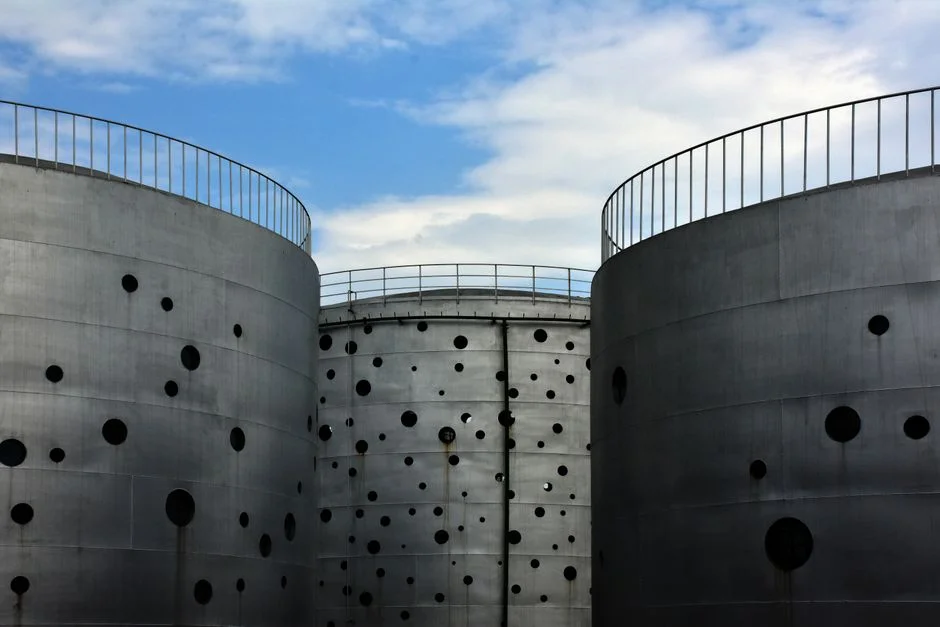
A phased paper-mill treatment train should separate solids removal, COD reduction and reuse-specific polishing so that each unit has a defensible duty. The working sequence is equalization and screening, primary solids removal, high-strength COD treatment where justified, biological polishing, final clarification or membrane separation, disinfection where required, and reuse or discharge.
The clarification stage should precede biological or advanced treatment. An industrial DAF system for pulp-and-paper wastewater is suited to removing suspended fibers, colloidal material and floatable contaminants. It does not remove dissolved COD, so DAF sizing must follow from the measured solids and contaminant load rather than total wastewater flow alone. A lamella clarifier with sludge recirculation is another solids-separation option, while automatic chemical dosing can support coagulation and pH control where the wastewater requires it.
High-strength COD reduction is conditional, not automatic. The Liberty Paper precedent described by Voith Meri in 2023 used cooling, pre-acidification, an anaerobic reactor, carbon-dioxide stripping, calcium and solids removal, and centrifuge sludge thickening. The system processed an average of 9,700 kg COD per day. That sequence is useful precedent for managing calcium and odorous gas, but it is not a template for sizing a Nine Dragons reactor without the mill’s flow, COD composition, temperature and alkalinity.
Reuse quality must also be checked against mill requirements. The BioResources review reports that closing water circuits can accumulate organics and inorganics, contributing to corrosion, deposits, odors and reduced paper-machine runnability. Consequently, “discharge-compliant” water is not automatically suitable for mill water reclamation. Final polishing should be driven by the receiving water or internal process specification.
The review cites wastewater generation of up to 70 m³ per metric ton of paper. This literature value varies with raw material, finished product and water reuse, so it must not be converted into 45.5 million m³ per year for the announced line. It is a screening reference for obtaining site data, not a default design flow.
Choose anaerobic, aerobic or MBR treatment by the treatment objective
Anaerobic, aerobic and membrane treatment serve different objectives: anaerobic treatment recovers energy from biodegradable COD, aerobic treatment oxidizes biodegradable pollutants, and MBR combines biological treatment with membrane solids separation for higher-quality effluent.
The Liberty Paper comparison by Voith Meri in 2023 reports average anaerobic sludge growth of 2–5%, compared with up to 60% of converted COD becoming new sludge under aerobic treatment. It also reports that the cited R2S anaerobic design can achieve volumetric loading as high as 25 kg COD/m³/day and a reactor height up to 30 m. These are properties of that reactor and application, not generic sizing values for Nine Dragons.
| Option | Primary treatment duty | Evidence-led advantage | Selection condition | Main engineering check |
|---|---|---|---|---|
| Anaerobic pretreatment | Converts dissolved biodegradable COD to methane, with potential energy recovery. | Voith Meri reported average sludge growth of 2–5% and lower energy demand than aerobic treatment for its cited application. | Use when the recoverable COD load, biodegradability and gas value support pretreatment. | Alkalinity, temperature, inhibition, sulfate, calcium, gas handling and pretreatment needs. |
| Aerobic biological polishing | Oxidizes biodegradable COD and BOD after solids and excessive loads are controlled. | Suited to variable loads where dependable biological oxidation is the main requirement. | Use when load variability and biodegradability dominate the design. | Peak COD/BOD load, nutrients, alkalinity, temperature and dissolved-oxygen control. |
| MBR wastewater treatment for advanced mill reuse | Combines activated sludge with membrane separation. | Provides the separation and effluent quality needed where conventional solids separation is insufficient. | Use when reliable solids separation, restricted footprint or advanced reuse quality justifies added complexity. | Final reuse specification, membrane fouling potential, pretreatment, cleaning and plant integration. |
Clarification, DAF and lamella systems should not be treated as alternatives to MBR on a one-for-one basis. Clarification performs primary solids removal; MBR is a biological treatment process that also provides membrane solids separation. They may be combined in the same train. The appropriate decision sequence is: remove paper solids first; use anaerobic pretreatment if recoverable COD and energy value support it; use aerobic polishing where biodegradability and load variability dominate; and add MBR when the required effluent or reuse quality warrants membrane separation.
Plan for sludge, monitoring and future expansion
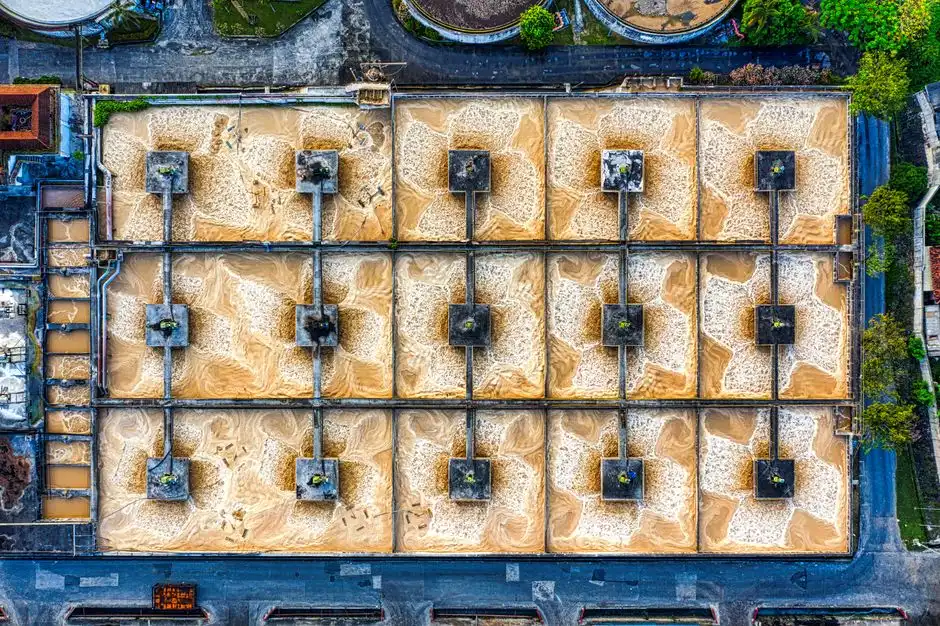
Sludge handling should be included in the ETP design rather than added after equipment selection. DAF or clarifier sludge characteristics will depend on fiber content, coagulants, lime, biological solids and calcium deposition. Plate-and-frame filtration can be evaluated for dewatering, but the final choice should follow sludge-characterization work, dewatering trials and the disposal route—not paper production tonnage.
Procurement should require measurements at the control points needed to operate clarification, biological treatment and reuse. These include flow, pH, temperature, COD, BOD, TSS, color, calcium and relevant mill-specific ions. The monitoring specification should also define sampling frequency, calibration, alarms, data retention and control-system interfaces.
Controls integration is a project deliverable. A Wunderlich-Malec paper-board example described in 2023 required integration of a new reclaimed-water ETP with the mill’s existing balance-of-plant system, supported by simulation, preplanning and coordinated operator training. That precedent demonstrates why hydraulic, process and controls interfaces must be resolved before installation.
Where the production ramp-up remains uncertain, modular equipment can reduce the risk of installing the final duty too early. Civil works, pipe routes, control architecture and future hydraulic reservations should nevertheless reflect the approved line. Otherwise, expansion may create an ETP bottleneck before the paper machine reaches its final operating condition.
A closed water-and-solids balance should connect water intake, process-water reuse, wastewater generation, sludge concentration and final effluent or reuse. The 2022 Frontiers study reported that approximately 85–90% of fresh water used at the studied mill became waste. That case illustrates why intake and reuse must be reconciled, but it is not transferable to Nine Dragons without site data.
A procurement decision framework for Nine Dragons Paper
A defensible procurement sequence starts with the expansion scope, not a preferred ETP configuration. It converts the announced paper capacity into verified wastewater and solids loads, sets the receiving-water or reuse criteria, and then compares technically equivalent bids against measurable performance obligations.
| Step | Buyer action | Required output | Procurement consequence |
|---|---|---|---|
| 1. Confirm scope | Verify production ramp, product mix, operating pattern, project type and the status of existing treatment assets. | Approved design basis and expansion boundary. | Do not price an assumed replacement or debottleneck before this is confirmed. |
| 2. Characterize wastewater | Complete a 12-month representative campaign across mill, bleach-plant, coating and sanitary streams, including peaks and seasonal conditions. | COD, BOD and solids mass balance with flow, temperature, pH, color, calcium and relevant toxicity data. | Use mass loads to define hydraulic and pollutant capacities. |
| 3. Set the compliance and reuse basis | Obtain the discharge permit and receiving-water conditions, or issue the internal mill-water reclamation specification. | Documented limits and required reuse-quality parameters. | Keep final equipment guarantees open until these criteria are issued. |
| 4. Compare process routes | Evaluate clarification, anaerobic, aerobic and MBR duties against flow, COD/BOD, TSS, calcium, footprint, energy, sludge and reuse requirements. | Approved process basis, mass balance and equipment list. | Compare whole-train duties rather than isolated equipment prices. |
| 5. Issue performance-based bids | Require separate guarantees for hydraulic capacity, pollutant removal, effluent or reuse quality, energy use, sludge yield, availability and controls integration. | Comparable technical and commercial schedules. | Separate unresolved design inputs from supplier commitments. |
| 6. Test residual uncertainties | Use pilot or bench work where variability, biodegradability, scaling or dewatering behavior remains uncertain. | Verified design parameters and risk allocation. | Resolve uncertainty before award or clearly price it as an exception. |
This sequence prevents the expansion from being sized on paper-machine tonnage alone. It also keeps the critical interfaces—hydraulic capacity, COD mass loading, solids removal, reuse quality, sludge route and control integration—inside the tender rather than leaving them as commercial assumptions.
Frequently Asked Questions
How much does an ETP for a 650,000-ton paper mill cost?
No reliable cost can be given from paper tonnage alone. The controlling inputs are wastewater flow, COD/BOD mass loading, suspended-solids production, reuse targets, permit limits, energy recovery and civil works. A buyer should request a mass-balance-based budget range after characterization, with separate allowances for clarification, biological treatment, sludge dewatering, membranes, controls and reuse infrastructure.
Should Nine Dragons Paper choose DAF, a clarifier or MBR?
DAF and lamella clarification primarily serve suspended-solids removal, while MBR combines biological treatment with membrane solids separation. They are not interchangeable. Select clarification based on fiber and floatable-solids loads; add MBR when the required effluent or reuse quality cannot be met reliably by conventional separation and biological polishing.
How long should the ETP lead time be?
Lead time must be confirmed by the selected supplier for the actual project configuration. Before requesting a delivery commitment, separate long-lead equipment from process development, civil works, controls integration, utility interfaces and commissioning. This prevents a quoted equipment date from obscuring an installation or plant-availability dependency.
Can anaerobic treatment lower paper-mill ETP energy costs?
Anaerobic treatment can recover methane from biodegradable COD and reduce biological sludge production. The Liberty Paper comparison by Voith Meri in 2023 reported average anaerobic sludge growth of 2–5%, but suitability depends on the feed’s COD composition, temperature, alkalinity, inhibition, sulfate and calcium, as well as gas use and pretreatment requirements.
What tests are needed before final ETP sizing?
Require a 12-month wastewater characterization, a COD/BOD and solids mass balance, segregated-stream sampling, seasonal temperature data, calcium and scaling assessment, and biodegradability or pilot testing where uncertainty remains. Final sizing should also require the discharge permit or mill-water reclamation specification.
Related Equipment
- industrial DAF system for pulp-and-paper wastewater — specifications, capacity range, and technical data
- MBR wastewater treatment for advanced mill reuse — specifications, capacity range, and technical data