
How to determine the right wastewater system for a Medellín hotel
A Medellín hotel or resort generally needs a decentralized sewage treatment train sized from measured wastewater flows and treatment objectives, not guest-room count alone. The WSZ underground package plant is a strong starting point for conventional domestic-sewage treatment, with a catalog capacity range of 1–80 m³/h. An MBR is preferable when the hotel needs a smaller footprint, highly clarified effluent, or water-reuse potential; the MBR range is 10–2,000 m³/day with filtration below 1 μm. Hotels with laundry, kitchen, pool, or boiler wastewater may also require pretreatment, disinfection, and sludge-dewatering equipment. Final selection should follow wastewater characterization, discharge rules, reuse objectives, and site constraints.
The supplied hotel pages establish a high-end hospitality context in Medellín, but they provide no reliable property-specific flow, wastewater-characterization, or permit data. The Medellín Marriott page returned an access error, while the Wake BioHotel review page was also inaccessible. Their presence therefore cannot justify a selected capacity or technology.
Issue a design-data request before comparing equipment. It should establish:
- Current and peak domestic wastewater flows, including seasonal occupancy, staff accommodation, restaurants, events, and laundry operations.
- Separate flows from kitchen grease traps, laundry, swimming-pool backwashing, and boiler blowdown.
- Measured or professionally estimated COD, BOD, TSS, grease and oil, pH, and salinity where relevant.
- The intended discharge route: municipal sewer, on-site subsurface discharge, irrigation, toilet flushing, cooling, or another reuse application.
- Available footprint, access for maintenance, utility connections, power reliability, odor constraints, and construction limitations.
Domestic sewage and process-like streams should remain separate in the initial mass balance. A kitchen drain cannot automatically be treated as ordinary guest-room sewage, and pool discharge or boiler blowdown cannot be assumed compatible with a biological plant. The hotel and resort wastewater treatment guide and regional hotel wastewater technology comparison provide useful frameworks for separating these decisions.
Set the treatment boundary from the destination of the water. Sewer discharge, subsurface discharge, irrigation, toilet flushing, and process reuse do not impose identical clarification, filtration, disinfection, or monitoring requirements. The correct sequence is: characterize the streams, define the receiving or reuse objective, establish peak and daily design flows, select the treatment train, and only then specify equipment.
Package sewage treatment, MBR, or hybrid treatment
The WSZ underground package plant is a conventional domestic-sewage option, while an MBR membrane bioreactor is more appropriate where compact construction or fine solids separation is central to the project.
| Criterion | WSZ underground package plant | MBR membrane bioreactor | Hybrid treatment train |
|---|---|---|---|
| Process configuration | Anoxic and aerobic biological contact oxidation, sedimentation, and disinfection in one buried package | Activated sludge treatment combined with submerged PVDF membrane filtration | Conventional biological treatment or MBR combined with project-specific pretreatment and downstream treatment |
| Published capacity | 1–80 m³/h | 10–2,000 m³/day | Depends on the selected biological stage and auxiliary equipment |
| Installation | Below grade with landscaping above, or trailer-mounted for mobile deployment | Selected where compact construction is valuable | May require several packaged units, pumps, pretreatment, and a wider site layout |
| Effluent separation | Integrated sedimentation and disinfection | Filtration below 1 μm | Depends on the clarification, filtration, and disinfection stages specified |
| Best fit | Conventional domestic sewage where below-grade installation is practical | Fine solids separation, compact construction, or reuse preparation subject to confirmed water-quality requirements | Properties with separate high-strength streams, screening needs, FOG removal, or additional treatment before reuse |
| Key review issue | Peak-flow coverage, solids separation, access, landscaping, and integrated disinfection | Membrane maintenance, pretreatment, controls, and residual-sludge management | Process compatibility, hydraulic balance, and clear responsibility for every treatment stage |
HydropureWater’s underground package sewage treatment plant is fully automated and identified in its product information as requiring no operator. The catalog also lists hotels as an application. Its burial arrangement can preserve above-ground development space, while trailer mounting supports mobile deployment.
The MBR membrane bioreactor combines biological treatment with submerged PVDF membranes. Its published filtration performance is below 1 μm, and the manufacturer states a 60% smaller footprint than conventional systems. Those are selection criteria, not proof that the system satisfies an unspecified Medellín reuse requirement; the receiving rule or reuse specification must define the required quality.
For module-level review, the MBR DF flat-sheet module is documented with 0.1 μm pore size, 80–225 m² configurations, 32–135 m³/day production, and energy use stated as 10–20 times lower than external cross-flow systems. These module figures cannot substitute for whole-plant hydraulic and process sizing.
Use a hybrid arrangement when a package plant cannot accept a separate high-strength stream, or when the project requires screening, oil removal, chemical conditioning, or additional disinfection before biological treatment or reuse. The hybrid option is often less elegant, but it can be the more defensible engineering choice.
Size the system from peak demand and wastewater character
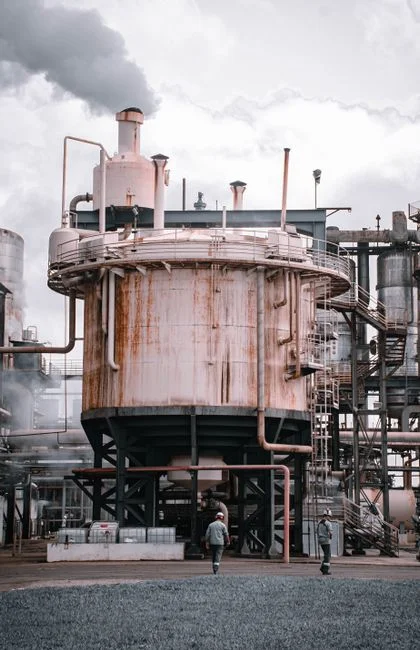
Equipment selection should be based on measured or professionally estimated peak-hour wastewater flow, supplemented by a daily mass balance—not on room count or hotel category.
The supplied research provides manufacturer capacity ranges but no Medellín hotel occupancy factors or wastewater-generation data. A quotation therefore needs an explicit design-flow basis. The engineer should document average daily flow, peak-hour flow, seasonal peaks, event-related demand, staff flows, and allowances for backwashing or cleaning interruptions that could affect the available treatment capacity.
For the WSZ platform, compare the required design flow against the published 1–80 m³/h capacity range. For the MBR platform, compare daily design flow against the published 10–2,000 m³/day range and verify the hydraulic response at the required peak. A daily average alone can conceal an overloaded peak period.
Hotel wastewater is not necessarily stable. Guest occupancy, restaurant service, laundry cycles, pool backwashing, and boiler blowdown can produce different daily and hourly profiles. Any capacity allowance must identify which flows are connected, whether they are batch or continuous, and how they affect biological loading.
Complete a wastewater characterization before finalizing pretreatment. Kitchen and laundry streams can alter grease and oil, suspended solids, pH, and chemical demand. Fibrous material and solids also create a maintenance and downstream-process problem. The rotary mechanical bar screen is intended to remove suspended solids, rags, plastics, and fibrous debris at a wastewater headworks, protecting downstream pumps and biological processes.
Do not convert star rating, number of rooms, or total hotel occupancy into an equipment capacity without a documented engineering method. The correct calculation must connect measured inputs to the selected process, identify uncertainty, and state whether extra capacity is provided for seasonal or operational variation.
Add pretreatment when the hotel has commercial wastewater
Separate kitchen, laundry, pool, boiler, and concentrated cleaning streams should trigger flow- and composition-specific pretreatment decisions rather than automatic inclusion in the main sewage train.
| Hotel stream or requirement | Equipment to evaluate | Engineering basis |
|---|---|---|
| Solids, rags, plastics, and fibrous debris | GX Series rotary mechanical bar screen | Use continuous fine screening where required at the headworks; confirm capacity against peak flow and debris loading |
| Suspended solids, FOG, oil and grease, or colloidal matter | DAF pretreatment system | Use when testing identifies material that should be removed ahead of biological treatment; the catalog covers 4–300 m³/h across 13 standard models |
| Coagulant, flocculant, pH adjustment, or specialty chemicals | automatic chemical dosing system | The PLC-controlled system is skid-mounted, pre-wired, and factory-tested; dose and chemical selection must follow the treatment design |
| Disinfection for the confirmed discharge or reuse route | chlorine dioxide generator | The catalog extends from 50 g/h manual units to 20,000 g/h fully automated systems; generator capacity does not establish the required dose |
| Residual solids from the selected process | sludge dewatering filter press | The catalog offers 1–500 m² filtration area with manual, hydraulic, or fully automatic PLC-controlled operation; include dewatering if the solids balance warrants it |
The GX Series screen is intended for continuous fine screening, with rake teeth and a self-cleaning brush discharging captured material. It can reduce the burden on downstream pumps and biological processes, but its suitability depends on peak flow, screen aperture, and expected debris.
DAF should be considered when characterization identifies suspended solids, FOG, oil and grease, or colloidal matter that needs removal before biological treatment. Its published 4–300 m³/h range is an equipment boundary, not a substitute for selecting the correct model.
Automatic chemical dosing should follow a defined treatment objective rather than being added by default. The treatment designer must specify the chemical, dose basis, control trigger, storage and handling requirements, and how the system responds to variable flows.
Disinfection depends on the confirmed receiving or reuse requirement. The chlorine dioxide generator range identifies available equipment scale, but the required configuration and dose must come from the process design.
Pool water, boiler blowdown, and concentrated cleaning discharges require separate engineering reviews. Their flow and composition determine whether they should be segregated, pretreated, reused, or disposed of through another route. Include sludge generation, storage, conditioning, and dewatering in the conceptual scope rather than treating residuals as an afterthought.
Match the treatment train to the discharge and reuse plan
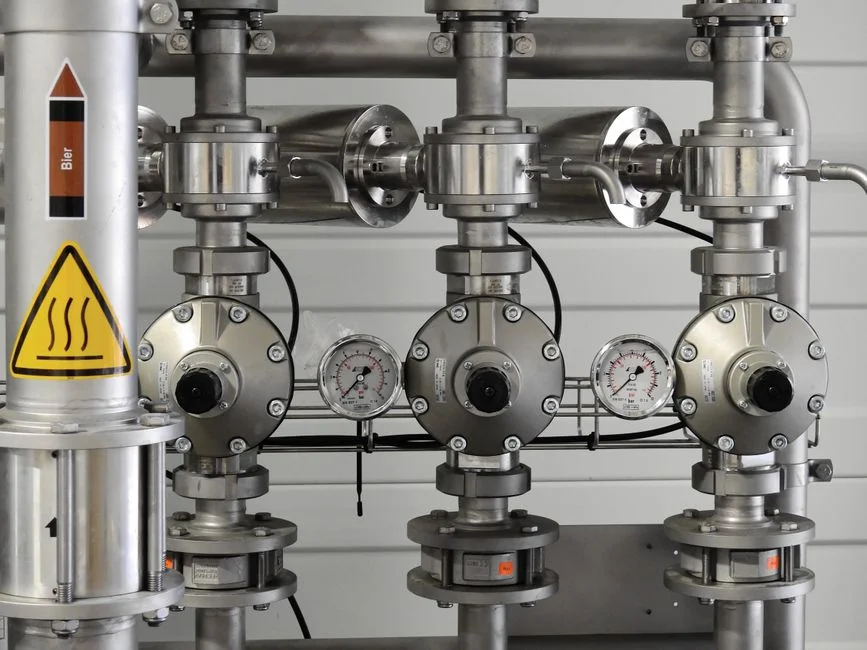
The final treatment train must follow the destination and required quality of the water, with each disposal or reuse route evaluated separately.
- Municipal sewer discharge: Obtain current authority requirements for discharge, permitted flow, pretreatment, sampling, and monitoring. Confirm the plant’s hydraulic and process capacity against those conditions.
- On-site subsurface discharge: Identify the receiving soil and groundwater conditions, setback requirements, and applicable authority approvals. These site-specific conditions require confirmation from the relevant authority and project designer.
- Irrigation: Define the crop, exposure pathway, water-quality specification, and applicable restrictions before selecting disinfection and filtration.
- Toilet flushing: Establish the recycled-water quality, distribution controls, cross-connection protection, and equipment maintenance requirements.
- Process-water reuse: Define the required constituent limits and operating reliability, then select the corresponding filtration and disinfection stages.
For a conventional buried package solution, evaluate peak-flow coverage, solids separation, integrated disinfection, access, landscaping constraints, and maintenance arrangements. For an MBR, compare the value of filtration below 1 μm and the stated 60% footprint reduction against membrane maintenance, pretreatment, controls, and residual-sludge management.
Do not treat the WSZ’s integrated disinfection or the MBR’s fine filtration as proof of suitability for an unspecified reuse application. Reuse requires an agreed water-quality objective and supporting treatment train.
The supplied sources do not establish current numerical limits specific to Medellín sewer discharge. The project designer should therefore confirm the current requirements directly with the relevant sewer authority rather than importing limits from another jurisdiction. The Colombian domestic sewage treatment guide can support general planning, but it does not replace site-specific regulatory verification.
Procurement checklist for a 2026 Medellín hotel project
A performance-based request for proposal will produce more comparable quotations than a specification based only on equipment names.
| Buyer check | Information required from each bidder |
|---|---|
| Design basis | Design flow, wastewater characteristics, treatment objective, reuse plan, and documented assumptions |
| Proposed process | Every treatment stage, hydraulic basis, process equations, equipment dimensions, controls, and auxiliary systems |
| Capacity evidence | WSZ capacity shown within the published 1–80 m³/h range, or MBR capacity shown within the published 10–2,000 m³/day range, as applicable |
| Complete scope | Civil works, pumps, screening, grease or FOG removal, dosing, disinfection, flow measurement, laboratory analysis, odor control, backup power, commissioning, training, and maintenance |
| Operations | Routine consumables, residual-sludge handling, spare parts, service access, and local support arrangements |
| Commercial allocation | Clearly identified exclusions, civil interfaces, utility requirements, warranty conditions, and acceptance tests |
The brief should include design flow, wastewater characteristics, required effluent objectives, installation constraints, reuse plans, utilities, odor control, access, and local service requirements. Each bidder should identify the treatment train, equipment dimensions, process stages, controls, consumables, sludge handling, commissioning tasks, and maintenance obligations.
Require evidence appropriate to the selected configuration. For a WSZ proposal, confirm that the offered design flow falls within the published 1–80 m³/h range. For an MBR proposal, confirm that daily capacity falls within the published 10–2,000 m³/day range and explain the peak-flow response. Pretreatment equipment must be matched to measured streams rather than selected from generic hotel assumptions.
Clarify whether the price includes civil works, pumps, screening, grease or FOG removal, chemical dosing, disinfection, flow measurement, laboratory analysis, odor control, backup power, commissioning, training, and maintenance. The treatment parts, valves, and media scope should be identified wherever exclusions would affect operation.
Require a local implementation plan and a documented warranty and spare-parts strategy. Treat every performance guarantee as conditional on the wastewater characterization and design flow agreed in the final contract.
Frequently Asked Questions
What size wastewater treatment system does a hotel or resort in Medellín, Colombia need in 2026?
Size the system from measured or professionally estimated peak-hour flow and a daily mass balance, then compare those requirements with the published WSZ range of 1–80 m³/h or MBR range of 10–2,000 m³/day, as applicable. Occupancy alone is not a defensible design metric. Seasonal peaks, restaurant service, laundry, pool backwashing, and boiler flows must be included in the basis.
How much does a hotel wastewater treatment system cost in Medellín?
Request a project-specific quotation rather than a generic price. Ask each bidder to price capacity, civil work, pretreatment, disinfection, sludge handling, utilities, controls, commissioning, and reuse provisions separately. The supplied research contains no Medellín price range, so a reliable budget cannot be calculated without the confirmed design flow, wastewater characteristics, treatment objective, and site scope.
How do I select a wastewater treatment supplier for a hotel in Medellín?
Evaluate suppliers against performance criteria, documented design assumptions, verified site data, and a complete scope of supply. Require identification of the treatment train, hydraulic basis, controls, maintenance, commissioning tasks, local implementation capacity, and spare-parts strategy. Compare the proposed capacity against the published WSZ or MBR range, but do not treat catalog capacity alone as proof of project suitability.
What Medellín sewer discharge requirements must be confirmed before selecting equipment?
Confirm current discharge criteria, permitted flow, pretreatment conditions, sampling requirements, and any reuse conditions directly with the relevant authority and project designer. The supplied research provides no current Medellín-specific numerical limits, so general Colombian treatment guidance must not be presented as an approved discharge standard. Final equipment selection should follow written verification of the applicable route.