
What treatment system does a Vancouver hotel actually need?
A Vancouver hotel or resort treatment system should be selected based on its sewer-discharge route, average and peak wastewater flow, kitchen grease, laundry solids, reuse objectives, and land constraints. A buried packaged A/O plant may suit smaller sites with basic treatment needs, while an MBR membrane bioreactor is relevant where solids separation, reuse potential, or footprint is important. Pretreatment may be required before biological treatment or sewer discharge. Separately, wastewater heat recovery can recover energy from hot water, but it does not treat sewage.
The decision sequence is straightforward:
- Confirm where the wastewater will go and whether reuse is required.
- Document average daily, peak-hour, and peak-season flows and loads.
- Characterize kitchen, laundry, and other waste streams.
- Compare municipal discharge, packaged A/O, and MBR treatment against site constraints.
- Confirm approval, pretreatment, and operating requirements before selecting equipment.
A hotel’s wastewater includes guestrooms, food service, laundry, housekeeping, pools, and other back-of-house operations. The supplied research does not provide Vancouver hotel unit-flow values, so request a site-specific flow and load basis rather than applying an unsupported average. A buried packaged A/O sewage treatment plant and an MBR system perform different functions from a heat-recovery system.
SHARC’s Piranha system extracts thermal energy from hot wastewater through a heat pump, whereas an A/O or MBR plant treats the wastewater itself. This distinction remains necessary for equipment selection.
A proposal for a 250-room floating hotel near the Vancouver Convention Centre, reported in April 2026, confirms that Vancouver accommodation development remains active, though it does not establish a treatment requirement for the property.
Map the hotel wastewater streams before selecting equipment
Hotel wastewater systems must accommodate variable loading under continuous occupancy and peak-season conditions, according to Anua’s hotel and motel wastewater guidance. Design cannot stop at an average daily flow.
| Design input | Information to document | Why it affects selection |
|---|---|---|
| Flow | Average daily flow, peak-hour flow, seasonal variation and planned future development | Determines hydraulic capacity and whether equalization is needed |
| Occupancy | Current and forecast room counts, occupancy patterns and event use | Links operating demand to guest and support-water flows |
| Waste streams | Guestrooms, kitchens, food service, laundry, housekeeping, pools and other back-of-house flows | Identifies contaminant-specific pretreatment needs |
| Solids and FOG | Laundry rags and fibres, kitchen fats, oils and grease, and other solids | May require screening, solids separation or DAF before biological treatment |
| Discharge route | Direct sewer discharge, on-site treatment, reuse, or a combination | Sets the treatment objective and approval path |
| Site constraints | Footprint, soil, maintenance access, noise, odour, landscaping and neighbouring occupied spaces | May rule out an otherwise technically suitable process |
Consult the sewer authority or approving agency for the permitted discharge route, treatment and pretreatment rules, sampling and reporting requirements, and restrictions on sewer connections or reuse. A rotary mechanical bar screen may protect downstream equipment from fibrous material where wastewater characterization justifies it. A dissolved air flotation machine should be considered only where its solids or FOG-removal role is supported by the waste streams.
Record noise and odour constraints near guestrooms, dining areas, and public spaces, along with access for maintenance and sludge removal. These operational constraints are as critical as nominal treatment capacity.
Compare municipal discharge, packaged A/O and MBR treatment

Municipal sewer discharge selection begins with determining whether the sewer authority will accept the proposed flow and waste characteristics and whether hotel-specific pretreatment is required.
| Option | Indicative equipment scope in supplied research | Best-supported selection question |
|---|---|---|
| Municipal sewer discharge | Acceptance and pretreatment requirements must be confirmed with the sewer authority | Is direct sewer discharge acceptable, and what pretreatment is required? |
| Buried packaged A/O | HydropureWater’s WSZ series handles 1–80 m³/h and combines anoxic/aerobic biological contact oxidation, sedimentation and disinfection in one buried package; the source identifies hotels among its intended applications | Does the site need a simpler buried installation with basic biological treatment? |
| MBR | HydropureWater’s MBR handles 10–2,000 m³/day, combines activated sludge with submerged PVDF membrane filtration and provides filtration below 1 μm | Are tighter solids separation, reuse potential or a constrained footprint important? |
| DAF as pretreatment | HydropureWater’s DAF handles 4–300 m³/h across 13 standard models | Does characterization show a justified need for FOG or solids removal? |
HydropureWater states that its MBR design has a 60% smaller footprint than conventional systems, though this is a product-specific claim that should not be generalized to every MBR or A/O alternative.
The MBR option is not automatically the better choice. Its published capacity is expressed in m³/day, while the WSZ range is expressed in m³/h, so bidders must define and compare equivalent design bases. Pretreatment, equalization, civil works, disinfection, controls, and sludge handling must also be included in the comparison. This is consistent with the approach in this comparison of packaged A/O, MBR and DAF systems for hotels.
Choose the right treatment train for variable occupancy
A hotel treatment train should be assembled in process order rather than as a list of interchangeable products.
- Characterize the wastewater and control incoming flow.
- Apply fine screening where solids protection is required.
- Add FOG or solids pretreatment where characterization supports it.
- Provide biological treatment.
- Use final separation or membrane filtration appropriate to the discharge and reuse objectives.
- Disinfect where the sewer authority or reuse specification requires it.
- Arrange responsible sludge handling.
The supplied evidence does not specify one mandatory train for every Vancouver hotel. The final configuration depends on the sewer authority’s requirements and the property’s reuse objective. Anua’s observation remains relevant: hotel infrastructure must operate reliably under variable loading and continuous occupancy, rather than meeting only an average daily design condition.
Solid management must be planned before the biological process is finalized. A plate and frame filter press is one available dewatering option, with filtration areas from 1 m² to 500 m². Its suitability depends on sludge characteristics, solids capture, operating cycle, filtrate handling, and the chosen method of residual disposal. Equipment selection should therefore include the downstream handling route, not just the treatment vessel.
Treat heat recovery as a separate 2026 efficiency decision
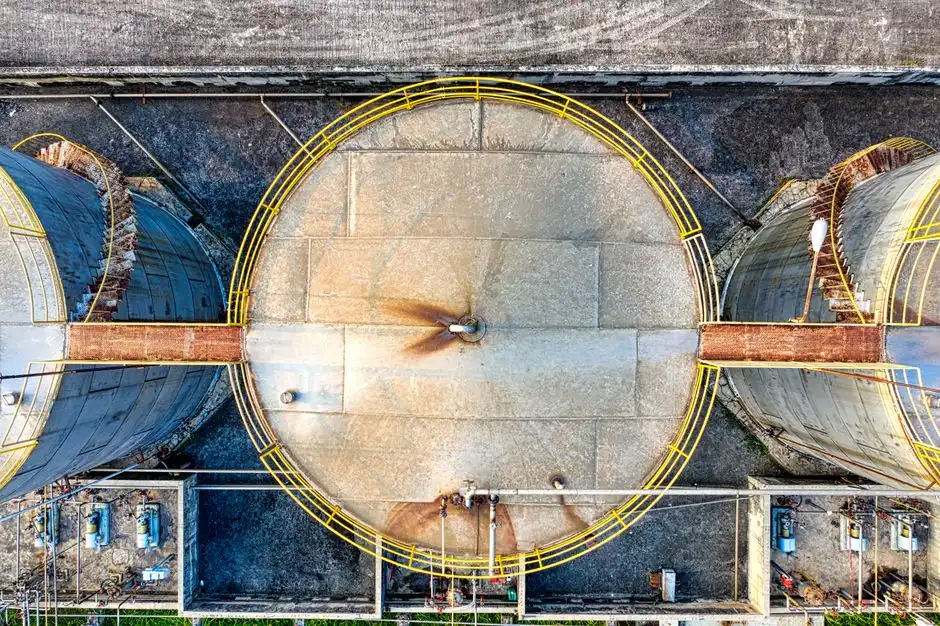
Wastewater heat recovery extracts thermal energy from hot wastewater for water or space heating; it is not biological treatment, disinfection, or discharge compliance.
The strongest supplied Canadian hotel precedent is the Lake Louise Inn in Alberta. SustainableBiz reported that SHARC’s Piranha system was installed in two days of plumbing and electrical work at a cost of about $60,000. The self-contained heat pump uses a proprietary direct-expansion heat exchanger to recover heat from washing-machine water to heat incoming cold water.
SustainableBiz reported that the system, running 18 hours per day, was estimated to produce an average of 17,000 litres of hot water daily, with expected reductions of 85% in washing-machine energy use and more than 80 tonnes of carbon dioxide emissions annually. These are source-qualified expectations for that installation, not a Vancouver performance guarantee.
The Vancouver connection is district-scale rather than a hotel equipment claim. SustainableBiz reported that SHARC is involved with the Southeast False Creek Neighbourhood Energy Utility, which uses sewage-derived thermal energy for space heating and hot water across 5.2 million square feet. This demonstrates a local thermal-energy application, but it does not establish the treatment configuration for an individual hotel.
A hotel should assess heat recovery only after confirming a sufficiently hot wastewater source, a meaningful heating or hot-water load, available space, and an engineering arrangement that does not compromise discharge compliance. Heat recovery can reduce energy demand, but it cannot replace an A/O or MBR treatment train.
Build a 2026 Vancouver procurement and approval checklist
A compliant equipment selection requires a common design basis, a defined approval route, and evidence that matches the proposed site.
| Procurement check | Evidence to request | Decision risk if omitted |
|---|---|---|
| Site-specific flow and load basis | Average day, peak hour, occupancy, seasonal variation and planned development | Undersized equipment or unjustified equalization |
| Aligned bids | Same units and scope for design flow, process, effluent objectives, footprint, automation, utilities, commissioning and operations | Apparent price differences may reflect different scope |
| Approval route | Written discharge route and relevant sewer authority and local approval requirements | Redesign after equipment selection |
| Continuous-operation plan | Redundancy, critical pumps, controls, maintenance, spare parts and sludge removal | Guest-service disruption and unreliable treatment |
| Performance evidence | Operating basis, test conditions, guarantees and references for the proposed configuration | Unsupported product claims enter the commercial comparison |
| Total project definition | Pretreatment, treatment, disinfection, sludge handling, controls, utilities, civil works, commissioning and approvals | Hidden costs and incomplete pricing |
Require bidders to explain their assumptions. HydropureWater describes its WSZ system as fully automated and requiring no operator, while its MBR system is specified from 10–2,000 m³/day. Match those claims to the proposed design and operating model rather than treating them as generic guarantees.
Generic product ranges are selection references, not substitutes for a site design. Do not accept a fixed equipment price without defining the flow basis, pretreatment boundary, civil works, utilities, commissioning, and approval scope. Specify treatment parts, valves and media only after the process train and service requirements are settled. A useful cross-market reference is this package wastewater treatment plant specification guide.
Frequently Asked Questions
How should a Vancouver hotel be sized for wastewater treatment?
Size the system from a site-specific average and peak wastewater flow basis, including occupancy, peak seasons, and planned development. HydropureWater’s published WSZ range is 1–80 m³/h, while its MBR range is 10–2,000 m³/day; require bidders to translate both into the site’s actual flow profile and operating scenario.
When is an MBR more appropriate than a packaged A/O system?
MBR is relevant where a small footprint, below-1 μm filtration, or reuse potential is important. A packaged A/O plant may be more suitable for a simpler buried installation with basic treatment objectives, subject to the sewer authority’s requirements and site-specific waste characterization.
What should a buyer budget for a hotel wastewater project?
Separate treatment-equipment cost from total installed project cost. SustainableBiz reported that the Lake Louise Inn heat-recovery installation cost about $60,000, but that was a heat-pump installation—not a complete sewage-treatment plant. Request itemized pricing for equipment, pretreatment, civil works, utilities, controls, commissioning, sludge handling, and approvals.
What compliance risks should be checked before selecting equipment?
Confirm the discharge route, sewer authority requirements, and local approvals before relying on a treatment technology. The supplied research does not establish a universal Vancouver hotel effluent limit, so obtain the applicable requirements and written acceptance criteria for the proposed flow and waste characteristics.
How should suppliers be selected and compared?
Compare bids using one flow basis and one scope covering pretreatment, treatment, disinfection, sludge handling, controls, utilities, commissioning, maintenance, and approvals. Check redundancy, maintainability, and the evidence behind operating and performance claims rather than awarding the