Determine Which Discharge Rules Apply
Mining and metals plants near Warren County that discharge industrial wastewater to a municipal sewer generally comply through the Clean Water Act §307(b) pretreatment program and 40 CFR Part 403, not through an NPDES permit for that sewer discharge. Applicable categorical standards, including 40 CFR Part 437 for ore mining and 40 CFR Part 433 where metal-finishing operations are involved, establish the federal floor; the receiving POTW’s permit and sewer-use ordinance control site-specific limits. A compliant train typically equalizes variable flows, adjusts pH, precipitates metals, removes solids by DAF or clarification, filters residuals, and manages sludge. Operators must also control slug discharges, monitor representative samples, notify the POTW, and keep complete analytical and operating records.
An industrial user is a non-POTW source that discharges industrial wastewater into a POTW collection system. The POTW owns or operates the municipal wastewater treatment system and administers its pretreatment program through a sewer-use ordinance and individual permits. A sewer discharge enters the municipal collection system; a direct surface-water discharge reaches a river, stream, or other receiving water. The latter generally requires an NPDES permit under Clean Water Act §402.
EPA states that 40 CFR Part 436 covers wastewater from mine drainage, mineral processing, and stormwater runoff and is incorporated into NPDES permits (EPA, undated). That rule does not replace pretreatment requirements when another stream enters a POTW sewer. A facility may need both authorizations for different outfalls.
Part 437 governs ore mining and dressing, while Part 433 may govern a metal-finishing operation involving plating, pickling, or anodizing. Applicability depends on the actual process, not merely the company’s description of itself.
| Discharge or operation | Primary regulatory pathway | Key compliance document |
|---|---|---|
| Industrial wastewater to a municipal sewer | Clean Water Act §307(b); 40 CFR Part 403; applicable categorical standard | Industrial-user permit and POTW sewer-use ordinance |
| Mine drainage, mineral processing, or covered stormwater to surface water | NPDES under Clean Water Act §402; 40 CFR Part 436 incorporated into the permit | NPDES permit |
| Ore mining and dressing to a POTW | 40 CFR Part 403 with 40 CFR Part 437 as applicable | POTW industrial-user permit |
| Metal finishing to a POTW | 40 CFR Part 403 with 40 CFR Part 433 where applicable | POTW industrial-user permit |
A local permit does not remove federal enforcement risk. In the Williams Mullen summary of the EMD Millipore consent decree, published March 30, 2017, the facility allegedly caused pass-through or interference, exceeded pH prohibitions, failed to notify the POTW of slug loads, and violated flow-rate limits. The settlement required treatment upgrades, annual operator training, sampling, analysis, quarterly monitoring, and a $385,000 civil penalty. Before selecting equipment, obtain the receiving POTW’s identity, current sewer-use ordinance, industrial-user permit, local limits, monitoring requirements, discharge point, and enforcement history.
Build the Warren County Permit and Limits Matrix
The controlling design value is the enforceable requirement applicable at the specific discharge point. Build one row per parameter and separate categorical applicability, federal floor, local permit limit, monitoring frequency, and reporting deadline.
For example, 40 CFR Part 437 provides a representative zinc comparison point of 1.0 mg/L daily maximum and 0.5 mg/L monthly average. For applicable metal-finishing operations, 40 CFR Part 433.15 provides copper limits of 3.38 mg/L daily maximum and 2.07 mg/L monthly average and total chromium limits of 2.77 mg/L daily maximum and 1.71 mg/L monthly average (HydropureWater, undated).
| Parameter | Categorical or local comparison value | Status before design |
|---|---|---|
| pH | Insert the permit’s instantaneous range and prohibited range | Confirm against the receiving POTW permit |
| TSS | Insert the applicable local or categorical limit | Confirm frequency and sample type |
| Copper | Part 433 comparison: 3.38 mg/L daily maximum; 2.07 mg/L monthly average | Apply only if Part 433 applies; confirm local limit |
| Zinc | Part 437 comparison: 1.0 mg/L daily maximum; 0.5 mg/L monthly average | Apply only to the confirmed categorical subcategory |
| Lead, cadmium, nickel, arsenic, ammonia, sulfate, TDS, flow | Insert values from the confirmed categorical subcategory and POTW permit | Do not use an assumed local value |
| Other regulated pollutant | Insert the POTW-specific limit | Identify authority, monitoring point, and deadline |
HydropureWater identifies representative 2026 local POTW ranges of 0.3–1.0 mg/L monthly average for zinc and 0.3–0.5 mg/L monthly average for copper (undated). These are planning references, not confirmed Warren County requirements. Enter the receiving POTW’s enacted values before selecting tanks or dosing rates. Where the local limit is lower, it controls equipment design even when the categorical floor is less stringent.
The matrix should also identify whether a result is a grab, composite, or event sample; who performs analysis; the reporting deadline; and any mass-based limit or prohibited discharge. A concentration limit does not excuse an uncontrolled slug, and a compliant concentration does not establish acceptable flow.
Characterize Each Wastewater Stream
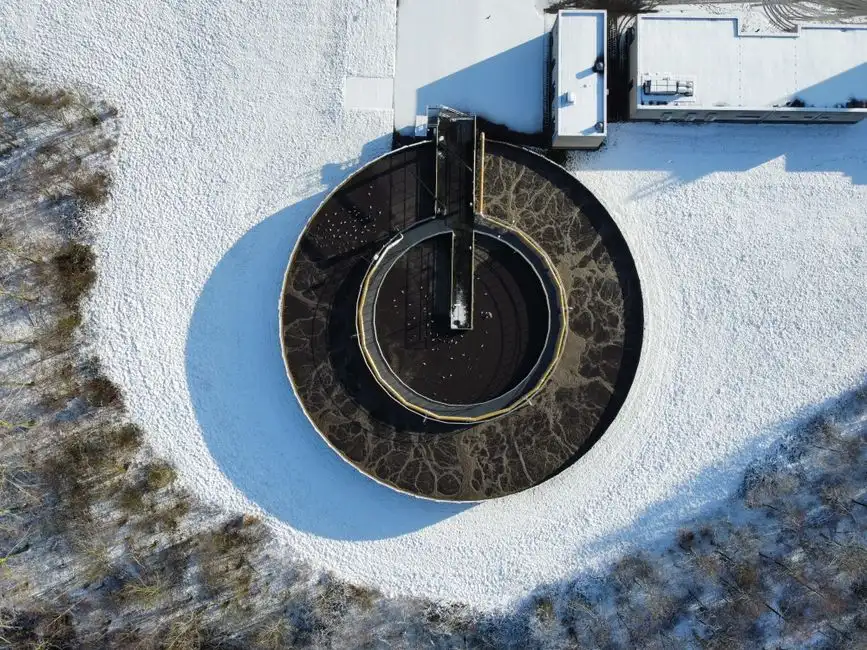
Treatment capacity is controlled by the most demanding stream and the largest batch, not by a plant-wide average. Segregate clean stormwater, contact stormwater, mine drainage, process runoff, washdown, spent solutions, and equipment clean-out water until each source has been characterized.
| Stream | Characterization inputs | Design consequence |
|---|---|---|
| Clean stormwater | Flow range, pollutants, drainage area | Determine whether sewer discharge is permitted or whether another control applies |
| Contact stormwater and mine drainage | pH, metals, TSS, sulfate, TDS, flow duration | Separate acidic or high-solids drainage from cleaner flows |
| Process runoff and washdown | Batch frequency, pH, solids, metals, surfactants, toxicity | Establish equalization and chemical-control demand |
| Spent solutions and clean-out streams | Concentration, volume, acidity, metals, oil and grease | Evaluate dedicated treatment or controlled equalization |
| Equipment clean-out streams | Slug volume, solids, production-cycle timing | Confirm storage and monitoring capacity for the complete release |
Screen each stream for pH, suspended solids, dissolved metals, oil and grease, organics, ammonia, sulfate, TDS, toxicity, and flow variability. Add the receiving POTW’s required analytes and any site-specific constituents associated with process chemicals.
Use a sampling plan that combines routine composite samples with event-based samples during batch dumps, shift changes, mill clean-outs, upsets, and slug loads. Document the range of flow, pH, metal concentration, TSS, temperature, and toxicity across production cycles. Ask the POTW for its representative sampling method, container requirements, analytical hold times, and chain-of-custody procedures.
Segregation may be necessary where oil-bearing water, high-TDS brine, acidic drainage, or plating rinse water requires different chemistry from bulk ore-processing water. The alternative—blending every stream before sampling—can conceal toxic or high-concentration batches and produce an equalization basin sized around diluted flow rather than actual treatment demand.
Size Equalization and Chemical Control
Equalization must damp complete batch discharges, not merely average daily flow. HydropureWater recommends an equalization basin sized at approximately 8–24 hours of average daily flow to absorb shift changes, dump-leach cycles, and mill clean-outs; it also warns that a 4-hour basin may pass upstream spikes into clarification (undated). Those figures are a scoping basis, not a substitute for site-specific hydraulic analysis.
Develop the hydraulic profile around peak flow, batch-release duration, required turndown, and the permitted discharge rate. Equalization volume does not reduce the total mass of pollutants, but it can prevent an untreated slug from overwhelming pH control, precipitation, flotation, or clarification.
Place pH control immediately after equalization. Lime and caustic can both support metal hydroxide precipitation: HydropureWater identifies lime as cheaper per ton but producing more sludge, while sodium hydroxide generates less sludge (undated). The selected reagent should reflect the water chemistry, reagent-storage constraints, handling requirements, and resulting sludge volume—not reagent price alone.
Use an automatic chemical dosing system for pH and metals precipitation with PLC control that responds to flow and measured chemistry. Establish dose, mixing, and pH-control objectives from site-specific jar tests. Vendor literature is not a substitute for identifying the pH window that produces acceptable residual metals with the actual wastewater.
Evaluate sulfide precipitation, or hydroxide treatment followed by sulfide polishing, only when jar tests demonstrate a need for exceptionally low residual metals. HydropureWater reports sulfide residual metals of 0.01–0.05 mg/L versus 0.5–2.0 mg/L for hydroxide, but also reports 2–4 times higher reagent cost and a need for sealed reactors and H₂S scrubbing (undated). Review reagent handling and ventilation before accepting that process.
Choose DAF or Lamella Clarification
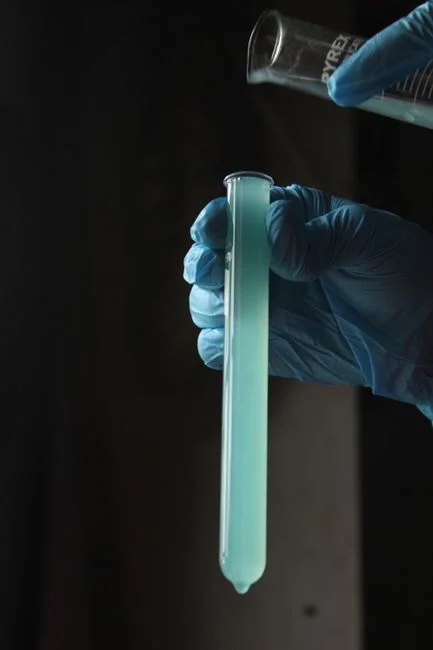
Select the primary solids-removal mechanism from the wastewater character, not from available floor space alone. DAF is generally more suitable when oil, grease, fine colloids, or floatable metal-bearing material are present; a lamella clarifier is generally more suitable for comparatively high flow carrying dense metal-hydroxide sludge.
| Decision factor | DAF | Lamella clarification |
|---|---|---|
| Preferred feed character | Oil, grease, fine colloids, or floatable material | Metal-hydroxide floc and comparatively high flow |
| Reported hydraulic loading | 5–25 m/h | 20–40 m/h surface loading |
| Reported removal performance | 90–98% TSS; 85–95% oil and grease | Not established by the supplied research |
| Footprint and sludge context | Requires reliable float and sludge capture | Compact structure; dense sludge blanket |
| Key limitation | Hydraulic and chemical instability can reduce capture | Less effective for free oil and colloidal fines |
The loading and performance values above are reported by HydropureWater (undated) for mining and metal-finishing service. A DAF system for mining and metals wastewater should be evaluated when oil or colloids interfere with settling. A lamella clarifier for metal hydroxide sludge becomes more credible where high flow and footprint constrain the project.
Neither device alone proves POTW compliance. Combine jar-tested chemistry with hydraulic reserve, filtration, sampling, and operating controls. For mixed oily and metal-bearing streams, determine whether free-oil pretreatment is necessary before primary clarification. If a lamella unit is selected, include a method for handling oil rather than assuming its removal by settling.
Precipitated solids must leave the liquid treatment train as a controlled waste. The sludge consequence belongs in the equipment decision because each clarification or flotation route changes sludge volume, thickening demand, and dewatering requirements. A filter press for metal-bearing sludge should be evaluated where cake handling and liquid-solid separation justify fixed equipment.
For a more detailed equipment comparison, see the guide to compare DAF and clarifiers for mining wastewater.
Add Polishing, Sampling, and Sludge Controls
The permit becomes an auditable operating system only when treatment performance, sampling, and waste handling are linked. Add multimedia filtration after clarification or flotation when the local limit requires further TSS control or when the facility needs a polishing barrier against solids carryover. HydropureWater describes a multimedia filter as a safety net and reports residual TSS below 10 mg/L under its stated filtration conditions (undated). A multimedia polishing filter should be specified around confirmed duty, backwash demand, and permit requirements.
Use automatic, flow-proportional sampling where required and retain the resulting composite record with grab samples collected under the POTW’s approved protocol. Confirm sample points, frequency, laboratory methods, and reporting deadlines against the industrial-user permit.
Prepare a written slug-load procedure that identifies the trigger, immediate POTW notification, flow diversion or storage, representative sampling, corrective treatment, incident documentation, and authorization to resume discharge. Operators should know which conditions require stopping discharge rather than attempting uncontrolled dilution.
The Williams Mullen EMD Millipore enforcement summary, published March 30, 2017, identifies flow-rate limits, pH prohibitions, failure to notify the POTW of slug loadings, pass-through, and interference as enforcement concerns. A compliant local permit therefore cannot be reduced to one analyzer reading.
Dewater precipitated sludge and manage filtrate and cake under the applicable waste-disposal requirements. Do not return untreated filtrate to the treatment head. Include filtrate chemistry and flow in the plant water balance so an apparent removal becomes an internal recirculation of pollutants.
Turn the Permit into a Procurement Checklist
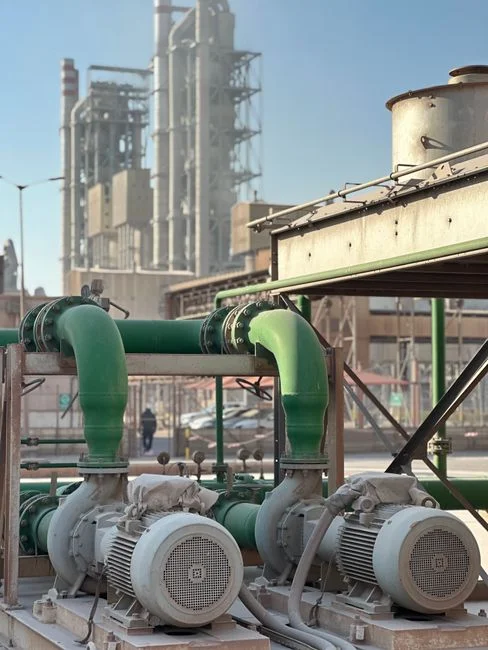
Equipment quotations should be based on enforceable limits and representative wastewater data, not a packaged average-flow estimate. Give each vendor the same permit-limit matrix, stream characterization, jar-test results, sludge estimate, utility requirements, monitoring points, and future-production scenario, then require comparable proposals.
- State the design basis. Include design flow, peak flow, batch duration, equalization volume, operating turndown, units in service, redundancy, duty cycle, and control narrative.
- Map every limit to a treatment stage. Identify which parameters the proposed train is designed to meet, expected residual values, and operating conditions under which those values cannot be achieved.
- Quantify operating consequences. Compare reagent use, sludge volume, dewatering demand, energy, maintenance, operator workload, and the effect of an avoidable permit excursion—not purchase price alone.
- Define acceptance. Agree on FAT and SAT protocols, test streams or sampling plans, performance acceptance criteria, and resolution of failed tests.
- Require handover documents. Specify PLC controls, alarms, data export, operating manual, spare-parts list, operator training, and a defined support plan.
Do not accept a residual-concentration guarantee without defining the test stream, sampling point, analytical method, hydraulic condition, and acceptance period. A proposal that cannot connect its equipment performance to the permit matrix is incomplete.
Give the vendor the complete monitoring and compliance scope. Ask how the regional mining and metals pretreatment guide structures permit-to-operations decisions, but require the final proposal to use the receiving POTW’s actual documents.
Monitor the Result and Prepare for Enforcement
Maintain a permit-compliance register that links each limit to its sample point, method, frequency, result, exceedance, corrective action, notification, and closeout record. This turns monitoring into evidence that the treatment train remained controlled between sample events.
Calibrate pH, flow, turbidity, and other online instruments on a defined schedule. Compare field measurements with laboratory results so control trends remain trustworthy. Review the treatment train whenever a result approaches an enforceable limit; an instrument trend may reveal a failed pump, reagent interruption, polymer mis-dose, or hydraulic surge before a formal exceedance appears.
Escalate engineering review when production changes, new chemicals enter the process, a stream is diverted, the POTW revises local limits, or monitoring identifies adverse trends. The permit matrix and treatment assumptions should be revised together rather than changing equipment without reassessing compliance.
Williams Mullen’s March 30, 2017 summary of the EMD Millipore consent decree is a useful enforcement benchmark. The settlement required system upgrades, annual operator training, sampling, analysis, quarterly monitoring, and a $385,000 civil penalty. It demonstrates that treatment equipment alone is not the compliance system; operating procedures, notification, monitoring, and records are equally relevant.
Keep corrective-action planning separate from legal advice, while making the operating response unambiguous. Operators should know when to stop a discharge, notify the POTW, preserve analytical and operating records, obtain approved corrective treatment, and seek authorization before resuming. Legal and compliance personnel should determine the formal regulatory position and any reporting obligations.
Frequently Asked Questions
Does a Warren County mining or metals plant need an NPDES permit for a sewer discharge?
Usually not for the industrial wastewater sent into the municipal sewer. That discharge is addressed through Clean Water Act §307(b), 40 CFR Part 403, the POTW sewer-use ordinance, and the industrial-user permit. A separate outfall to surface water may require an NPDES permit incorporating the applicable 40 CFR Part 436 requirements, as described by EPA.
How should equipment be sized when choosing between DAF and a lamella clarifier?
Start with the enforceable local limit, peak and batch flow, and worst credible wastewater composition—not average daily flow alone. Then match the equalization basin, precipitation stage, flotation or clarification device, polishing filter, and sludge train to those inputs. Use jar-test results to confirm chemistry, and use the DAF-versus-clarifier comparison as a decision framework.
What drives the cost and operating trade-offs in metals pretreatment?
Hydroxide precipitation is the common baseline because the chemistry is established. Sulfide treatment can produce lower residual metals but has higher reagent demands and requires controls for H₂S. DAF versus lamella depends on oil, colloids, sludge characteristics, flow, and footprint. Request itemized reagent consumption, sludge generation, dewatering demand, energy, maintenance, and training from every supplier.
How should a buyer select a treatment supplier?
Require evidence relevant to the actual wastewater, automatic controls, monitoring integration, FAT or SAT, operator training, service support, and a transparent performance guarantee. Ask each supplier to define the test stream, sampling point, analytical method, hydraulic condition, and acceptance criterion. Confirm that the guarantee maps to every permit parameter rather than a selected demonstration parameter.
Does one online analyzer prove that the plant meets pretreatment requirements?
No. Compliance may involve pH, metals, flow, slug loads, pass-through, interference, notification, and recordkeeping. Online instruments support process control, but permit compliance must be demonstrated through the required sampling and analysis, documented operating controls, and a response process for excursions.