What Makes Thai Textile Wastewater Treatment Different?
Textile wastewater treatment in Thailand cannot be selected from a generic process description because dyeing, printing, washing and finishing streams can differ materially in dilution, pH, color, COD and chemical composition. A defensible design therefore begins with stream-specific sampling, flow records and identification of the discharge or reuse route—not a single composite sample. Research from DR-NTU identifies coagulation and flocculation as central treatment processes, while a Journal of Ecological Engineering study of a conventional Thai textile facility demonstrates why microplastic containment and upstream/downstream verification also belong in the design basis.
Request a representative sampling plan that separates process streams and captures production campaigns, batch dumps and operating changes. The supplied ResearchGate table concerning Thai textile wastewater was inaccessible because of a security check, so it cannot support a numerical contaminant profile here. Consequently, buyers should request site data for pH, COD, BOD, TSS, color, temperature, flow variation and relevant process chemicals rather than adopt assumed ranges.
The Journal of Ecological Engineering evaluation, titled Evaluating Microplastics Removal Efficiency of Textile Industry Conventional Wastewater Treatment Plant of Thailand, examined microplastics entering the canal and adjacent water bodies and compared upstream and downstream samples. That design should influence physical containment, solids-management barriers and monitoring, rather than proving that any conventional treatment plant removes all microplastics.
Before equipment selection, identify whether the destination is direct discharge, municipal sewer discharge or water reuse, and confirm which Thai authority and permit apply. For broader equipment context, use an industrial COD removal technology comparison as a reference, but keep the final train specific to the textile facility.
Build the Treatment Train from the Wastewater Characterization
The treatment train should be assembled as a sequence of defined process functions: equalization and screening, pH adjustment, coagulation/flocculation, solids separation, biological treatment where required, polishing, reuse-specific treatment, and sludge handling. Each stage needs an inlet duty basis, outlet criterion and operating dependency; otherwise, an equipment list can conceal gaps between pretreatment, biological treatment and final compliance.
| Process stage | Primary function | Design input required | Downstream consequence |
|---|---|---|---|
| Equalization and screening | Mix flows, attenuate batch variation and remove gross solids | Flow hydrograph, batch-dump records and screening requirements | Stable feed to pH control and solids separation |
| pH adjustment | Establish the chemical condition required for treatment | pH distribution and selected coagulant operating window | Repeatable coagulation and biological compatibility |
| Coagulation/flocculation | Destabilize contaminants and form separable floc | Jar-tested chemistry, mixing conditions and wastewater variability | Effective DAF, lamella or sedimentation separation |
| DAF or clarification | Remove floated or settled suspended material | Hydraulic loading, solids characteristics and required separation performance | Reduced solids loading to downstream treatment |
| Biological treatment | Remove degradable dissolved load | Influent characteristics, temperature, aeration and process-control requirements | Biological solids requiring separation and stabilization |
| Polishing | Meet the selected discharge or reuse objective | Permit-aligned parameters and reuse quality targets | Permit evidence or reuse acceptance |
| Sludge handling | Concentrate and stabilize separated solids | Solids generation, dewatering performance and disposal route | Manageable residue volume and transport cost |
DAF is suitable for suspended solids, oil and grease, and colloidal material. The supplied product record identifies textile wastewater as a DAF application and provides a textile wastewater DAF system reference. Lamella clarification can follow coagulation/flocculation or replace a conventional solids-separation stage once floc conditioning is established. The supplied lamella product record states surface-loading rates of 20–40 m/h and chemical consumption up to 30% lower, but these are product-record claims rather than guaranteed site outcomes.
Neither DAF nor clarification establishes that degradable dissolved load has been removed. An MBR membrane bioreactor combines biological treatment with membrane separation, so its role is materially different from a physical separation stage.
Final sizing requires flow, pH, COD, BOD, TSS, color and temperature data. Where relevant, add dye chemistry, salt, conductivity, fiber loss and microplastic screening. Request campaign-based data and the basis for peak-flow selection rather than relying on an average daily flow.
Choose DAF, Clarification or MBR by Treatment Objective
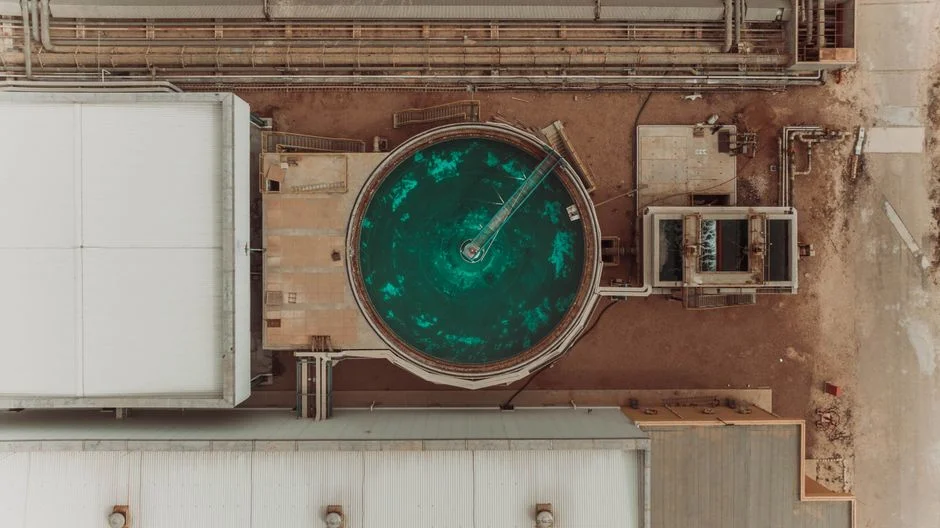
DAF, lamella clarification and MBR should be compared by treatment function and project objective, not by equipment price or nominal capacity alone. DAF and lamella are primarily physical solids-separation stages; MBR is a biological treatment system with membrane separation. The correct choice therefore depends on where the train lacks solids separation, where degradable dissolved load must be removed and what quality the discharge or reuse target requires.
| Option | Primary function | Suitable role | Operating dependency | Main output | Key selection question |
|---|---|---|---|---|---|
| DAF | Separation of floated solids, oil and grease and part of the colloidal load | Physical separation after equalization and chemical conditioning | Established floc, recycle performance, pressure and solids handling | Separated sludge stream and clarified water | Will it meet the specified solids duty under the actual wastewater? |
| Lamella clarification | Clarification of conditioned solids through inclined settling surfaces | Solids separation after coagulation/flocculation or as an alternative stage | Floc conditioning, sludge withdrawal and controlled hydraulic loading | Sludge and clarified water | What clarification rate and sludge condition are required? |
| MBR | Biological degradation combined with membrane separation | Biological treatment where required, with membrane solids retention | Aeration, membrane operation, pretreatment, controls and maintenance | Permeate and concentrated mixed liquor solids | Can it meet the permit or reuse objective with the proposed feed and fouling controls? |
The supplied DAF product record covers 13 models with capacities from 4 to 300 m³/h. That range can frame market screening, but it is not a hydraulic design basis. Selection still depends on wastewater characteristics, hydraulic loading, required removal performance and treatment-train integration.
The supplied MBR product record states membrane filtration below 1 μm and a capacity range of 10–2,000 m³/day. These are product specifications, not guarantees of COD, color, microplastic or reuse performance for every customer. Buyers should request test-water data tied to the proposed feed and acceptance criteria.
- Define the treatment function the technology must perform.
- Match the technology to the treatment train and final objective.
- Compare guaranteed duty parameters rather than nominal capacity labels.
- Obtain utilities consumption, footprint, controls scope, wear-part or membrane maintenance and local service support.
Set Chemical Dosing with Jar Tests and Automated Control
Chemical dose should be established from site wastewater rather than copied from a generic dosing table. HydroChemix’s Thailand Industrial Wastewater: Sugar & Textile Guide, dated 2026-08-15, lists an indicative PAC range of 50–500 mg/L at pH 6.5–8.0 and an indicative PAM range of 0.5–3.0 mg/L at pH 6.0–10.0. The source explicitly recommends actual dosage determination by jar testing; these values are trial starting points, not a prescription for a Thai textile plant.
| Chemical | Indicative trial range | Indicative pH window | Required interpretation |
|---|---|---|---|
| PAC | 50–500 mg/L | pH 6.5–8.0 | Coagulant trial range only; determine the site dose through jar testing |
| PAM | 0.5–3.0 mg/L | pH 6.0–10.0 | Second-stage flocculant-aid range; assess floc strength, settling and filtration resistance |
Use the following sequence:
- Characterize mixed wastewater and confirm the production campaign represented by each sample.
- Establish the target pH for the selected chemical program.
- Run a jar-test matrix across the indicative PAC range, then evaluate PAM as a second-stage aid.
- Compare settleability, supernatant clarity, color, floc recovery and filtration resistance.
- Select the least-cost chemical program that consistently meets the treatment and downstream requirements.
- Validate the selected combination with pilot or plant data before full-scale control settings are fixed.
A PLC-controlled automatic chemical dosing system should provide repeatable pH correction and coagulant/flocculant feed through calibrated pumps, verified tank sizing and instrument interlocks. Include calibration, storage and handling arrangements in the equipment scope. An ultrafiltration system design guide can help frame downstream filtration checks, but it does not replace site dosing trials.
Request safety data sheets, certificates of analysis, import documentation, storage requirements and local chemical-handling support from every chemical supplier.
Verify Compliance Beyond a Compliance Claim

Compliance evidence should connect the permit to sampling points, test methods and stage-by-stage performance. HydroChemix’s 2026-08-15 Thailand guide identifies PCD standards, Notification of MOI 2020 and industrial effluent standards per DIW as relevant references. The supplied research does not provide numeric Thai textile discharge limits, so the applicable permit, receiving-water conditions and any pretreatment or sewer-discharge requirements must be obtained from the responsible authority.
| Evidence item | Minimum procurement requirement | Reason for review |
|---|---|---|
| Applicable approval basis | Site permit, receiving-water conditions and authority confirmation | Defines the numerical and procedural obligations that must be demonstrated |
| Raw wastewater baseline | Flow, pH, COD, BOD, TSS, color and permit parameters | Establishes the treatment challenge and design load |
| Stage samples | Samples from each major treatment stage | Identifies where removal occurs and which unit is underperforming |
| Final-effluent evidence | Performance against permit-aligned acceptance criteria | Links commissioning results to the compliance obligation |
| Microplastic verification | Upstream and downstream monitoring where relevant | Tests whether physical containment is performing as intended |
| Handover records | Operating manual, training records, test certificates and troubleshooting responsibility | Connects equipment acceptance to continued operation |
The Journal of Ecological Engineering’s Thai textile study used upstream and downstream sampling to investigate microplastic leakage into a canal and adjacent water bodies. Apply that logic to the selected treatment barrier: define sampling locations, analytical method, frequency, acceptance criteria and responsibility for corrective action.
Require the supplier to define every sampling point, test method and acceptance criterion in the contract. Include operator training, as-built documentation, controls configuration, spare-parts list, commissioning protocol and troubleshooting responsibility. A statement that equipment “meets Thai standards” is not an acceptance test.
Budget for Chemicals, Freight, Sludge and Lifecycle Cost
The equipment quotation is not the project cost. Compare the full operating and disposal burden, including chemicals, operator labor, energy, wear parts, sludge transport or disposal, membrane replacement and downtime. HydroChemix’s 2026-08-15 guide provides market-screening CIF Thailand benchmarks, but its publication date is later than the current 2026 reference point; its forecasts and prices therefore require current validation and should not be treated as established current-year evidence.
| Cost item | HydroChemix indicative CIF Thailand benchmark | Procurement treatment |
|---|---|---|
| PAC, spray-dried | $350–500/ton | Validate current price, freight basis and delivered volume |
| PAC, drum-dried | $280–400/ton | Compare product performance and delivered cost, not grade name alone |
| Anionic PAM | $1,700–2,500/ton | Confirm grade, trial suitability and current landed quotation |
| Coal-based activated carbon | $900–1,500/ton | Include dose, replacement interval and performance test |
| Sea freight | 15–35 days | Obtain a current, destination-specific logistics plan |
| Air freight | 3–7 days | Price the schedule premium against production and commissioning risk |
HydroChemix also identifies certificates of analysis, material safety data sheets, commercial invoices, packing lists and certificates of origin as documentation for imported treatment chemicals. Include those items in procurement and customs readiness.
Connect sludge handling to the selected solids-separation duty. The supplied plate-and-frame filter press record provides an available filtration-area range of 1–500 m². Require bidders to state the design feed, batch cycle, cake-moisture assumption, polymer demand, filtrate return and disposal route; these inputs determine whether the proposed press area is credible.
For MBR proposals, include membrane replacement and fouling-control assumptions. For DAF and clarification, include pump wear, recycle, sludge withdrawal and air-system maintenance. Use the MBR membrane replacement cost guide as a prompt for lifecycle assumptions, not as a substitute for a supplier quotation.
Use a Supplier Comparison Checklist Before Awarding the Project
A comparable bid requires the same wastewater, objective and scope from every bidder. Require each supplier to submit a process concept, equipment list, guaranteed operating parameters, utilities consumption, footprint, controls narrative, installation boundary and complete scope exclusions. The industrial ETP and DAF buyer checklist provides a useful structure, but Thai textile suppliers must complete it against the site’s actual campaign data and permit.
- Provide the same wastewater dataset, including production-campaign variation and the basis for peak-flow sizing.
- Require guaranteed duty parameters, utilities consumption, footprint and controls scope from every bidder.
- State installation, civil works, chemical storage, commissioning, training and remote-support responsibilities.
- Request maintenance intervals, spare parts, membrane or wear-part replacement and local service support.
- For imported chemicals, request certificates of analysis, safety data sheets, commercial invoices, packing lists and certificates of origin.
- Compare the treatment train and lifecycle support rather than awarding on the lowest equipment quotation alone.
Use the filter press selection guide to check whether sludge equipment is linked to realistic feed and cake-disposal assumptions. The commercial comparison should then include performance evidence, operating resources, schedule risk, documentation and support—not only acquisition cost.
Frequently Asked Questions
What treatment train is normally required for textile wastewater in Thailand?
A normally required train includes equalization and screening, pH control, coagulation/flocculation, solids separation, biological treatment where required, polishing, reuse treatment where applicable, and sludge handling. The correct sequence and performance must be validated against the facility’s wastewater characterization, permit and reuse objective; a generic textile recipe is not sufficient.
Should I size the ETP from peak factory flow or average production wastewater?
Use neither a generic average nor an unverified peak alone. Identify batch dumps, production-campaign variation and hydraulic peaks through flow records and representative sampling, then document the basis for peak-flow sizing. Hydraulic capacity, treatment performance and equalization volume are separate design decisions and should be reviewed separately.
How much does textile wastewater treatment equipment cost in Thailand?
The supplied research contains chemical-price benchmarks but no complete ETP capital-cost figure for a Thai textile facility. Request itemized quotations covering process equipment, civil works, installation, controls, initial chemicals, operator labor, energy, sludge handling and lifecycle spare parts. Use HydroChemix’s 2026-08-15 chemical benchmarks only as market-screening inputs pending a current quotation.
How do I compare a DAF supplier with an MBR supplier?
Compare them by function and treatment architecture: DAF is primarily a physical solids-separation stage, while an MBR combines biological treatment with membrane separation. Give both bidders the same wastewater data, effluent or reuse objective and scope boundary. For the textile wastewater DAF system and the MBR membrane bioreactor, request guaranteed duty parameters, test-water evidence, utilities consumption, controls, maintenance and local support—not capacity labels alone.
What compliance evidence should a supplier provide in Thailand?
Require permit-aligned acceptance criteria, defined sampling points, test methods, stage-by-stage performance data, operator training, documentation handover and troubleshooting responsibility. Confirm the applicable PCD, Notification of MOI 2020 and DIW requirements with the responsible authority. Where relevant, include upstream and downstream microplastic monitoring based on the Journal of Ecological Engineering study’s sampling approach.