How to Choose Between DAF and Clarification for Livingston Food Plants
For Livingston food and beverage factories, choose dissolved air flotation when wastewater contains floatable oils, fats, FOG, or buoyant solids that require reliable skimming; choose clarification when the main objective is separating settleable solids through gravity. DAF uses 30–50-micron microbubbles to lift conditioned material, while lamella clarification uses inclined plates to improve settling area. Neither equipment should be selected from flow rate alone: characterize TSS, FOG, particle buoyancy, settleability, flow variation, chemical demand, discharge destination, and downstream treatment before requesting a final size.
That decision becomes more complicated because food processing streams can change by production area and operating condition. AECOM’s October 21, 2026 qualification material lists brewing, beverages, dairy and cheese, meat and poultry processing, grain processing, fresh produce, frozen foods, distilling, and snack foods among the sectors it serves. It also frames industrial wastewater work as a lifecycle requiring planning, permitting, design, construction, startup, commissioning, and operations support, rather than as a single equipment purchase.
For soft drink producers, the treatment-train implications are detailed in this soft drink wastewater treatment train guide. Poultry processors face different stream behavior, as discussed in this poultry processing wastewater technology comparison. Those differences are why the selection must follow the wastewater’s physical behavior and the plant’s downstream objectives.
What Changes Between Food and Beverage Wastewater Streams
Characterize each production, cleaning, and shutdown stream before combining them: TSS, FOG, suspended-material distribution, buoyancy, settleability, flow, and flow variation can point to different unit duties.
| Wastewater source or condition | Characteristics to verify | Equipment decision affected |
|---|---|---|
| Brewing and beverage production | Representative flow pattern, suspended material, product loss, settleability, and cleaning contribution | Whether clarification, flotation, biological treatment, or a combined train is appropriate |
| Dairy and cheese processing | FOG contribution, solids carryover, cleaning chemicals, and flow variation | Whether conditioning and DAF are required ahead of downstream treatment |
| Meat and poultry processing | Suspended solids, blood and tissue losses, FOG, and production-driven load variation | Whether solids removal and float recovery need separate stages |
| Grain, fresh-produce, frozen-food, and snack processing | Particle size, wash-water solids, soil or debris, and settleability | Screening, clarification, flotation, or solids handling sequence |
| Cleaning and shutdown discharges | Intermittent chemical use, pH, FOG, solids concentration, and duration | Equalization, routing, chemical control, and peak-capacity design |
AECOM’s food and beverage project matrix in the October 21, 2026 material includes wastewater-source evaluations and pretreatment or reuse systems for brewing, beverages, cereal, dairy and cheese, grain processing, meat, poultry, and other food sectors. That breadth is evidence that pretreatment cannot be standardized solely by flow. A high-flow beverage line may carry relatively light material, while a lower-flow washing operation may produce concentrated settleable solids.
Do not let one composite sample represent every operating condition. Request separate or event-based samples from production, cleaning, and shutdown periods. Where intermittent FOG or solids loading determines equipment duty, specify how the supplier will test performance with representative wastewater rather than relying on a generic removal claim.
DAF Performance Starts With Chemical Conditioning
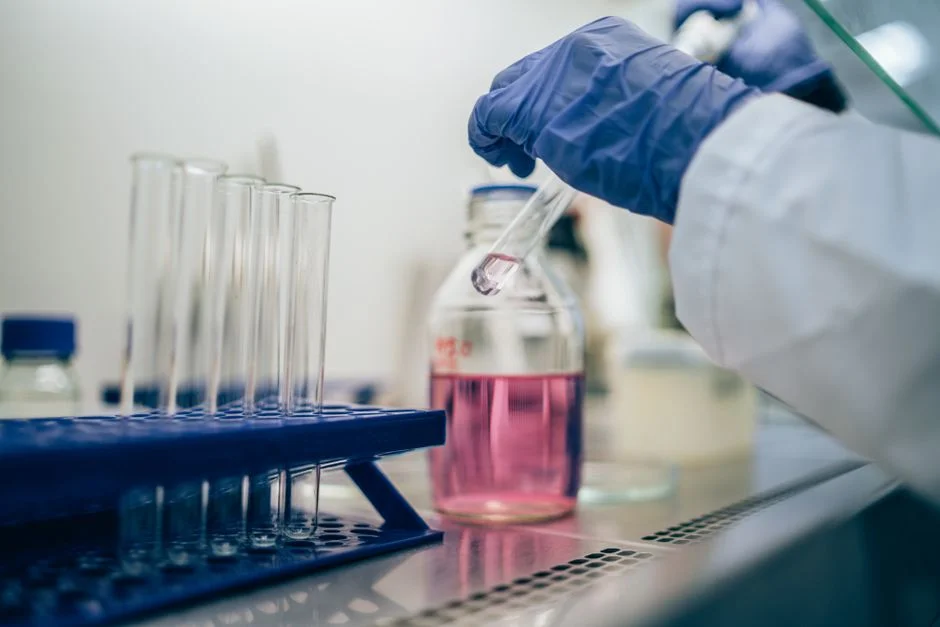
DAF separates conditioned solids from wastewater by attaching them to microbubbles, floating them to the surface, and removing the resulting float with a skimmer.
Clearwater Industries’ DAF system information, dated April 27, 2026, states that the system uses microbubbles measuring 30–50 microns. It also states that DAF should be paired with coagulation and flocculation because chemical conditioning increases solids size and improves their contact with microbubbles. Serpentine flocculator mix tubes or chemical mix tanks can provide that conditioning.
The treatment train should therefore be reviewed in process order:
- Equalize and screen the incoming wastewater.
- Adjust chemistry where required, then coagulate and flocculate.
- Separate conditioned material in DAF.
- Send clarified effluent to biological treatment or polishing when required.
- Remove, recover, or dispose of DAF float and bottom solids through a defined solids-handling route.
Conditioning is not an accessory to be added after the tank is ordered. Solids properties, chemical demand, mixing, residence behavior, and recovery of conditioned chemicals affect separator selection and operating cost. An automatic chemical dosing system may form part of that train, but its scope should follow the wastewater analysis and chemical plan.
Do not accept an unspecified TSS or FOG removal rate. Require a supplier to demonstrate performance with wastewater representative of the Livingston plant and to state how conditioning, sampling, and acceptance testing will be handled. For broader design context, use the 2026 DAF beverage wastewater design guide to check whether the proposed train addresses both separation and downstream treatment.
DAF or Lamella Clarifier: Engineering Trade-Offs
DAF is generally the stronger candidate for floatable FOG and oils, while a lamella clarifier is generally the stronger candidate for wastewater whose dominant contaminant load is settleable solids.
| Decision factor | Dissolved air flotation | Lamella clarification |
|---|---|---|
| Primary separation mechanism | 30–50-micron microbubbles attach to conditioned solids, which float and are skimmed | Sludge recirculation and flocculation support separation on inclined plates |
| Best process fit | Floatable oils, fats, FOG, and buoyant solids | Settleable solids where gravity separation is suitable |
| Principal equipment train | Flotation tank, recycle and saturation system, conditioning equipment, skimmer, and solids handling | Clarifier with sludge recirculation, flocculation, inclined plates, and sludge withdrawal |
| Recovered solids | Surface float that may contain FOG and conditioned solids | Settled sludge |
| Main engineering question | Can representative solids be conditioned and attached reliably to microbubbles? | Will the solids settle within the selected hydraulic and loading basis? |
The separation mechanisms are materially different, but neither automatically removes the plant’s full treatment obligation. DAF can recover floatable material while leaving soluble organic load for downstream biological treatment. A lamella clarifier can remove settleable material while leaving oil, grease, and dissolved load outside its direct physical-separation duty. The unit selected first should therefore be assigned to the contaminant that controls the next treatment step or discharge risk.
The lamella clarifier specification states a surface-loading range of 20–40 m/h and chemical-consumption reductions of up to 30%; those values retain the scope of the product specification and must be matched to the proposed wastewater and design basis. Its inclined plates increase effective settling area within a compact structure. By contrast, an industrial DAF system must accommodate the flotation tank and associated recycle, saturation, conditioning, skimming, and solids-removal provisions.
Configuration evidence also matters. Clearwater Industries’ April 27, 2026 information identifies the FPAC for small-to-medium flows with very high TSS and FOG loads, the FPBC for low-to-medium solids loads using lamella-pack technology, and the FPHF for high flows with low-to-large solids loads. These descriptions illustrate why “DAF” is not a sufficient purchase specification. Load range, flow regime, flotation behavior, and skimming arrangement need to be stated.
Clearwater Industries states that standard DAF units use 304 stainless steel, with 316 stainless steel, polypropylene, and other materials available. For a Livingston plant, review that selection against actual wastewater chemistry, cleaning exposure, temperature, and maintenance practices. Clarifier metallurgy, coating, plate access, and corrosion protection should receive the same scrutiny rather than being treated as generic accessories.
Sizing and Supplier Evaluation Checklist
A valid DAF system sizing package begins with measured flow and wastewater data, not a model number.
HydropureWater’s current DAF range covers 4–300 m³/h across 13 standard models. That range identifies available equipment capacity; it does not determine the correct model for a Livingston plant. Final selection requires the actual hydraulic and contaminant loads.
| Information to request | Why the supplier needs it | Response required from each bidder |
|---|---|---|
| Average and peak flow; production, cleaning, and shutdown schedules | Establishes hydraulic range and equalization needs | Design flow basis, treatment configuration, and margin |
| TSS, FOG or oil and grease, particle-size distribution, buoyancy, and settleability | Defines whether flotation or gravity separation fits | Performance basis and acceptance-test method using representative wastewater |
| Temperature, pH, and chemical demand | Establishes conditioning needs and operating constraints | Chemical list, dosing control, mixing arrangement, and chemical-consumption assumptions |
| Future production changes | Prevents undersizing or unnecessary excess capacity | Stated assumptions and treatment-train scalability |
| Solids destinations | Defines float or sludge handling, recovery, and disposal interfaces | Complete solids balance and collection, withdrawal, storage, and transfer arrangement |
Ask each bidder to explain its flotation or clarification loading basis, recycle ratio, saturation-system arrangement, conditioning equipment, skimmer design, sludge-discharge method, and design margin. Require material schedules, controls, alarms, utility demands, installation information, local service support, operator training, commissioning tests, and performance criteria tied to the supplied wastewater.
Also ask what is included beyond the separator. The proposed train may require equalization, screening, pH adjustment, coagulation and flocculation, DAF or clarification, biological treatment, filtration, disinfection, or reuse polishing. Screening can affect downstream equipment, while a plate-frame filter press may be relevant if dewatering is included in the solids-handling scope. A rotary mechanical bar screen may be considered where upstream solids protection is required.
Do not leave float and sludge handling as a note in the quotation. DAF float may carry recoverable FOG or solids; clarifier sludge creates a different concentration and disposal pathway. Ask each supplier to state what leaves the system, where it goes, who handles it, and which downstream equipment is included.
Compliance, Operations, and Lifecycle Risk
The discharge destination and Livingston site’s applicable pretreatment or sewer requirements must be confirmed before the equipment train is finalized; no generic national limit should be assumed to govern the plant.
AECOM’s October 21, 2026 New York and Buffalo-area qualification example emphasizes coordination with the New York State Department of Environmental Conservation and other agencies during planning and permitting. For a Livingston factory, use that experience as a coordination prompt: identify the receiving sewer authority, applicable pretreatment permit, local discharge criteria, monitoring obligations, and any reuse restrictions before finalizing the separator and downstream treatment.
Operational dependencies can make an otherwise suitable separator a weak investment. Review chemical availability, dosing control, skimmer or sludge withdrawal, equipment access, cleaning, odor control, freeze protection, power reliability, and operator workload. DAF has a skimmer and float-handling duty; clarification has a sludge-recirculation and solids-withdrawal duty. Neither duty disappears after the tank enters service.
Compare lifecycle requirements as well as purchase price. Relevant items include chemical consumption, labor, maintenance, parts, utilities, sludge or FOG handling, recovered-material value, and downtime exposure. AECOM’s October 21, 2026 material describes food and beverage expertise in waste-to-energy and water-reuse optimization. If reuse is an objective, ask whether residual oil, suspended solids, biological demand, or pretreatment chemistry will impair downstream reuse.
Site-specific requirements for another New York location should not be transplanted automatically to Livingston. Use the pretreatment-limit assessment guide as a structured review method, then confirm the actual site’s rules with the receiving authority.
A Practical Selection Path for Livingston Factories

Select the separator by the dominant physical behavior of the wastewater, then design the complete train around what remains.
- Floatable FOG or oils dominate: Evaluate DAF with coagulation, flocculation, skimming, and float handling. Confirm that representative material can be conditioned and floated reliably.
- Settleable solids dominate: Evaluate a lamella clarifier with sludge recirculation and a defined sludge-management route. Confirm the proposed hydraulic basis against the actual solids and flow data.
- Both floatable and settleable loads are significant: Evaluate a combined treatment train rather than assigning both duties to one separator without proof.
- Soluble organic load remains the main challenge: Define biological treatment separately. The supplied research does not support treating DAF or clarification as a substitute for biological treatment.
- Reuse is part of the project: Evaluate the complete downstream treatment and storage requirements, not only the separator’s outlet appearance.
Finalize the purchase only after representative wastewater testing, site-requirement review, solids-balance review, and supplier performance commitments. If the wastewater changes materially, revisit the decision rather than relying on the original equipment label.
For mixed wastewater requiring broader treatment, an integrated wastewater treatment system may be evaluated for the downstream train. The soft drink wastewater treatment train guide provides a useful reference for separating physical pretreatment from the biological stage.
Frequently Asked Questions
What does a DAF system cost for a Livingston food and beverage plant?
Request an itemized life-cycle comparison rather than a single equipment price. It should separately identify equipment, chemical conditioning, FOG or solids handling, maintenance, utilities, labor, downstream treatment, and disposal costs. No representative quotation or site-specific cost is supported by the supplied research, so require suppliers to price the complete scope against the plant’s wastewater and operating schedule.
Which DAF model should a factory select?
HydropureWater’s DAF range spans 4–300 m³/h across 13 standard models, but that range does not identify the correct model. Ask each supplier to show how average and peak flow, TSS, FOG, buoyancy, settleability, chemical demand, operating schedule, and future production changes drive the final selection and performance demonstration.
When should a food processor use lamella clarification instead of DAF?
Use clarification as the leading candidate when representative testing shows that the principal solids load is settleable and gravity separation is adequate. DAF becomes the stronger candidate when oils, fats, FOG, or buoyant solids are the dominant removal duty. Mixed loads may justify both technologies in series.
Which compliance requirements should be confirmed before ordering?
Confirm the specific receiving sewer authority, pretreatment permit, local discharge criteria, monitoring requirements, and downstream reuse restrictions with the Livingston site’s authorities. State and federal frameworks are relevant context, but they do not replace the site-specific approval. Confirm these requirements using the pretreatment-limit review approach before accepting a supplier’s performance schedule.