What Thai Hotel Resorts Need From Wastewater Treatment
Hotel resort wastewater treatment in Thailand should be designed around the property’s wastewater profile, discharge route, environmental sensitivity and intended reuse. A packaged A/O treatment plant can serve decentralized hotel sewage, while MBR suits sites prioritizing compactness and fine filtration. UV provides final, chemical-free disinfection, as illustrated by a Thai resort that installed two low-UVT systems after organic filtration. Reuse planning should follow confirmation of the permitted application and receiving environment.
Environmental sustainability was the principal focus among independent hotel resort managers and owners interviewed for a Mahidol University thesis on Koh Samui, published in 2022. The study identified community, government and employee support as enablers of sustainable practice. For a wastewater project, that finding translates into a practical requirement: treatment design cannot be separated from coordination with operators, authorities and people affected by the discharge or reuse route.
Set three distinct objectives before evaluating equipment:
- Discharge compliance: establish the applicable approval pathway and receiving route for the treated flow.
- Environmental protection: assess the sensitivity of coastal waters, public drains, surface waters and other receiving environments.
- Approved reuse: define whether treated water will support garden watering, landscape irrigation, stream filling, toilet flushing or another approved non-potable activity.
Generic sustainability language is not an effluent specification. Request the design flow, wastewater characteristics, receiving point, proposed reuse and applicable Thai approval pathway before comparing technologies. This is the approach set out in the hotel and resort wastewater system selection guide.
The Avani Khao Lak case illustrates the commercial logic of linking treatment to reuse. ULTRAAQUA reported that the resort’s sustainability policy supported organic filtration, final UV disinfection and reuse for garden watering and stream filling, while treated wastewater was also discharged to a public drain.
Build a Site and Wastewater Profile Before Choosing Equipment
Equipment selection must begin with measured wastewater generation and a mapped site rather than occupancy figures alone. The supplier needs an auditable design basis covering flows, wastewater quality, drainage arrangements, reuse demand and operating constraints.
| Design-basis item | Information to obtain | Why it affects selection |
|---|---|---|
| Domestic wastewater flow | Average and peak contributions from guest occupancy, restaurants, laundry, staff quarters and other connected wastewater sources | Establishes biological loading and equipment capacity |
| Influent quality | Suspended solids, organics, oil and grease, pH, and expected daily and seasonal variation | Defines pretreatment, biological and solids-handling requirements |
| Reuse demand | Pool and landscape irrigation demand and the proposed non-potable end use | Links treatment objectives to an actual water demand |
| Site and drainage | Separated drainage, sewer connection, public drain, watercourse, coastal receiving area, flood level, available land and access | Defines hydraulic routes, installation constraints and environmental interfaces |
| Operations | Electrical supply, maintenance access, sludge removal, odor and noise limits, backup power and technician availability | Tests whether the proposed train can be sustained at the property |
Separate wastewater sources where practical so that kitchen grease, laundry effluent and pool water are not assumed to have the same treatment route. Do not treat the hotel occupancy as a complete wastewater balance. Restaurants, banqueting, laundry, staff accommodation, back-of-house operations and seasonal events can materially alter both the flow and the organic load.
The reuse application must be named before equipment is specified. Garden watering and stream filling impose different operating and water-quality questions from toilet flushing, and neither should be treated as permission to reuse. Confirm the application, receiving route and approval requirements with the relevant parties.
Headworks should also be assessed. A rotary mechanical bar screen can remove rags, plastics and fibrous debris that may otherwise overload downstream pumps, biological equipment and valves.
S Hotels & Resorts provides a useful operating benchmark. Its water-management information states that all self-managed hotels have wastewater treatment systems enabling treated water reuse for gardening and other non-potable activities, with treated-water quality monitored regularly.
Compare Packaged A/O, MBR and Advanced Treatment
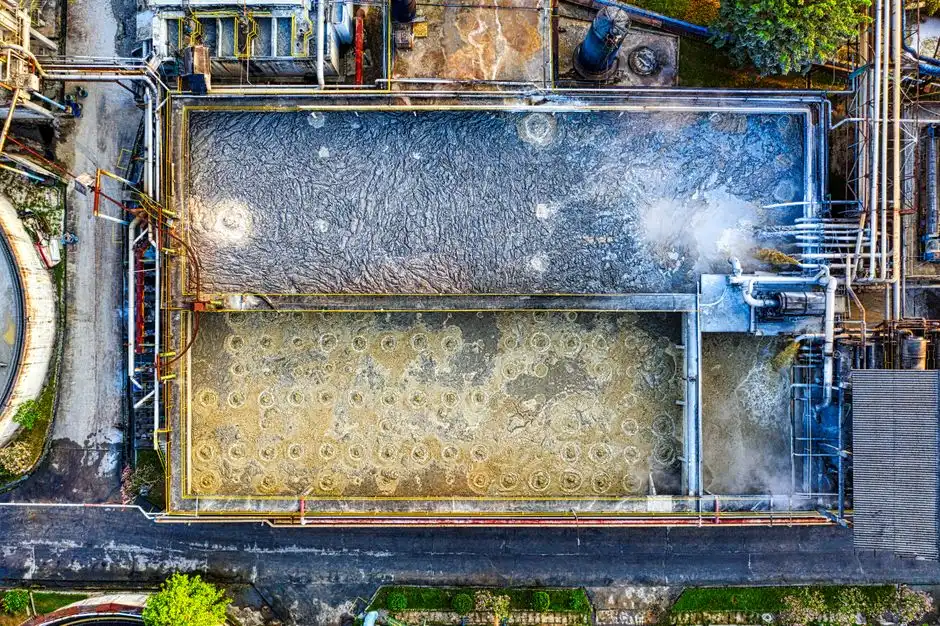
Packaged A/O is the simpler decentralized option, MBR adds membrane filtration in a compact installation, and UV is a final disinfection component rather than a substitute for biological treatment and solids removal.
| Technology | Stated configuration or performance | Project relevance | Information requiring confirmation |
|---|---|---|---|
| WSZ packaged A/O | Anoxic/aerobic contact oxidation, sedimentation and disinfection integrated in one buried unit; stated flow range 1–80 m³/h | A straightforward option for a decentralized resort sewer with landscaping above the installation | Organic loading, peak flow, installation conditions, access and performance at the site design flow |
| MBR | Activated sludge with submerged PVDF membrane filtration; filtration below 1 μm, stated 60% smaller footprint than conventional systems, and stated capacity of 10–2,000 m³/day | Compact treatment where footprint and fine filtration are priorities | Whether filtration performance is adequate for the intended reuse and how membranes, aeration and sludge handling affect operations |
| UV disinfection | Chemical-free final disinfection; addresses chlorine-resistant Cryptosporidium and Giardia, with no disinfection by-products or taste change | A final barrier after appropriate treatment and solids removal | Measured UV-transmittance condition, flow and UV dose, lamp condition, fouling and maintenance access |
The integrated hotel sewage treatment plant suits buyers seeking an integrated biological and settling train in a buried unit. Its stated flow range is a catalog limit, not confirmation that the unit will meet the resort’s hydraulic and organic design basis.
The MBR system for compact water reuse combines activated sludge with submerged PVDF membranes. Its stated filtration below 1 μm and smaller footprint should be evaluated against the selected reuse application, but filtration performance alone does not establish permission to reuse the water. The application, treatment objectives and receiving environment remain separate design questions.
UV should follow appropriate solids removal and biological treatment. A UV wastewater disinfection system is therefore evaluated as the final stage of a complete treatment train.
Avani Khao Lak demonstrates a hybrid arrangement. ULTRAAQUA reported that organic filtration was followed by two MR6-220SS LOW UVT UV systems at the final treatment stage before discharge to a public drain. Wastewater UV-transmittance was measured at 60%, and the selected LOW UVT configuration was intended for that low-UVT condition.
Design the Treatment and Reuse Process Flow
Every treatment unit should have a defined hydraulic and treatment purpose. The logical flow is source separation and collection, preliminary screening, flow equalization where required, biological treatment, solids separation, final disinfection, and then authorized reuse or discharge.
- Source separation and collection: identify wastewater streams and keep drainage routes separate where practical.
- Preliminary screening: remove rags, plastics and fibrous debris before they reach pumps, valves or biological equipment.
- Flow equalization where required: buffer the effects of operating peaks and variable wastewater composition.
- Biological treatment: apply the selected A/O or membrane bioreactor process against the documented organic load.
- Solids separation: remove solids before final disinfection so that the downstream barrier operates on an appropriate water quality.
- Final disinfection: size UV from the measured UV-transmittance condition and required dose.
- Authorized endpoint: route the treated water to the permitted discharge point or approved non-potable reuse application.
The Avani Khao Lak case supports this sequence: organic filtration preceded final UV disinfection, and the treated flow then entered a public drain while supporting garden watering and stream filling. The wastewater UVT of 60% was a measured input to the UV selection, not an assumption that all wastewater has the same optical condition.
Sludge management is a separate design workstream. A plate and frame filter press can be evaluated for sludge dewatering, with stated filtration areas from 1 m² to 500 m². The appropriate unit depends on the biological process, sludge characteristics, operating cycle, solids handling and available space.
Monitoring and maintenance should appear in the design, not only in the supplier’s product literature. Define safe sludge handling, access to equipment, power resilience, alarms, spare parts, UV condition checks, preventive maintenance and responsible operators. The reuse endpoint must remain either an approved non-potable application or the permitted discharge route.
Check Sustainability, Water Stress and Community Expectations
Water-quality protection and measured reuse align with the sustainability priorities observed in Thai resorts. In the Mahidol University thesis published in 2022, independent resort owners and managers interviewed on Koh Samui placed greater emphasis on environmental sustainability than on other sustainability dimensions. That supports a wastewater plan centered on measurable water quality, resource recovery and operational continuity.
Water-stress assessment should determine whether reuse is primarily an environmental obligation or an operational resilience measure. S Hotels & Resorts reported that its portfolio assessment found 40% of self-managed properties in water-stressed areas. It also reported a 5.58% reduction in water withdrawal per guest against a target of a 1% reduction compared with 2024.
The company’s current water-management information records approximately THB 25 million invested in 2025 in a water-management improvement project at SAii Phi Phi Island Village. This illustrates that site treatment may sit within a broader program involving technical studies, storage, supply resilience and operational continuity.
Authority coordination is also essential. S Hotels & Resorts states that it supported local infrastructure development by providing land for the Wastewater Management Authority to establish a wastewater treatment facility at SAii Phi Phi Island Village. A similar project should identify the responsible authority, site interface and approval pathway early.
Engagement should be an implementation task. Where a discharge or reuse plan affects the property, neighboring community or receiving environment, define who will participate in design review, construction coordination, monitoring and incident response. Resort management, technical staff, local authorities and community representatives may have different responsibilities, and those responsibilities should be recorded.
Prepare a Supplier Brief and Make the Investment Decision
Comparable proposals require the same design basis, scope boundaries and evidence. A catalog capacity range is not a substitute for a project-specific selection. Use the packaged MBR sizing and selection guide as a check on the questions a supplier should answer.
| Procurement section | Information to request from every bidder |
|---|---|
| Design basis | Measured average and peak flow, wastewater characterization, discharge route, reuse application, footprint and power supply |
| Technical scope | Complete process flow, equipment schedule, civil-interface drawing, control philosophy, monitoring and performance-test method |
| Delivery and handover | Commissioning plan, operator training, maintenance schedule, spare-parts list and after-sales support |
| Commercial boundary | Every assumption, exclusion, approval responsibility, site-work item, civil work and reuse-validation requirement |
| Whole-life assessment | Biological capacity, footprint, energy demand, chemical use, sludge volume and handling, disinfection performance and replacement needs |
Compare whole-life consequences rather than relying on unsupported purchase-price claims. Energy demand, chemical consumption, sludge handling, membrane or lamp replacement, monitoring and operator availability can affect operating performance and lifecycle cost.
Check capacity claims against the same design basis. The WSZ stated range is 1–80 m³/h, while the MBR stated range is 10–2,000 m³/day. These are different sizing bases and must not be compared without converting the units and checking hydraulic and organic loading.
Require each supplier to identify assumptions concerning Thai approvals, receiving-water conditions, reuse validation and site works. Also require the proposed treatment train, selected UV configuration and monitoring duties to be linked to the actual wastewater profile. Incorporate the Mahidol University finding into handover by assigning post-occupancy performance reporting, regular treated-water monitoring and staff ownership to named responsibilities.
Frequently Asked Questions
What flow should a hotel resort wastewater treatment plant be sized for?
Size the plant from a measured project flow basis that includes guest occupancy, peak periods, restaurants, laundry, kitchens, staff quarters and every other connected wastewater contribution. The WSZ catalog range of 1–8
Frequently Asked Questions
What size wastewater treatment system does a hotel or resort in Thailand need?
The sizing of a wastewater treatment system in Thailand is primarily determined by the daily water consumption rate, typically calculated at 200 to 300 liters per guest per day for standard hotels, and up to 400 liters for luxury resorts. Designers must also account for a peak factor of 1.5 to 2.0 times the average daily flow to handle fluctuations during high season and morning/evening usage spikes.
Should a Thai hotel choose a packaged A/O plant or an MBR system?
For resorts with limited land availability or those requiring high-quality effluent for reuse, a Membrane Bioreactor (MBR) system is preferred as it produces permeate with BOD levels consistently below 10 mg/L and removes suspended solids, allowing for a smaller footprint. Conversely, a packaged Anoxic/Oxic (A/O) system is generally more cost-effective for larger properties with ample space, provided they can meet the standard Thai Pollution Control Department (PCD) effluent guidelines for BOD (below 20 mg/L) through secondary clarification.
What should I include when selecting a wastewater treatment supplier in Thailand?
Ensure your supplier provides a system designed to meet the Thailand Ministry of Natural Resources and Environment standards for building type A or B, depending on the number of rooms. You should specifically request a detailed O&M manual, a guaranteed spare parts supply chain for critical components like blowers and sensors, and a performance bond backed by a verifiable track record of local installations that have successfully passed provincial environmental inspections.
Can treated hotel wastewater be used for landscaping in Thailand?
Yes, treated wastewater is frequently used for landscape irrigation in Thailand, provided the effluent meets the "Type 3" or "Type 4" reclaimed water quality standards defined by the Thai Industrial Standards Institute (TISI). This requires the system to achieve a fecal coliform count of less than 1,000 MPN/100ml and maintain a chlorine residual of 0.2 to 0.5 mg/L at the point of use to ensure public health safety.
Is UV disinfection required for a resort wastewater treatment system?
While chlorine is the traditional method for disinfection in Thailand, UV disinfection is increasingly required or recommended when the resort intends to reuse treated water for sub-surface irrigation or decorative fountains. UV systems are highly effective at inactivating pathogens without the formation of harmful disinfection byproducts (DBPs), provided the influent turbidity is kept below 5 NTU to ensure sufficient UV transmittance for effective microbial kill.