
What Wastewater Does a Cheonan Data Center Actually Need to Treat?
A Cheonan data center generally needs a dedicated treatment plan for cooling-tower blowdown, separate from sanitary sewage, because evaporation leaves dissolved minerals and treatment chemicals concentrated in the remaining water. The required train depends on the cooling design, source-water chemistry, chemical program, discharge route, and whether blowdown will be reused. Typical steps are source characterization, equalization, pH and temperature control, removal of suspended solids or metals where required, and—where reuse or stricter discharge conditions justify it—filtration or reverse osmosis. Any Cheonan design must be confirmed with the receiving sewer authority and the relevant Korean environmental authorities before equipment selection.
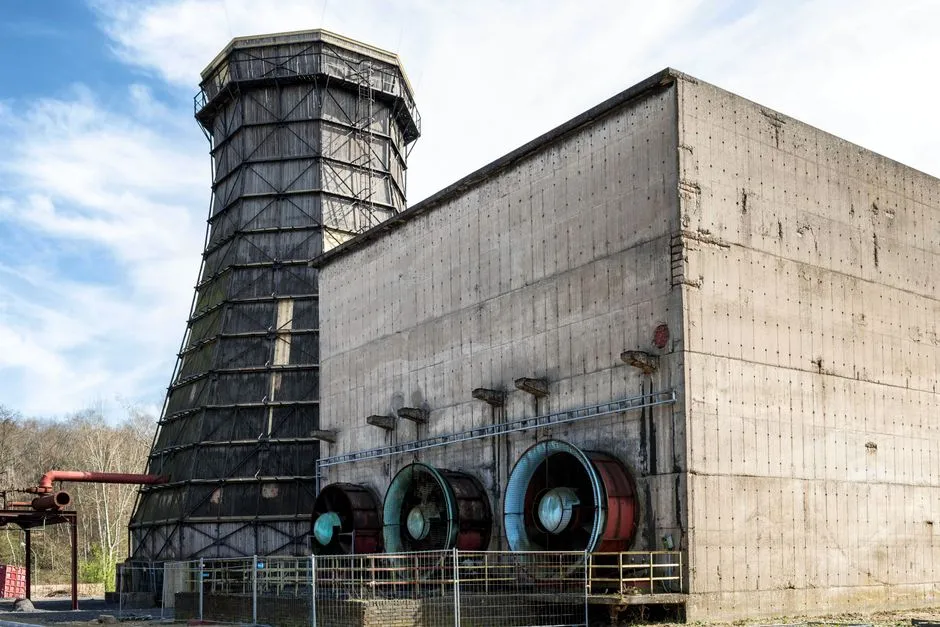
Cooling-tower blowdown is the controlled removal of concentrated circulating water after pure water evaporates while dissolved solids and treatment chemicals remain. RSP Engineers identifies it as the principal process-wastewater source in most large-scale data centers. It is not the same stream as domestic sanitary wastewater from restrooms and kitchens. Equipment-cleaning wastewater, water-treatment backwash and air-handling condensate should also be identified separately because their flows and contaminants may require different collection and treatment arrangements.
Before selecting a treatment skid, request the following minimum inputs:
- Cooling-system type and operating configuration.
- Makeup-water source and available water chemistry.
- Design cycles of concentration and intended operating range.
- Complete cooling chemical package, including biocide, corrosion inhibitor and anti-scaling products.
- Expected blowdown flow, temperature and operating peaks.
- Intended discharge point and reuse target.
Recycled or reclaimed source water can reduce freshwater demand, but it does not remove the need for water-quality management. The Water Utility Report, updated April 14, 2026, states that reclaimed water may alter scaling, corrosion, pretreatment and monitoring requirements. A global data-center cooling blowdown treatment guide provides useful background, but the Cheonan design still needs site-specific data.
| Site input | Engineering question | Why it changes scope |
|---|---|---|
| Cooling-system configuration | Is the system evaporative, and where are makeup, evaporation and blowdown measured? | Defines the process-water balance and peak treatment flow. |
| Source-water analysis | What are the pH, conductivity, TDS, chloride, sulfate, hardness and relevant metals? | Identifies concentration and treatment requirements. |
| Cooling chemical package | Which biocides, inhibitors and antiscalants are dosed, and what residuals leave the loop? | Determines neutralization, dechlorination and discharge risk. |
| Flow and temperature | What are average and peak blowdown flow, temperature and storage time? | Sets equalization, cooling and treatment capacity. |
| Discharge or reuse objective | Will the water enter an industrial sewer, support non-potable reuse, or return as cooling makeup? | Sets the final water-quality objective. |
Why Cheonan Site Conditions Must Drive the Treatment Design
Cheonan source-water chemistry and the complete cooling chemical package determine whether blowdown can be pretreated for discharge or requires a more demanding treatment train. RSP Engineers identifies pH, TDS, chlorides, sulfates, phosphates, biocides, corrosion inhibitors, anti-scaling agents and metals as constituents that may require control. The final combination is site-specific; a generic data-center template cannot establish compliance or treatment performance.
Characterize the source water, circulating cooling water and blowdown before selecting equipment or submitting a permit application. The cooling vendor should supply the chemical names, dosing ranges, application methods and expected residuals. Source analysis should cover the parameters that affect scaling, corrosion, biological control and downstream treatment. Without this information, a treatment unit may be technically suitable for one chemical program but ineffective under the facility’s actual operating conditions.
Temperature is a separate utility-coordination issue. RSP Engineers notes that hot blowdown can affect receiving-facility biology and may require cooling or holding before discharge. A biocide residual can also interfere with a receiving biological treatment system or violate a constituent restriction. These issues should be raised with the receiving authority rather than inferred from equipment selection.
RSP Engineers gives an illustrative pH range of 6.0–9.0 and an example temperature limit of 150°F. Those examples are not Cheonan discharge standards and must not be copied into a permit basis. The Cheonan sewer authority and responsible Korean environmental authorities must establish the applicable route, constituent limits, temperature conditions, monitoring duties and connection requirements.
Confirm at least these local matters during design development:
- Whether industrial sewer discharge is permissible at the proposed connection point.
- Receiving-system capacity and any flow or cooling-system restrictions.
- Permitted constituents, pH and temperature limits, and chemical restrictions.
- Application, reporting, sampling and pretreatment-acceptance requirements.
- Applicable Korean environmental approvals and whether direct discharge is being considered.
Map the Wastewater Sources to the Right Treatment Steps
Segregation and equalization come first because cooling blowdown should not mix automatically with sanitary sewage or variable equipment-cleaning flows. A segregated industrial stream preserves representative chemistry, prevents dilution from masking treatment requirements and gives the operators a measurable discharge. Equalization should accommodate normal flow variation, planned maintenance and upset conditions without allowing temperature or chemical concentration to pass directly to the receiving system.
After equalization, the treatment sequence follows the identified contaminants and the receiving or reuse objective:
- Temperature management: provide cooling or holding where the receiving facility or reuse system requires it.
- pH control: use an automatic dosing system for pH and chemical control when the cooling program or receiving limits require neutralization.
- Physical separation: remove suspended solids and colloidal material where site analysis demonstrates the need. A DAF system for cooling blowdown pretreatment is one separation option.
- Targeted dissolved-contaminant treatment: RSP Engineers identifies chemical precipitation, ion exchange and specialized filtration for metals when limits require them.
- Biocide management: evaluate dechlorination or an appropriate non-persistent biocide program where residual oxidizing biocides could affect downstream biological treatment.
- Advanced polishing: add filtration or reverse osmosis only when the discharge or reuse specification requires it.
Metals treatment should follow a confirmed analytical need. A device that removes particulate solids will not reliably remove dissolved metals without an appropriate chemical or separation mechanism. Conversely, installing a chemical precipitation or membrane train for constituents absent from the site data adds cost and operating burden without a defensible benefit.
Reverse osmosis is appropriate for a defined advanced-reuse application, not an automatic discharge assumption. The supplied industrial RO product states a recovery rate of up to 95%; that is a product capability, not a guarantee for Cheonan source chemistry, pretreatment quality or site operating conditions.
| Process need | Potential treatment step | Design basis |
|---|---|---|
| Variable industrial flow or hot discharge | Equalization and cooling or holding | Peak flow, temperature, storage time and upset allowance. |
| High or low pH | Acid or caustic neutralization with automatic dosing | Measured pH range, receiving limits and chemical demand. |
| Suspended solids or colloids | DAF or filtration | Particle size, solids concentration and required removal. |
| Dissolved metals | Chemical precipitation, ion exchange or specialized filtration | Metal species, concentration and permit or reuse limit. |
| Oxidizing biocide residual | Dechlorination or suitable biocide program | Residual species and receiving-system sensitivity. |
| Dissolved salts for advanced reuse | Filtration plus reverse osmosis | Target water quality, scaling index, recovery and concentrate disposal. |
Include automatic flow and pH monitoring, accessible sampling points, laboratory testing and a permanent operating record. RSP Engineers states that industrial discharge permitting begins with approval but continues through sampling, analysis, reporting and permanent monitoring after commissioning.
Choose Between Discharge Pretreatment and Blowdown Reuse
The treatment objective should be selected before comparing equipment, because discharge pretreatment, non-potable reuse and advanced reuse impose different water-quality requirements. Start with the receiving authority’s actual limits for a discharge route, the required quality and demand for non-potable reuse, and the scaling, corrosion and chemistry-control requirements for cooling-loop makeup. The selected objective determines which contaminants must be removed and whether storage, distribution or concentrate management is needed.
| Objective | Typical process direction | Decision test | Main risks to resolve |
|---|---|---|---|
| Industrial sewer discharge | Equalization, temperature control, pH correction and targeted solids or metals removal | Can measured blowdown meet the authority’s limits with the proposed pretreatment? | Permit conditions, pretreatment acceptance, residuals and monitoring. |
| Non-potable reuse | Filtration, disinfection as required, storage and distribution | Is water quality suitable for equipment washing, dust control or another locally approved use? | Storage turnover, distribution cross-connection, public exposure and water quality. |
| Advanced cooling makeup | Filtration, membrane treatment, residual chemistry control and possibly demineralization | Can the product water meet the cooling supplier’s chemistry and operating requirements? | Scaling, corrosion, biological control, recovery, energy and concentrate disposal. |
For non-potable reuse, evaluate filtration plus storage and distribution as a complete system. Equipment washing and dust control may have different requirements from irrigation. Irrigation suitability must also be checked against local water-quality and site-use requirements. For advanced reuse, assess membrane treatment together with residual chemistry, scaling tendency, pretreatment and operating complexity; cooling-loop make-up should not be selected only because reverse osmosis is available.
Calculate the site-specific water balance from measured makeup, evaporation, blowdown and unmeasured losses. WUE alone does not describe blowdown quality or reuse potential. Genesis Water Technologies, using the screening relationship 1/(CoC−1), calculates blowdown as 25% of makeup at 4 CoC and 20% at 6 CoC. Moving between those examples reduces blowdown by five percentage points of makeup, not by half. The higher-CoC case may increase scaling, corrosion, biological-control and chemical-management risks, so the water-saving calculation must be tested against operating data and once-through or emergency discharges.
Do not assume reuse is cheaper. Compare avoided water purchases and wastewater charges against pretreatment equipment, energy, chemicals, membranes or media replacement, maintenance, monitoring, operators, storage, residual disposal and the consequences of an outage. The business case should use Cheonan’s actual tariffs and the project’s measured water balance; the supplied research does not provide a defensible Cheonan project cost.
Size the Equipment from Site Data, Not a Generic Data-Center Template
Equipment sizing must begin with measured or vendor-supported values for makeup flow, evaporation, blowdown flow, temperature, pH, conductivity or TDS, suspended solids, residual biocide and relevant metals. The 1/(CoC−1) relationship is suitable only for initial screening: it gives 25% blowdown at 4 CoC and 20% at 6 CoC. Verify the design against operating data, unmeasured losses, once-through discharges and emergency dumps.
The sizing basis must also include peak flow, equalization storage time, treated-water demand, recovery objective, redundancy philosophy and planned cooling expansion. A bar screen may be relevant to protect downstream equipment or manage a specific solids stream, but it does not remove dissolved treatment chemicals; the mechanical bar-screen equipment scope should therefore be matched to the actual blowdown and debris problem.
Product ranges are selection aids, not Cheonan conclusions. The supplied DAF system has a stated capacity range of 4–300 m³/h, while the supplied UF system has a stated range of 2,000–40,000 L/h. Neither range determines the Cheonan flow. Require the selected supplier to demonstrate performance against the characterized stream and provide:
- Design flow, peak flow and operating redundancy.
- Treatment performance and chemical consumption.
- Equipment footprint, utilities and chemical-storage requirements.
- Control philosophy, alarms and operating records.
- Maintenance access, spare-parts strategy and local service support.
- Concentrate or residual-management requirements.
For filtration and advanced reuse, the ultrafiltration system for fine solids removal and industrial reverse osmosis system for advanced blowdown reuse should be evaluated against separate duties. UF addresses fine solids and colloids; RO addresses dissolved-solute separation. Neither removes the need to define the receiving or reuse specification.
Build the Cheonan Permitting and Operations Plan Before Construction
Cheonan wastewater design should begin with early engagement with the receiving sewer authority and relevant Korean environmental authorities. Obtain written clarification of the permissible route, flow and temperature conditions, constituent limits, chemical restrictions, application materials, pretreatment criteria, sampling duties and reporting requirements before committing to equipment or a discharge connection.
Keep industrial process wastewater separate from sanitary sewage in the site plan and approval strategy. Their chemistry, treatment needs and operating responsibilities differ. The project should not rely on dilution through a combined discharge to demonstrate compliance.
Reserve adequate space for treatment skids, tanks, pumps, chemical storage, spill containment, drainage, vehicle access, sampling points and maintenance clearance. Include storage and distribution piping where treated blowdown will be reused. Treatment equipment that is added after site layout approval can cause redesign, schedule and operating-cost problems.
Plan commissioning as the start of ongoing compliance. The operating record should cover flow, pH, temperature, sampling, laboratory analysis, reporting, chemical inventory and treatment-system upsets. Define operator training, alarm response, laboratory turnaround, corrective-action authority and contact procedures before startup.
Document the baseline water balance and reassess it after commissioning, seasonal changes, cooling-load changes and future expansion. If treatment performance, blowdown chemistry or the reuse demand differs materially from the design basis, review both the equipment scope and the permit submission. A cooling blowdown treatment guide for another water-stressed site may offer comparison points, but it does not replace Cheonan authority confirmation.
Frequently Asked Questions
How much does industrial wastewater and cooling blowdown treatment cost for a data center in Cheonan?
The supplied research does not provide a defensible Cheonan project price. A supplier quotation needs the measured or vendor-supported blowdown flow, temperature, source-water analysis, complete chemical package, discharge limits, reuse target, available utilities, footprint, storage time and local infrastructure. Request capital cost and operating cost separately, including chemicals, energy, maintenance, monitoring, residual disposal and operator labor. Do not compare quotations based only on treatment capacity.
Should a Cheonan data center use DAF, UF, RO, or pH-neutralization equipment?
Use each unit only for the duty established by site data. DAF addresses suspended solids and colloidal material; UF provides fine-solids and colloid removal; RO separates dissolved solutes; and an automatic dosing system controls chemical addition and pH. For example, a DAF unit does not establish that metals will meet a limit, while RO may be unnecessary for a simple discharge application. A data-center wastewater treatment comparison can help frame the decision, but Cheonan chemistry and authority requirements remain controlling.
What flow rate is needed for cooling blowdown treatment?
Calculate the treatment flow from the site water balance and peak operating conditions. The screening relationship 1/(CoC−1) gives 25% blowdown at 4 CoC and 20% at 6 CoC, but these percentages are not a substitute for measured site flows. Include once-through operation, emergency discharge, maintenance and future cooling expansion in the sizing request. Ask the supplier to state whether its quoted capacity applies to average flow, peak flow, or continuous flow.
Can cooling-tower blowdown be reused instead of discharged?
Yes, when the treated water quality, demand, storage, distribution arrangement and local requirements support the intended use. Options include equipment washing, dust control and irrigation where locally appropriate; returning treated blowdown to cooling makeup requires additional evaluation of dissolved solids, residual chemistry, scaling, corrosion and biological control. Define the reuse specification and take a site water balance before selecting equipment.
What discharge information should be requested from the Cheonan sewer authority?
Request the permitted discharge route, flow and temperature conditions, pH and constituent limits, chemical restrictions, monitoring and reporting duties, sampling requirements, connection requirements and pretreatment-acceptance criteria. Also ask whether combined discharge with sanitary sewage is permissible and how proposed industrial flow affects receiving capacity. Use the authority’s written responses—not an equipment vendor’s generic list—to establish the compliance basis.