SMIC’s expansion ETP decision starts with the acquisition and production roadmap
SMIC should evaluate an expanded fab ETP as a segregated, treatment-capacity and compliance-risk decision—not simply a larger version of the existing plant. A suitable 300 mm benchmark train combines equalization and chemical dosing, DAF for CMP slurry, Fenton or ozone oxidation, MBR for TMAH and ammonia, RO plus ion-exchange polishing, and sludge dewatering. For an acquired site, SMIC must first verify the future production roadmap, 12 months of flow and chemistry records, permits, equipment condition and whether TMAH, fluoride, ammonia, NMP and PFAS loads invalidate the original design basis. The benchmark is 20,000–40,000 m³/day and US$18 million–US$45 million CAPEX for a Tier 1 fab, but the final answer depends on site-specific testing, local limits and reuse targets.
The supplied research contains no confirmed SMIC expansion flow, target-site wastewater chemistry, discharge permit or reuse specification. Those values must therefore be verified; they cannot be inferred from wafer-fab capacity or from the benchmark case. This is the central distinction between a greenfield ETP, an expansion of an operating plant and the acquisition of a fab carrying a legacy wastewater liability.
That liability may include unpermitted historical discharges, contaminated soil or groundwater, undersized or non-functional treatment equipment, expired or transferred permits, and undocumented production changes that invalidated the original design basis. The SMIC ETP due-diligence checklist identifies a failed post-close retrofit as capable of halting production for 6–12 months while permits are reissued and equipment is replaced. The same source treats the ETP audit as part of transaction risk pricing, not merely EHS approval.
Three tests should govern the decision:
- Permit compliance: Can the existing authorization cover the actual discharge route, production changes and planned expansion?
- Treatment capability: Can each process train handle the future stream chemistry within its validated design envelope?
- Capacity and reuse: Is there adequate hydraulic reserve, chemical-loading capacity and treatment for both peak discharge and the intended industrial wastewater reuse rate?
The process train described below is a 300 mm benchmark, not an SMIC design. Its parameters must be checked against the acquired site’s water balance, chemistry, permit and production roadmap before being placed into an RFP.
Map each fab wastewater stream to its required treatment step
Fab wastewater must be segregated by chemistry before equalization because the treatment mechanisms—and the consequences of mixing—are different. CMP slurry carries a high particulate and surfactant load; lithography streams carry refractory organics; fluoride-bearing etchants require precipitation and polishing; UPW reject needs a different route from process wastewater; and GaN rinse water introduces a separate ammonia and gallium duty.
| Wastewater stream | Benchmark composition and treatment implication |
|---|---|
| CMP slurry wastewater | Colloidal silica or ceria, residual oxidizer, trace Cu, Co and Ta, and surfactants. The benchmark reports TSS of 1,500–4,000 mg/L with sub-1 µm particles, requiring solids and FOG removal before biological treatment (HydropureWater, 2026). |
| Lithography and developer | 2–5% TMAH with IPA and NMP; benchmark COD is 1,500–3,000 mg/L. Refractory-organics oxidation and biological treatment are required rather than simple settling (HydropureWater, 2026). |
| Fluoride-bearing etchants and scrubber effluent | Benchmark pH varies from 1–11 and fluoride reaches 2,000 mg/L. This requires controlled pH, precipitation, solids separation and polishing (HydropureWater, 2026). |
| UPW reject | 15–25% of total UPW feed exits the polishing loop. Boron, silica and TOC remain, so the stream must be treated or reclaimed through a route defined by the reuse target (HydropureWater, 2026). |
| GaN or MOCVD rinse water | High-ammonia wastewater with trace gallium and low-pH swings. If this process enters the acquired roadmap, it requires a segregated assessment and potentially dedicated ammonia and gallium treatment (HydropureWater, 2026). |
The expanded semiconductor fab ETP guide and rinse-water precipitation engineering specifications support stream-by-stream design, but they do not remove the need for source characterization.
The decisive inputs are the future production chemistry, segregation philosophy and destination of each treated stream. Nameplate wafer capacity alone does not determine treatment duty. A product-mix change can alter TMAH, fluoride, ammonia, solvent, trace-metal and PFAS loading even when daily production volume changes little. UPW reject should also be evaluated against the industrial wastewater reuse plan rather than treated as a low-strength discharge stream simply because its conductivity is low.
Use a six-stage benchmark train for the expanded fab ETP
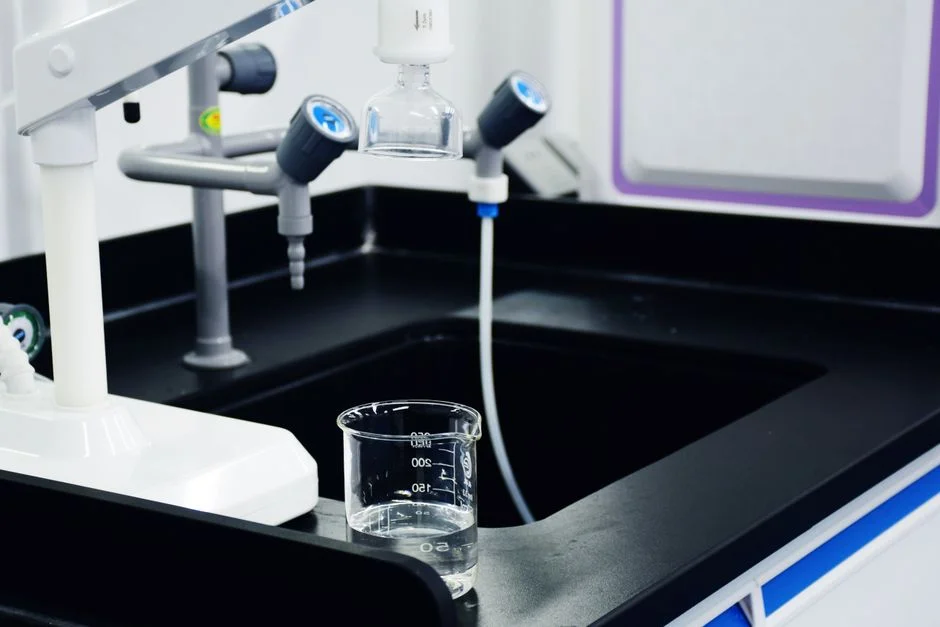
The six-stage benchmark combines physical removal, chemical precipitation, oxidation, biological treatment and final polishing in a sequence that can be converted into site-specific equipment line items.
| Stage | Benchmark specification |
|---|---|
| 1. Equalization and dosing | Two parallel equalization basins sized at 8–12 hours of peak flow; pH control; CaCl₂ for fluoride precipitation; NaHS or TMT-15 for heavy-metal precipitation; NaOH and sulfuric acid for pH trim (HydropureWater, 2026). |
| 2. DAF | CMP solids and FOG removal with 90–95% TSS removal. This is the benchmark Texas treatment sequence, suitable for comparison with DAF pretreatment for CMP wastewater. |
| 3. Fenton or ozone oxidation | Fe²⁺ and H₂O₂ at pH 3–4 for TMAH, IPA and NMP; benchmark COD falls from 1,500–3,000 mg/L to below 200 mg/L before biological treatment (HydropureWater, 2026). |
| 4. MBR | Sub-1 µm PVDF membranes for TMAH and ammonia polishing; benchmark targets are ammonia nitrogen below 1 mg/L and COD below 50 mg/L, with footprint about 60% of conventional activated sludge (HydropureWater, 2026). See integrated MBR for fab wastewater. |
| 5. RO and selective IX | RO followed by selective ion exchange for dissolved metals, fluoride and PFAS; benchmark targets include copper below 0.1 mg/L and residual fluoride below 2 mg/L. See industrial RO polishing for semiconductor wastewater. |
| 6. Sludge dewatering | A filter press producing cake described as below 60% moisture for hazardous-waste disposal or, where chloride and fluoride allow, cement kiln co-processing. See filter press for fab treatment sludge. |
Rotary bar screening at the headworks protects pumps and membranes from wipes and oversized solids; the benchmark specifies a 3–6 mm aperture. ClO₂ disinfection is an optional route where the selected discharge or reuse design and local permit support it. The benchmark residual is 0.5–1.0 mg/L at 30 seconds, selected because it does not form regulated trihalomethanes with residual organic load (HydropureWater, 2026). Equipment selection may involve automatic chemical dosing, rotary mechanical bar screening and chlorine dioxide generation.
The sequence is a benchmark, not a blanket prescription. DAF performance, chemical demand, oxidation control, membrane flux and RO recovery all depend on measured influent variability, hydraulic profile and the selected reuse quality.
Set compliance targets by destination and validate the PFAS design basis
The applicable limit must come from the receiving jurisdiction, the site’s permit and any POTW pretreatment conditions; one universal discharge number does not govern every SMIC location. For the supplied Texas benchmark, TCEQ Chapter 307 industrial outfall limits are fluoride below 4 mg/L, copper below 0.5 mg/L, zinc below 1.0 mg/L, ammonia nitrogen below 10 mg/L, COD below 150 mg/L and TSS below 45 mg/L (HydropureWater, 2026). These values must not be transferred to a non-Texas site.
The target-site discharge permit, POTW pretreatment agreement, receiving-jurisdiction rules and any reuse specification should be obtained before performance guarantees are issued. Where the site is permitted for direct discharge or indirect discharge through a POTW, sampling points, averaging periods and constituent definitions can differ even where the numeric analyte is identical.
EPA’s National Primary Drinking Water Regulations specify 4 ng/L for PFOA, 4 ng/L for PFOS and 10 ng/L for HFPO-DA. Their regulatory scope is public water systems. The supplied research notes that industrial screening, indirect-discharge requirements and reuse rules can nevertheless make these levels de facto design targets (HydropureWater, 2026). They should be cited as a project design basis when applicable—not misrepresented as a direct industrial discharge mandate.
Use 40 CFR Part 463, the U.S. semiconductor point-source category, as a design check. The supplied research does not establish a specific SMIC site limit under that regulation, so the buyer must reconcile it with the actual permit and production classification.
Before selecting GAC, IX or RO for PFAS, require influent and effluent monitoring, chemical mass-balance information and a written treatment objective. The 2026 pretreatment-limits guidance is a useful benchmark, but it cannot replace site-specific PFAS characterization or the receiving authority’s written requirements.
Choose between capacity expansion, retrofit and a new ETP
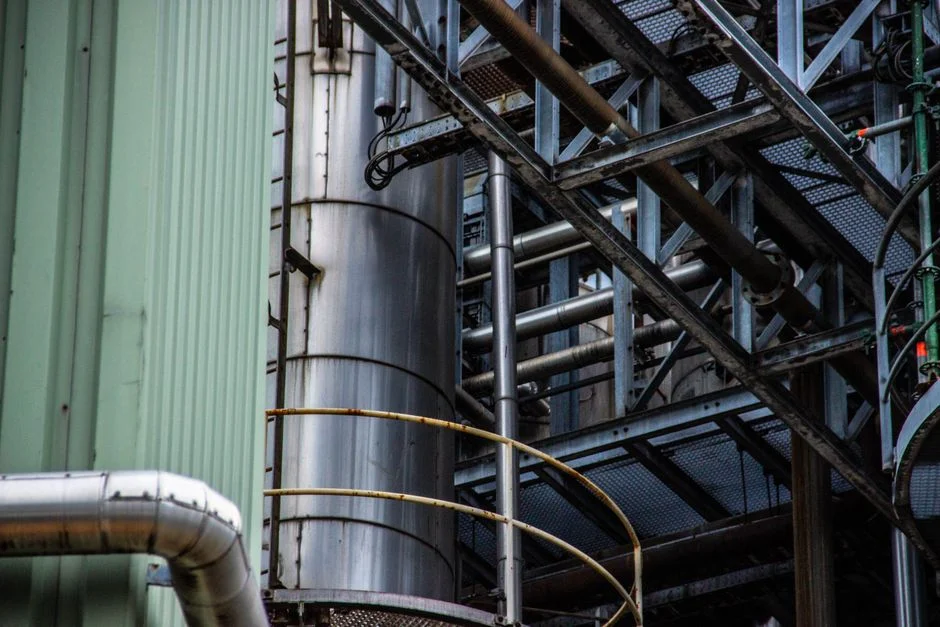
The preferred strategy depends on four forms of reserve: asset condition, hydraulic reserve, chemical-loading reserve and permit headroom. Nameplate treatment capacity alone is insufficient; equipment at the end of its service life may not be expandable, and adequate flow capacity cannot compensate for a chemical stream outside the original design envelope.
| Option | Selection logic |
|---|---|
| Capacity expansion | Use where existing equipment is serviceable, hydraulic and chemical reserves are adequate, permits can accommodate the change, and additional treatment can be installed without invalidating the overall process. |
| Targeted retrofit | Use where the gap is identifiable—such as pretreatment, oxidation, MBR capacity or polishing—and the remaining assets remain reliable and permitted. |
| New ETP or major replacement | Use where the existing design envelope cannot accommodate the future chemistry, permits are not transferable, redundancy is inadequate or the sludge route has no viable destination. |
The benchmark end-state is ETP plus RO plus ZLD with semi-grade reuse. Its primary stage restores 60–70% TSS removal; RO bridges treated effluent toward fab reuse requirements, while ZLD addresses the final liquid-disposal constraint (Green Mark Engineering, 2025, as cited in the supplied SMIC due-diligence research). Neither RO nor ZLD should be specified without site-specific water, salt, contaminant and energy balances. Membrane and polishing details may require separate evaluation of RO and UF elements and EDI systems.
HydropureWater’s 2026 comparable-project benchmarks place a Tier 1 fab at 20,000–40,000 m³/day and US$18 million–US$45 million CAPEX with US$2 million–US$3.5 million annual OPEX. A Tier 2 fab at 5,000–20,000 m³/day is benchmarked at US$8 million–US$22 million CAPEX and US$0.8 million–US$2 million annual OPEX. These are comparison bands, not SMIC quotations.
The same benchmark assigns PFAS polishing an additional 20–30% of CAPEX and approximately US$0.15–US$0.40/m³ of OPEX, while a dedicated GaN stream adds US$1.5 million–US$4 million. Key retrofit triggers are obsolete equipment, inadequate hydraulic reserve, chemistry outside the original envelope, non-transferable permits, PFAS treatment gaps and no viable sludge route.
Audit 39-plus records before the ETP retrofit is priced
An ETP retrofit cannot be priced from a nameplate-capacity review because the design basis may already have been invalidated by production changes, undocumented discharges or deferred maintenance. The supplied SMIC due-diligence research requires a 39-plus-record review across seven categories.
| Document group | Records to request |
|---|---|
| Design basis | Process flow diagram, authority-approved flow chart, original design flow and constructor’s initial analysis. |
| Water balance | 12 months of overall water consumption, water bills and process-level breakdown. |
| Operating history | At least 12 months of ETP inlet and outlet logs, including TMAH, fluoride, ammonia and NMP mass-balance information. |
| Legal liability | Permits, transfer or reissue documents, historical discharge records, contaminated soil or groundwater findings, and expired or transferred authorization. |
| Asset condition | Equipment condition, hydraulic and chemical capacity, MBR and RO performance, chemical inventory, utilities, redundancy and maintenance records. |
| Operational resilience | Factory risk assessment, ETP emergency plan, drill records and ETP failure-action plan. |
| Future production plan | Intended product and chemistry changes, required capacity and reuse assumptions, including any GaN or MOCVD roadmap. |
These records feed the SMIC ETP due-diligence checklist and determine which findings require further Phase II testing or engineering work.
The future production plan should be a transaction condition. Without the intended product mix and chemistry changes, the buyer cannot define treatment performance, size the retrofit, identify permit amendments or quantify the production-halt exposure associated with the 6–12 month retrofit risk identified in the supplied 2026 research.
Corporate development should preserve the findings in the purchase-price, escrow or capex framework; environmental counsel should assess permit and contamination liabilities; EHS should verify operating controls and emergency response; and procurement should carry unresolved findings into the vendor’s contractual scope. That prevents the audit from becoming a post-close exercise with no design consequence.
Turn the ETP decision into a vendor and RFP checklist

Comparable bids require each vendor to trace its proposal from verified wastewater source to permit-compliant discharge or reuse. A catalogue response does not establish that a train will perform as an integrated plant.
| RFP requirement | Evidence required from each bidder |
|---|---|
| Process mapping | Map every component to a verified influent stream, design flow, chemical loading and applicable permit limit. |
| Performance guarantees | Guarantee TSS, COD, fluoride, ammonia nitrogen, copper and PFAS, with sampling locations, test methods and averaging periods defined. |
| Mass and resource balances | Provide hydraulic and chemical balances, utility consumption, sludge generation, chemical-residuals management and recovery calculations. |
| Acceptance and warranty | Define FAT and SAT protocols, membrane or media warranties, spare-parts strategy, controls scope and local service support. |
| Commercial basis | Show the basis for CAPEX and OPEX, including exclusions, chemical assumptions, replacement cycles and site-specific civil, utility and disposal costs. |
The industrial ETP supplier comparison provides a useful bid-review format, while MBR membrane bioreactor modules illustrate the level of equipment-specific warranty information that should be requested.
Require vendors to identify every exclusion and assumption. Benchmark treatment performance, a Tier 1 or Tier 2 cost band, or a single equipment datasheet cannot substitute for a site-specific design. Bids should be normalized around the same verified flow, chemistry, permit limits, reuse target, utilities and sludge-disposal route.
Frequently Asked Questions
What will an expanded SMIC fab ETP cost?
HydropureWater’s 2026 comparable-project benchmarks put a Tier 1 fab at 20,000–40,000 m³/day and US$18 million–US$45 million CAPEX, with US$2 million–US$3.5 million annual OPEX. A Tier 2 fab at 5,000–20,000 m³/day is benchmarked at US$8 million–US$22 million CAPEX and US$0.8 million–US$2 million annual OPEX. These are not SMIC quotations. Request a quotation using the verified flow and chemistry, destination and reuse target, permit limits, required redundancy, sludge route and PFAS design objective. PFAS polishing and a dedicated GaN stream can materially change both capital and operating cost.
How should ETP capacity be sized for a 300 mm wafer fab?
The benchmark capacity for a 300 mm fab is 20,000–40,000 m³/day, but actual sizing requires the production roadmap, water balance, peak-flow profile and stream chemistry. Include UPW reject, segregation decisions and industrial wastewater reuse requirements. Capacity should also be checked against chemical-loading limits, hydraulic reserve, redundancy and the condition of existing assets rather than average daily flow alone.
What should SMIC check when selecting an ETP supplier?
Require each bidder to map equipment to verified streams and permit limits, guarantee TSS, COD, fluoride, ammonia nitrogen, copper and PFAS with defined test methods, and submit hydraulic and chemical balances. Also request FAT and SAT protocols, membrane or media warranties, controls scope, utility consumption, sludge quantities, local service support and the assumptions behind CAPEX and OPEX. Compare normalized bids rather than headline prices.
What acquisition risk does a legacy fab ETP create?
The supplied 2026 SMIC due-diligence research states that a failed post-close ETP retrofit can halt production for 6–12 months while permits are reissued and equipment is replaced. Before signing, review the design basis, 12 months of water and wastewater records, permits and transfer documents, contamination history, equipment condition, utilities, redundancy, emergency plans and the future production roadmap. Treat the production plan and unresolved wastewater liabilities as transaction conditions, not post-close cleanup items.
Does the U.S. PFAS drinking-water rule directly set the SMIC ETP limit?
Not universally. EPA’s NPDWR values of 4 ng/L PFOA, 4 ng/L PFOS and 10 ng/L HFPO-DA apply to public water systems. Industrial discharge, indirect-discharge and reuse requirements can make those levels project design targets, but the controlling basis remains the target site’s permit, POTW requirements and written reuse specification. Require PFAS monitoring, mass-balance information and a defined treatment objective before selecting GAC, IX or RO.
Related Equipment
- DAF pretreatment for CMP wastewater — specifications, capacity range, and technical data