Colombian Regulatory Baseline: What Resolución 0631/2015 Actually Requires
Resolución 0631 of 2015 mandates strict surface water discharge parameters for industrial facilities across Colombia, capping chemical oxygen demand (COD) at 300 mg/L, biochemical oxygen demand (BOD₅) at 50 mg/L, and total suspended solids (TSS) at 50 mg/L. Regional Environmental Authorities (CARs) such as CAR Cundinamarca and CVC in Valle del Cauca enforce compliance under Decreto 1076 of 2015, which dictates that every active plant maintain an approved Environmental Management Plan (PMA) and submit periodic discharge monitoring logs.
Resolution 1207 of 2014 classifies concentrated liquid wastes—specifically evaporator reject, solvent distillation bottoms, and RO concentrate carrying active pharmaceutical ingredients (APIs)—under hazardous waste codes Y31 and Y42. Generating plants must maintain registration on the Hazardous Waste Generator Registry (RUG) and utilize licensed transport contractors, adding approximately USD 150 to USD 300 per ton to plant operating overhead for concentrated reject disposal (Condorchem Envitech, 2023). Repeated non-compliance with Table 1 limits triggers sanctions under Ley 1333 of 2009, with fines reaching up to 5,000 Minimum Monthly Legal Wages (SMLMV), approximately USD 1.2 million.
| Discharge Parameter | Resolución 0631/2015 Table 1 Limit | Raw Pharma Effluent Range | Target Effluent (MBR + RO Train) |
|---|---|---|---|
| Chemical Oxygen Demand (COD) | < 300 mg/L | 500 – 15,000 mg/L | < 10 mg/L |
| Biochemical Oxygen Demand (BOD₅) | < 50 mg/L | 200 – 6,000 mg/L | < 2 mg/L |
| Total Suspended Solids (TSS) | < 50 mg/L | 100 – 2,500 mg/L | < 1 mg/L |
| Fats, Oils & Grease (FOG) | < 15 mg/L | 20 – 350 mg/L | < 1 mg/L |
| Total Nitrogen (TN) | < 30 mg/L | 50 – 800 mg/L | < 5 mg/L |
| pH / Temperature | 6.0 – 9.0 / < 35 °C | 4.0 – 11.0 / 18 – 45 °C | 6.5 – 8.0 / Ambient |
Three Colombian Pharma Wastewater Profiles and Their Treatment Implications
Atmospheric pressure at high elevation reduces oxygen transfer efficiency, as observed in Bogotá at 2,600 meters where dissolved oxygen saturation peaks at roughly 7.5 mg/L compared to 9.1 mg/L at sea level. This physiological constraint requires environmental engineers designing biological aeration basins for elevated Colombian plants to expand reactor volume by 25% to 30% or install supplemental pure oxygen injection. Effective design requires segmenting process waste streams before raw effluent blending degrades biological viability (Condorchem Envitech, 2023).
| Sub-Sector Profile | Flow Range | Typical Water Quality Indicators | Primary Treatment Strategy |
|---|---|---|---|
| Profile A: Fermentation | 50 – 200 m³/d | COD 3,000–15,000 mg/L, NH₃-N 200–800 mg/L, TDS 1,000–3,000 mg/L | High-rate anaerobic digestion followed by biological nitrification/denitrification MBR |
| Profile B: Chemical Synthesis | 20 – 100 m³/d | Refractory COD 1,000–5,000 mg/L, TDS 5,000–20,000 mg/L, residual solvents | Source segregation, vacuum evaporation (MVR), and Fenton/Ozone AOP polishing |
| Profile C: Formulation & Filling | 10 – 50 m³/d | COD 500–3,000 mg/L, high surfactant load, variable wash water volume | Dissolved air flotation pretreatment paired with compact MBR and polishing RO |
Fermentation plants producing antibiotics or biologics yield high volumes of readily biodegradable COD paired with elevated nitrogen compounds. Chemical synthesis plants generate refractory organic loads, concentrated salts, and trace active compounds that inhibit standard activated sludge populations (Journal of Water Process Engineering, 2024). Coastal manufacturing facilities in regions like Barranquilla or Cartagena encounter ambient raw water chlorides of 200 to 500 mg/L, dictating the use of 316L stainless steel for tanks and piping systems to mitigate localized pitting corrosion.
Technology Train Comparison: MBR, MBR+RO, Evaporation+AOP, Hybrid ZLD
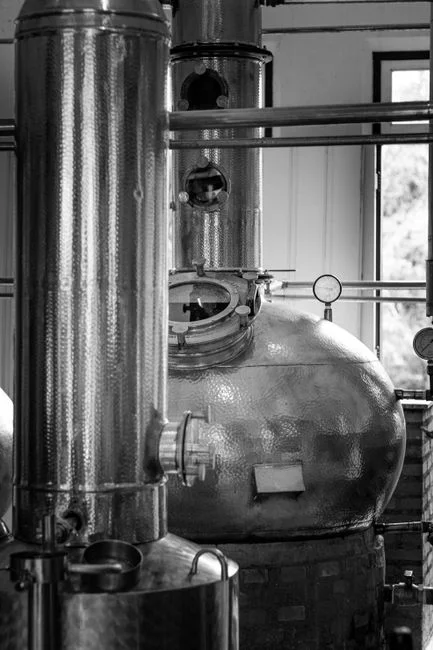
Submerged membrane bioreactor (MBR) systems achieve complete solid-liquid separation using pore sizes below 0.1 µm, eliminating secondary clarifier washouts caused by bulking sludge (*Journal of Water Process Engineering*, 2024). Choosing a treatment configuration involves evaluating discharge targets against operational complexity and direct chemical costs. For facilities seeking strict compliance or process water recycling, a submerged PVDF MBR system (10–2,000 m³/d) delivers an effluent with TSS below 1 mg/L and COD below 50 mg/L, operating within a footprint up to 60% smaller than conventional activated sludge basins.
When high-purity utility reuse or cooling tower makeup is required, adding a 95% recovery RO for water reuse downstream of the MBR strips dissolved salts and trace organics down to < 50 µS/cm conductivity. For complex micropollutant degradation, reviewing detailed MBR design parameters for pharmaceutical micropollutants provides kinetic scaling criteria for persistence control. Refractory synthesis streams containing elevated solvents bypass biological units entirely to undergo thermal mechanical vapor recompression (MVR) coupled with Fenton or ozone oxidation (*Condorchem Envitech*, 2023).
| Technology Train | CAPEX Band (USD/m³/d) | OPEX Band (USD/m³) | Footprint (m²/m³/d) | Primary Reject / Residue Handling |
|---|---|---|---|---|
| Train 1: Standalone MBR | $800 – $1,400 | $0.35 – $0.60 | 0.8 – 1.2 | Dewatered biological sludge cake (20–30% TS) |
| Train 2: MBR + RO | $1,200 – $2,100 | $0.60 – $1.00 | 1.2 – 1.6 | RO concentrate brine (5–10% total volume) |
| Train 3: Evaporation + AOP | $1,500 – $2,800 | $1.20 – $2.00 | 1.5 – 2.2 | Concentrated liquid hazardous waste (5–15% volume) |
| Train 4: Hybrid ZLD | $3,000 – $5,000 | $2.50 – $4.00 | 2.5 – 4.0 | Dry salt and solid API cake for hazardous landfill |
Equipment Sizing and Colombian Procurement Reality Check
High surfactant loads and emulsified oils generated during equipment washdowns severely reduce membrane permeability if allowed directly into biological aeration tanks. Installing a DAF for FOG/surfactant removal (4–300 m³/h) upstream strips 80% to 95% of fats, oils, and greases while reducing solids loading on membrane surfaces. Detailed guidelines on hydraulic surface loading rates for these primary units are provided in our DAF sizing and selection for pharma wastewater analysis.
Precise chemical conditioning maintains stable RO operational pressure and prevents irreversible membrane mineral scaling. Utilizing PLC-controlled antiscalant/pH dosing skids ensures exact stoichiometric addition, protecting membrane elements against calcium carbonate and silica fouling. Waste biological sludge dewatering relies on a heavy-duty filter press (1–500 m²) for MBR sludge to convert wet waste biomass (1–2% solids) into a dry cake (25–35% total solids), reducing local haulage gate fees that average COP 120,000 to COP 250,000 per ton. Procurement managers can reference a Vietnam industrial ETP cost/compliance template to benchmark international skid fabrication and validation protocols against local Colombian execution models.
Implementation Roadmap: From Pilot to Permit in 12 Months
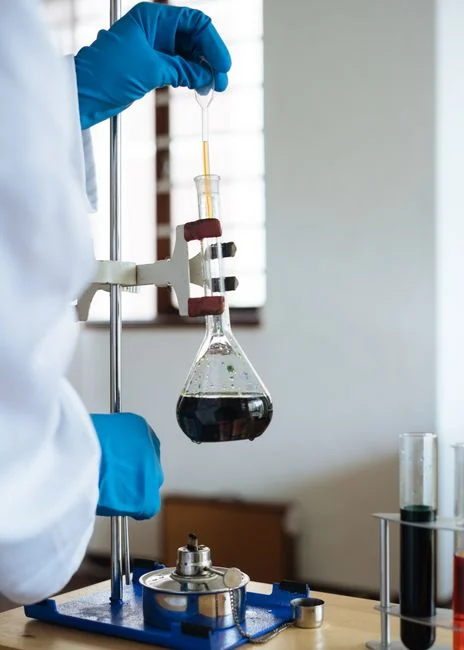
Execution of a compliant pharmaceutical wastewater system requires structured milestones aligned with regional environmental permitting timelines under Decreto 1076 of 2015. Careful planning ensures all legal validations are secured prior to commissioning.
- Months 1–2: Effluent Characterization & Benchtop Analysis — Perform 24-hour composite sampling over 7 operational days. Measure baseline COD, BOD₅, TSS, total nitrogen, phosphorus, heavy metals, and priority API fractions using GC-MS and LC-MS/MS.
- Months 2–3: On-Site Pilot Testing — Deploy containerized pilot skids (0.5–1.0 m³/d capacity) for MBR flux determination and RO recovery verification. Confirm chemical cleaning cycles, membrane rejection ratios, and sludge yield coefficients.
- Months 3–4: Detailed Engineering & CAR/CVC Filing — Complete process P&IDs, civil layouts, and safety HAZOP evaluations. Submit environmental permit amendment applications (PMA updates) to regional authorities (CAR, CVC, or CORPOURABA).
- Months 5–8: Procurement & Skid Importation — Issue purchase orders for imported PVDF hollow-fiber membranes, high-pressure RO pumps, and MVR heat exchangers. Oversee local fabrication of 316L stainless steel tanks and structural skids. Register site hazard profiles on the national RUG system.
- Months 9–11: Site Integration & Mechanical Completion — Complete civil foundations, interconnecting piping, power distribution panels, and central PLC/SCADA integration. Execute hydrostatic testing and cold equipment rotational checks.
- Month 12: Hot Commissioning & Compliance Certification — Ramp biological loading from 25% to 100% capacity over 4 weeks. Conduct mandatory 72-hour continuous performance test witnessed by an IDEAM-certified analytical laboratory for formal permit sign-off.
Frequently Asked Questions
What is the total operational cost per cubic meter for an MBR+RO facility in Colombia?
Operating a 100 m³/d MBR and
Frequently Asked Questions
What is the all-in cost per m³ for MBR+RO at 100 m³/d in Colombia?
For a 100 m³/d facility utilizing Membrane Bioreactor (MBR) followed by Reverse Osmosis (RO), the all-in operational and maintenance cost typically ranges between $2.80 and $4.50 USD per cubic meter. This calculation includes electricity consumption, chemical cleaning agents (CIP), membrane replacement amortization, and local labor costs adjusted for the Colombian market.
Capital expenditure (CAPEX) for a system of this capacity, accounting for current import logistics and local installation requirements, generally falls within the $250,000 to $380,000 USD range, depending on the specific pharmaceutical load and desired permeate quality requirements.
Can I discharge evaporator concentrate to the sewer in Bogotá?
No, discharging pharmaceutical evaporator concentrate directly into the Bogotá sewer system is prohibited under Resolution 0631 of 2015. Concentrates often contain high concentrations of Total Dissolved Solids (TDS), heavy metals, and persistent organic pollutants that exceed the maximum permissible limits defined by the Empresa de Acueducto y Alcantarillado de Bogotá (EAAB).
Facilities must manage this waste stream through specialized hazardous waste (RESPEL) incineration or certified off-site disposal. Any discharge requires pre-treatment to meet the specific parameters established in the facility's discharge permit (PUEA) and local environmental regulations.
How long do MBR membranes last on pharmaceutical wastewater?
In pharmaceutical applications, MBR membranes typically exhibit a functional lifespan of 3 to 5 years, provided that rigorous pre-treatment and an optimized Clean-in-Place (CIP) schedule are maintained. The high presence of surfactants and recalcitrant compounds common in drug manufacturing can lead to accelerated fouling rates compared to municipal wastewater.
To ensure this lifespan, operators must manage Flux rates strictly within the 10–25 LMH range and perform daily automated back-pulses. Failure to control influent pH and temperature fluctuations often reduces membrane life to under 2 years due to irreversible pore blockage.
Is local MBR fabrication an option to avoid import duties?
While local assembly of the mechanical housing, piping, and skid structures is a viable strategy to reduce logistics costs and import duties on finished machinery, the core membrane modules themselves are almost exclusively imported. Utilizing local fabrication for the "non-proprietary" components can reduce total project CAPEX by 15% to 20% by avoiding the high tariffs associated with complete imported units.
However, local fabrication must strictly adhere to international engineering standards to ensure pressure vessel integrity and compatibility with imported membrane cartridges. Certification of locally welded components is often required by insurance providers and environmental auditors.
What pilot data do Colombian environmental authorities (CAR/CVC) require for license amendment?
The Corporación Autónoma Regional (CAR) and the Corporación Autónoma Regional del Valle del Cauca (CVC) typically require a minimum of 3 to 6 months of continuous pilot plant operation data. This dataset must demonstrate consistent removal efficiencies for specific parameters including Chemical Oxygen Demand (COD), Biological Oxygen Demand (BOD5), Total Suspended Solids (TSS), and specific Active Pharmaceutical Ingredients (APIs) identified in the facility's environmental impact study.
Submissions must include certified laboratory reports from IDEAM-accredited facilities, a mass balance summary of the treatment process, and a characterization of the sludge generated. The data must prove that the proposed technology maintains effluent concentrations below the thresholds established in Resolution 0631 of 2015 under varying seasonal load conditions.