What treatment configuration fits a Colombian sewage project?
Domestic sewage treatment in Colombia depends on project scale, wastewater variability, available land, reuse requirements and applicable environmental conditions. Constructed wetlands can serve decentralized domestic wastewater projects, but the Colombian study discussed here was conducted at one home in San Marcos, Sucre; it does not establish performance for housing developments, hotels, hospitals or municipal systems. Underground A/O package plants provide compact biological treatment, sedimentation and disinfection, while membrane bioreactor systems suit higher-capacity applications requiring membrane separation. Final selection should follow measured flows, sewer conditions, land availability and project-specific compliance review.
Domestic sewage treatment in Colombia means treating wastewater generated by domestic activities, including residential, hotel and institutional uses. Begin with four decisions:
- Define the required flow range from occupancy, usage and measured data.
- Establish whether the effluent will be discharged, reused or both.
- Confirm the available footprint and underground installation conditions.
- Identify the environmental and reuse requirements applicable to the receiving location.
Constructed wetlands are nature-based decentralized options. An underground A/O sewage treatment plant is a compact, automated alternative combining biological contact oxidation, sedimentation and disinfection. An MBR sewage treatment system adds membrane separation for projects where tighter solids control or reuse objectives justify added process complexity.
The available evidence must be scoped correctly. The MDPI study evaluated a horizontal subsurface-flow wetland at a single-family home in San Marcos, Sucre, using ornamental plant biomass as an added carbon source. Its results provide a Colombian case study, not a catalog guarantee or a design basis for a commercial-scale facility. The comparison of domestic sewage treatment technologies should therefore be used as a screening framework, while project flows, land, reuse objectives and regulatory conditions determine the final train.
Colombian evidence and standards to verify before design
The MDPI study collected four composite influent and four composite effluent samples, with an average interval of seven days, from the household-scale wetland in San Marcos, Sucre. The system achieved maximum removal efficiencies of 91% COD, 94% TSS, 98% TP, 52% nitrates, 73% nitrites, 78% ammonium and 75% TN.
| Measured parameter | Documented result | Engineering interpretation |
|---|---|---|
| BOD | Average influent: 333.9 mg/L; average effluent: 71.4 mg/L | The difference was statistically significant, with p-value = 0.03. |
| COD | Maximum removal: 91% | Maximum study result, not a guaranteed package-plant efficiency. |
| TSS | Maximum removal: 94% | Must be verified under the selected process and loading. |
| Total phosphorus | Maximum removal: 98% | Reuse suitability cannot be inferred from this result alone. |
| Nitrates | Maximum removal: 52% | Carbon availability and nitrogen-removal conditions require design review. |
| Nitrites | Maximum removal: 73% | Performance depends on the biological process and operating conditions. |
| Ammonium | Maximum removal: 78% | Do not convert this study maximum into an equipment guarantee. |
| Total nitrogen | Maximum removal: 75% | Seasonal loading and carbon balance remain project-specific. |
The source discusses Resolution 1256 of 2021 and Resolution 1207 of 2014 as Colombian regulatory references associated with discharge and agricultural reuse. Before design, the owner must confirm the currently applicable resolution, the governing permit, receiving-water conditions, reuse rules and the authority’s interpretation for the specific project.
No universal numerical discharge limit should be inserted into the preliminary basis unless it appears in the governing permit or applicable resolution. This is especially important where the proposed effluent is discharged to a watercourse or considered for agricultural reuse. The effluent treatment plant guide can support the project brief, but the permit and current Colombian requirements must govern the acceptance criteria.
Compare wetlands, buried A/O plants and MBR systems

Constructed wetlands, buried A/O package plants and MBR systems solve different project constraints; catalog capacity indicates equipment scale, not guaranteed treatment performance.
| Selection factor | Constructed wetland | Buried A/O package plant | MBR system |
|---|---|---|---|
| Core process | Biological treatment through wetland processes, with substrate potentially supplying carbon for nitrogen removal. | Anoxic/aerobic biological contact oxidation, sedimentation and disinfection in one buried package unit. | Activated sludge combined with submerged membrane filtration. |
| Catalog capacity | Not stated in the supplied evidence. | 1–80 m³/h according to the HydropureWater verified product catalog. | 10–2,000 m³/day according to the HydropureWater verified product catalog. |
| Land and installation | Requires land area; seasonal loading, substrate availability, carbon-to-nitrogen balance and local conditions must be assessed. | Below-grade installation, leaving the surface available for landscaping above the unit. | Membrane equipment requires a defined footprint, access and a broader pretreatment and control basis. |
| Solids separation | Depends on wetland hydraulic and solids-retention design. | Integrated sedimentation stage. | Submerged filtration below 1 μm according to the supplied catalog evidence. |
| Sludge and residuals | Biomass accumulation, solids removal, stabilization and disposal must be included in the design. | Sludge withdrawal, storage and disposal require a defined scope. | Waste activated sludge and membrane cleaning residuals require management. |
| Operator involvement | Requires attention to plugging, vegetation, hydraulic distribution, substrate condition and seasonal loading. | Fully automated operation according to the supplied catalog evidence; alarms, maintenance and sludge removal still require defined procedures. | Greater attention to membrane condition, cleaning, controls, aeration and solids inventory. |
| Potential application | Decentralized sites with adequate land and evidence supporting the selected hydraulic and seasonal basis. | Residential communities, hotels, hospitals, factories and rural areas within the catalog range. | Projects requiring membrane separation, with capacity and expansion needs matched to the design flow. |
The two catalog ranges use different time bases: cubic metres per hour for the A/O plant and cubic metres per day for the MBR system. Any comparison must therefore convert both to a common basis and check peak-hour, average-day and seasonal conditions. Converting the numbers does not establish process adequacy; the supplier must still present the hydraulic and biological calculations.
A wetland is attractive where land is available and the discharge or reuse objective can be demonstrated under local conditions. Its evidence base must include hydraulic loading, carbon-to-nitrogen balance, seasonal loading, land area and local substrate availability. The San Marcos results should be used as site-specific evidence rather than generalized to a housing estate, hotel or hospital.
A buried A/O package plant reduces the above-ground footprint and combines several treatment steps. An MBR adds membrane separation, which can be relevant when the reuse objective requires greater solids control or when the process basis justifies its additional mechanical, operational and maintenance demands. Neither option should be declared cheaper or compliant without site-specific pricing and an approved compliance basis.
Build a reliable preliminary sizing basis
A defensible sewage treatment sizing basis requires measured hydraulic conditions, wastewater characteristics and installation constraints; a catalog flow range is not a substitute for project data.
| Required input | Information to obtain | Why it changes the design |
|---|---|---|
| Hydraulic load | Daily flow, peak-hour flow and seasonal variation from metered data or a documented occupancy and usage basis. | Establishes the selected unit capacity, equalization need and hydraulic reserve. |
| Wastewater quality | BOD, COD, TSS, nitrogen fractions and phosphorus, with seasonal sampling where relevant. | Defines biological loading, nutrient-removal needs and solids handling. |
| Infiltration and inflow | Dry-weather flow, wet-weather observations and evidence of groundwater or stormwater entry. | Separates wastewater production from flow entering the collection system. |
| Collection system | Sewer slope, diameter, inlet condition, access, blockage history and connected systems. | Identifies hydraulic restrictions and pretreatment requirements. |
| Site conditions | Burial depth, groundwater, flood exposure, available land, access and constructability. | Controls installation method, civil works, unit arrangement and maintenance access. |
| Effort destination | Discharge point, reuse purpose, receiving receptor and authority confirmation. | Sets the required treatment and disinfection basis. |
The US EPA municipal wastewater guidance states that significant infiltration and inflow can cause sanitary sewer overflows and operational problems at treatment facilities. It also identifies blockages and equipment failures as causes of sewage overflows. For a Colombian project, the equivalent inspection should examine the actual sewer rather than assume a clean, hydraulically isolated flow.
Wastewater characterization should cover BOD, COD, TSS, nitrogen fractions and phosphorus because the San Marcos study evaluated COD, TSS, TP, nitrates, nitrites, ammonium, TN and BOD. One household study does not establish that its effluent is suitable for agricultural irrigation elsewhere. The receiving environment, reuse pathway and authority confirmation must be resolved before equipment selection.
Ask each supplier to state the design flow basis, process calculations, duty cycle, sludge withdrawal, disinfection method, control strategy, commissioning tests and contractual performance guarantees. A rotary mechanical bar screen may be relevant to the headworks where raw sewage contains rags, plastics or fibrous debris, but its need depends on the collection-system survey. Further guidance on sizing an MBR sewage treatment plant can support the brief, while Colombian site data must remain the controlling input.
Design the treatment train and manage residuals
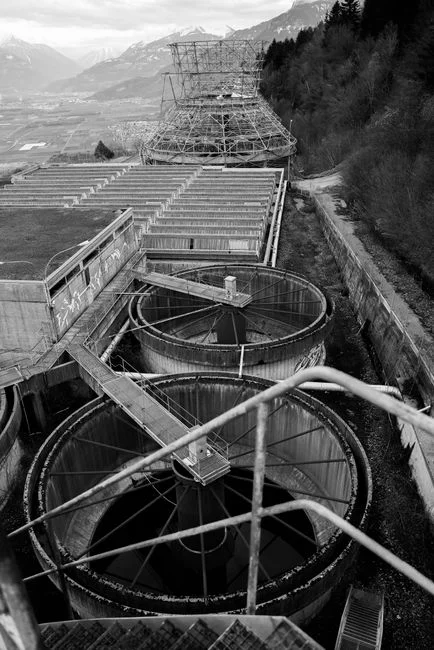
A complete treatment train follows a measurable sequence: flow measurement and pretreatment, biological treatment, solids separation, disinfection, and authorized effluent discharge or reuse. Each stage protects the next one and must have a defined operating response.
- Measure and screen: establish the incoming flow and remove debris that could obstruct biological equipment, pumps or membranes.
- Treat biologically: provide the required organic-matter and nutrient-removal functions under the selected process.
- Separate solids: use the sedimentation or membrane stage specified in the process design.
- Disinfect: apply the treatment required by the project’s discharge or reuse basis.
- Manage residuals: withdraw, store, stabilize and dispose of sludge under the agreed operating plan.
The WSZ configuration retains the published sequence of anoxic/aerobic biological contact oxidation, sedimentation and disinfection. The MBR configuration connects activated sludge with submerged membrane separation and adds downstream disinfection where required by the project basis.
Debris, peak flows and equipment failures can affect downstream biological processes. The US EPA municipal wastewater guidance identifies blockages, equipment failures, broken pipes and infiltration and inflow as contributors to overflows and operational problems. That supports specific commissioning checks: test the screen, verify flow-meter response, examine controls under simulated peak conditions and confirm how the system responds to an equipment fault.
Residuals cannot be assumed away. Include sludge-generation estimates, withdrawal frequency, storage, stabilization, transport and final disposal in the supplier’s scope. If direct dewatering is required, request a sludge dewatering filter press proposal with the required cake-handling and disposal method identified. Where upstream debris is a credible risk, evaluate the rotary mechanical bar screen as optional headworks protection.
For decentralized systems, the operating plan must also address access without exposing workers to confined-space hazards, safe electrical installation, sludge lifting, standby power or emergency storage where required, and routine inspection. These are implementation requirements to verify in the project site and supplier documentation, not generic performance claims.
Plan implementation, commissioning and compliance verification
Acceptance criteria should be agreed before the equipment contract is finalized, because retrofitting treatment guarantees after installation is difficult and expensive.
Require four deliverables before manufacturing: a site survey, hydraulic assessment, process design basis and confirmation of the applicable Colombian environmental requirements. The survey should record available land, access, burial depth, groundwater, flood exposure and utility routes. The hydraulic assessment should distinguish wastewater generation from infiltration and inflow and state how peak and seasonal flows were derived.
The commercial scope should identify testing, commissioning, operator training, spare parts, remote controls, alarms, preventive maintenance and sludge-removal procedures. Acceptance testing should use the contracted flow and the effluent criteria agreed for this project. The wetland study’s maximum removals must not be converted into package-plant guarantees.
| Verification item | Minimum project-specific evidence |
|---|---|
| Process performance | Contracted flow, effluent parameters, test methods, sampling conditions and acceptance procedure. |
| Instrumentation | Flow measurement, control logic, alarm list, local controls and remote-access requirements. |
| Startup and training | Pre-start inspection, loading procedure, operator training, troubleshooting and handover records. |
| Residuals | Sludge-generation basis, withdrawal schedule, storage, stabilization, transport and disposal route. |
| Compliance | Applicable resolution, permit conditions, receiving-water or reuse requirements and evidence required by the authority. |
The MDPI research identifies COD, TSS, TP, nitrates, nitrites, ammonium, TN and BOD as useful monitoring parameters for evaluating the studied system. The final monitoring plan should be based on the selected process and governing permit, rather than treating that list as a universal acceptance suite.
For reuse projects, obtain the local authority’s confirmation of the permitted reuse pathway and the evidence required to support it. Compliance cannot be promised universally because requirements depend on the receiving environment, discharge point, scale and project classification. For housing procurement, a packaged sewage treatment plant selection framework can help structure comparisons, but the Colombian owner must replace project assumptions with local survey, permit and supplier commitments.
Frequently Asked Questions
What is the cheapest domestic sewage treatment system in Colombia?
The supplied research does not support a defensible cost ranking for Colombia because it provides no local prices for equipment, excavation, transport, utilities, sludge disposal or civil works. Request site-specific quotations using the same design flow, effluent criteria, excavation depth, access conditions, civil-works scope, utilities connection, commissioning obligations and residual-disposal route. Compare the quotations on installed scope and performance obligations, not on unit-equipment price alone.
Should a project in Colombia choose a buried A/O package plant or an MBR system?
Choose a buried A/O package plant when its integrated biological contact oxidation, sedimentation and disinfection arrangement matches the design flow and the project can support automated operation and defined sludge removal. Its supplied catalog capacity is 1–80 m³/h. Consider an MBR when membrane separation is justified by the reuse objective or process basis; its supplied catalog capacity is 10–2,000 m³/day. Compare both in the same units and ask each supplier to document peak loading, footprint, controls, sludge handling, expansion provisions and acceptance tests. Neither option is universally cheaper or compliant.
How much sewage flow should a domestic treatment plant in Colombia be sized for?
Size from measured daily and peak flows or a documented occupancy and usage basis, then evaluate infiltration and inflow separately. The US EPA identifies infiltration and inflow as a cause of significant flow increases and operational problems at treatment facilities, so the selected unit cannot be based on wastewater production alone. Require the supplier to show how the daily average, peak-hour flow, seasonal variation, equalization and duty cycle were incorporated into the process calculations.
Can a constructed wetland replace a packaged sewage treatment plant?
It cannot be assumed. The direct Colombian evidence came from a constructed wetland serving one home in San Marcos, Sucre. That study does not establish equivalence for a housing development, hotel, hospital or rural community. A larger wetland project would need project-specific hydraulic loading, seasonal behavior, land area, carbon balance, substrate availability, solids removal and reuse or discharge verification; otherwise, a packaged treatment train is the more controlled basis for equipment procurement.
Which Colombian resolution should the final effluent comply with?
The MDPI study discusses Resolution 1256 of 2021 and Resolution 1207 of 2014, but it does not replace a current project-specific compliance review. The owner should ask the competent authority to identify the currently applicable resolution, permit conditions, receiving-water requirements, reuse pathway and required evidence. Do not adopt the study’s reported effluent concentrations as discharge limits or guarantee the authority’s acceptance.