What Porto Alegre Effluent Projects Must Decide First
An effluent treatment plant in Porto Alegre should be selected based on final effluent use, discharge permits, and wastewater characteristics rather than generic package sizes. A practical industrial wastewater process train commonly evaluates physical separation, biological treatment, clarification, disinfection, and advanced polishing. Dissolved air flotation (DAF) is suitable where suspended solids, oil, grease, FOG, or colloids require removal; membrane bioreactors combine biological treatment with membrane filtration below 1 μm; UF or nanofiltration can provide further polishing where reuse is the objective. Brazilian water-resource and discharge rules must be confirmed for the receiving water and operating conditions.
The first decision is the project boundary: direct discharge, sewer connection with pretreatment requirements, controlled reuse, or process-water replacement. An industrial ETP in Porto Alegre must address the actual production wastewater, including its flow variability and composition, rather than reproducing a municipal sewage treatment design. Document wastewater sources and segregate incompatible streams before combining them for treatment. The characterization program should cover suspended solids, oil and grease, FOG, pH, COD, BOD, nutrients, color, salinity, temperature, and toxicity, plus contaminants specific to the industrial sector.
The permitting route should be confirmed with the responsible authorities and the sewer operator. The supplied research cites Federal Law No. 9,433/1997, Law No. 357/2005, and Law No. 430/2011, together with CONAMA effluent standards, but it does not establish a current numeric Porto Alegre discharge limit. Obtain the current permit conditions, receiving-water classification, sampling protocol, and any sewer pretreatment requirements before comparing bids.
Water reuse is a separate design objective requiring an agreed quality specification tied to its application. The University of Twente’s research on Direct nanofiltration of wastewater treatment plant effluent identifies nanofiltration as a method studied for polishing WWTP effluent for agricultural or indirect potable uses; it does not make nanofiltration a universal treatment choice. For a broader engineering comparison, the Porto Alegre project roadmap provides the decision framework used in this guide.
The Industrial Effluent Treatment Process
An industrial wastewater process train works in sequence: protect downstream equipment, remove bulk contaminants, treat biodegradable material, separate solids, control pathogens where required, and polish the effluent to its final specification. Skipping one stage because a catalog unit has a nominal capacity does not remove the underlying treatment duty.
- Segregation and headworks: Keep incompatible production streams separate. Use mechanical screening to remove rags, plastics, fibers, and coarse solids, and equalization to manage batch discharges and flow variation.
- Physical or chemical pretreatment: Apply DAF when suspended solids, colloids, oil, grease, or FOG are important removal targets. The cataloged industrial DAF system for oil, FOG and suspended-solids removal covers 4–300 m³/h across 13 models; this is a manufacturer range, not a design guarantee for every wastewater.
- Biological treatment: Select attached- or suspended-growth treatment according to biodegradable organic load, toxicity, temperature, and available footprint. Equalization and pH control may be needed before biological organisms can be protected from shock loads.
- Solid–liquid separation: Position clarification after biological treatment when biomass and residual solids require separation. The cataloged lamella clarifier specifies surface-loading rates of 20–40 m/h; these remain manufacturer specifications rather than universal design values.
- Disinfection: Select the final microbial-control stage against the discharge or reuse objective. The cataloged chlorine dioxide generator extends from 50 g/h in a compact manual configuration to 20,000 g/h in a fully automated industrial configuration.
- Advanced polishing: Reserve UF, RO, or nanofiltration for defined reuse or high-quality process-water requirements. Include membrane pretreatment, cleaning, replacement, and residual-stream handling in the project scope.
| Process stage | Primary decision | Design evidence to request |
|---|---|---|
| Headworks and equalization | Protect the plant from solids and hydraulic/composition peaks. | Screen selection, flow profile, storage logic and bypass provisions. |
| DAF | Oil, grease, FOG, colloids and suspended solids are relevant. | Contaminant loading, recycle, skimming and flotation-residue handling. |
| Biological treatment | Biodegradable organic load requires treatment. | Organic load, toxicity, temperature, biomass separation and footprint. |
| Clarification | Residual solids or biological solids must be separated. | Hydraulic and solids loading, sludge withdrawal and standby strategy. |
| Disinfection | Microbial control is required by the final route. | Target organism, dose, contact arrangement, residuals and monitoring. |
| UF, RO or nanofiltration | Reuse or process-water quality requires further polishing. | Feed specification, pretreatment, recovery, energy, cleaning and membrane replacement. |
DAF, MBR, UF and Conventional Treatment Compared
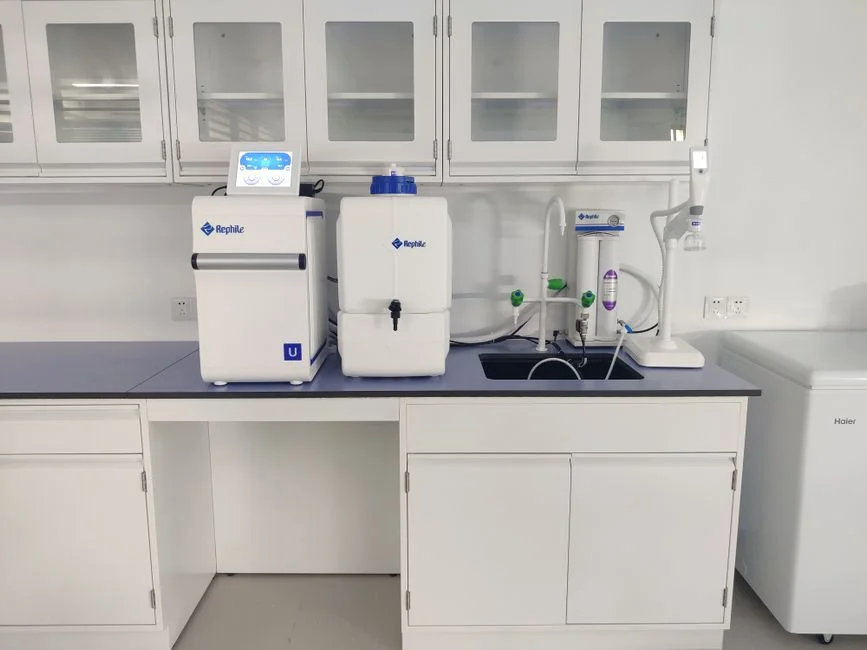
DAF, MBR, UF, and conventional biological treatment are not interchangeable products because they solve different parts of the treatment problem. A technology should enter the train only after the wastewater analysis and final effluent objective establish its required duty.
| Technology | Documented catalog capability | Best fit for screening | Critical qualification |
|---|---|---|---|
| DAF | 4–300 m³/h across 13 standard models. | Wastewater where oil, grease, FOG, suspended solids or colloidal matter dominate. | Confirm contaminant loading, chemical demand, recycle and skimming performance with representative wastewater. |
| MBR | Submerged PVDF membranes; filtration below 1 μm; offered from 10 to 2,000 m³/day. | Combined biological treatment and membrane separation where compact treatment is required. | Review hollow-fiber MBR design criteria, including membrane area, aeration, solids concentration, expected flux and cleaning. |
| UF | 2,000–40,000 L/h; 0.03 μm PVDF membranes; turbidity acceptance up to 300 ppm; automatic backwash and air scour. | Fine solids separation, an RO pretreatment barrier or polishing duty. | Confirm feed-water chemistry, solids carryover, recovery, cleaning chemistry and membrane replacement. |
| Conventional biological treatment plus clarification | Technology selection and dimensions are site-specific. | A permit or reuse target that can be met with established biological treatment and solids separation. | Assess land, sludge handling, energy, operator requirements and lifecycle cost against the project constraints. |
The cataloged MBR membrane bioreactor for compact biological treatment is relevant when biological treatment and solids separation are both needed, but its published capacity and filtration description do not replace a site-specific design. Similarly, the cataloged UF system provides a fine filtration barrier, not a substitute for removal of bulk organics, oil, or FOG. Membrane pretreatment must match the incoming wastewater.
For reuse, the evidence supports evaluating polishing methods rather than assigning one universal train. The University of Twente studied direct nanofiltration for WWTP-effluent reclamation, and Wageningen University and Research’s 2022 doctoral thesis, Removal of micropollutants from wastewater treatment plant effluent by constructed wetlands, investigated micropollutant removal through constructed wetlands. Neither study establishes a Porto Alegre industrial reuse specification or proves that either technology will meet an unspecified application.
Use the matrix to screen technology fit, then require site-specific calculations and pilot evidence where wastewater variability, new contaminants, or reuse claims make laboratory confirmation necessary. The industrial ETP and DAF selection framework provides a practical structure for translating characterization data into a candidate treatment train.
How to Size an ETP Without Guessing
A defensible ETP size comes from simultaneous hydraulic and contaminant-load calculations, not from the largest nominal capacity in a catalog. Prepare a 12-month flow history where available and a future production profile. State average, peak, and instantaneous flow, including the operating schedule, batch discharges, and expected future changes.
| Sizing input | Information required | Equipment question to resolve |
|---|---|---|
| Hydraulic profile | Average, peak and instantaneous flow; production and discharge schedule. | Which unit handles the hydraulic peak, and what remains available during maintenance? |
| Organic load | COD and BOD, including variability and biodegradability. | Is equalization or flow-paced biological operation required? |
| Solid and float loading | TSS, oil and grease, FOG, solids settleability and skimming characteristics. | How are DAF loading and biological solids separation calculated? |
| Chemical condition | pH, alkalinity, color, conductivity, salinity and temperature. | Which streams must be segregated, neutralized or chemically conditioned? |
| Environmental risk | Nutrients, toxicity and sector-specific contaminants. | Which permit parameters and reuse requirements govern the guarantees? |
Run the parameter survey across production, cleaning, shutdown, and abnormal-operation periods. If batch discharges create composition or hydraulic peaks, determine whether equalization, segregation, or flow-paced operation is appropriate. Balance each process unit against its governing contaminant load, hydraulic peak, and required effluent quality. A tank’s nominal volume or a membrane unit’s nominal capacity does not establish treatment performance.
For MBR applications, review membrane area, aeration, solids concentration, expected flux, cleaning, and replacement requirements. For DAF, review contaminant loading, recycle, skimming, and flotation-residue handling. For UF or RO polishing, include the feed-water specification, pretreatment, recovery, energy demand, membrane replacement, and cleaning chemistry.
Require each bidder to state the design basis, assumptions, design flow, contaminant duty, operating mode, standby arrangement, guarantees, and exclusions. If those inputs are absent, the comparison is not technically equivalent. The proposal should also distinguish equipment performance from site performance and identify which values require confirmation by analysis or pilot testing.
Build a Procurement-Ready Treatment Plant
A procurement-ready ETP begins with a technical RFQ that allows every bidder to design against the same wastewater, permit, and reuse requirements. Include flow data, wastewater analyses, operating schedule, permit conditions, reuse targets, utilities, civil constraints, site access, residual handling, and required test protocols.
Ask each bidder to identify the proposed process train, design basis, equipment scope, civil interfaces, utilities, controls, guarantees, and excluded items. Clarify sludge or flotation-residue handling as part of the commercial scope. The cataloged plate and frame filter press is available with filtration areas from 1 m² to 500 m² and manual, hydraulic, or fully automatic PLC-controlled operation; the appropriate configuration depends on cake characteristics, cycle time, and residual-disposal route.
| Procurement package | Required submission or check |
|---|---|
| Technical proposal | Process flow, design basis, mass and hydraulic balance, equipment list, utilities and control philosophy. |
| Performance commitments | Permit and reuse parameters, test methods, sampling protocol, acceptance conditions and remedy for non-compliance. |
| Residuals | Sludge and flotation-residue quantity, dewatering route, disposal assumptions and included equipment. |
| Chemical dosing | Duty, control basis, storage, containment and dosing sequence. |
| Factory and site acceptance | FAT/SAT protocols, witnessed tests, punch-list closeout and commissioning support. |
| Handover | Operator training, maintenance documentation, spare parts, control narratives, as-built drawings and warranty terms. |
Use automatic chemical dosing where pH, coagulation, or flocculation must be controlled. The cataloged automatic chemical dosing system is PLC-controlled, skid-mounted, pre-wired, and factory-tested; the buyer must still confirm compatibility with the chemical, required turndown, storage, containment, and local controls.
Plan FAT and SAT before award, not after equipment fabrication. FAT should verify workmanship, controls, alarms, and agreed functional tests; SAT should demonstrate installation, utilities, interlocks, and process operation with plant wastewater. Do not accept guaranteed effluent values until the applicable permit and reuse specification are written into the procurement documents. Commercial closure should also identify delivery milestones, commissioning support, operator training, and the evidence required for final acceptance.
Frequently Asked Questions
How much does an industrial effluent treatment plant in Porto Alegre cost?
The supplied research contains no defensible local capital-
Frequently Asked Questions
How much does an industrial effluent treatment plant in Porto Alegre cost?
The capital expenditure (CAPEX) for an industrial effluent treatment plant in Porto Alegre typically ranges from R$ 250,000 for small-scale modular systems to over R$ 5,000,000 for high-capacity, automated complex facilities. Costs are heavily influenced by the specific pollutant load, required discharge standards set by DMAE or FEPAM, and the selection of tertiary treatment technologies.
Operational expenditure (OPEX) should be budgeted at R$ 2.00 to R$ 8.00 per cubic meter of treated water. This includes electricity consumption, chemical reagents, sludge disposal logistics, and mandatory labor for system monitoring and compliance reporting.
Should I choose DAF, MBR or UF for industrial wastewater in Porto Alegre?
The selection depends on the effluent matrix: Dissolved Air Flotation (DAF) is the standard for removing oils, greases, and suspended solids with high efficiency, often serving as a primary treatment step. Membrane Bioreactor (MBR) technology is preferred when space is limited and high-quality effluent is required for industrial reuse, as it combines biological degradation with membrane filtration.
Ultrafiltration (UF) is typically employed as a polishing stage downstream of biological treatment to achieve tertiary quality. If your goal is compliance with strict local discharge permits for sensitive watersheds in the Guaíba basin, MBR is generally the most robust choice despite higher energy requirements.
What information does a wastewater treatment equipment supplier need for a proposal?
To receive an accurate proposal, you must provide a laboratory characterization report including Chemical Oxygen Demand (COD), Biological Oxygen Demand (BOD), Total Suspended Solids (TSS), pH levels, and oil and grease concentrations. Additionally, suppliers require the average and peak daily flow rates (m³/day) and the maximum hourly flow (m³/h).
You must also identify the target discharge point (e.g., municipal sewage system or surface water body) to ensure the design meets the specific limits defined by CONAMA Resolution 430/2011 and local Porto Alegre municipal regulations.
What size ETP do I need for my factory in Porto Alegre?
The size of your ETP is determined by your daily hydraulic load plus a safety margin of 15% to 20% to account for seasonal fluctuations or future production growth. You must calculate the volume of all process water, cleaning-in-place (CIP) discharge, and sanitary wastewater generated within the facility.
For example, a factory discharging 50 m³/day requires a system designed for a hydraulic retention time (HRT) consistent with the chosen biological process, typically ranging from 12 to 24 hours for activated sludge systems. Consulting a civil or environmental engineer is necessary to ensure the physical footprint complies with local urban planning ordinances.
Can a packaged wastewater treatment plant meet my reuse and discharge requirements?
Yes, modern packaged wastewater treatment plants (containerized systems) are capable of meeting both stringent discharge standards and industrial reuse quality requirements. These systems are pre-engineered and factory-tested to ensure high performance in removing organic matter and pathogens.
When equipped with advanced tertiary stages such as Reverse Osmosis (RO) or UV disinfection, these units can produce water suitable for cooling towers, boiler feed, or facility cleaning. However, the system must be sized according to the final reuse application's water quality specifications, which are often more rigorous than those required for simple discharge into the public sewage network.