How to Choose Domestic Sewage Treatment in Recife
Domestic sewage treatment in Recife should be selected from measured wastewater flow and loads, required effluent performance, installation constraints and project-specific discharge consent—not from capacity alone. A buried A/O package such as the WSZ integrated package plant combines anoxic/aerobic contact oxidation, sedimentation and disinfection in one automated unit, with a stated capacity of 1–80 m³/h. An MBR wastewater treatment system combines activated sludge with submerged PVDF membranes below 1 μm and has a stated capacity of 10–2,000 m³/day. Neither capacity range establishes compliance with a Recife discharge condition; that requires current consent and site-specific effluent data.
Begin with four questions: What are the design and peak wastewater flows? What organic, solids and surfactant loads must be treated? What effluent objective and receiving destination apply? What space, access, drainage, power and maintenance constraints exist at the site? Only then compare packaged A/O, MBR and decentralized alternatives.
| Selection input | Packaged A/O | MBR | Procurement check |
|---|---|---|---|
| Process arrangement | Anoxic/aerobic contact oxidation, sedimentation and disinfection | Activated sludge followed by submerged PVDF membrane filtration below 1 μm | Obtain a process schematic and stated treatment duty points |
| Catalog capacity | 1–80 m³/h | 10–2,000 m³/day | Compare against design flow, peak flow and organic load—not nameplate flow alone |
| Primary site issue | Buried installation with landscaping above | Equipment arrangement and maintenance access associated with membrane systems | Assess excavation, lifting, access, drainage, odor and power |
| Performance status | Requires confirmation against the applicable Recife consent | Requires confirmation against the applicable Recife consent | Request guarantees tied to defined influent and effluent conditions |
The practical rule is simple: shortlist a packaged A/O where an integrated biological, solids-separation and disinfection train suits the footprint and discharge objective; shortlist MBR where membrane solids separation or a higher-grade reuse objective justifies its additional process complexity. Confirm both against the receiving point and current authority requirements.
Recife Treatment Objectives and Local Evidence
The supplied research does not establish current Recife discharge limits, analytical methods or universal permit conditions, so those requirements must be obtained for each project. The 2026 study by the Federal University of Pernambuco, published in Environmental Technology on 23 September 2026, evaluated pilot-scale integrated anaerobic-aerobic systems treating typical domestic sewage at 0%, 50% and 100% effluent recirculation. It provides process evidence for a Recife project, not a discharge guarantee.
In that study, aerobic units achieved peak LAS removal of 75 ± 17%, while the complete system achieved 68 ± 38% overall LAS removal at 50% recirculation. The reported influent LAS concentration ranged from 2.55 ± 0.34 to 3.43 ± 1.31 mg L⁻¹. These values describe the tested sewage and reactor conditions; they are not a universal Recife influent limit or a sizing factor.
The study also shows why hydraulic design cannot be separated from process configuration. Higher recirculation increased hydraulic loading and promoted LAS desorption in anaerobic units, resulting in higher LAS loads during some treatment stages. Recirculation therefore requires a defined hydraulic and solids-retention basis rather than being treated as a generic efficiency measure.
Before selecting equipment, identify the receiving destination and obtain the current project-specific consent conditions in writing. Request the applicable parameters, analytical methods, monitoring frequency and any reuse or discharge constraints. Where no confirmed requirement exists, record that gap instead of substituting an assumed Recife threshold. For another municipal perspective, see domestic sewage treatment comparison for another Brazilian city.
Treatment Process Options for Domestic Sewage
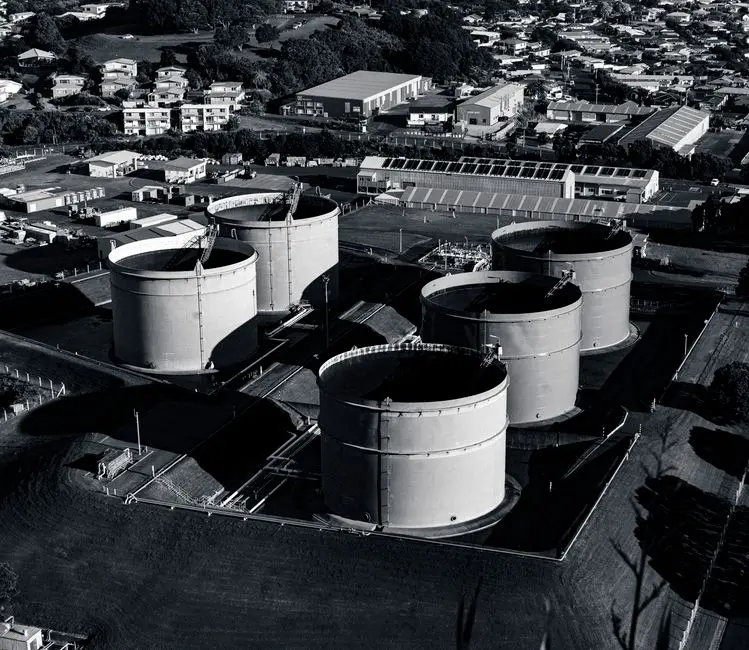
A complete treatment train normally follows five functions: screening and solids management, equalization where required, biological treatment, solids separation and effluent disinfection. The process can begin with a wastewater inlet bar screen, followed by an anaerobic stage for suitable projects, aerobic biological treatment, separation of biomass and final disinfection. Equalization, pumping and pretreatment remain project-specific.
The Federal University of Pernambuco study distinguishes aerobic biodegradation from anaerobic adsorption. Aerobic units selectively biodegraded LAS positional isomers, while adsorption was the dominant removal mechanism in anaerobic sludge. This distinction supports the use of anaerobic-aerobic wastewater treatment where anaerobic pretreatment can recover usable capacity before aerobic polishing, but it does not justify assuming that every anaerobic unit will remove the same pollutant fraction.
Recirculation must be engineered around the selected process. In the tested pilot systems, higher recirculation increased hydraulic loading and encouraged LAS desorption from anaerobic sludge. The 2026 results apply to pilot-scale systems and the tested LAS conditions; they should not be converted into guaranteed performance for a full-scale housing development, hotel or hospital without project-specific verification.
| Option | Treatment mechanism | Solids separation | Automation and maintenance implications | Appropriate project question |
|---|---|---|---|---|
| Conventional activated sludge | Biodegradation in an aerated biological reactor | Usually requires a separate settling stage | Process control, aeration, sludge withdrawal and returned sludge require sustained operation | Is available civil infrastructure sufficient for a conventional train? |
| Integrated A/O package | Anoxic/aerobic contact oxidation followed by sedimentation and disinfection | Included in the package arrangement | Catalog describes a fully automated unit without an operator; access for inspection and maintenance still requires confirmation | Does a compact buried train satisfy the hydraulic, loading and site constraints? |
| MBR | Activated sludge combined with submerged PVDF membrane filtration below 1 μm | Membrane separation is integral to the process | Requires membrane-operation controls, cleaning access, replaceable elements and specialist support | Does the required solids separation or reuse objective justify membrane complexity? |
For a broader equipment-selection framework, use the packaged sewage treatment plant selection guide. In Recife, the process decision should remain tied to measured flow, load, consent and site conditions.
Package A/O or MBR: Which System Fits the Project?
The WSZ package is a below-grade integrated option, while the MBR is a membrane-based alternative with different equipment and maintenance requirements. Their stated capacities use different time bases, so the buyer must normalize demand before comparison.
The buried A/O sewage treatment plant combines anoxic/aerobic biological contact oxidation, sedimentation and disinfection. Its verified catalog states a capacity of 1–80 m³/h and permits landscaping above the installed unit. This arrangement is relevant where surface area is constrained and an integrated biological, separation and disinfection package is appropriate.
The MBR wastewater treatment system combines activated sludge with submerged PVDF membranes below 1 μm. Its catalog states a capacity of 10–2,000 m³/day and claims a 60% smaller footprint than conventional systems. The footprint statement is an equipment-catalog claim, not an independent Recife site study; it should be checked against the complete arrangement, including inlet works, tanks, membrane access, controls and sludge handling.
| Decision issue | Favors packaged A/O | Favors MBR | Evidence required before award |
|---|---|---|---|
| Treatment objective | Integrated biological treatment, solids separation and disinfection are required | Membrane-based solids separation or a higher-grade reuse objective applies | Current consent, receiving destination and confirmed effluent objectives |
| Site arrangement | Below-grade installation and landscaping above are acceptable | Compact equipment arrangement can be integrated within available space | Survey, excavation limits, access routes, drainage and lifting plan |
| Operating environment | Odor control, noise, power resilience and remote access can be provided | Cleaning, membrane replacement and specialist operation can be supported | Control philosophy, local service capability and spare-parts plan |
| Capacity fit | 1–80 m³/h catalog range | 10–2,000 m³/day catalog range | Design flow, peak flow, organic loading and hydraulic response |
| Sludge route | Package sludge withdrawal and stabilization need definition | Residual sludge handling remains part of the complete design | Production basis, stabilization, dewatering and final disposal |
Neither equipment range is a complete design. Capacity must still accommodate peak flow and organic loading, while the design must address sludge production, start-up, effluent objectives, maintenance and utilities. For a technical distinction between membrane and conventional biological systems, see the MBR versus conventional activated sludge comparison.
Sizing Inputs and Performance Evidence
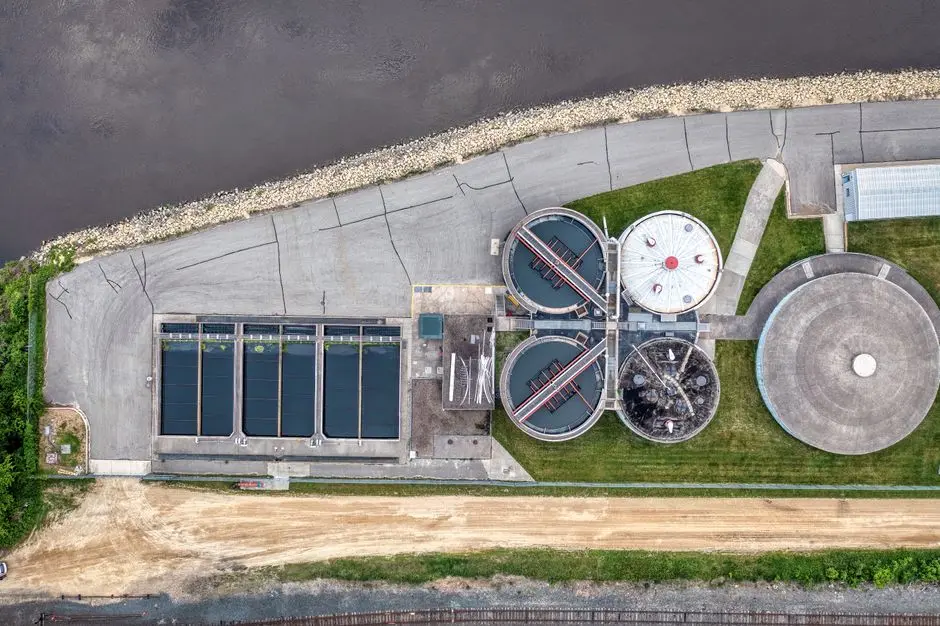
A defensible sewage treatment sizing request begins with measured wastewater characteristics and documented operating conditions. Request design flow, peak-flow basis, influent COD, BOD, suspended solids, LAS where relevant, pH, temperature and anticipated diurnal and seasonal variation. Also request occupancy assumptions for hotels, hospitals and housing developments, stormwater ingress controls and the expected start-up loading condition.
The supplied evidence is limited but specific. The 2026 Federal University of Pernambuco study reports an influent LAS range of 2.55 ± 0.34 to 3.43 ± 1.31 mg L⁻¹ and maximum aerobic LAS removal of 75 ± 17% under its tested conditions. Those figures can support questions about mechanism and sensitivity, but they do not replace a project influent characterization or establish package capacity.
A Wageningen University low-temperature thesis provides a separate sensitivity example. At 13 °C, the anaerobic filter removed 82% of suspended COD. An AF+AH train operating at 4+8 hours HRT achieved 71% total COD removal, with removals of 92%, 60% and 55% for suspended, colloidal and dissolved COD, respectively. This concerns low-temperature domestic sewage in the tested research scope; it must not be represented as Recife climate-performance assurance.
| Design input | Information required | Evidence or decision output |
|---|---|---|
| Hydraulics | Average and peak flow; diurnal and seasonal variation; stormwater ingress | Hydraulic retention, equalization and pumping duty basis |
| Organics and solids | COD, BOD, suspended solids and relevant surfactants | Loading calculations and reactor and solids-separation sizing |
| Site and climate | Temperature, soil, groundwater, drainage, access and available footprint | Installation method, environmental controls and seasonal sensitivity |
| Effluent objective | Current project-specific consent, receiving destination and monitoring requirements | Defined performance guarantee and test protocol |
| Residuals and utilities | Sludge production, stabilization and disposal; power and backup needs | Complete treatment-train and operating-cost scope |
For the MBR route, include membrane design flow, cleaning access, replacement provisions, controls and performance verification. For either route, document odor control, disinfection, monitoring, start-up and backup power. A quoted capacity without these boundary conditions is incomplete.
Implementation, Compliance and Procurement Checklist
Current Recife discharge consent must be established before equipment order because the supplied research does not define present project-specific limits. Start with the receiving point and applicable Recife authority, then request the current consent conditions, analytical methods, monitoring obligations and any connection or installation requirements in writing.
Complete hydraulic and load calculations before fixing the treatment train. Define inlet screening, equalization, biological treatment, solids separation, disinfection, effluent pumping, sludge stabilization and final disposal routes. For sludge dewatering where required, obtain a separately scoped proposal for a plate-and-frame filter press, including cake handling and operating labor.
Require each supplier to document process selection, guaranteed duty points, design assumptions, control philosophy, installation method, commissioning tests, operating support, spare parts and warranty boundaries. Performance guarantees should identify the influent conditions, effluent parameters, analytical methods and test duration. Factory nameplate capacity is not equivalent to a site-performance guarantee.
The supplied local reference identifies domestic sewage treatment at a full-scale UASBB plant in Mangueira, Recife, supporting early evaluation of anaerobic-aerobic configurations where the project conditions are suitable. It does not establish that a UASB reactor alone is appropriate for every development, nor does it replace current consent review.
| Stage | Required action | Procurement hold point |
|---|---|---|
| Regulatory basis | Identify receiving destination, authority and current project-specific consent | Do not accept an assumed local limit |
| Design basis | Complete flow, load, site, sludge, utility and effluent calculations | Do not award on catalog capacity alone |
| Supply documentation | Obtain process schematic, duty points, controls, installation and commissioning plan | Resolve design exclusions and interface responsibilities |
| Commissioning | Test biological stabilization, solids separation, disinfection and load response | Agree acceptance criteria and operating support |
| Long-term operation | Confirm monitoring, sludge disposal, maintenance, spare parts and backup power | Record lifecycle responsibilities before acceptance |
Start-up and monitoring should address hydraulic and load variation, not merely equipment energization. Require a procedure for initial biological stabilization, solids inventory, effluent sampling, disinfection performance, alarm response and corrective action.
Frequently Asked Questions
How much does domestic sewage treatment in Recife cost?
The supplied research provides no Recife project price. Request a quotation that separates equipment, process design, civil works, inlet and outlet works, installation, electrical and controls, commissioning, training, sludge handling, monitoring, maintenance and long-term consumables. Comparing only the packaged-plant price can conceal the largest site and lifecycle costs.
Which supplier should be selected for a Recife project?
Ask for verified duty data, guarantees tied to defined influent and effluent conditions, local commissioning evidence and after-sales support. Check whether the supplier has documented experience with the proposed process and can define the sludge-disposal route, monitoring obligations and performance tests. A capacity range alone is not adequate supplier evidence.
Can an A/O package or MBR meet the required Recife discharge condition?
Neither system should be approved before the current project-specific consent is obtained. Compare the required parameters, analytical methods, receiving destination and monitoring conditions against proposed guarantees. The 2026 Federal University of Pernambuco findings support the tested anaerobic-aerobic mechanism, but they do not constitute a site-specific discharge guarantee.
How long will equipment delivery and commissioning take?
No verified lead time was supplied. Require a project-specific schedule covering design approval, manufacturing, civil interfaces, delivery, installation, testing, biological start-up and acceptance. The supplier should identify dependencies and distinguish equipment delivery from the date on which the treatment train can meet the agreed performance criteria.