What Limits Apply to a Fabricated Metals Plant in Englewood?
Fabricated metals plants near Englewood meet pretreatment limits by characterizing each wastewater stream, comparing pollutants and flow with the current POTW permit, and installing controls that prevent pass-through, interference, prohibited pH conditions, slug loads, and flow-limit violations. Treatment may combine screening, oil and suspended-solids removal, pH adjustment, coagulation or flocculation, and sludge dewatering. Equipment selection must follow the actual waste and permit—not a generic metals-fabrication assumption. EPA notes that metal-finishing regulation is process-based, and the supplied enforcement record shows why documented sampling, monitoring, operator training, and reliable treatment are essential.
The controlling documents begin with the current POTW pretreatment permit, the applicable sewer-use ordinance, and any state or federal requirements. Obtain the permit and renewal history before specifying equipment: local limits, monitoring conditions, discharge points, flow restrictions, prohibited discharges, and compliance schedules determine what the treatment system must accomplish. Review wastewater self-monitoring and reporting requirements alongside the permit rather than treating monitoring as a separate administrative task.
EPA defines Metal Finishing regulation by manufacturing processes rather than industrial sectors. If a plant performs any of the six operations identified by EPA, discharges from the 46 operations listed in 40 CFR 433.10(a) may be covered by Part 433 standards (US EPA, Metal Finishing Effluent Guidelines). Chrome finishing operations identified by EPA are chromium plating, chromium anodizing, chromic acid etching, and chromate conversion coating. A fabricator performing one or more of these operations needs a separate applicability review; a plant engaged only in cutting, grinding, forming, or mechanical fabrication should not automatically be treated as a chrome-finishing facility.
EPA docket EPA-HQ-OW-2022-0869 concerns the agency’s PFAS rulemaking for a subset of Metal Finishing and Electroplating facilities, including certain chrome finishing facilities (US EPA, Metal Finishing Effluent Guidelines). It is a rulemaking docket, not a new universal Englewood discharge limit. It should, however, be checked when the plant performs chromium operations or uses PFAS-containing process aids.
| Control document | What to establish | Equipment implication |
|---|---|---|
| POTW pretreatment permit | Applicable pollutants, local limits, sampling requirements, flow restrictions, discharge points, and compliance schedules | Define the treatment performance basis and monitoring points |
| Sewer-use ordinance | Prohibited discharges, local sewer restrictions, and enforcement provisions | Identify controls needed beyond the numeric permit limits |
| EPA metal-finishing applicability review | Whether the plant performs a covered operation, including chrome finishing | Determine whether Part 433 analysis is relevant; do not assume coverage from the word “fabrication” |
| PFAS rulemaking docket EPA-HQ-OW-2022-0869 | Whether the facility and its PFAS use fall within the scope of EPA’s developing chrome-finishing approach | Track applicable requirements separately from current site-specific permit limits |
Characterize the Wastewater Before Choosing Treatment Equipment
A defensible treatment design starts with a process-to-wastewater map, not a catalog selection. Separate wash, rinse, cutting, grinding, plating, etching, and floor or equipment washdown streams where they exist. A combined discharge can conceal high-strength batches behind a satisfactory average concentration, so characterize each stream and then evaluate the combined discharge at the permitted sampling point.
- Request recent analytical results and identify the sampling locations, flow periods, production conditions, and analytical methods behind them.
- Obtain process-flow diagrams, chemical inventories, production schedules, maximum and average flows, batch-discharge timing, and records of documented slug-discharge events.
- Test for every parameter named in the permit. pH, TSS, oil and grease, metals, and other pollutants may be relevant, but the permit—not an industry checklist—defines the required scope.
- Evaluate variability, including higher-strength production periods, cleaning cycles, upset operations, accumulated floor washings, and the timing of batch releases.
- Provide this record to the process designer so that capacity, chemical demand, solids loading, and operating controls are based on measured conditions.
DAF is relevant when the waste contains suspended solids, FOG, oil and grease, or colloidal material that must be removed before discharge. Its role must still be defined through site data: the supplied research establishes the treatment function, but it does not establish the wastewater characteristics of any particular Englewood plant. That distinction matters because a nominal flow rate cannot identify the required surface area, flotation loading, recycle ratio, or chemical demand.
Use analytical results to define two separate questions. First, can the treatment process remove the pollutants that cause pass-through or interference? Second, can it handle the batch profile without an uncontrolled concentration or flow excursion? If those answers differ, include equalization or batch segregation in the design basis rather than relying on larger treatment capacity to compensate for every failure mode.
| Input to obtain | Engineering question | What it controls |
|---|---|---|
| Separate-stream flow records | Which operation contributes the dominant hydraulic and pollutant load? | Equalization, DAF sizing, pumping, and batch-control design |
| Permit-based analytical data | Which pollutants must be controlled, and under what local limits? | Treatment objectives and sampling program |
| Batch and production schedules | When can concentrated or high-flow discharges occur? | Segregation, flow restriction, alarms, and slug-load procedures |
| Oil, grease, FOG, TSS, and colloid characterization | Is physical separation required before chemical conditioning? | DAF or clarification, sludge generation, and downstream handling |
| Chemical inventory and wastewater chemistry | Which conditioning or pH-control chemicals are compatible? | Dosing equipment, storage, materials selection, and residual management |
Build a Pretreatment Train That Controls Pass-Through and Interference
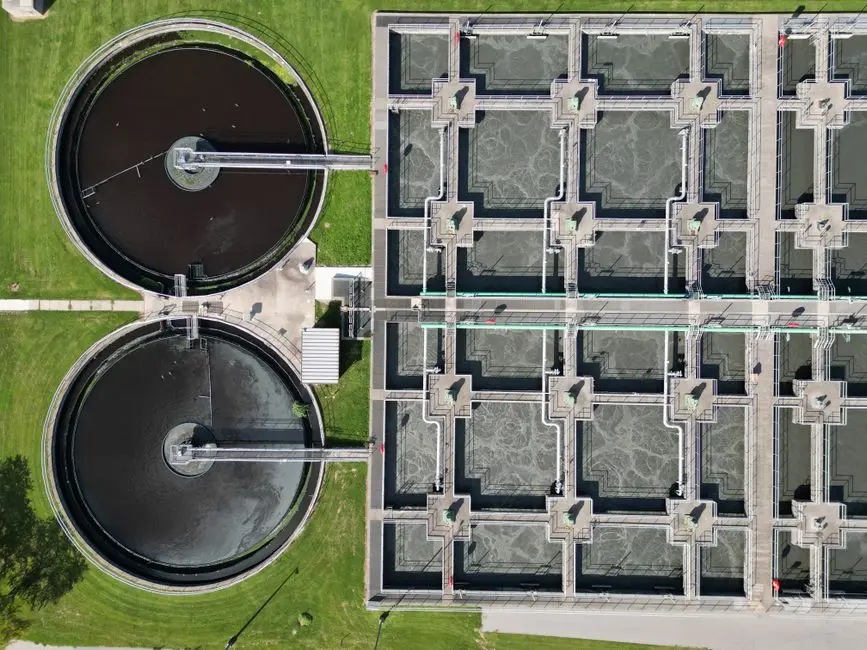
The treatment train should remove damaging material before it reaches the POTW, then control chemical residuals and discharge conditions. A rotary mechanical bar screen is the first consideration when rags, plastics, fibrous debris, or suspended solids could overload downstream pumps, valves, or the POTW’s biological treatment processes. Its duty should reflect the debris and flow characterization, not merely the permitted discharge flow.
Where oil, grease, FOG, suspended solids, or colloidal matter require removal, evaluate DAF as a physical separation step. The available DAF system for metals-wastewater pretreatment has a stated range of 4–300 m³/h across 13 standard models and is listed for metalworking and industrial pretreatment applications (HydropureWater product information, 2026). Those figures describe available equipment capacity; they do not establish the required duty for an Englewood facility.
Use PLC-controlled chemical dosing when the train requires controlled pH adjustment, coagulation, or flocculation. An automatic chemical dosing for pH and flocculation control should be evaluated as part of the process-control loop, including its measured chemical demand, control response, containment, and compatibility with the wastewater. Chemical addition does not replace physical removal of solids, oil, or grease.
Route DAF or clarifier sludge to a plate and frame filter press when dewatering is required. The available filtration area ranges from 1 m² to 500 m², with manual, hydraulic, or fully automatic PLC-controlled operation (HydropureWater product information, 2026). That range is equipment availability, not a recommendation for the required filter area; cake characteristics, solids production, operating cycle, filtrate quality, and handling requirements determine the duty.
Frame every selection around pass-through and interference risk. A Williams Mullen enforcement summary from 2017-03-30 describes an industrial discharger’s alleged POTW interference or pass-through, federal pH prohibition violations, failure to notify the POTW of slug loadings, and permitted flow-rate violations. The same summary reports that the consent decree required treatment-system upgrades, annual operator training, sampling, analysis, and quarterly monitoring, plus a $385,000 civil penalty. That settlement is not a specification for Englewood, but it shows which failure modes regulators examine.
| Process risk | Potential unit process | Selection basis |
|---|---|---|
| Rags, plastics, fibrous debris, and coarse solids | Rotary mechanical bar screen | Debris loading, flow, screen opening, retained-solids handling, and downstream protection |
| Oil, grease, FOG, suspended solids, or colloidal matter | DAF or clarification | Measured pollutant loading, batch variability, flotation performance, sludge production, and required removal |
| pH outside permit limits or chemical conditioning required | Automatic chemical dosing system | Wastewater chemistry, dose range, control response, chemical storage, and residual discharge |
| Sludge dewatering required | Plate and frame filter press | Solids quantity, cake characteristics, filtration-area duty, operating cycle, filtrate quality, and cake handling |
Do not freeze a universal sequence into the purchase specification. Require a pilot test, jar test, or manufacturer sizing review using measured flow, analytical results, production schedules, and permit conditions. If that review is not possible, document the assumptions and uncertainty explicitly.
Control Batch Discharges and Prove Ongoing Compliance
Batch control is a process-control function because short-duration discharges can cause pass-through, interfere with POTW operations, violate pH or flow conditions, or defeat an otherwise compliant treatment train. Segregate high-strength batches where practical. Use equalization, restricted discharge flow, calibrated pumping, and alarm response to limit the rate and concentration reaching the sewer.
Create a written slug-load procedure before the first relevant release. It should identify the trigger, responsible operators, POTW notification requirements, sampling points, hold-and-release authority, maximum discharge rate, and escalation steps. Define what operators must do if an alarm, upset, or unexpected batch occurs. Do not leave those decisions to an informal shift handoff.
The monitoring program should follow the permit’s self-monitoring requirements: sampling location, frequency, analytical methods, record retention, reporting, and inspection access. Use the wastewater self-monitoring and reporting requirements to structure the permit cross-check, then record actual results, deviations, corrective actions, and operator signatures.
The EMD Millipore consent decree, summarized by Williams Mullen on 2017-03-30, illustrates how enforcement follows the operating record. Its settlement required treatment-system upgrades, annual operator training, sampling, analysis, quarterly monitoring, and a $385,000 civil penalty. Training and documentation are therefore part of the engineered compliance system: they connect the permit to the people, controls, measurements, and corrective actions that produce repeatable compliance.
Maintain an evidence chain from the permit requirement to the operating record: the applicable limit, sampling method, result, equipment status, chemical dosage, batch-release decision, deviation, response, and follow-up verification. That chain supports both routine management and enforcement readiness. It also prevents a paper compliance claim from remaining disconnected from what the plant actually did.
Choose a Pretreatment Supplier Using Site Data
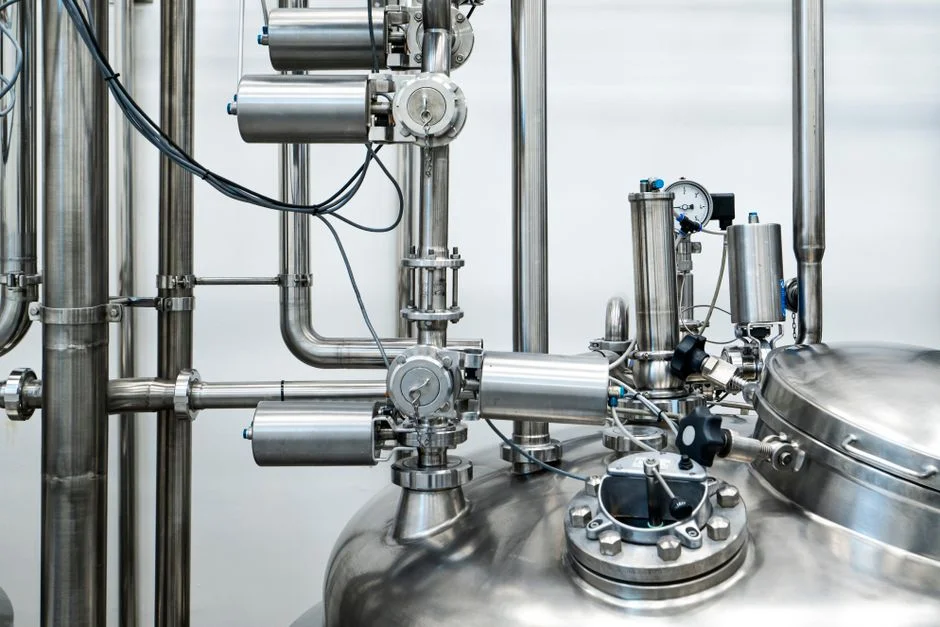
A supplier should size the system from measured flow, wastewater analysis, operating hours, batch profile, and applicable permit conditions. “Fabricated metals” is not a sizing basis. Require the vendor to identify which stream drives hydraulic capacity, which parameters drive treatment performance, how batch peaks are handled, and which permit conditions are design constraints.
Evaluate materials of construction against the actual corrosion exposure. GetChemReady identifies stainless steel, carbon steel, aluminum, and nickel alloys as common materials used in wastewater fabrication, with stainless steel valued for corrosion and rust resistance (GetChemReady, Metal Fabrication Applications in Wastewater). Do not select stainless steel by default: compatibility with process chemicals, wastewater chemistry, temperature, cleaning practices, and structural requirements should be documented.
Also evaluate automatic controls, overload protection, self-cleaning features, maintenance access, spare-parts support, installation footprint, and operator training. Ask for proposed performance criteria, a test protocol, commissioning criteria, and a written process-control narrative tied to the permit. A supplier should explain how the equipment responds to an upset, not only describe its normal operating mode.
Confirm whether the project also requires chemical storage, auxiliary sludge handling, odor control, or zero-discharge provisions. Those items affect the installation scope, operating labor, waste-disposal obligations, and compliance evidence. A regional pretreatment compliance workflow for metals plants can provide a useful cross-check on the sequence of permit review, characterization, treatment selection, and documentation.
| Vendor submittal | Required content | Buyer check |
|---|---|---|
| Sizing basis | Measured flow, analytical results, operating hours, batch profile, and permit basis | Confirm every design input is measured or expressly identified as an assumption |
| Process narrative | Unit sequence, operating ranges, alarms, controls, and response to upset conditions | Trace each response to a permit or treatment risk |
| Materials recommendation | Corrosion assessment and selected materials by wetted component | Check compatibility with wastewater and process chemicals |
| Performance and commissioning plan | Proposed criteria, test protocol, acceptance tests, and training | Make criteria objective and require records after commissioning |
| Project scope | Chemical storage, sludge handling, odor control, utilities, footprint, and installation | Identify exclusions that could affect startup or permit compliance |
Frequently Asked Questions
How do I size a DAF system for an Englewood fabricated metals plant?
Give the supplier measured flow, permit-based analytical results, operating hours, batch profile, and the oil, grease, FOG, suspended-solids, and colloidal loading that must be controlled. Have the supplier document the resulting duty and verify it through appropriate testing. The available 4–300 m³/h range and 13 standard models described in HydropureWater product information (2026) are selection boundaries, not a plant sizing recommendation.
Is chemical dosing enough to meet pretreatment limits?
No. Chemical dosing can support pH adjustment, coagulation, or flocculation, but it does not replace physical removal of solids, oil, grease, or other material that can cause pass-through or interference. The permit, characterization results, and treatment-function review must show whether chemical conditioning is sufficient or whether screening, DAF, clarification, or solids handling is also required.
What should I request from a wastewater equipment supplier?
Provide analytical data, flow and batch profiles, the applicable permit, available footprint, utilities, and sludge-handling requirements. Require a written sizing basis, proposed performance criteria, test protocol, commissioning criteria, process-control narrative, materials justification, and maintenance and training scope. This is a different check from price: it tests whether the supplier’s proposed system can be traced to site conditions.
How much does a compliant metals-wastewater treatment system cost?
The supplied research does not support a defensible price for this application. Request a scoped quotation that separates treatment equipment, civil work, installation, controls, chemical storage, initial chemicals, sludge handling and disposal, monitoring, commissioning, training, and maintenance. Ask the supplier to state exclusions and assumptions so equivalent scopes can be compared.
What is the biggest compliance risk for a fabricated metals discharger?
Uncontrolled batch discharges combined with inadequate monitoring are a major risk because the Williams Mullen enforcement summary from 2017-03-30 identifies alleged pass-through or interference, pH violations, slug-load notification failures, and flow-rate violations. Test the response through written operating procedures, alarms, calibrated flow control, permit-aligned sampling, retained records, and documented corrective actions.