
Separate the data center's wastewater streams first
RSP Engineers identifies cooling tower blowdown as the primary process-wastewater stream in most large-scale data centers and distinguishes it from domestic sanitary sewage. The project team should also inventory equipment-cleaning wastewater, softener or reverse-osmosis backwash, and air-handling condensate, rather than combining them into one design flow. Industrial wastewater such as cooling tower blowdown cannot be discharged through a stormwater system, according to RSP Engineers. Peak, average, and emergency flows must come from the facility’s design documents and operating records; the supplied research provides no El Paso-specific flow values.
This source-by-source inventory is the starting point for a data center cooling blowdown treatment framework. It also prevents a smaller cleaning stream from dictating treatment equipment sized for blowdown, or an intermittent dump from being missed during preliminary design.
| Stream | Primary design concern | Information required |
|---|---|---|
| Cooling tower blowdown | Concentrated minerals, treatment chemicals, suspended solids, temperature, and biocide residue | Measured flow profile, complete chemical analysis, and cooling-water program |
| Equipment-cleaning wastewater | Detergent, cleaning chemicals, suspended material, and variable pH | Cleaning frequency, batch volume, and product safety data |
| Softener or RO backwash | Regenerated brine, salinity, hardness, and treatment residuals | Source unit data, regeneration cycle, and disposal route |
| Air-handling condensate | Potentially variable pH and contamination from system components | Collection point, material of construction, and water analysis |
| Domestic sanitary sewage | Different wastewater characteristics and regulatory pathway | Fixture drainage estimate and separate sanitary permit coordination |
Characterize the blowdown before selecting treatment
Cooling tower blowdown contains concentrated dissolved solids and residual treatment chemicals because evaporation removes water while minerals and chemical compounds remain in the circulating loop. RSP Engineers therefore directs designers to evaluate pH, TDS, chlorides, sulfates, phosphates, temperature, residual chlorine or biocides, and copper or zinc where relevant. Its stated pH range of 6.0–9.0 and maximum temperature example of 150°F are examples, not El Paso limits; both must be confirmed with the receiving authority.
The operating baseline should follow the Genesis Water Technologies monitoring checklist: measure makeup water, blowdown, evaporation, conductivity, pH, and suspended solids. This supports an industrial wastewater flow metering guide based on measured conditions rather than the nameplate cooling-system calculation.
Cycles of concentration (CoC) describe how many times water circulates before dissolved solids require blowdown. Genesis Water Technologies reports a 25% blowdown ratio at 4 CoC and 20% at 6 CoC; the actual reduction is five percentage points, not the 50% that an assumed percentage calculation would suggest. Its monitoring findings also indicate that actual blowdown may exceed theoretical calculations by 15–30% because of unmeasured losses and emergency dumps. Use measured flow for equalization and treatment sizing, then test the proposed change in CoC against fouling, corrosion, and biological-control constraints.
| Measurement or calculation | Engineering use | Evidence or project requirement |
|---|---|---|
| pH | Assess corrosion risk and determine whether neutralization is needed | RSP Engineers gives 6.0–9.0 only as an example range |
| Conductivity and TDS | Track concentration performance and dissolved-solids load | Measure against site chemistry and receiving requirements |
| Suspended solids | Define filtration or solids-removal requirements | Genesis Water Technologies includes it in its baseline monitoring checklist |
| Residual chlorine and biocides | Identify dechlorination or biocide-management needs | Actual limit and treatment must be confirmed with the authority |
| Temperature | Establish cooling, holding, or thermal-impact requirements | RSP Engineers gives 150°F only as an example maximum |
| Makeup, evaporation, and blowdown flow | Calculate CoC performance and actual water balance | Use facility records and field measurements; supplied research gives no El Paso values |
Confirm El Paso's discharge and reuse pathway
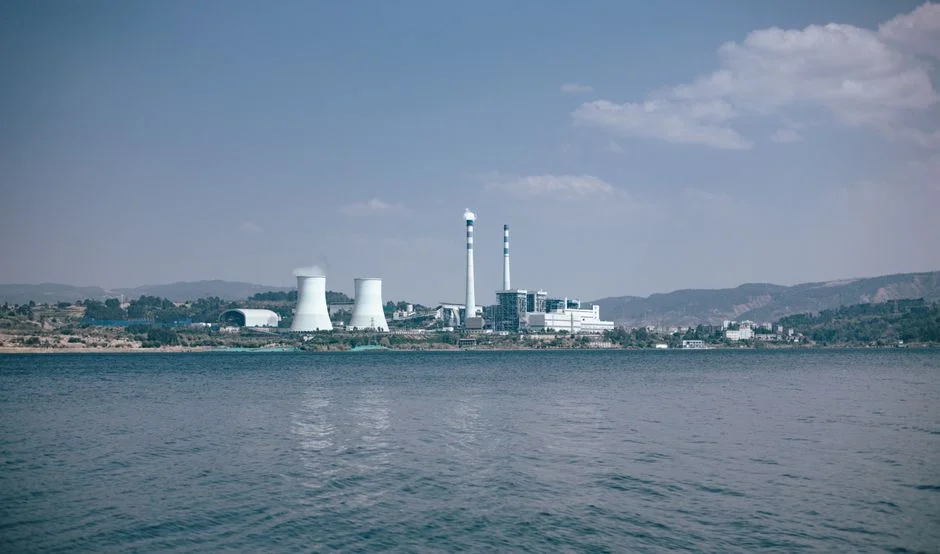
RSP Engineers identifies two regulatory pathways for industrial wastewater: connection to a public sanitary sewer under an industrial user permit, or direct discharge to a surface-water body under an NPDES permit. For an El Paso project, the selected route must be confirmed with the receiving sewer authority and other agencies holding applicable review authority. The industrial user permit governs sewer discharge; it does not disappear if the facility also pursues water reuse.
Engage the local sewer authority early and request the applicable pretreatment standards, connection fees, permit application process, flow and temperature limits, monitoring requirements, chemical restrictions, and discharge authorization conditions. RSP Engineers specifically warns that late discovery of restrictive limits can force redesign and schedule delay. A separate wastewater reuse guide for applications and compliance can help frame reuse objectives, but it does not replace project-specific agency confirmation.
Two local research records provide useful technical context: OSTI’s “Semiscale blowdown and Emergency Core Cooling (ECC) Project” and UTEP’s “Cost-Effective Recovery of Concentrated Cooling Tower Blowdown Using the CERRO Process.” Their titles establish relevant El Paso research topics, not current discharge limits, sewer pretreatment limits, or approval for a proposed treatment train.
| Decision | Primary pathway | Project-specific confirmation |
|---|---|---|
| Discharge to sanitary sewer | Industrial user permit and on-site pretreatment | Obtain applicable standards, limits, fees, monitoring, and chemical restrictions from the sewer authority |
| Direct surface-water discharge | NPDES permit | Confirm permit authority, application requirements, receiving-water conditions, and monitoring |
| On-site reuse | Water-quality and operating controls tailored to the end use | Define reuse application, acceptance criteria, storage, distribution, and cross-connection controls |
| Cooling tower makeup reuse | Advanced treatment, mass balance, and chemistry-control review | Project-specific technical demonstration and operations review |
Proposed reuse applications should be assessed separately because each places a different demand on water quality and control. Dust control, outdoor equipment washing, non-process uses, and cooling tower makeup should not be treated as one interchangeable demand.
Build the treatment train around the discharge risk
Equalization and flow control should precede unit operations because Genesis Water Technologies reports actual blowdown 15–30% above theoretical calculations. The equalization system must accommodate normal variability and the project’s documented emergency-dump condition without using a theoretical average flow as the equipment basis. Genesis describes a two-stage treatment approach: physical separation through media filtration or dissolved air flotation, followed by treatment for the specific contaminants that limit the selected reuse or discharge route.
- Equalize and control flow. Establish a measured water balance, provide required retention, and isolate upset or off-specification water.
- Remove solids and floating material. Select filtration or a DAF system for cooling tower blowdown pretreatment from the measured suspended-solids and treatment objective.
- Control pH. pH neutralization is a likely consideration for sewer discharge, but the receiving sewer authority must define the applicable limits and monitoring method.
- Address regulated chemical constituents. Where residual chlorine or specific biocidal compounds are regulated, provide dechlorination or evaluate non-persistent alternatives, as identified by RSP Engineers.
- Remove remaining contaminants. Add precipitation, ion exchange, specialized filtration, or other treatment only where the analysis and receiving requirement justify it.
- Polish for reuse where required. Apply filtration and, where justified, reverse osmosis when dissolved-solids control or higher-grade blowdown-to-makeup reuse requires it.
Automatic dosing should follow, not precede, the design basis. An automatic chemical dosing system for blowdown pH adjustment requires a defined target range, chemical-selection basis, storage plan, containment, and control logic; a pH-adjustment skid is not a substitute for treatment of metals, biocide compounds, or TDS.
| Condition | Applicable treatment step | Design basis to obtain |
|---|---|---|
| Variable flow or emergency dumps | Equalization and controlled feed | Measured flow profile, dump procedure, and storage requirement |
| Suspended solids or floating material | Filtration or DAF | Solid-loading test, settling behavior, and downstream protection requirement |
| pH outside the applicable limit | Neutralization | Receiving-authority limit, control range, and chemical compatibility |
| Residual chlorine or regulated biocides | Dechlorination or alternative biocide program | Specific constituent, permit limit, and residual measurement |
| TDS or dissolved constituents | RO, precipitation, ion exchange, or specialized separation | Complete analysis, target quality, recovery requirement, and concentrate disposition |
| Cooling tower makeup reuse | Advanced polishing and integrated controls | Mass balance, scaling risk, water chemistry, and operating capability |
Do not assume the cooling loop can be closed. Genesis reserves advanced blowdown-to-makeup integration for facilities with sufficient scale and operational expertise and identifies evaporation as the principal consumptive loss. That means reuse feasibility depends on the whole cooling system, not only the recovery equipment.
Size the equipment from flows, chemistry, and reuse goals
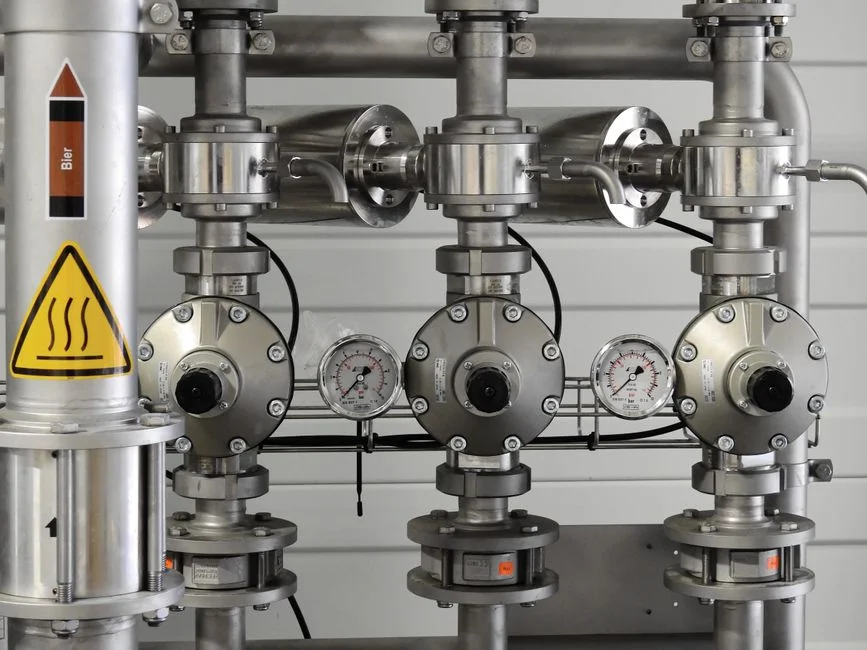
Equipment sizing should use measured average and peak blowdown, anticipated CoC changes, the emergency-dump allowance, and the selected reuse demand. Genesis Water Technologies describes modular 100–300 GPM blowdown treatment systems as appropriate for many enterprise and colocation facilities, but that range is a supplier reference, not an El Paso design value. The vendor must reconcile its proposed capacity with the site water balance.
Do not compare treatment vendors by nominal flow rate alone. Require treatment-capacity details for DAF, filtration, dosing, reverse osmosis, storage, and reuse pumping. Scope the supply around temperature, chemistry, controls, automatic backwash, containment, drainage, maintenance access, and sampling provisions. An RO system for dissolved-solids control and an ultrafiltration system for pretreatment answer different design problems and should not be selected by product name alone.
| Vendor input | Required content | Reason for inclusion |
|---|---|---|
| Flow basis | Measured average, peak, emergency dump, and selected reuse demand | Prevents undersizing from theoretical blowdown |
| Water analysis | Makeup, blowdown, suspended solids, dissolved constituents, temperature, and chemical package | Defines process and chemical needs |
| Destination | Industrial permit route or specified reuse application | Connects equipment to a measurable endpoint |
| Equipment performance | Flow, removal basis, recovery, controls, backwash, and redundancy | Supports a comparable proposal |
| Site requirements | Footprint, containment, drainage, utilities, access, and sampling | Integrates the treatment train into site design |
| Operating commitments | Chemical use, maintenance, monitoring, reporting, and consumable replacement | Tests whether the concept is operable |
Genesis provides one scale example: a 10 MW facility with 15 million gallons of monthly intake and a 25% blowdown ratio has 3.75 million gallons of monthly recoverable blowdown. This is an example, not an El Paso design value, and it should not be inserted into the project model without site-specific intake, blowdown, and reuse measurements.
Build the business case around avoided water and discharge costs
The financial case should compare total avoided cost rather than utility savings alone. Genesis Water Technologies states that the business case depends on accurately accounting for avoided costs. It also estimates that treated blowdown used for non-critical applications can reduce makeup-water demand by 15–25%; that estimate must be adjusted using measured reuse acceptance, demand, treatment performance, and site conditions.
Operating expenditure should include treatment chemicals, media or membrane replacement, energy, maintenance, monitoring, reporting, and disposal. Capital evaluation should also consider the treatment area, chemical storage, containment, utility connections, controls, and the operational labor required to keep the system compliant.
There is no defensible universal El Paso payback period in the supplied research because it provides no current local water, sewer, discharge, or energy rates. Obtain current utility tariffs, sewer connection and discharge charges, chemical bids, energy estimates, maintenance costs, and disposal quotations during feasibility design. A treatment-system business case for an arid U.S. facility can provide a comparison structure, but its local values must not be transferred to El Paso.
Frequently Asked Questions
How much should an El Paso data center budget for cooling blowdown treatment?
No defensible local budget can be calculated from the supplied research because it provides no El Paso cost or tariff data. Request measured flow and chemistry, the permit route, reuse target, site constraints, and current utility and disposal prices, then ask each supplier for capital, installation, consumables, energy, maintenance, monitoring, and concentrate-disposal costs.
Should the project choose DAF, filtration, or reverse osmosis first?
Choose from the contaminant and destination, not from a preferred product. DAF addresses suspended solids and floating material; filtration provides solids separation and protects downstream equipment; reverse osmosis is principally relevant where dissolved-solids control or higher-grade reuse is required. A complete water analysis and receiving specification must determine the sequence.
What information should be sent to a wastewater-equipment supplier?
Send the measured flow profile, water analyses for makeup and blowdown, the cooling chemical package, target discharge or reuse specification, applicable utility limits, site footprint, electrical and drain requirements, controls, and monitoring obligations. Also require treatment performance, chemical consumption, recovery, maintenance access, and sampling provisions in the proposal.
Can treated cooling blowdown be returned to the cooling tower?
Possibly, but not from blowdown chemistry alone. The project needs a water mass balance, treatment train, scaling and corrosion review, water-quality verification, control strategy, and operations review. Advanced integration should follow only when the site can operate and monitor it reliably.
What is the main compliance risk for an El Paso data center?
The main risk is selecting or operating a discharge route without confirming the applicable requirements. Do not combine process wastewater with sanitary sewage without agency coordination, and do not route process wastewater through a stormwater system. Confirm the sewer authority’s industrial-user requirements or the applicable NPDES pathway before committing equipment.