
What a CATL Mexico Expansion Changes for Wastewater
CATL’s Mexico wastewater should be handled as segregated, production-linked streams rather than one blended effluent. The comparative context is CATL’s planned 100 GWh Debrecen plant at $7.5 billion and approximately 40 European gigafactories planned to start by 2035, according to American Chemical Society, 2026. However, available research does not establish CATL’s confirmed Mexico site plan, wastewater flows, permit limits, or discharge route. Those facts require environmental due diligence before equipment scope is fixed.
A Mexico expansion should link treatment capacity to production phases, new cell formats, electrolyte recipes, cleaning frequency, water-reuse objectives, and tighter discharge requirements. The implementation principle is to map actual flow, COD, BOD, TSS, pH, conductivity, and metals before freezing equipment scope. See the comparison in How Should Wastewater Be Handled When Tesla Acquires a Gigafactory in Hungary?
Map the Wastewater Before Selecting Equipment
Battery cell manufacturing produces chemically distinct streams that cannot safely be treated through one generic industrial train. The CATL treatment source identifies cathode coating water carrying NMP and PVDF, anode coating water carrying CMC/SBR, electrolyte salt flush containing fluoride and phosphate, and general effluent combining boiler blowdown, HVAC condensate, and domestic sewage. A separate battery-manufacturing guide adds formation rinse with ammonia and dissolved lithium, plus CIP water containing oils, metals, and surfactants.
The cathode benchmark explains the segregation requirement: COD of 5,000–25,000 mg/L, fluoride of 50–500 mg/L, TSS of 500–3,000 mg/L, and pH of 2–4, according to the CATL wastewater source, 2026. The broader guide reports coating-condensate NMP at 5,000–50,000 mg/L. These are different scopes and should not be collapsed into one assumed design concentration.
| Production stream | Dominant contaminants | Required project data |
|---|---|---|
| Cathode coating water | NMP, PVDF, COD, suspended solids | Batch flow, NMP, COD, TSS, pH, oil |
| Anode coating water | CMC/SBR binder residues | Flow, COD, BOD, TSS, pH |
| Electrolyte salt flush | Fluoride, phosphate, metals | Fluoride, phosphate, conductivity, metals, pH |
| Formation and CIP | Ammonia, lithium, oils, metals, surfactants | Ammonia, lithium, oil, metals, surfactants, batch timing |
| Utility and sanitary | Boiler blowdown, condensate, sewage | Flow, COD, BOD, TSS, conductivity, seasonal demand |
Site characterization should also record seasonal recipe changes and the intended reuse or discharge destination for each stream. The framework in Mexico gigafactory wastewater permitting and stream segregation is relevant, but its values must be validated against the actual Mexico plant rather than transferred automatically.
Build a Treatment Train Around Source Segregation
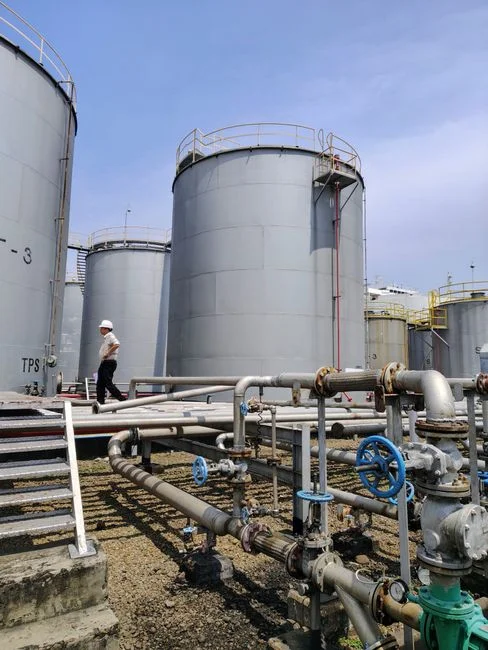
The recommended sequence protects solvent recovery, biological treatment, and membrane equipment from incompatible loads. Start with rotary bar screening, segregated collection, pH correction to 6–8, and equalization for 8–24 hours, according to the CATL wastewater source, 2026. Equalization should absorb batch dumps and coating swings before streams reach shared polishing.
- Protect the NMP recovery branch with suspended-solids removal and activated-carbon polishing before vacuum distillation. The CATL source specifies 50–100 mbar and 80–120 °C, recovering roughly 1–5 wt% NMP to above 99.5% reusable grade.
- Remove metals in stages. Ni and Co precipitate as hydroxides at pH 9.5–10.5; soluble Mn²⁺ is oxidized to MnO₂ at pH 10 or above. Calcium chloride then precipitates fluoride as CaF₂, with a target residual below 10 mg/L.
- Send the residual streams to an MBR membrane bioreactor for battery wastewater polishing. The CATL source specifies TSS below 1 mg/L and SDI below 3 before RO.
- Use an industrial RO system for Mexico factory water reuse. The CATL source specifies 70–80% recovery and permeate conductivity below 50 μS/cm.
- When ZLD is required, route RO concentrate to MVR evaporation and forced-circulation crystallization. The CATL source reports MVR consumption of 20–35 kWh per m³ of distillate.
Lithium remains soluble through practical hydroxide precipitation and reports to the RO concentrate, where the source describes possible recovery as lithium carbonate. DAF is preferable where oil or light batch solids make a lamella clarifier unreliable. Precipitation sludge should be dewatered with a plate-and-frame sludge dewatering press before licensed handling or metal recovery.
| Process block | Design role | Key boundary condition |
|---|---|---|
| Screening and equalization | Remove solids and absorb batch swings | Design from actual batch dumps |
| NMP recovery | Recover solvent for coating reuse | Protect distillation from solids and PVDF |
| Precipitation | Remove Ni, Co, Mn, and fluoride | Control pH and reagent staging |
| MBR | Remove residual organics and solids | Protect membranes from shock loads |
| RO | Produce reuse-grade permeate | Maintain the specified SDI feed limit |
| ZLD | Convert concentrate to distillate and salts | Confirm brine and sludge disposal routes |
Choose the Mexico Reuse and Discharge Strategy
Mexico’s reuse infrastructure is substantial, but an industrial reuse system still needs a defined quality pathway and accountable user. CONAGUA reported that municipal treatment plants processed 143.8 m³/s of wastewater in 2024; approximately 40% was directly reused and 53% was classified as indirect reuse, according to Mexico Business News, 2025.
The 2025 General Water Law amendments promote reuse, require compliance with Mexican Official Standards, and direct development of implementing regulations. The 2026–2030 National Water Program also promotes treated-water use in industry, landscaping, and agriculture. These are policy drivers, not confirmation of a CATL permit or reuse allocation.
| Configuration | Primary decision | Treatment implication |
|---|---|---|
| Discharge-led | Confirm discharge authority, route, limits, and monitoring | Includes discharge-quality polishing and residual-sludge controls |
| Reuse-led | Assign each outlet to an actual water user and quality specification | Adds RO and reuse-water verification |
| ZLD-ready | Reserve space and utilities for later membrane concentration, evaporation, and crystallization | Avoids retrofitting a constrained layout |
Cooling-tower makeup, toilet flushing, and landscape irrigation have different health, salinity, metal, fluoride, and monitoring requirements from electrode-coating or electrolyte-preparation reuse. The CATL source gives site-wide reuse of 70–90% as planning context, while the battery guide cites an 85–95% recovery target. Final recovery depends on site hydraulics, salinity, and end-use quality. The regional context in the Effluent Treatment Plant in Querétaro: 2026 Industrial Guide should be checked against CONAGUA, state, municipal, and applicable NOM requirements.
Plan for Ramp-Up, Compliance, and Future Expansion
Treatment capacity should be modular and linked to actual production ramps. Provide parallel trains, utility headroom, scalable PLC/SCADA input-output, and physical space for later membrane concentration, evaporation, and crystallization. These provisions allow added production to be handled without re-engineering the entire plant.
Online pH, flow, conductivity, TOC or equivalent organic monitoring, and fluoride measurement should feed chemical dosing and load control. The implementation case specifies individual-unit testing, integrated water tests, a 72-hour continuous run, and a 30-day performance validation before acceptance. That sequence provides an operating baseline rather than treating commissioning as a single switch-on event.
Operator handover should include preventive membrane cleaning, probe calibration, reagent management, sludge handling, remote support, and actionable alarm triage. A packaged treatment system can support these requirements, but the buyer must define responsibility at skid interfaces. Solvent recovery, reuse water, and metal-bearing sludge may create value; financial conclusions still require site-specific NMP quantities, reuse allocations, reagent prices, sludge classification, and disposal routes. Further procurement detail is available in the Querétaro domestic sewage treatment buyer guide.
A Decision Framework for Equipment Procurement
Choose the discharge and reuse destinations first, then fix the source-segregation boundary, and only then compare equipment packages. A generic quotation cannot replace a site-specific design basis.
- Request separate scopes for NMP recovery, fluoride and metals precipitation, MBR, RO, ZLD, sludge dewatering, controls, commissioning, and operator training.
- Require transparent sizing inputs: measured flows and loads, production schedule, batch dumps, end-use quality, discharge route, chemistry, utilities, and future-capacity assumptions.
- Evaluate suppliers on chemical mass balance, guarantees tied to measured influent and effluent duties, scale-up evidence, spare-parts support, and accountability across skid interfaces.
- Pilot the most consequential unknowns, particularly NMP recovery, fluoride precipitation, oil variability, and reuse-water quality.
The battery guide states that a full gigafactory above 500 m³/h can fall in a high-seven to low-eight-figure USD planning range when NMP recovery, biology, RO, and sludge dewatering are included. That is a scoped planning note, not a quotation for CATL Mexico. A buyer should request the flow basis, equipment list, P&ID boundary, battery limits, and commercial exclusions. The technical distinctions in MBR versus conventional activated sludge for chemical wastewater inform biological-scope evaluation.
Frequently Asked Questions
What treatment configuration should a CATL Mexico expansion select?
Select a source-segregated train with dedicated NMP recovery, fluoride and metal precipitation, MBR polishing, and RO where reuse requires it. Add ZLD only when the confirmed discharge route, brine handling, and lifecycle economics justify it.
How much does a battery gigafactory wastewater plant cost?
The battery guide identifies a high-seven to low-eight-figure USD planning range only for a full gigafactory above 500 m³/h including NMP recovery, biology, RO, and sludge dewatering. Request a site-specific quotation with flow, P&ID, battery limits, civil works, sludge disposal, commissioning, and reuse allocations shown separately.
When is pilot testing necessary before selecting full-scale equipment?
Pilot testing is warranted when stream chemistry, NMP recovery, fluoride loading, oil variability, or reuse-water quality remains unresolved. It should test the consequential assumptions under representative batch conditions before equipment guarantees are fixed.
Does the research confirm a CATL Mexico wastewater plant or permit?
No. The supplied research supports a treatment concept and Mexico compliance framework, not disclosure of a CATL Mexico plant, permit, discharge route, flow, or final equipment package. Confirm those items through CONAGUA, state, municipal, and site-specific due diligence.