What Treatment System Fits a Brasília Property?
Domestic sewage treatment in Brasília usually means choosing between a buried A/O package plant, an MBR system and a decentralized collection-and-treatment network. A package plant combines anoxic/aerobic biological contact oxidation, sedimentation and disinfection; the WSZ series handles 1–80 m³/h and can be installed below grade. For greater treatment compactness or reuse objectives, the WSZ series offers an alternative to an MBR system with sub-1 μm filtration and capacities of 10–2,000 m³/day. The right choice depends on verified wastewater flow and loading, available footprint, soil and groundwater conditions, discharge route, reuse requirements and the applicable Brasília authority’s approval and commissioning requirements.
Begin by classifying the application: residence, housing development, hotel, hospital, commercial property, rural facility or decentralized community. The WSZ series is explicitly offered for residential communities, hotels, hospitals, factories and rural areas, but that application list does not replace project-specific sizing. It is fully automated, can be buried below grade with landscaping above, and can also be mounted on a trailer for mobile deployment.
Next, identify the discharge pathway. A property connected to a sanitary sewer may need only pretreatment and connection works. A site without that connection may require an on-site domestic wastewater plant and an authorized discharge route. A cluster served by a decentralized sewage system adds collection infrastructure, multiple treatment assets and shared operating responsibilities.
Treatment objectives must also be separated. Basic domestic-sewage treatment, installation that preserves usable space, higher-quality effluent and water reuse are not interchangeable requirements. No unsourced Brasília discharge limit should be assumed: the competent authority and project designer must confirm the applicable approval, discharge and reuse conditions.
Map the Wastewater and Discharge Pathway
Hydraulic and biological loading must be established before asking a supplier to select equipment. Draw the intended process as wastewater source → collection or screening → biological treatment → solids separation → disinfection → authorized discharge or reuse. This pathway exposes where collection deficiencies, treatment-stage limitations or reuse obligations will affect the design.
Request daily flow, peak flow, wastewater-quality characterization, occupancy or population equivalents, operating schedule and expected expansion. The designer or owner should also document stormwater entry, process flows from kitchens or laundries, and any industrial or healthcare characteristics that differ from domestic sewage.
The US EPA’s Municipal Wastewater guidance explains that damaged or improperly connected sanitary sewers can admit large volumes of infiltration and inflow during wet weather. Such flows can cause sewer overflows and operational problems, while wet-weather flow increases can affect treatment efficiency, reliability and control of unit operations. The same source identifies combined sewers and separate sanitary sewers as the two major domestic-sewer designs.
| Site input | What to document | Why it changes selection |
|---|---|---|
| Wastewater generation | Daily flow, peak flow and occupancy basis | Establishes hydraulic and biological loading |
| Wastewater composition | Representative sampling and laboratory characterization | Indicates treatment and pretreatment requirements |
| Collection pathway | Separate or combined system; stormwater entry; infiltration and inflow | Wet-weather flow can impair reliability and treatment performance |
| Installation conditions | Soil, groundwater, flooding, access and available footprint | Controls excavation, anchoring, access and installation method |
| Final destination | Authorized discharge point or defined reuse application | Determines treatment-stage and monitoring requirements |
Record soil, groundwater, flood and installation-access constraints. The underground configuration does not remove those dependencies; the manufacturer still needs the site information to assess suitability. Where preliminary screening is required, evaluate the rotary mechanical bar screen as an upstream component only after confirming its duty basis and integration requirements.
Compare Buried A/O, MBR and Decentralized Treatment
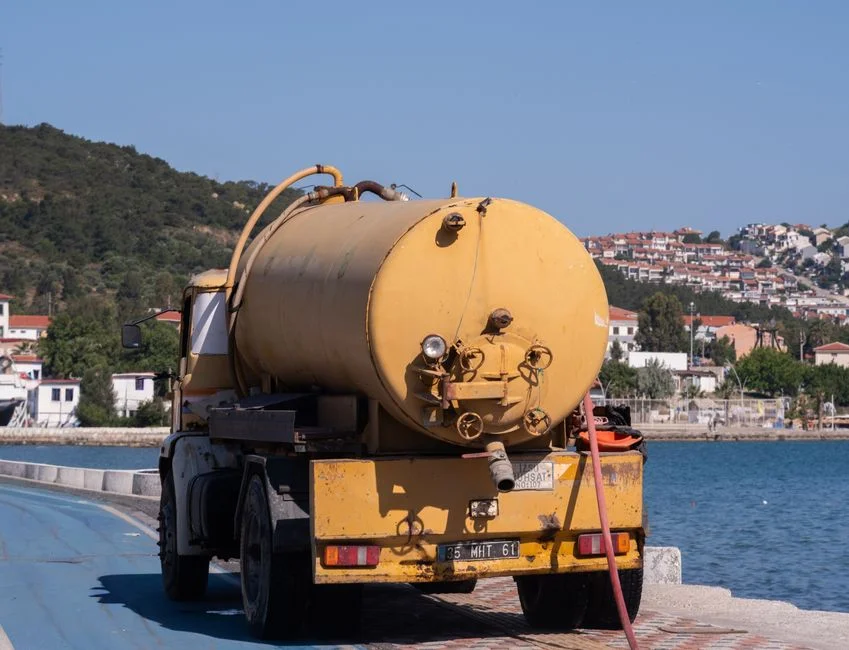
The three main deployment routes solve different collection and operating problems. A buried A/O package plant consolidates biological treatment, settling and disinfection; MBR adds membrane separation within a more compact process; decentralized treatment distributes collection and treatment assets across a development or community.
The WSZ series combines anoxic/aerobic biological contact oxidation, sedimentation and disinfection in one buried unit. HydropureWater’s verified product catalog describes it as fully automated, requiring no operator, with a treatment range of 1–80 m³/h. It can be installed below grade or mounted on a trailer for mobile deployment. These are published catalog capabilities, not a guarantee that any selected unit is suitable for a given site.
The integrated MBR combines activated sludge with submerged PVDF membrane filtration. Its published filtration performance is below 1 μm, its stated footprint is 60% smaller than conventional systems, and its capacity range is 10–2,000 m³/day. Those figures describe the catalog system. A project design must still demonstrate that the selected configuration meets the confirmed flow, loading, effluent objective and maintenance conditions.
The DF flat-sheet series is an MBR module-selection input rather than a complete-plant capacity claim. Its published specifications include a 0.1 μm pore size and 80–225 m² configurations producing 32–135 m³/day. Buyers should use the integrated MBR sewage treatment system and the buried A/O package sewage treatment plant to establish the bid boundary, then identify whether the DF module is included.
Decentralized treatment is appropriate when each property or cluster must be treated locally. Its comparison must include collection infrastructure, multiple treatment assets, monitoring and maintenance responsibilities rather than comparing only reactor capacity. Foreign regulatory examples, including US EPA material, are technical references and do not establish Brasília legal requirements.
| Decision dimension | Buried A/O package plant | MBR system | Decentralized network |
|---|---|---|---|
| Treatment train | A/O contact oxidation, sedimentation and disinfection | Activated sludge with submerged PVDF membrane filtration | Multiple local treatment assets linked to collection infrastructure |
| Published catalog range | 1–80 m³/h | 10–2,000 m³/day | Depends on the assets and collection design |
| Installation | Below grade with landscaping above; trailer option | Requires a defined equipment and maintenance layout | Requires coordinated works across properties or clusters |
| Filtration claim | Catalog treatment train does not establish sub-1 μm filtration | Below 1 μm | Depends on each selected treatment train |
| Operational responsibility | Fully automated; catalog states no operator required | Membrane cleaning, monitoring and replacement responsibilities must be allocated | Shared asset, network and monitoring management |
| Information still to verify | Site loading, groundwater, discharge route and approvals | Loading, reuse objective, footprint and membrane maintenance access | Collection topology, ownership, access, monitoring and local approvals |
Select Equipment by Capacity, Loading and Reuse Goals
Published capacity is a screening range, not a design duty point. The WSZ range of 1–80 m³/h and integrated MBR range of 10–2,000 m³/day should be used to identify candidate equipment categories. Final selection requires a documented calculation based on verified occupancy, wastewater generation, peak periods and future expansion.
Require the bidder to state the design flow, operating flow and peak-flow basis, then show how these values and wastewater characteristics drive organic loading, solids loading, hydraulic retention, biological treatment and disinfection. The WSZ A/O process and the MBR process should not be compared on nameplate throughput alone.
For water reuse, distinguish filtration from a complete reuse-treatment train. The integrated MBR system’s below-1 μm filtration does not, by itself, establish fitness for the intended reuse. Additional disinfection, polishing, reuse piping, validation and regulatory acceptance must be identified separately. Evaluate the chlorine dioxide generator or UV sterilizer only after the supplier defines the required treatment duty and application.
Sludge is part of the process scope. Ask whether removal, dewatering with a plate-and-frame filter press, transport and disposal are included. An operating concept must identify where solids accumulate, how often they are removed and who assumes final disposal responsibility.
| Sizing or selection input | Required evidence | Decision consequence |
|---|---|---|
| Flow | Daily and peak flow, operating schedule and expansion | Selects the hydraulic configuration |
| Wastewater quality | Representative characterization | Sets biological and solids loading |
| Treatment objective | Required effluent quality and reuse application | Determines treatment stages beyond the core process |
| Site constraints | Footprint, access, soil, groundwater and flooding | Controls installation and maintenance arrangement |
| Residuals | Sludge generation, removal, dewatering and disposal route | Defines operating and life-cycle obligations |
For monitoring programs that include microplastics, the 2026 study in Archives of Environmental Contamination and Toxicology validated its method using raw wastewater and dewatered sewage sludge and identified irregular fragments ranging from 0.1 to 3.0 mm. This supports a defined sampling and analysis scope; it does not establish a plant operating requirement.
Plan Installation, Commissioning and Maintenance
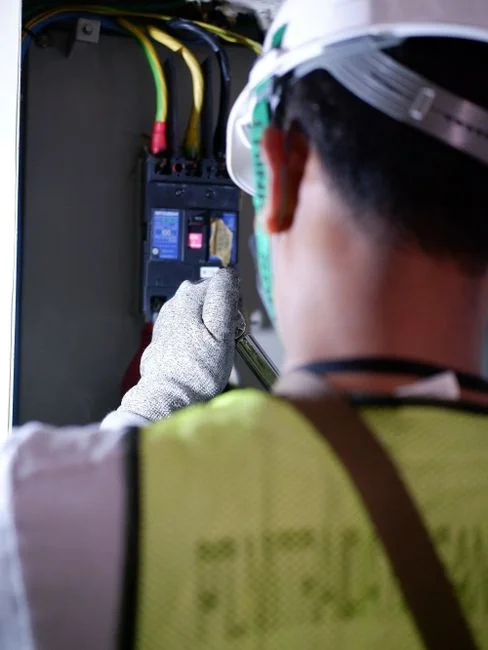
Installation planning must match the technology’s physical and service requirements. For a buried WSZ unit, obtain manufacturer confirmation of excavation, access, lifting, weather protection, electrical supply, control access, odor management and the interface with landscaping. These checks are part of site suitability, not optional construction details.
For an MBR system, reserve clear access for membrane maintenance, air scour and cleaning. The contract should identify fouling monitoring, membrane replacement, control-system integration and responsibility for specialized maintenance. For decentralized networks, define how access to multiple assets will be maintained without disrupting occupied properties.
Use stage-based commissioning. The study in Genetics and Molecular Biology evaluated crude sewage, primary effluent, secondary effluent and tertiary effluent as four distinct stages of a municipal wastewater-treatment routine. This supports separating performance evidence by process stage rather than relying only on a final sample.
Provide sampling points at inlet, biological treatment, solids separation, final effluent and sludge handling. Agree acceptance criteria with the designer and relevant authority; do not import numerical limits from another jurisdiction. The commissioning record should include the design basis, test method, operating condition, result and corrective action for each accepted test.
Build the preventive-maintenance schedule around pumps, aeration, membranes where applicable, screens, sludge removal, disinfection and control-system checks. If pretreatment is included, specify how the rotary mechanical bar screen is inspected and cleaned.
For microplastics monitoring, the 2026 Archives of Environmental Contamination and Toxicology study reports optimal Fenton digestion at 40–60°C for 2 hours and found ZnCl₂ best among the tested density-separation solutions for particle recovery. These are laboratory-method findings, not plant operating settings. For solids handling, define whether the plate-and-frame filter press is included and how cleaned filter media are managed.
Issue a Supplier Request for Proposal
A comparable request for proposal should separate verified equipment data from project-specific assumptions and Brasília approvals. Give every bidder the same confirmed site inputs and require written exceptions where information is missing.
- Request design flow, operating flow, peak-flow basis, wastewater assumptions, treatment process, dimensions, utility requirements and the proposed operating concept.
- Ask for the guaranteed duty point, process calculations, drawings, controls scope, installation boundary, training, commissioning plan, spare parts and warranty exclusions.
- Require evidence supporting the proposed route and a method for demonstrating performance across the relevant treatment stages.
- List exclusions explicitly, including sewer construction, pumping, sludge disposal, power supply, permits, reuse piping and major civil works.
- Compare delivered scope and life-cycle obligations rather than equipment price alone.
Specify valves, filter media and other service components only when their inclusion is technically justified. The water-treatment parts, valves and filter media reference can support a scope schedule, but catalog availability does not establish project suitability or price.
The supplied research provides no validated Brasília cost range. Obtain current, site-specific quotations that separately identify equipment, civil works, utilities, controls, sludge handling, commissioning, training and maintenance. Confirm that the quotation does not silently treat a permit, discharge authorization or reuse approval as an equipment supply item.
Frequently Asked Questions
How much does domestic sewage treatment cost in Brasília?
The supplied research contains no reliable local price range. Request site-specific quotations covering equipment, civil works, utilities, sludge handling, commissioning, training and maintenance. Require each bidder to identify exclusions so that a lower equipment price is not mistaken for a lower installed cost.
Should I choose a buried A/O package plant or an MBR system for a Brasília development?
Choose a buried A/O package plant when its published process range matches verified site loading and compact underground deployment is the priority. Consider an integrated MBR sewage treatment system when finer filtration, a smaller stated footprint or a defined reuse objective justifies the additional membrane-related requirements. Confirm maintenance capability, footprint, discharge route and local acceptance before deciding.
How do I size domestic sewage treatment equipment?
Size from verified flow and wastewater-loading data, not population alone. The published WSZ range is 1–80 m³/h, while the integrated MBR range is 10–2,000 m³/day. Require the supplier to show how verified occupancy, generation rates, peak periods, wastewater characteristics and future expansion produce the selected duty point.
What should I check before accepting a sewage treatment supplier’s quotation?
Check the design basis, process calculations, guaranteed duty point, treatment-stage testing, utility requirements, installation boundary, controls, O&M scope, sludge route, training, commissioning, spare parts and warranty exclusions. Also confirm that every local approval is identified as a client or designer responsibility rather than an unsupported promise that the equipment is already approved.
Which Brasília approvals and discharge requirements apply?
Confirm the current requirements with the competent Brasília authority and the project designer. The supplied research contains no authoritative Brasília rule or numeric discharge limit, so do not adopt a foreign example or catalog statement as a local legal requirement. The buried A/O package sewage treatment plant can be evaluated technically, but site-specific discharge, connection, installation and reuse conditions still require written confirmation.