Make the Treatment Decision from the Wastewater, Not the Equipment Name
A Los Angeles factory usually needs DAF when its wastewater contains removable oil and grease, suspended solids, or colloidal material and the treatment objective is physical separation before discharge or further treatment. DAF pressurizes wastewater—typically at 3 to 5 bar—then releases microscopic bubbles that carry contaminants to the surface for skimming. A broader effluent treatment plant is needed when biological, filtration, disinfection, or other unit operations are also required. The correct choice begins with representative wastewater tests, average and peak flow, receiving sewer or discharge requirements, and the intended reuse or disposal outcome.
“ETP” and “DAF” are not interchangeable equipment categories. Dissolved air flotation is a physical-separation process within a treatment train. An industrial effluent treatment plant is the broader system used to meet a defined discharge or reuse objective. Selecting the equipment name first risks a system that removes the wrong contaminants, omits necessary pretreatment, or is priced around unrealistic wastewater and flow assumptions.
The first branch is therefore straightforward: if the required removal centers on floatable oil, FOG, suspended solids, or colloidal material, evaluate DAF as the core separation stage. If the objective also requires dissolved contaminant removal, biological treatment, finer filtration, disinfection, or other polishing, evaluate a broader ETP or a combined train. The [decision framework for selecting an industrial DAF system](/blog/14147-what-industrial-etp-or-daf-system-does-a-boston-factory-need-2026.html) can be adapted to the factory’s discharge route rather than treated as a fixed configuration.
The destination must be established before equipment selection. A sewer discharge, a direct discharge under an independent permit, and internal reuse impose different treatment objectives. The facility name, address, and regulated-process context also belong in the compliance review: the California Water Boards document “Name and Location of Facility Inspected” shows that facility identity and location are compliance-relevant information.
| What the wastewater and objective show | Treatment decision | Still to establish |
|---|---|---|
| Removable oil, FOG, suspended solids, or colloidal matter; physical separation is the main objective | Evaluate DAF as the core treatment stage | Peak flow, pretreatment needs, outlet quality, and skummings destination |
| Biodegradable dissolved contaminants must also be removed | Evaluate biological treatment, with DAF if physical separation is also required | Biological loading, nutrients, toxicity, and final discharge or reuse criteria |
| Final use requires finer solids control or microbial control | Add filtration and, where required, disinfection | Required outlet specification and receiving authority or reuse criteria |
Collect the Factory Data Needed to Size the System
Representative wastewater characterization must precede sizing because both flow and contaminant variability determine the treatment architecture. A clean-water sample or an isolated cleanup sample will not establish the load entering a compact treatment unit during normal production. Collect samples across operating shifts and representative production conditions, including startup, stable production, and cleanup where those conditions can materially alter the wastewater.
Characterize flow as average flow, peak flow, production changes, batch discharges, and washdown events. A unit selected only from the daily average may be overloaded during a batch release or production surge. Conversely, sizing every stage for the shortest transient may impose unnecessary capital cost if that event can be equalized or routed differently. The engineering basis should state both the continuous flow condition and the transient condition the system must handle.
The analytical program should match the proposed removal mechanisms. For DAF, investigate suspended solids, oil and grease, FOG, and colloids where applicable. Record pH and the chemical conditions that affect coagulation or flocculation. Alantech’s DAF technical overview, published in 2026, states that chemicals may be mixed with the wastewater to aid flocculation; the selected chemical and dose cannot be fixed before wastewater testing and treatment objectives are established.
Also identify preliminary treatment requirements. The same 2026 Alantech overview identifies screening and sedimentation before DAF to remove large particles and settleable solids that could clog the flotation unit or create excessive buildup. The receiving sewer’s industrial-user requirements and any pretreatment documentation should be obtained rather than inferred from generic guidance. If a direct discharge permit or reuse specification controls, use those requirements as the compliance basis.
| Data item | Why it affects selection | Evidence needed from the factory |
|---|---|---|
| Representative wastewater characterization | Defines contaminant load and the applicable treatment mechanisms | Samples covering representative production and operating conditions |
| Average, peak, batch, and washdown flows | Establishes hydraulic and equalization requirements | Flow records plus the production schedule |
| Suspended solids, oil and grease, FOG, colloids, and pH | Indicates whether DAF is technically aligned and whether conditioning is required | Site-specific laboratory results |
| Discharge or reuse destination | Defines the outlet objective and downstream treatment | Sewer permit conditions, independent permit, or reuse specification |
Chemical dosing should remain an engineered requirement, not an assumed accessory. Once the required chemical, dose range, and operating sequence have been established, an automatic chemical dosing system can be specified and compared on that basis.
When a DAF System Is the Right Core Treatment
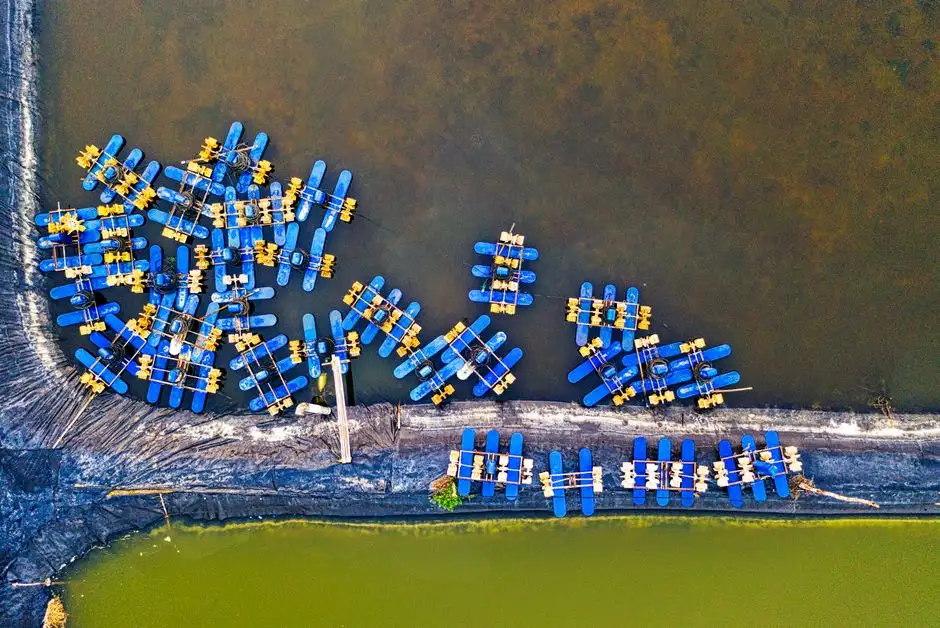
DOF separates floatable material by releasing dissolved air as microscopic bubbles in a flotation tank; the bubbles attach to suspended solids, oils, and greases, which rise and are removed by a skimmer. This makes DAF technically aligned with wastewater dominated by oil, FOG, suspended solids, or colloidal matter that can be conditioned and floated. It is not a substitute for biological, membrane, or disinfection treatment where those functions are required.
The operating principle is pressure-driven physical separation. Alantech’s 2026 DAF overview states that wastewater is pressurized with air, typically at 3 to 5 bar, and then depressurized in the flotation stage so the dissolved air forms tiny bubbles. Chemicals may be introduced to promote flocculation before flotation. The clarified stream leaves the process for further clarification, treatment, discharge, or reuse as required.
For preliminary sizing, HydropureWater’s industrial DAF system range covers 4 to 300 m³/h across 13 standard models for industrial wastewater containing suspended solids, FOG, oil and grease, and colloidal matter. This is a catalog screening reference, not a model selection. The selected unit must match the factory’s measured flow, wastewater load, pretreatment requirements, pressure-system arrangement, and outlet objective. The DAF unit specifications guide provides a framework for checking those project-specific requirements.
Screening and sedimentation should be added where the stream contains large debris or settleable material. Without that upstream protection, a flotation unit can clog, accumulate excessive solids, and lose operating reliability. The best DAF unit selection framework can then be used to compare pretreatment, pressure, skimming, and control assumptions.
| DAF suitability check | Engineering interpretation |
|---|---|
| Primary contaminants are oil, FOG, suspended solids, or colloids | DAF is a candidate core physical-separation stage |
| Large particles or settleable solids are present | Provide screening, sedimentation, or other defined pretreatment |
| Chemical conditioning is needed | Establish the chemical and dose through wastewater testing |
| The final use requires more than clarified water | Add the necessary clarification, filtration, biological, or disinfection stages |
DAF normally produces clarified water rather than complete reuse-quality water. The treatment objective determines what follows. A sewer-discharge basis may require additional stages where local limits or pretreatment rules apply; direct discharge and reuse typically require a more explicit treatment specification. The outlet should therefore be defined before the DAF is treated as the complete solution.
When a Full Industrial ETP Is Needed
A full industrial ETP is needed when the wastewater profile and final objective require unit operations beyond physical flotation. Flotation can remove floatable and suspended material, but it does not provide biological treatment, complete dissolved-contaminant removal, filtration to a specified solids level, or disinfection. The broader ETP becomes necessary when the receiving authority or reuse specification requires those functions.
Add biological treatment when the wastewater contains biodegradable dissolved material that must be removed. Do not assume that a DAF unit provides this treatment merely because it removes floating organics. Biological suitability requires an appropriate process basis and assessment of the wastewater characteristics and treatment objective.
Add filtration when the downstream process or discharge specification requires a lower suspended-solids level than the DAF outlet can consistently provide. Add disinfection when microbial control is required by the reuse application or receiving authority. These stages should be selected from the required outlet quality, not added simply because a broader treatment train is being quoted.
For industrial wastewater reuse requiring high-quality process water, a membrane stage may be needed after clarification. HydropureWater’s UF system for industrial wastewater reuse uses 0.03 micron PVDF membranes, accepts turbidity up to 300 ppm, and is stated to remove bacteria, colloids, and suspended solids without chemicals. When the objective is near-reuse-quality effluent and biological treatment is part of the train, the integrated MBR treatment system combines activated sludge with submerged PVDF membrane filtration below 1 micrometre and is offered from 10 to 2,000 m³/day. These figures describe the cited products, not a universal sizing range for every factory.
| Additional requirement | Stage to evaluate | Basis for inclusion |
|---|---|---|
| Biodegradable dissolved contaminants | Biological treatment | Wastewater characterization and required removal |
| Lower suspended solids than DAF can provide | Filtration or membrane treatment | Final process, discharge, or reuse specification |
| Microbial control | Disinfection | Reuse application or receiving authority requirement |
| Near-reuse-quality water with biological treatment | Integrated MBR | Combined treatment objective and project flow |
The decision boundary is not simply “DAF or ETP.” In many factory applications, DAF becomes the front-end physical separation stage in a broader ETP, while biological treatment, filtration, and disinfection follow according to the final use.
Build the Treatment Train for the Los Angeles Factory
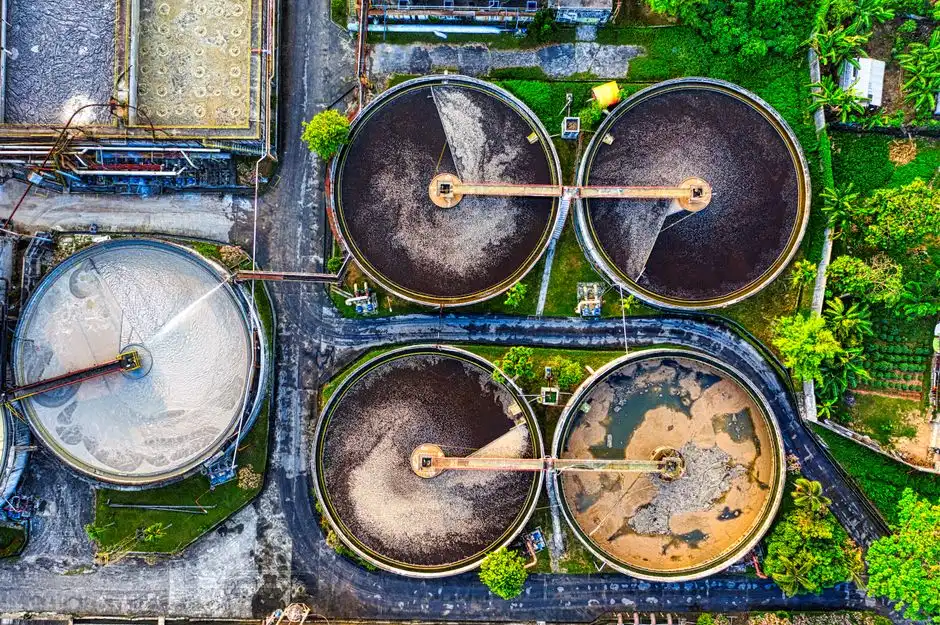
A defensible treatment train contains only the stages required by the wastewater profile, flow regime, and outlet objective. The sequence should begin with the contaminants and hydraulic conditions identified during characterization, then end with a defined discharge or reuse specification.
- Remove coarse material. Add screening where rags, plastics, fibers, or other debris could interfere with downstream equipment or interfere with flotation performance.
- Control hydraulic variation. Add equalization where production changes, batch releases, or washdown events could overload the treatment equipment. Define both the storage basis and the operating sequence.
- Remove floatable material. Use DAF as the primary physical-separation stage where wastewater contains oil, FOG, suspended solids, or colloidal material.
- Meet the final objective. Add biological treatment, filtration, membrane treatment, or disinfection only where the wastewater profile and discharge or reuse requirements demand them.
- Handle residuals. Route sludge and skimmings to an appropriate dewatering process. HydropureWater’s plate and frame filter presses offer filtration areas from 1 m² to 500 m² for industrial sludge separation, subject to project-specific selection.
The same sequence discipline applies to chemical-intensive stages. Specify automatic dosing only after wastewater testing has established the required chemical, dose range, and operating sequence. A mechanical screen is appropriate where debris is present, but it does not replace clarification; similarly, DAF does not replace sludge handling or downstream treatment.
The result should be a process flow with mass balance points: influent flow and contaminants, each treatment-stage objective, final flow and quality, and the destination of recovered oil, skimmings, sludge, and chemical waste. That sequence gives suppliers enough information to propose equipment, while leaving no room to price an incomplete treatment train.
Compare Quotes Using the Same Engineering Basis
Comparable quotes require the same wastewater, flow, and treatment assumptions. A tank price is meaningful only when the proposed scope and design basis are visible. Before comparing proposals, issue a common engineering basis to every supplier and require each response to state its assumptions against that document.
For every DAF proposal, require confirmation of the design flow basis, wastewater characterization, treatment objective, pretreatment assumptions, and proposed outlet quality. Confirm capacity, pressure-system basis, skimming arrangement, pretreatment requirements, and controls. The DAF cost and price-factor guide can help identify the commercial inputs behind the quoted scope, while project-specific engineering remains necessary for a North American DAF project case study to understand how operating conditions affected the application.
| Required quotation item | Question the buyer should ask |
|---|---|
| Design basis | Which average, peak, batch, and washdown flow conditions were used? |
| Wastewater basis | Which analyzed contaminants and operating conditions were used for sizing? |
| Scope of supply | Are screening, equalization, dosing, DAF, sludge handling, controls, piping, installation, commissioning, and downstream treatment included? |
| Performance basis | Which figures are guaranteed, which are expected under stated conditions, and which require pilot or site acceptance testing? |
| Commercial exclusions | Which permits, foundations, utilities, connections, taxes, and owner-provided items are excluded? |
Use HydropureWater’s DAF range of 4 to 300 m³/h across 13 standard models only as catalog screening. It can narrow the initial equipment category, but it cannot replace selection against representative wastewater, peak flow, pretreatment, controls, outlet quality, and installation conditions.
Frequently Asked Questions
Can a DAF system replace a complete industrial ETP?
Only when the required treatment is physical separation and the DAF outlet meets the applicable discharge or reuse objective. If biological treatment, filtration, disinfection, or dissolved-contaminant removal is required, DAF becomes one stage in a broader ETP rather than a complete substitute.
What flow rate does a Los Angeles factory need for a DAF unit?
The required flow cannot be selected from factory size alone. Provide average flow, peak flow, batch-discharge information, washdown events, and production changes; then size the unit around the operating condition it must actually handle. HydropureWater’s 4 to 300 m³/h range across 13 standard models is a catalog screening reference, not a project sizing conclusion.
How much wastewater testing should I provide before requesting an ETP quote?
Provide representative samples across production conditions and operating shifts, with results matched to the proposed treatment: suspended solids, oil and grease, FOG, colloids where applicable, pH, and the contaminants relevant to any biological, filtration, or reuse stages. Also provide flow records and the receiving sewer or permit requirements so suppliers quote the same objective and wastewater basis.
Should I choose DAF or biological treatment for factory wastewater?
Choose DAF when the main requirement is removal of floatable oil, FOG, suspended solids, or colloidal material. Choose biological treatment when biodegradable dissolved material must be removed. If both duties exist, use DAF for physical separation and biological treatment for its defined biological objective.
What should I ask a wastewater equipment supplier to include in a bid?
Require the supplier to identify the design flow, wastewater characterization, treatment objective, pretreatment assumptions, outlet quality, complete equipment scope, performance guarantees, test requirements, installation boundaries, commissioning responsibilities, and exclusions. Ask for pricing with these elements separated so that a lower equipment price is not hiding omitted treatment or installation work.
Related Equipment
- industrial DAF system — specifications, capacity range, and technical data