Why Sewage Treatment Is a Critical Rio de Janeiro Site Decision
Domestic sewage treatment in Rio de Janeiro in 2026 generally requires a project-specific choice between connection to an available public sewer, decentralized biological treatment, and pretreatment before a non-domestic discharge enters the network. The decision is shaped by collection access, wastewater characteristics, site space and discharge conditions. Academic research identifies untreated sewage as a continuing source of contamination in Guanabara Bay and its rivers. A 2026 report also states that Águas do Rio 4 applies a special tariff to non-domestic wastewater with organic loads above normal domestic parameters; affected users may challenge the classification with technical reports or install pretreatment. Therefore, engineers should characterize the wastewater, confirm the discharge route and applicable regulator requirements before selecting equipment.
The receiving environment explains why discharge feasibility cannot be treated as a secondary detail. The academic study Environmental and Sanitary Conditions of Guanabara Bay describes a drainage basin of 4,081 km² covering 16 municipalities, with approximately 16 million inhabitants in the bay’s surroundings. It identifies untreated domestic sewage discharged directly into Guanabara Bay or into basin rivers as a continuing sanitation issue.
That problem reflects infrastructure history rather than a simple statement that treatment capacity is now unavailable. The same study reports that the Program for Remediation of Guanabara Bay, or PDBG, began in 1994; several planned plants were not completed, while others were not fully functional or connected to collection and disposal systems. Its historical estimate for 2005 placed the collection and treatment deficit at 13 m³/s: 20 m³/s of untreated discharge and 7 m³/s of treated discharge.
Domestic sewage means wastewater primarily generated by residential activity or equivalent domestic use. Hotels, hospitals, housing developments and mixed commercial premises require site-specific characterization because their flow may include non-domestic contributions. A more detailed domestic sewage treatment buyer guide can support the process review, but the receiving route and applicable Rio requirements remain project-specific.
Confirm the Discharge Route Before Choosing Equipment
A nearby sewer line does not establish that a site has a lawful and technically available discharge route. The project must distinguish connection to a public sewer from on-site treatment followed by permitted discharge and treatment followed by entry into a public network; each route has different approval, characterization and operating obligations.
The commercial risk became visible in a 2026 dispute reported by Valor International on 14 September 2026. Águas do Rio 4 serves central and northern Rio de Janeiro and eight cities in the Baixada Fluminense, and began notifying affected companies between April and May. The reported special tariff applies to non-domestic wastewater with organic loads above usual domestic parameters because it requires a different treatment process.
Affected companies challenged the way classifications and charges were applied. Aegea stated that customers could submit their own technical reports to challenge the concessionaire’s findings or install pretreatment to qualify for an exemption. That makes wastewater evidence and the accepted treatment route part of the commercial decision, not a post-installation issue.
| Route | Pre-design evidence | Principal risk |
|---|---|---|
| Public-sewer connection | Flow data, wastewater composition, sewer ownership, connection location and written acceptance | Assuming proximity or available hydraulic capacity without confirmation |
| On-site treatment with permitted discharge | Confirmed receiving point, applicable discharge criteria, permit pathway and operating party | Selecting equipment before the receiving route is legally and technically defined |
| Treatment followed by public-network discharge | Non-domestic characterization, utility requirements, treatment performance and tariff treatment | Abnormal loads, surcharge exposure or rejection of the proposed discharge |
Before design, obtain verified flow data, wastewater composition, sewer ownership, connection location, easements, receiving point and the party responsible for long-term operation. Written confirmation from the relevant utility and regulator should be retained with the design basis. A disputed tariff cannot substitute for that confirmation, and the wider comparison with sewer-limit compliance planning illustrates the same need to test discharge assumptions.
Characterize the Wastewater and Map Compliance Risk
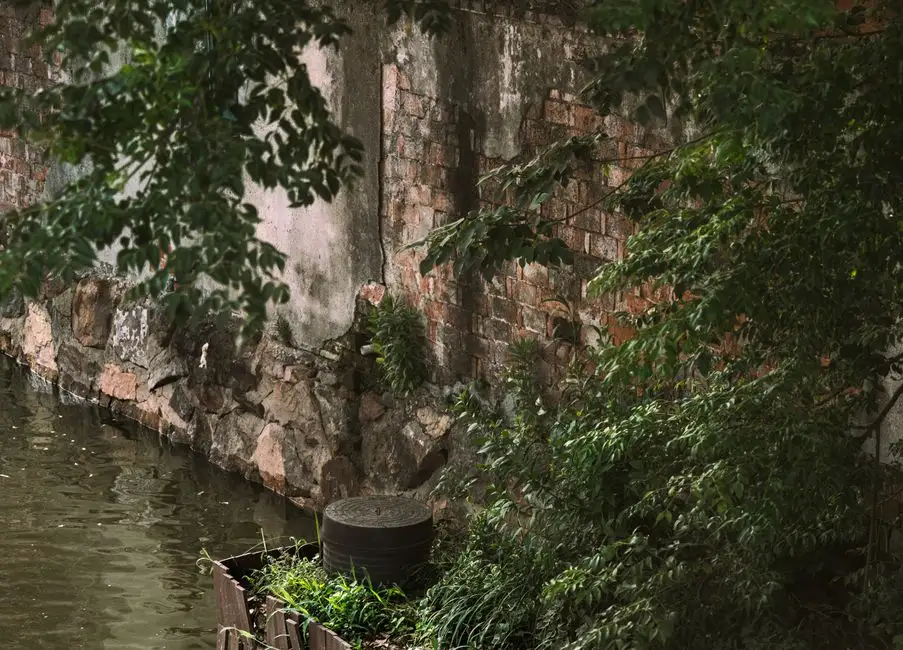
Equipment selection should begin with representative wastewater data, not population estimates alone. The supplied research does not provide a universal Rio de Janeiro loading profile, so the engineer must obtain flow and pollutant information for the specific occupancy, operating schedule and contributing activities.
For mixed domestic and non-domestic flows, request analyses that address organic load, suspended solids and the characteristics relevant to the proposed biological process. Valor International reported on 14 September 2026 that Águas do Rio 4 distinguishes domestic sewage from non-domestic wastewater with higher pollutant loads. The reporting does not establish one analytical threshold as the universal legal trigger, so the applicable criteria must be confirmed with the utility and regulator rather than inferred from the article.
The characterization plan should also address sampling points, operating periods and contributions that may dilute or obscure a discharge. This matters in disputed cases: the 14 September 2026 Valor International report described questions over sampling representativeness and whether analyses were conducted with customer participation. A defensible project record therefore documents sampling method, chain of custody, flow assumptions and the relationship between each analysis and the billed discharge.
| Characterization input | Question for the buyer | Use in design or acceptance |
|---|---|---|
| Representative flow | What are the verified average, peak and operating-period flows? | Hydraulic loading and capacity selection |
| Organic load | Does the discharge differ materially from normal domestic wastewater? | Process selection and utility-classification review |
| Suspended solids | What solids enter the proposed treatment route? | Solids handling and biological-process assessment |
| Discharge criteria | Which current written conditions apply at the receiving point? | Performance specification and acceptance tests |
| Sludge and residue route | Where will treatment residues be stored, dewatered and disposed of? | Site planning, operation and compliance evidence |
Sludge quality also requires project diligence. An Elsevier study examined heavy metals, PCDD/F and PCB in sewage sludge from two wastewater treatment facilities in Rio de Janeiro State. The site, process and disposal route determine which sludge and effluent evidence must be prepared for review; the supplied sources do not establish current numerical discharge limits, so none should be assumed. The separate MBR and conventional activated-sludge comparison provides process context, but it does not replace characterization of this wastewater.
Compare Buried A/O and MBR Treatment Packages
The primary packaged-system distinction is process architecture and physical scale, not an unsupported promise of universally superior effluent quality. The WSZ provides a fully integrated buried package, while the MBR combines biological treatment with submerged membrane filtration. Both must still be matched to the confirmed influent, receiving route and applicable discharge conditions.
According to the HydropureWater verified product catalog, the WSZ combines anoxic/aerobic A/O biological contact oxidation, sedimentation and disinfection in one buried unit. Its cataloged capacity is 1–80 m³/h. The catalog describes full automation, no operator requirement, installation below grade with landscaping above, and mounting on a trailer for mobile deployment. These are configuration options, not proof that every installation avoids attended operation or local civil works.
The MBR catalog describes activated sludge combined with submerged PVDF membrane filtration, with below-1 μm filtration and a cataloged capacity of 10–2,000 m³/day. It claims a 60% smaller footprint than conventional systems. Treat that as a catalog claim and use it for initial screening: the actual footprint still depends on the selected capacity, ancillary equipment, access, odor control and site constraints.
| Comparison point | WSZ buried package | MBR membrane bioreactor |
|---|---|---|
| Treatment route | A/O biological contact oxidation with sedimentation and disinfection | Activated sludge with submerged membrane filtration |
| Cataloged capacity | 1–80 m³/h | 10–2,000 m³/day |
| Installation concept | Buried package; catalog also describes trailer mounting | Compact packaged system; project footprint requires verification |
| Principal design question | Can the integrated package meet the confirmed flow, loading, footprint and installation conditions? | Can membrane separation, controls and maintenance provisions satisfy the confirmed effluent and operating requirements? |
| Best-fit screening condition | A project seeking an integrated below-grade treatment route | A project screening a membrane-based route across a broader cataloged daily range |
| Key limitation | Catalog capacity and automation do not establish site-specific compliance | Catalog footprint and filtration claims do not eliminate membrane maintenance or disposal conditions |
For preliminary comparison, the buried A/O sewage treatment plant and the MBR membrane bioreactor should be evaluated as alternative project configurations. Footprint, membrane maintenance, access, sludge removal and confirmed discharge conditions are the screening issues. Neither catalog establishes compliance for every Rio de Janeiro site, so final selection requires project calculations and written acceptance of the proposed discharge route.
Size the System From Verified Design Inputs
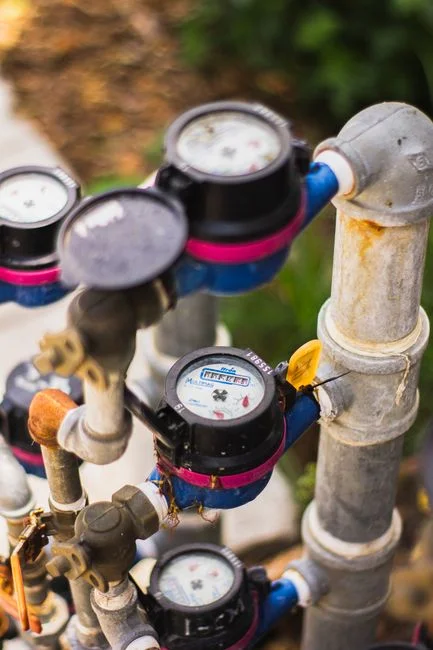
A defensible size follows verified flow, loading and discharge information through a defined design sequence. It does not result from selecting the nearest catalog capacity to an occupancy estimate.
- Establish the flow basis. Derive average and peak domestic flows from verified occupancy, operating schedules or metered discharge data. Record which sources are measured and which remain engineering estimates.
- Characterize the loading. Assess organic loading, suspended solids and any non-domestic contributions. Identify seasonal, weekend and operating-period variations that may affect biological loading or peak hydraulic demand.
- Select the treatment route. Apply the confirmed discharge requirements, then test available footprint, soil and groundwater conditions, odor controls, maintenance access, power supply and sludge-removal arrangements.
- Compare the process capacity. Check the selected design against the WSZ catalog range of 1–80 m³/h or the MBR catalog range of 10–2,000 m³/day, then apply the manufacturer’s design factors and local engineering checks.
- Validate and obtain acceptance. Confirm hydraulic and organic calculations with the supplier, verify installation requirements and obtain written acceptance of the proposed discharge route before procurement.
Two design checks must remain separate. First, confirm whether the selected process and equipment have adequate treatment capacity for the verified flow and load. Second, verify that the installed treatment train, controls, maintenance regime and receiving point will meet the applicable discharge conditions. A correctly sized unit can still fail the second check if the process is unsuitable, operation is not resourced or the discharge is not accepted.
The broader MBR versus conventional activated-sludge analysis is useful for understanding process differences, but the domestic package still requires project-specific hydraulic and loading calculations. For a mixed-use building, ask how the design responds if non-domestic operations expand or operating hours change. Future occupancy should be treated as a documented scenario rather than folded invisibly into the present load.
Where the flow and pollutant data are incomplete, record the gap in the design basis and request the missing evidence before procurement. The research provides catalog ranges but no universal Rio loading profile; filling that gap with an assumed loading rate would make the equipment comparison weaker rather than stronger.
Plan Installation, Operation and Commercial Acceptance
A packaged treatment system becomes an accepted project only when civil works, utilities, maintenance access, monitoring and residue handling are included in the scope. Equipment selection cannot resolve an unresolved easement, unavailable sewer connection or undefined operating responsibility.
The installation scope should address excavation or underground works, structural requirements, access for maintenance, electrical supply, controls, odor management, effluent sampling points, bypass strategy and sludge storage or removal. The supplier should state which activities are excluded. A buried system can reduce above-ground visual impact, but its underground construction, access provisions and commissioning sequence still need to be defined.
Commercial verification is equally important. The 14 September 2026 Valor International report states that Águas do Rio 4 allows affected users to submit technical reports challenging the classification or install pretreatment to qualify for an exemption from the special tariff. That provides a project route, not a blanket exemption. The wastewater characterization, treatment performance and proposed receiving point must support the position.
| Cost or acceptance item | Information to require | Acceptance evidence |
|---|---|---|
| Equipment and installation | Treatment package, freight, erection, underground or civil works and connections | Itemized quotation and approved submittals |
| Utilities and controls | Power, controls, instrumentation, odor control and access requirements | Confirmed single-line diagram and site layout |
| Commissioning and training | Tests, operating personnel, documentation and performance demonstration | Signed commissioning record |
| Monitoring and maintenance | Sampling plan, routine tasks, consumables and response to power interruption | Operating manual, schedule and maintenance record |
| Sludge and residues | Generation estimate method, storage, removal and disposal route | Documented handling plan and responsible operator |
| Performance obligations | Conditions, guarantees, corrective actions and responsibility boundaries | Contractual acceptance criteria tied to confirmed influent and discharge conditions |
The supplied research contains no reliable Rio-specific price range, so any budget should be requested as a transparent scope rather than built from an invented unit cost. Compare the treatment package with the plate-and-frame filter press or automatic chemical dosing system only where those items are actually required by the selected process and residue-handling strategy. Require commissioning records, operating documentation and demonstrated performance before final acceptance.
Build a Supplier and Compliance Checklist
A comparable proposal should expose the design assumptions, outstanding evidence and responsibilities behind the quoted equipment. Request project-specific process calculations and drawings rather than relying on a brochure capacity range.
Each supplier should state the design flow, treatment stages, treatment units, controls, materials, installation method, footprint, utilities, maintenance access and operating requirements. The response should identify missing data, the party responsible for sewer connection approval, permits and discharge acceptance, and the evidence supporting the proposed treatment solution.
| Supplier submission | Question the buyer should ask | Evidence needed for comparison |
|---|---|---|
| Design basis | Which verified flows, loads, discharge criteria and site assumptions were used? | Project-specific calculations and assumptions register |
| Process scope | Which stages, controls, sludge-handling provisions and ancillaries are included? | Process flow diagram, equipment schedule and drawings |
| Installation | What excavation, underground works, utilities, access and commissioning are included? | Scope boundary and site requirements |
| Resilience and operation | How does the system respond to non-domestic peaks, power interruption, odor and sludge accumulation? | Control narrative, maintenance plan and operating scenarios |
| Compliance responsibility | Who will obtain connection approval, permits and written discharge acceptance? | Named responsibility matrix and supporting correspondence |
| Lifecycle obligation | What consumables, service visits, monitoring and performance support are committed? | Offered scope, schedule and contractual acceptance criteria |
Ask how the proposed system responds to non-domestic peak loads, sludge production, odor control, power interruption and future occupancy changes. Compare offers on lifecycle scope and verifiable obligations, not only initial equipment price. The packaged sewage treatment options for housing developments provides a useful precedent for asking site-specific questions, but the Rio project must still be assessed against its own sewer route and permit conditions.
Shortlist only offers that identify what data remains outstanding. A proposal that treats connection approval or discharge acceptance as an assumption creates a commercial risk even if its treatment package is technically suitable.
Frequently Asked Questions
What should a domestic sewage treatment budget include in Rio de Janeiro?
Request a quotation that separates the treatment package from freight, installation, excavation or underground works, electrical and control connections, commissioning, training, monitoring, consumables, maintenance and sludge handling. The supplied research contains no reliable Rio-specific price range, so obtain project-specific quotations rather than relying on an assumed equipment-only price. Also establish which party bears permit, sewer-connection, power-connection and disposal costs.
How should a decentralized sewage treatment system be sized?
Start with verified average and peak flows, then characterize organic loading, suspended solids and any non-domestic contribution. Apply the manufacturer’s design factors and local engineering checks before comparing the project with the WSZ catalog range of 1–80 m³/h or the MBR catalog range of 10–2,000 m³/day. Capacity and discharge compliance remain separate checks: the proposed process and receiving point must also be confirmed.
Which questions should a buyer ask when selecting a treatment supplier?
Request project-specific calculations, drawings, process assumptions, utilities, maintenance access, control requirements and contractual performance criteria. The supplier should identify missing data and state who will obtain sewer connection approval, permits and written discharge acceptance. Compare lifecycle obligations and support, not only the initial equipment price or a catalog range.
What compliance risk applies to a non-domestic wastewater discharge?
Obtain current written requirements and characterize the wastewater before design. Valor International reported on 14 September 2026 that Águas do Rio 4 applies a special tariff to non-domestic wastewater with organic loads above usual domestic parameters. The report says affected users may submit technical reports challenging the classification or install pretreatment to qualify for an exemption; neither route should be selected without documented analysis and confirmation from the relevant parties.
When should a buyer screen an MBR instead of a buried A/O package?
Screen the buried A/O sewage treatment plant when an integrated below-grade route is central to the site concept; its cataloged range is 1–80 m³/h. Screen the MBR membrane bioreactor when submerged membrane filtration and a larger cataloged daily range warrant evaluation. The final decision must follow wastewater characterization, discharge conditions, footprint and maintenance review.