Which Rules Control a Pulp Mill Discharge Near Lawrence?
Pulp and paper plants near Lawrence, Kansas, meet sewer-discharge pretreatment requirements through two overlapping regulatory layers. Federal categorical standards apply under 40 CFR Part 430, while the receiving publicly owned treatment works may impose site-specific numeric or narrative local limits under 40 CFR Part 403.5(c). The mill must prevent pass-through and interference, demonstrate that its discharge will not impair POTW treatment or sludge handling, and control the discharge at the point of connection. Equipment should therefore be selected from verified wastewater data, the applicable subpart and the receiving authority’s current permit—not from generic mill assumptions.
The first step is matching the mill’s production operations to the correct categorical subpart. The supplied HydropureWater treatment overview, dated 2026, identifies Subpart C for bleached kraft mills producing market pulp, paperboard, tissue or fine paper, and Subpart B for dissolving kraft operations producing nitration, viscose, cellophane or acetate grades. A mill should not assume that “paper mill” identifies its category; pulping method, bleaching operations and finished product determine the applicable production basis and pollutant requirements.
The second layer is the sewer authority. Part 403 applies to indirect dischargers, and the POTW’s pretreatment program controls what enters its collection system. Under 40 CFR Part 403.5(c), local limits may address pass-through, interference, or best management practices. The POTW can also establish sampling frequency, self-monitoring and other discharge conditions, according to the HydropureWater overview from 2026.
Pass-through and interference are separate enforcement triggers. The 2026 overview cites 40 CFR Part 403.3(p): pass-through occurs when an industrial discharge causes a POTW permit violation; interference occurs when the discharge inhibits or disrupts POTW treatment, sludge processes or disposal.
| Control layer | What to establish | Procurement consequence |
|---|---|---|
| 40 CFR Part 430 | Mill subcategory, applicable subpart, production basis and regulated parameters | Define minimum treatment performance and monitoring scope |
| 40 CFR Part 403 | Federal pretreatment requirements applicable to an industrial user | Establish discharge-control and reporting obligations |
| POTW local limits | Current numeric or narrative requirements, BMPs and monitoring conditions | Set the binding site-specific design targets |
| Approved authorization | Current permit or discharge authorization, sewer-use ordinance and approved monitoring plan | Confirm that the proposed train matches the authority’s conditions |
No supplied source identifies the specific POTW, sewer authority or numeric local limits serving a particular mill near Lawrence. That limitation matters: the binding requirements must be obtained from the identified authority. Before purchasing, request the current discharge authorization, local limits, sewer-use ordinance, applicable categorical subpart and any approved BMPs. The pretreatment-limit framework for industrial facilities near Jasper and the Kansas City sewer-compliance guide provide useful process context, but neither substitutes for the Lawrence-area permit.
Build the Mill's Wastewater Compliance Basis
The treatment train must be designed from a segregated, representative wastewater inventory linked to the permit—not from a generic paper-mill wastewater profile. Create a process map for pulping, bleaching, screening, washing, coating, paper-machine housekeeping, fiber recovery and recycling. Mark where streams can be segregated, where they must be combined, and which operations can generate the most variable pollutant loads.
For each stream, request representative sampling that covers normal production, startup, shutdown, upset and cleanup conditions. The sampling program should measure flow, pH, suspended solids, BOD, color, AOX, chlorinated organics, metals, sulfides, oil and grease, temperature and any parameter specifically limited by the POTW. Sampling locations and methods should permit mass-loading calculations; concentration data alone cannot establish whether a proposed unit has adequate hydraulic and pollutant capacity.
The supplied HydropureWater overview from 2026 describes pulp and paper wastewater as highly variable and warns against treating industry benchmarks as substitutes for site data. That matters because a mill can change products, bleaching practices, operating patterns and recycled-fiber contributions without changing its nominal capacity. Equipment sizing should reflect verified peak flow, mass loads and operating envelopes rather than a production nameplate alone.
Historical context must remain clearly separated from current requirements. EPA’s 1973 Pulp and Paper Industry Effluent Limitation Guidance and Technical Documentation used maximum daily production as the basis for pulp and paper effluent-limit calculations. It also reported an aerated-lagoon trial producing effluent consistently below 30 mg/L BOD and 40 mg/L suspended solids, even during ambient temperatures below zero. Those are 1973 guidance and historical test results, not current Lawrence discharge limits.
| Design-basis item | Evidence required | Use in equipment selection |
|---|---|---|
| Mill classification | Process description, products and applicable Part 430 subpart | Defines the categorical compliance scope |
| Stream segregation | Sampling points and operating-condition records | Prevents incompatible loads from entering one unit |
| Hydraulic envelope | Representative flow measurements and operating scenarios | Sizes equalization and each treatment step |
| Pollutant envelope | Concentration and mass-load data for applicable parameters | Sets removal targets and removal mechanisms |
| Permit mapping | Requirement-to-equipment responsibility matrix | Identifies gaps before procurement |
Water-reuse objectives belong in a separate design track. The 2021 ACS Engineering paper, Opportunities and Challenges for Industrial Water Treatment and Reuse, supports the importance of industrial treatment and reuse, but a reuse target does not replace a permit-compliance calculation. The team should define whether reclaimed water will enter brown-stock washing, shower service or another application, then assess the additional treatment and operational controls that application requires.
Select Unit Processes by the Failure They Prevent
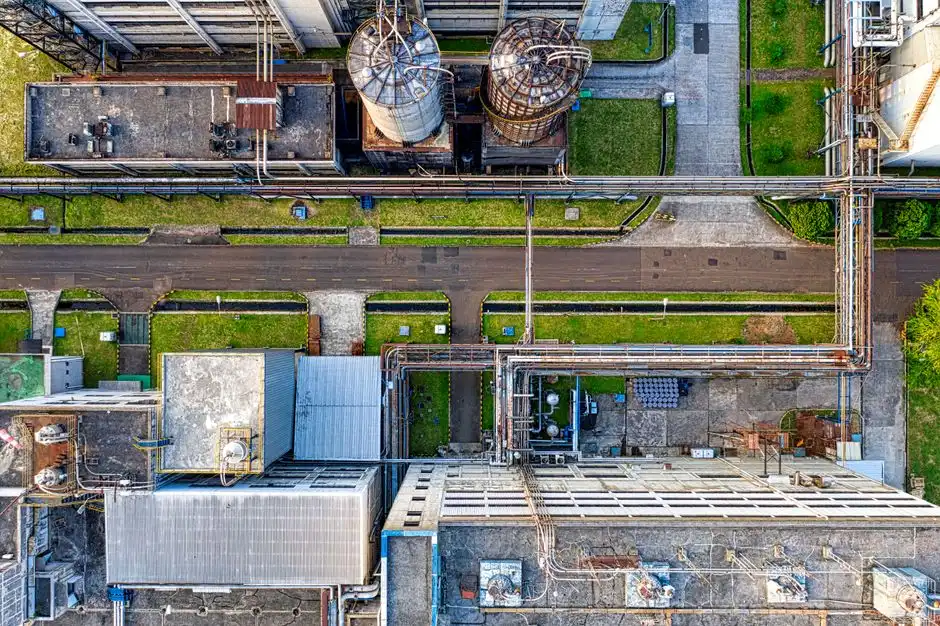
A defensible treatment train assigns each unit a specific compliance function: recover fiber, remove settleable material, capture colloidal solids and FOG, stabilize flow and pH, reduce biodegradable organics, polish regulated pollutants and handle the resulting sludge. The sequence is commonly fiber recovery and save-all, primary clarification, DAF, equalization and pH control, biological treatment, pollutant-specific polishing, monitoring and authorized discharge. Bleached kraft mills generally need additional attention to AOX and color because no single unit should be credited with removing every regulated constituent.
DAF addresses material that does not settle reliably in a primary clarifier. The supplied HydropureWater overview from 2026 identifies colloidal material, suspended solids, FOG and oil and grease among its target fractions in pulp and paper service. It reports 13 standard DAF models spanning 4–300 m³/h and typical paper-mill hydraulic loading of 15–25 m³/m²·h. These figures should be checked against verified mill flow, solids capture and recycle performance, not used as universal design inputs. Buyers can use the DAF system for pulp and paper pretreatment to evaluate an equipment scope, then require site-specific calculations in the proposal.
Biological treatment should follow the waste profile. Activated sludge remains a common option for biodegradable organics. Anaerobic treatment can suit high-strength streams, while an MBR combines activated sludge with submerged PVDF membrane filtration where footprint or low suspended-solids polishing justifies it. The MBR membrane bioreactor for mill wastewater polishing should therefore be selected by required effluent quality, hydraulic load, membrane configuration, cleaning strategy and life-cycle cost—not merely by nominal flow.
Equalization and automatic pH control protect downstream biology from sudden load and pH changes. Solids and FOG can burden collection systems and headworks; metals and sulfides can disrupt biological treatment; temperature and pH excursions can shift biological performance. These are interference pathways as well as equipment-selection issues. A treatment train should therefore demonstrate both end-of-pipe compliance and compatibility with the POTW’s biological and sludge operations.
Sludge is part of the treatment train. The 2026 commercial source reports plate-and-frame cake dryness above 30% with lime or polymer conditioning. The 2021 study Polyhydroxyalkanoate Production by Bacillus thuringiensis also investigated pulp and paper mill sludge as a feedstock for bioproduct recovery, demonstrating that sludge may have value beyond landfilling. Neither result removes the need to select dewatering equipment based on the upstream sludge’s chemistry and expected volume.
| Process step | Primary failure addressed | Selection evidence |
|---|---|---|
| Fiber recovery and save-all | High suspended-solids loading and recoverable fiber loss | Stream flows, solids inventory and recovery objective |
| Primary clarification and DAF | Settleable solids, colloidal material, FOG and oil and grease | Representative hydraulic and solids loads; required capture |
| Equalization and pH control | Variable flow, pH and pollutant shock loading | Operating scenarios, storage calculation and control strategy |
| Biological treatment | Biodegradable organics and treatment interference | BOD load, toxicity considerations and treatment objective |
| AOX/color or other polishing | Pollutants not adequately removed by upstream units | Permit parameter, constituent behavior and polishing target |
| Sludge dewatering | Residual solids handling and disposal readiness | Sludge chemistry, mass balance and conditioning assumptions |
Verify Performance Before the Sewer Connection
Commissioning should prove that the accepted treatment train performs as a system under representative mill loads. Verify flow distribution, pH control, solids capture, biological performance, polishing and sludge handling. Testing only individual pieces of equipment does not demonstrate how the complete train responds to startup, shutdown, production changes, cleaning cycles or upset conditions.
Use the POTW’s approved sampling point, analytical methods, monitoring frequency and recordkeeping requirements. The 2026 commercial source notes that the POTW may impose sampling frequency, self-monitoring and BMPs as discharge conditions. The commissioning plan should map each result to both the applicable Part 430 subpart and the POTW’s local limits; demonstrating only one layer leaves the other unverified.
Operating alarms need defined trigger levels and responses for permit parameters, including flow, pH, color, AOX, suspended solids, metals, sulfides, oil and grease or temperature as applicable. Automatic pH control for variable industrial wastewater can protect equalization and biological operations, but its performance still requires site-specific tuning. If an excursion occurs, the response plan should identify when to divert, reduce production, adjust treatment, sample or notify the authority.
| Verification stage | Required evidence | Acceptance basis |
|---|---|---|
| Factory and site readiness | Equipment inspection, utilities, controls, calibration and training records | Approved procurement specification |
| Hydraulic commissioning | Flow routing, level control, alarms and sampling confirmation | Approved commissioning plan |
| Process verification | Representative loads and unit-by-unit performance results | Guaranteed treatment objectives |
| Compliance verification | Analytical results from the approved sampling point | Part 430 subpart and current POTW limits |
| Operational handover | Operating manual, maintenance plan, spare parts and response procedures | Accepted performance test |
The 1973 EPA aerated-lagoon result—less than 30 mg/L BOD and 40 mg/L suspended solids—belongs in historical performance context only. It is not a current Lawrence-area requirement. The binding targets are the current permit, local limits and applicable categorical regulations.
Choose Equipment and Suppliers With Permit-Ready Proposals
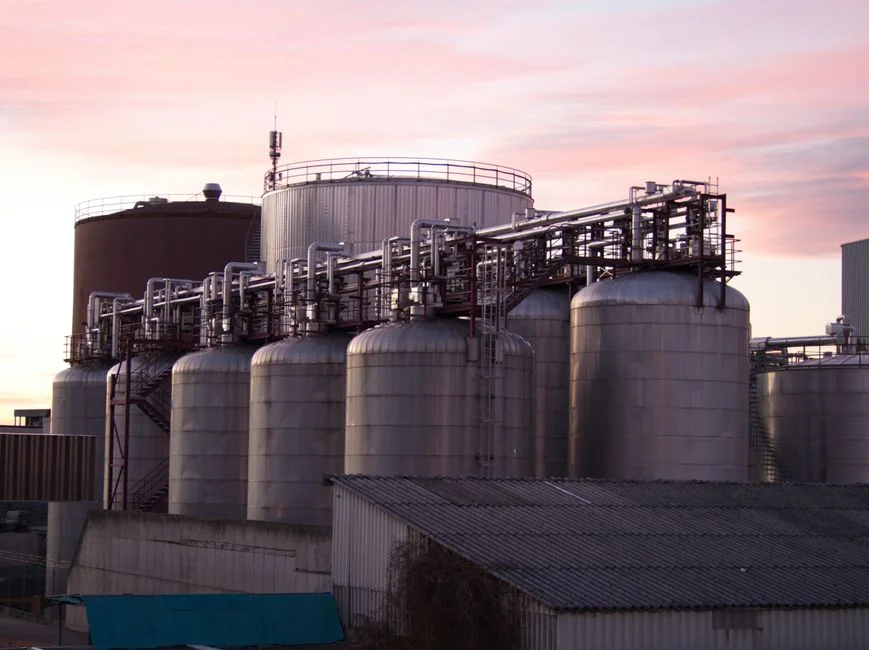
A comparable bid should identify the design flow, pollutant load, treatment objective, applicable discharge parameter, sizing margin and expected performance guarantee. Suppliers should state whether their proposal uses site-representative data or generic pulp and paper assumptions. Any omitted flow, pH, temperature, AOX, color, solids or locally limited pollutant information must be identified as a design hold point rather than silently filled with a supplier default.
Compare controls, automatic backwash or cleaning, chemical-dosing integration, sludge handling, spare parts, maintenance support and life-cycle operating costs. For DAF, require the proposed hydraulic loading and recycle performance to be reconciled with the mill’s verified flow and solids load. For an MBR, require the proposed solids target, membrane-cleaning strategy and replacement assumptions to be included in lifecycle cost. The ultrafiltration selection guide illustrates the broader requirement to connect equipment features with verified treatment objectives.
Treat the lowest capital bid as incomplete if it omits required pretreatment, equalization, sludge dewatering, controls, freight, installation, training or permit-support work. Request a responsibility matrix and an industrial ETP and DAF selection guide for basis-of-design review, but require the supplier to price the actual Lawrence-area scope. A permit-ready proposal should show which requirement each component satisfies and who remains responsible for gaps.
Frequently Asked Questions
What documents should a Lawrence-area mill request before purchasing wastewater treatment equipment?
Request the current POTW permit or industrial discharge authorization, site-specific local limits, sewer-use ordinance, applicable BMPs, monitoring requirements, Part 430 subpart classification and approved discharge point. Because the supplied research does not identify the authority or local limits for a particular mill, ask the mill’s existing regulator to identify the controlling POTW and the documents that must be incorporated into the design basis.
Is DAF alone sufficient for a bleached kraft mill, and what determines the final treatment train?
DAF normally addresses colloidal solids, suspended solids and FOG, but it does not establish compliance by itself. The final train depends on the mill subcategory, verified pollutant envelope, POTW local limits, reuse objectives and treatment mechanisms required for BOD, AOX, color and other applicable parameters. Part 430 and the POTW limits must both be addressed.
How should the mill size an MBR or DAF system to minimize purchase risk?
Require sizing from representative hydraulic and pollutant loads, not nameplate mill production or generic paper-mill values. The DAF bidder should reconcile flow, solids loading and recycle performance with its proposed equipment; the MBR bidder should document organic loading, membrane area, solids target, cleaning assumptions and replacement provision. Both should identify missing mill data as explicit assumptions requiring confirmation.
What evidence should an equipment supplier include in a compliance-related proposal?
Require a permit-to-equipment matrix, design-flow and mass-load calculations, treatment objectives, performance guarantees, control narratives, utility requirements, sludge balance, maintenance plan, spare parts, installation exclusions and lifecycle costs. Ask for supporting data and identify which results are measured values, guarantees or modeled predictions. A generic equipment schedule is not adequate compliance evidence.