
Transportation Equipment Wastewater in Piqua: What Needs Treatment?
For transportation-equipment wastewater in Piqua, MBR is usually the stronger option when the facility has limited space, variable flows, a high reuse objective or needs consistently low suspended solids. Conventional activated sludge remains attractive when flows are predictable, land is available, capital budget is limited and the team has activated-sludge operating experience. An MBR combines biological treatment with membrane separation instead of a secondary clarifier; supplied technical guidance indicates that this can produce a footprint up to 50% smaller than conventional treatment. Neither option should be selected until oily wash water, paints, cleaners, metals and sanitary flows are characterized because pretreatment, sludge handling and local discharge requirements can outweigh the nominal technology advantage.
The first step is a stream-by-stream mass balance, not a technology comparison. A vehicle or component wash line, maintenance-floor drainage, paint or coating wastewater, industrial process water, stormwater, employee sanitary wastewater and hauled waste should be listed separately before the buyer determines whether they share a sewer connection. Batch washing and intermittent discharge can create hydraulic and organic peaks; AUC Group states that MBR can accommodate hydraulic and organic-load fluctuations better than conventional treatment.
Request a 12-month flow record plus peak-hour and peak-event data. The chemical record should include COD, BOD, oil and grease, total suspended solids, pH and temperature, along with any detected metals or priority pollutants. Missing seasonal data or unrepresentative grab samples make equipment sizing unreliable.
| Facility stream | Treatment issue to verify | Likely process or decision before biology |
|---|---|---|
| Vehicle and component washing | Detergents, suspended solids, oil and variable wash-batch discharge | Screening, equalization and source segregation; assess whether dissolved air flotation equipment is appropriate for recoverable free oil |
| Oily floor and maintenance drainage | Free oil, emulsified oil, grit and episodic flow | Intercept and pretreat separately; do not send uncontrolled oily runoff to the biological process |
| Paint or coating wastewater | Biodegradable organics, pH excursions and possible metals | Control at source; characterize before deciding on biological treatment |
| Industrial process wastewater | Variable load, temperature and batch discharges | Equalization, pH correction and load-specific pretreatment |
| Stormwater | Sediment, oil and event-driven flow | Determine whether exclusion, segregation or separate treatment is required |
| Sanitary wastewater and hauled waste | Organic load, pathogens and hydraulic contribution | Account for hydraulic and organic loads; use a mechanical bar screen where screening is required |
The buyer must also verify current Piqua discharge or industrial-pretreatment requirements with the receiving authority. Neither an MBR nor conventional activated sludge has a universal permit classification; sewer location, receiving point, discharge characteristics and reuse plans determine the applicable requirements.
How MBR and Conventional Activated Sludge Work
Conventional activated sludge separates biological treatment from solids separation: microorganisms oxidize organics in an aeration tank, a secondary clarifier settles the biomass from the treated liquid, and part of the settled sludge is recycled to maintain the active culture. MBR combines those functions by placing membrane solids separation inside the biological process train.
For MBR, a suspended-growth bioreactor supports bacteria and protozoa that consume organic matter. The membrane then retains the biomass and passes the separated liquid. PCI Membranes describes aerobic, anoxic and anaerobic bioreactors: aerobic configurations remove organic matter and oxidize ammonia, anoxic configurations remove nitrogen from nitrates, and anaerobic configurations remove organic matter under oxygen-free conditions. The selected biological regime must match the discharge objective rather than the equipment name alone.
Both microfiltration and ultrafiltration can serve as MBR separation media. PCI Membranes identifies ultrafiltration as the preferred MBR choice because of its separation characteristics and lower pore-clogging tendency relative to microfiltration; that source also notes that ultrafiltration can remove some colloids and viruses. This is a membrane-selection principle, not proof that every membrane material or geometry will suit a specific oily or paint-bearing wash stream.
PCI Membranes associates pressure-driven membranes with smaller installations and difficult industrial wastewaters, while submerged membranes are generally associated with medium and large installations. A submerged integrated MBR membrane bioreactor system replaces the clarifier with membrane modules, but it does not remove the need for equalization, solids protection, controls, sludge removal or membrane maintenance.
The practical definition is therefore narrow: an MBR is a bioreactor with membrane solids separation; conventional activated sludge is a bioreactor followed by secondary settling. Biological removal of soluble organics still depends on wastewater characteristics, loading, pH, temperature and toxic or inhibitory inputs.
Side-by-Side Comparison for Industrial Treatment
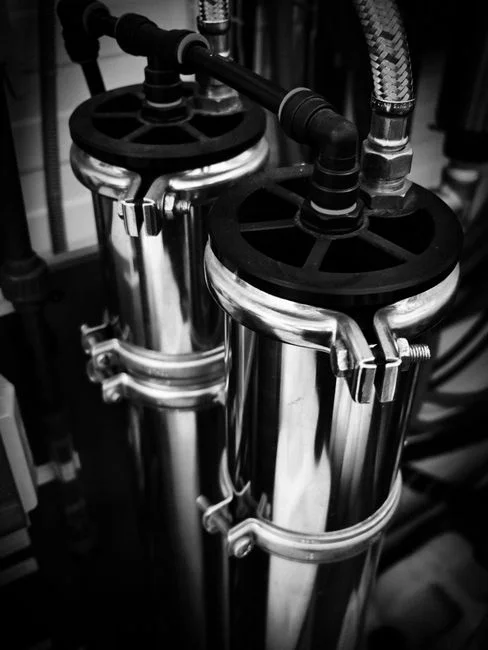
MBR and conventional activated sludge both use microorganisms for biological treatment, but they differ most clearly in how solids are separated and how much biomass can be retained within the treatment footprint. That difference influences civil works, reuse potential, maintenance obligations and the evidence a bidder must provide.
| Procurement issue | MBR | Conventional activated sludge |
|---|---|---|
| Biological treatment | Suspended-growth bioreactor with membrane solids separation | Aeration tank followed by secondary clarification and sludge recycle |
| Solids separation | Membrane modules retain biomass; no separate secondary clarifier arrangement | Secondary clarifier provides settling; return activated sludge maintains biomass concentration |
| Footprint | PCI Membranes reports up to 50% smaller footprints for properly designed MBR systems | Requires aeration, secondary settling, recycle and associated site area |
| Effluent behavior | PCI Membranes describes effluent as free of suspended solids with reduced bacterial and viral content | Clarification-dependent; additional filtration may be needed for comparable reuse quality |
| Operational control | Fouling monitoring, cleaning, air scouring, membrane replacement and controls | Stable aeration, settling, recycle, sludge wasting and odor control |
| Reuse pathway | Can provide a polished stream for suitable reuse or direct reverse-osmosis feed where justified | Normally requires additional clarification and filtration for the same objective |
| Cost basis | Price pretreatment, membranes, electricals, energy, cleaning, replacement and sludge handling together | Price basins, aeration, clarifiers, recycle, civil work, sludge handling and operations together |
Both routes can retain substantial microbial biomass, so “MBR always treats better” is too broad. The more defensible comparison ties the biological objective to the separation method, hydraulic profile and reuse target. AUC Group describes MBR as an enhancement of activated sludge in which membrane filtration replaces the settling tank, improving solids separation while retaining the basic biological treatment principle.
The footprint claim still requires drawing review. PCI Membranes states that a properly designed MBR can achieve up to 50% smaller overall footprint, while the HydropureWater verified product catalog gives a 60% smaller-footprint claim for its integrated system. These are supplier-specific benchmarks, not guarantees for a Piqua installation; pretreatment, equalization, access clearances and maintenance space can determine the installed result.
Do not compare equipment prices alone. Use the MBR wastewater membrane bioreactor cost per m3 guide as a scope prompt, then require equivalent lifecycle scopes: equipment, pretreatment, civil work, electrical, energy, membrane replacement, chemicals, sludge handling, operator labor and disposal. For CAS, include clarifier and recycle-system maintenance; for MBR, include membrane cleaning and replacement access.
Where Conventional Activated Sludge Can Be the Better Business Case
Conventional activated sludge is the better business case when predictable flow and load, available land, process familiarity and straightforward operation outweigh the reuse or footprint benefits of MBR. AUC Group describes CAS as an established, robust biological process widely used for municipal and industrial treatment.
The economic test is whether the avoided footprint, lower suspended-solids effluent and simpler downstream reuse path justify the additional membrane capital, replacement, cleaning and specialist service associated with MBR. That comparison must use the facility’s measured load and actual site geometry. A supplier’s general footprint percentage cannot substitute for an installed-layout estimate.
CAS remains credible when the required discharge quality can be achieved consistently through stable biological treatment and clarification, reuse demand is limited, and the operating team already understands sludge wasting, aeration and settling. The design must still provide room for clarifier performance, sludge removal, aeration capacity, nutrient management, odor control, maintenance and future expansion.
Industrial inputs can change the operating risk. WaterWorld identifies the Strathkelvin Instruments ASR activated-sludge respirometer as a tool for testing toxic shock loads entering a wastewater treatment plant. That makes respirometry relevant where wash chemicals, coatings or other industrial constituents could inhibit activated-sludge biomass. A toxicity test can distinguish an upset caused by incoming chemicals from a mechanical or settling problem.
Before retaining CAS, obtain measured sludge-settling behavior, aeration and oxygen-transfer data, recycle requirements, sludge-wasting routes and a clear operating-response plan for chemical or oily loading events. The review of proven BOD-reduction practices is useful for checking whether upstream load reduction can lower biological demand, but it should not replace site testing.
Where MBR Offers the Stronger Fit
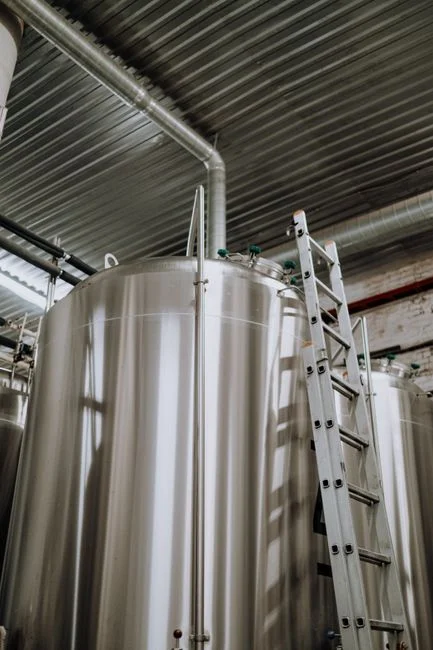
MBR offers the stronger fit when available floor area is restricted, flow or load varies, continuously low suspended solids are important, or the treated water must support reuse or reverse-osmosis pretreatment. Its advantage is the combination of retained biomass and membrane separation, not the ability to accept untreated oil, paint or metals.
The HydropureWater verified product catalog describes an integrated MBR combining activated-sludge treatment with submerged PVDF membrane filtration, filtration below 1 μm, a 60% smaller footprint than conventional systems and capacities from 10 to 2,000 m³/day. The DF-series product information identifies submerged modules with 0.1 μm PVDF membranes, integrated aeration for continuous scouring, individually replaceable elements, available membrane areas of 80–225 m² and capacities of 32–135 m³/day.
| MBR selection parameter | Buyer check for a transportation facility |
|---|---|
| Design flow and load | Require average flow, peak-hour flow, peak-event flow, COD, BOD, suspended solids and load duration |
| Membrane material and geometry | Confirm PVDF or another specified material, configuration, replacement method and compatibility with the selected cleaning chemistry |
| Fouling strategy | Review solids loading, air scouring, cleaning frequency, chemical recovery and access for withdrawn elements |
| Installed footprint | Include equalization, pretreatment, sludge removal, electrical equipment, clearances and maintenance access |
| Controls and guarantees | Ask for P&IDs, controls narratives, alarm strategy, performance guarantees and operator training |
| Source control | Keep oily runoff, paint wastewater, metals and incompatible cleaners outside the MBR unless pretreatment is verified |
For a compact installation, compare the claimed footprint with the complete plant layout rather than the bioreactor vessel alone. Evaluate the submerged DF-series MBR membrane modules against the wastewater’s expected solids loading, peak flux demand, cleaning chemistry, replacement access and supplier support.
MBR remains part of a treatment train. Source control, equalization and appropriate pretreatment protect the biological process and membrane. The MBR versus activated sludge comparison for industrial wastewater reinforces the need to match technology to industrial characteristics; oily vehicle-wash and paint-related streams require separate verification rather than direct application of another sector’s conclusion.
A Practical Selection Framework for Piqua Facilities
A defensible Piqua selection begins with measured wastewater data and ends with comparable performance, operating and lifecycle scopes. The framework below can structure a site meeting, pilot scope or request for proposal without treating MBR or CAS as universally preferable.
- Document the design basis. Obtain 12 months of flow records, peak-hour and peak-event flows, COD, BOD, oil and grease, suspended solids, pH, temperature, metals and priority pollutants. Record current sewer limits and the intended reuse endpoint.
- Eliminate unsuitable options. Review toxicity, inhibitory compounds, oil and grease, suspended solids, pH, temperature and upstream segregation. Identify where equalization, DAF, pH correction or another source-control step is mandatory.
- Rank non-negotiables. Set available footprint, compliance route, reuse quality, redundancy, operator competence and maintenance access as pass/fail criteria before comparing price.
- Build equivalent lifecycle scopes. Include equipment, pretreatment, civil work, electrical, energy, chemicals, labor, sludge handling, disposal, membrane replacement or clarifier maintenance, and replacement parts.
- Resolve uncertainty by testing. Where variability, toxicity or reuse performance remains uncertain, require a pilot or side-by-side performance test before the final equipment order.
Each bidder should state design flow, average and peak load, membrane type, cleaning method, controls, utilities, performance guarantees, operator training, spare parts and local service support. The MBR versus activated sludge comparison for chemical wastewater is relevant because industrial chemical inputs require characterization before biological performance can be compared.
| Decision gate | Evidence required before proceeding |
|---|---|
| Source control | Stream map, segregation plan and measured oil, grease, paint, cleaner and metal characteristics |
| Hydraulic and load basis | Historical flow, peak-event data, load ranges, equalization calculation and future-growth allowance |
| Treatment fit | Process flow diagram, membrane or clarifier data, pretreatment provisions and pilot results where uncertainty remains |
| Permit and reuse | Current Piqua requirements confirmed with the receiving authority and a defined reuse-quality endpoint |
| Lifecycle commitment | Utilities, chemicals, maintenance intervals, replacement parts, training, warranties and service response |
Use the MBR cost and selection guide to develop the bidder questionnaire, but do not treat published cost commentary as a Piqua quotation. The pricing request must contain the same measured design basis for both alternatives.
Frequently Asked Questions
How much does an MBR cost compared with conventional activated sludge for transportation-equipment wastewater in Piqua?
There is no defensible universal price for either system because the quoted scope changes with flow, load, pretreatment, footprint, controls, civil work and reuse requirements. Ask each bidder for a project-specific lifecycle comparison covering equipment, installation, electrical, energy, chemicals, sludge handling, operator labor, membrane replacement and disposal. A useful cross-check is the MBR wastewater membrane bioreactor cost per m3 guide, but it must be adapted to the measured Piqua design basis before a budget is approved.
How should an engineer select an MBR supplier?
Evaluate technical support rather than nominal capacity alone. Request membrane data, cleaning strategy, controls drawings, controls narratives, performance guarantees, service-response commitments, operator training and replacement-part availability. For the DF-series options, confirm the stated 0.1 μm PVDF membrane, available area, capacity range, continuous scouring arrangement and replaceable-element access against the facility’s actual loading. The equipment-manufacturer quality guide can support the qualification process, but it cannot replace project-specific references and drawings.
Is average wastewater flow enough to size an MBR or activated-sludge system?
No. Average flow excludes peak events, hydraulic surges, organic-load variation and equalization requirements. The sizing package should include average and peak flow, peak-event duration, COD and BOD loads, suspended solids, oil and grease, pH, temperature, pretreatment, future growth and the required reuse quality. For MBR selection, also obtain membrane area, flux assumptions, cleaning frequency and replacement strategy; for CAS, obtain aeration, clarifier, recycle and sludge-wasting calculations.
Will the selected treatment system satisfy Piqua discharge and reuse requirements?
Equipment selection does not establish permit approval or reuse suitability. Confirm the current discharge or industrial-pretreatment requirements with the receiving authority for the specific discharge point, and verify that the proposed treatment train—including pretreatment and any disinfection or polishing step—meets the stated limits. The reuse objective must also be defined by use; an MBR’s low suspended solids alone does not establish suitability for every reuse application.