
Which Rules Control a Sewer Discharge Near Arlington?
Near Arlington, a mining or metals plant complies with sewer-discharge requirements through the serving POTW’s sewer-use ordinance and industrial-user permit under Clean Water Act Section 307(b) and 40 CFR Part 403—not merely through an NPDES permit. Part 437 may apply to ore mining and dressing, while Part 433 applies to metal finishing, including plating, pickling, or anodizing. A typical treatment train combines equalization, pH adjustment, metal precipitation, solids separation, filtration, conditional disinfection, and sludge dewatering. Before sizing equipment, identify the controlling POTW and obtain its written limits: HydropureWater’s 2026 article reports representative monthly-average zinc limits of 0.3–1.0 mg/L and copper limits of 0.3–0.5 mg/L, but these are not universal Arlington requirements.
Arlington’s official Wastewater Pretreatment Program is the starting point for industrial-user permitting, discharge authorization, monitoring, and enforcement. It does not establish from the available research that one Arlington-area POTW serves every mine or metals facility. A plant must therefore determine its actual collection-system operator and obtain that POTW’s current ordinance, permit conditions, application procedure, and monitoring forms. Equipment selected from a representative limits table can still fail to match the binding permit.
| Discharge or obligation | Controlling framework | Engineering consequence |
|---|---|---|
| Industrial discharge to a POTW sewer | Clean Water Act Section 307(b), 40 CFR Part 403, the POTW sewer-use ordinance, and the industrial-user permit | Use written local limits, sampling requirements, prohibited discharges, and authorization conditions as the design basis. |
| Direct discharge to surface water | Clean Water Act Section 402 NPDES authorization | Address separate outfalls independently from the sewer-discharge treatment train. |
| Ore mining and dressing | 40 CFR Part 437, where the activity and subcategory apply | Determine the applicable subcategory and categorical requirements rather than assuming all mining discharges are identical. |
| Metal finishing | 40 CFR Part 433, where plating, pickling, anodizing, or another covered process applies | Evaluate metal-finishing requirements and any applicable state or local limits in addition to Part 403. |
| Separate stormwater or surface-water outfalls | Applicable NPDES requirements may apply alongside pretreatment authorization | Do not let sewer authorization substitute for separate stormwater authorization, or vice versa. |
The practical distinction is that NPDES addresses direct industrial discharges to surface waters, while Part 403 administers sewer discharges through the local POTW. EPA’s industrial-wastewater overview identifies NPDES as the direct-discharge framework (EPA, 2017-01). A mine may need both systems because it can have a sewer connection and separate stormwater or surface-water outfalls. The permit-first sequence is therefore: identify the receiving POTW, obtain the current sewer-use ordinance, determine the industrial-user permit category, and then map each written limit to treatment and monitoring.
Turn the Sewer Ordinance into a Treatment Specification
The permit—not a generic treatment template—should define each operating and compliance requirement. HydropureWater’s 2026 mining-wastewater article describes a representative pollutant profile of pH 2–4, suspended solids in the hundreds to several thousand mg/L, dissolved Pb, Cu, Zn, Cd, Ni, and As, and elevated sulfate and TDS. Those values are screening inputs, not a substitute for sampling every drainage, process, wash-water, and contact-water stream at the site.
| Permit or design input | Information required from the POTW or site records | Treatment or monitoring response |
|---|---|---|
| Local limits | Parameter, concentration limit, averaging period, and any flow or mass-based limit | Set a demonstrated treatment target below each applicable limit and define the compliance calculation. |
| Prohibited discharges | Written restrictions on pH, solids, oils, hazardous materials, or other constituents | Add pretreatment or diversion controls where the process stream cannot be treated consistently. |
| Monitoring point and method | Approved sampling location, sampler, container, preservation, analytical method, and reporting protocol | Locate final sampling and monitoring equipment where the permit requires it, not only at the treatment skid inlet. |
| Slug loading | Rules for batch, dump-leach, mill-cleanout, or other high-volume discharges | Size equalization around the actual batch duration and peak rate; require approval before releasing a batch. |
| Compliance response | Notification, resampling, reporting, corrective-action, and discharge-restriction requirements | Provide alarms, redundancy, operator verification, and a documented excursion-response procedure. |
The process flow should follow the wastewater chemistry: flow measurement and equalization; pH adjustment; precipitation; coagulation and flocculation; DAF or lamella solids separation; filtration; optional disinfection; and sludge dewatering. Equalization protects the treatment train from shift changes, dump-leach cycles, and mill clean-outs. HydropureWater’s 2026 article gives 8–24 hours of average daily flow as planning guidance, but the final basin must reflect measured batch duration, peak rate, and operating turndown.
pH is an operating variable, not a fixed chemical dose. HydropureWater identifies 6.5–9.0 as a common target in 2026, while requiring jar testing because the optimum precipitation window differs by metal and stream. Design hydraulic equipment around the peak 2-hour flow and 20–30% turndown identified in the same 2026 article, then check those assumptions against the serving POTW’s actual rules. The engineer should also resolve whether streams require segregation before they enter the common equalization basin.
Remove Dissolved Metals Before the Solids Separator
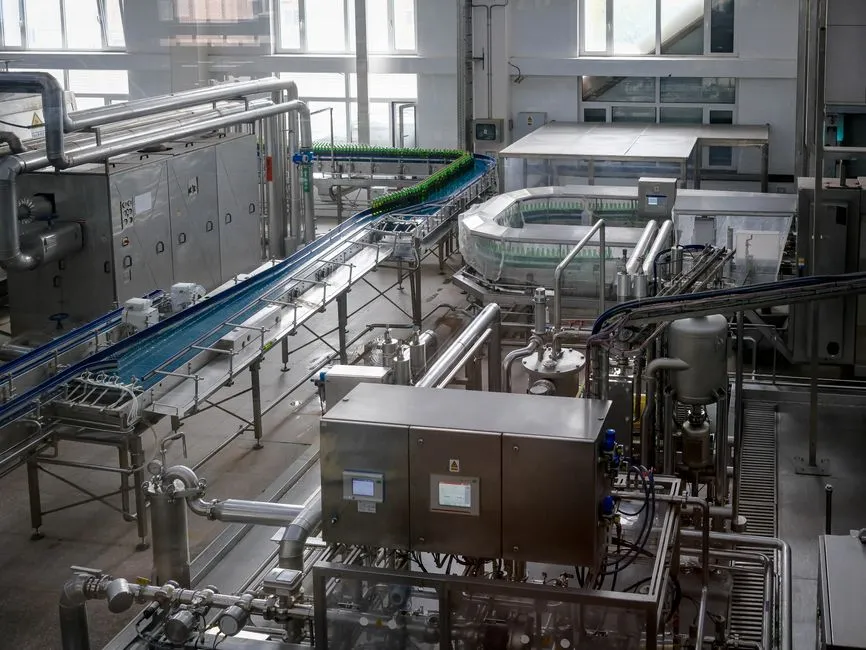
Dissolved metals must be converted into separable particles before clarification or flotation can deliver compliance. The default sequence is pH correction followed by hydroxide precipitation, with coagulant and polymer aid where needed to form floc that will separate reliably. Properly controlled precipitation systems can remove 85–95% of total metals, according to Fluence data cited by HydropureWater in November 2024; that performance range is not a guarantee for an untested site.
| Treatment decision | Engineering evidence | Design implication |
|---|---|---|
| Hydroxide precipitation | Residual metals of 0.5–2.0 mg/L for Cu, Zn, Cd, and Ni in HydropureWater’s 2026 comparison | Establish the default treatment route, then verify residuals against the POTW’s written limit. |
| Sulfide precipitation or polishing | Residual metals of 0.01–0.05 mg/L for Cu, Zn, Cd, and Ni, with 2–4 times higher reagent cost, according to HydropureWater, 2026 | Use where required residuals cannot be reached by hydroxide treatment; include sealed reactors and H₂S-scrubbed vents. |
| Lime versus sodium hydroxide | Lime is generally lower-cost per ton but generates more sludge; high-TDS streams may justify sodium hydroxide after jar testing and operating-cost review | Compare reagent cost, sludge quantity, chemical handling, and effluent chemistry together. |
The choice between hydroxide and sulfide should be driven by the most restrictive written limit. If a local limit requires residuals near 0.01–0.05 mg/L, hydroxide treatment may need a sulfide-polishing step. HydropureWater’s 2026 article identifies sulfide reagents as costing 2–4 times more and calls for H₂S control, so the budget must include sealed reaction equipment, ventilation, scrubbers, and monitoring rather than chemical reagent cost alone.
Chemical feed should be automatic and flow-paced, with pH and dose control, high/low alarms, and operator verification. An automatic pH and chemical dosing skid can implement that control architecture, but its sizing must follow jar-test results and the approved process narrative. Bench work should compare reagent type, dose, pH window, settling or flotation behavior, metal residual, sludge generation, and downstream filterability.
Choose DAF or Lamella Clarification for the Actual Flow
DAF is usually the stronger choice for low-density mineral fines, colloidal metals, variable feeds, and intermittent oil or FOG; lamella clarification is usually better for dense, fast-settling metal-hydroxide solids, steady flow, and a priority on lower lifecycle operating demands. HydropureWater’s April 2026 vendor comparison reports DAF hydraulic loading of 5–25 m/h with a 3–5 minute separation window, versus lamella surface loading of 20–40 m/h with 2–4 hours of clarifier residence. It reports 95–97% TSS removal for its well-conditioned DAF mining case, compared with 70–90% for clarification on the same feed; these are source-specific design ranges, not guarantees.
| Decision factor | DAF | Lamella clarification |
|---|---|---|
| Separation mechanism | Microbubbles attach to conditioned floc, which floats to the surface | Inclined plates shorten the effective settling distance |
| Hydraulic basis | 5–25 m/h; 3–5 minute separation window | 20–40 m/h surface loading; 2–4 hours residence |
| Source-reported mining TSS performance | 95–97% for a well-conditioned feed | 70–90% on the compared feed |
| Space at 100 m³/h | Roughly 15–25 m² for a packaged skid | Roughly 80–150 m² for the equivalent unit including sludge zone |
| Best-fit feed | Low-density fines, colloidal metals, oil or FOG, variable hydraulic or quality conditions | Dense fast-settling solids, consistent flow, lower operating priority |
| Principal operating considerations | Recycle pumping, air saturation, polymer conditioning, float removal | Sludge pumping, polymer demand, civil basin, adequate settling area |
At 100 m³/h, the same April 2026 comparison estimates approximately 15–25 m² for a packaged DAF skid against 80–150 m² for an equivalent lamella clarifier including its sludge zone. That footprint difference can determine feasibility in a constrained retrofit. For comparison, the packaged DAF system for mining wastewater addresses variable feeds and light solids, while a lamella clarifier for dense metal sludge addresses gravity-settleable precipitates. The wider Arlington DAF versus clarifier comparison provides the underlying selection framework.
HydropureWater’s 2026 article gives a standard DAF capacity range of 4–300 m³/h across 13 models and notes that parallel DAF trains or lamella may become more economical above 100 m³/h. It also reports cross-check performance of 90–98% TSS removal and 85–95% oil-and-grease removal, subject to feed conditioning. Neither separator replaces precipitation: both need upstream pH control and metal removal, then separate the resulting floc.
Polish, Disinfect, and Close the Sludge Loop
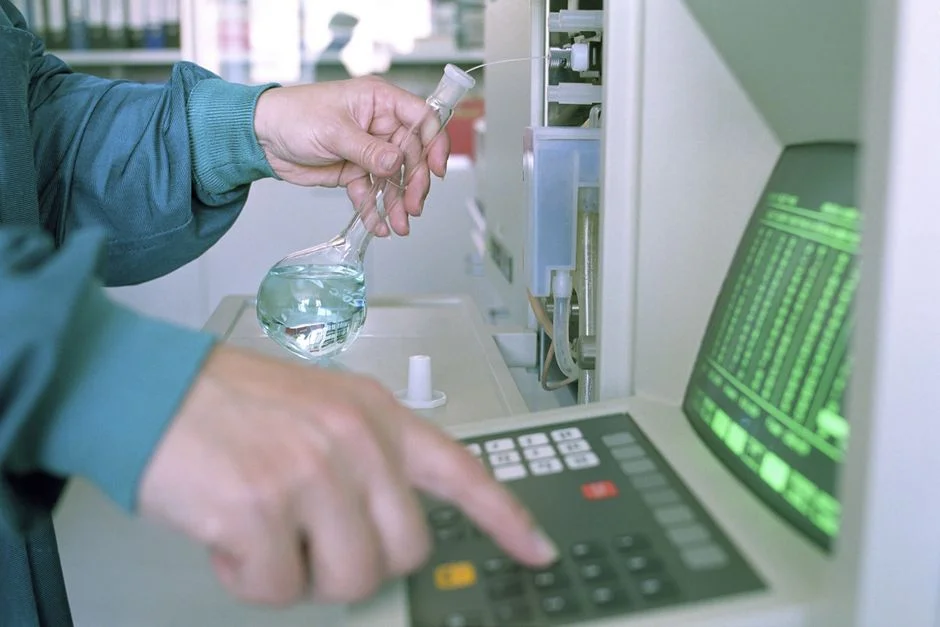
Final polishing protects the compliance sampler from clarification upsets, while an accepted sludge route prevents a compliant liquid discharge from becoming an unresolved waste problem. HydropureWater’s 2026 article recommends multimedia filtration after clarification as a TSS buffer, with a filtration rate of 1–2 m/h and residual TSS below 10 mg/L. These are planning references rather than permit guarantees. Filter sizing must account for the backwash cycle, solids loading, headloss recovery, and treatment upset—not average flow alone.
| Treatment stage | Source-specific basis | Design and verification point |
|---|---|---|
| Multimedia filtration | 1–2 m/h filtration rate and residual TSS below 10 mg/L, according to HydropureWater, 2026 | Size the multi-media filter for polishing and backwash reliability; verify final TSS at the compliance point. |
| Disinfection | Chlorine dioxide dosing of 1–5 mg/L where residual is required, according to HydropureWater, 2026 | Install an chlorine dioxide generator only if the POTW ordinance and collection-system risk justify it. |
| Sludge dewatering | Plate-and-frame presses can produce cake at 25–35% dry solids, according to HydropureWater, 2026 | Confirm the plate-and-frame filter press against the sludge rheology, filtration-cycle test, and authorized disposal route. |
| Filtrate return | Return to the plant head after confirming quality and equalization capacity | Include returned flow in hydraulic and chemical loading; prevent a solids recycle loop. |
Disinfection is conditional rather than automatic. The POTW ordinance, force-main configuration, siphons, and pathogen-risk assessment determine whether residual disinfection is required. HydropureWater’s 2026 article identifies long force mains, siphons, and pathogen-risk settings as reasons to consider chlorine dioxide.
Clarifier and DAF sludge requires its own acceptance criteria. A potential dewatering outcome of 25–35% dry solids does not establish that the cake is nonhazardous or accepted for disposal. The buyer must obtain the disposal site’s waste-characterization and acceptance requirements, evaluate metals recovery where appropriate, and characterize filtrate before returning it to the process. HydropureWater’s 2026 article also notes civil penalties of up to $25,000 per day per violation under Clean Water Act Section 309; that exposure supports redundant metering, alarms, sampling controls, and documented excursion response.
Build a Permit-Ready Submittal and Performance Test
A permit-ready submittal connects the written sewer requirements to measured wastewater behavior and a verified treatment train. The procurement sequence should be:
- Identify the serving POTW and responsible industrial-user office.
- Obtain the current sewer-use ordinance, industrial-user permit requirements, application forms, local limits, prohibited discharges, and monitoring instructions.
- Characterize each wastewater stream separately for pH, metals, TSS, flow, sulfate, TDS, and oil/FOG where applicable.
- Establish the controlling local limits and applicable categorical subcategory in writing.
- Run bench and pilot tests covering reagent dose, pH, solids separation, filtration, sludge generation, and dewaterability.
- Select the treatment train and prepare the process, chemical, hydraulic, controls, and solids-handling narratives.
- Submit the POTW application and obtain approval before final equipment selection or installation.
- Commission, sample at the required compliance point, correct deficiencies, and close out startup testing.
The characterization step must capture both steady flow and batch behavior. HydropureWater’s 2026 article identifies shift changes, dump-leach cycles, and mill clean-outs as reasons for equalization; those same events should appear in pilot scenarios rather than only in the average daily flow calculation. The same source reports that PLC-controlled dosing can hold pH within a ±0.2 band, making calibration records, high/low alarms, flow-paced feeds, and operator checks important procurement requirements.
Do not convert representative mining ranges, vendor performance figures, or advocacy examples into binding site limits. The current POTW documents and approved permit control. The supplier should provide a sizing basis based on verified flow and wastewater data, local-limit compliance calculations, equipment redundancy, footprint, utility demand, chemical storage, sludge route, controls and alarms, commissioning scope, and service support. This approach also supports the related mining wastewater sewer-pretreatment workflow for facilities applying the same permit-first sequence.
Frequently Asked Questions
What limits govern a mining plant’s sewer discharge near Arlington?
The controlling requirements are the serving POTW’s sewer-use ordinance and industrial-user permit under Clean Water Act Section 307(b) and 40 CFR Part 403, together with Part 437 or Part 433 categorical standards when applicable. Separate direct discharges to surface water remain subject to NPDES authorization. Request the current local limits and permit terms before treating any representative zinc or copper value as legally binding.
Should a mining plant choose DAF or a lamella clarifier?
Choose DAF for low-density fines, colloidal metals, oil/FOG, or variable feeds; choose lamella for dense, fast-settling solids and steady flow. HydropureWater’s April 2026 comparison reports 95–97% TSS removal for its conditioned DAF mining case versus 70–90% for clarification on the same feed, and approximately 15–25 m² versus 80–150 m² at 100 m³/h. Request feed-specific performance and sizing calculations rather than treating those ranges as guarantees.
How large should the equalization basin be?
Use 8–24 hours of average daily flow as HydropureWater’s 2026 planning guidance, then verify the final volume against measured batch duration, peak 2-hour flow, and 20–30% turndown. The basin must contain the complete batch—not merely average flow—so obtain operating records and require the supplier to show the mass-balance calculation.
What is the lowest-cost way to meet a very low zinc or copper limit?
Hydroxide precipitation is the default, but sulfide polishing may be necessary when residuals around 0.01–0.05 mg/L are required. HydropureWater’s 2026 comparison reports 2–4 times higher sulfide reagent cost and requires H₂S controls. Request jar-test results, reagent consumption estimates, sludge projections, and a lifecycle comparison before choosing between full sulfide treatment and a slipstream polishing arrangement.
What should a supplier demonstrate before equipment selection?
Require verified flow and wastewater data, a calculation showing compliance with the controlling local limits, a transparent sizing basis, controls and alarms, chemical and sludge handling, relevant test data, installation scope, commissioning acceptance criteria, and service support. A compliant-water calculation without an accepted sludge route is incomplete, so request the disposal and filtrate-return basis in the same proposal.