Which Treatment Is the Better Fit for a Milton Chemical Plant?
For industrial chemical wastewater in Milton, a membrane bioreactor usually earns its premium when reuse, a constrained brownfield footprint, low suspended solids, or protection from clarifier failure drives the decision. Conventional activated sludge remains credible for stable, readily biodegradable flows where land is available and basic treatment satisfies the applicable requirement. Neither process removes inherently toxic or non-biodegradable compounds without suitable chemical wastewater pretreatment, so the recommendation must follow the actual discharge destination, permit, influent character, operating constraints, and lifecycle costs—not a generic technology preference.
For a Milton plant, start with the current permit and reuse specification rather than an assumed regional limit. The receiving jurisdiction and site-specific permit controls determine whether CAS effluent has enough headroom. At the same time, characterize batch chemical slugs, toxicity, salinity, pH excursions, seasonal temperature, available footprint, biosolids haul route, and operator capability. These inputs determine whether an integrated MBR wastewater treatment system is justified or whether CAS remains the more defensible investment.
The practical decision rule is conditional. Favor MBR where reliably low solids, water reuse, limited land, or clarifier resilience has measurable value. Favor CAS where the stream is consistently biodegradable, sludge settles reliably, permit headroom is adequate, and lifecycle cost dominates. Consider a hybrid when existing biological capacity is worth retaining but additional membrane separation is needed. The 2026 MBR cost-per-m3 guide provides a broader basis for developing the business case.
How MBR and Conventional Activated Sludge Separate Wastewater
Conventional activated sludge separates biomass by gravity settling, while an MBR separates it through a membrane barrier after biological treatment. That mechanical difference changes solids capture and operating sensitivity, but it does not change the fundamental requirement for microorganisms to metabolize the contaminants they remove.
CAS uses an aerated biological basin followed by a secondary clarifier. Effluent quality depends on the separation of settleable sludge from treated liquid. If sludge settles poorly, solids carry into the discharge. MBR combines activated-sludge biology with submerged membrane filtration and retains biomass independently of whether it would settle cleanly in a clarifier.
HydropureWater’s 2026 chemical-wastewater comparison reports CAS SRT of 5–15 days and HRT of 6–12 hours, compared with MBR SRT of 20–60 days. It also reports MBR MLSS of 8,000–15,000 mg/L and submerged membrane pore sizes of 0.1–0.4 μm.
| Parameter | Conventional activated sludge | Membrane bioreactor |
|---|---|---|
| Solids separation | Secondary clarifier and gravity settling | Submerged membrane filtration |
| Reported SRT | 5–15 days | 20–60 days |
| Reported HRT | 6–12 hours | Not specified |
| Reported MLSS | Not specified | 8,000–15,000 mg/L |
| Reported membrane pore size | Not applicable | 0.1–0.4 μm |
| Primary constraint | Sludge settleability and clarifier performance | Membrane fouling and energy demand |
The MBR barrier prevents biomass from passing into permeate; it does not biodegrade, neutralize, or selectively remove dissolved contaminants. Toxic compounds, excessive salinity, unsuitable pH, and non-biodegradable chemistry can inhibit the biology in either train. An integrated MBR wastewater treatment system should therefore be presented as a biological process with membrane solids separation, not as a substitute for required pretreatment.
Effluent Quality, Reuse and Land Constraints
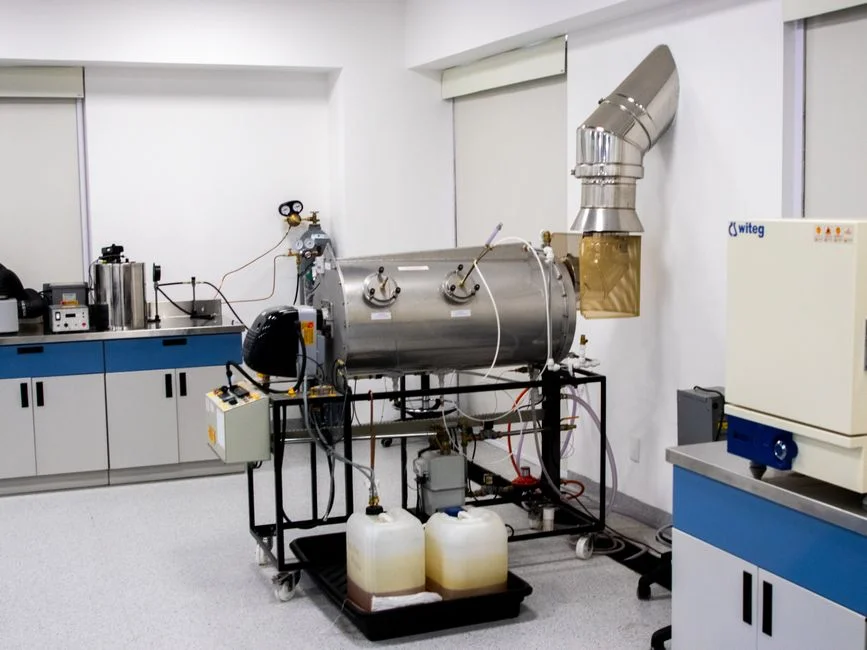
MBR’s principal advantage is more consistent solids separation, which can make reuse and brownfield retrofits feasible when a clarifier-based train cannot meet the same footprint or separation requirement.
HydropureWater reports typical MBR effluent below 5 mg/L TSS and below 1 NTU, compared with 10–30 mg/L TSS at best for CAS. The MBR result is closer to reuse-grade and may reduce some downstream polishing needs. It does not establish suitability for every reuse application: dissolved salts, residual organic matter, temperature, trace contaminants, and the receiving process must be evaluated separately.
The OpenAlex-hosted study Examination of the Fouling and Treatment Performance of a Hybrid Membrane Bioreactor for Decentralized Greywater Reclamation provides performance context, but not chemical-plant proof. Its tested MBR achieved average removals of 91% COD, 97% BOD, 58% total nitrogen, 71% total Kjeldahl nitrogen, 88% ammonia, and 90% total phosphorus. The scope was decentralized graywater reclamation, so those percentages should not be transferred directly to a Milton chemical stream.
HydropureWater also reports that MBR can reduce the treatment-train footprint by roughly 60% by eliminating the secondary clarifier and most tertiary filtration. That can materially change retrofit feasibility where an aeration basin, secondary clarifier, tertiary filters, or pipe corridors will not fit. It does not remove the need for hydraulic review, tank structural assessment, access clearances, membrane maintenance space, odor control, or constructability planning.
For a Milton brownfield, compare the MBR option against the civil work needed to retain CAS. An MBR versus extended-aeration comparison is useful for the treatment logic, but site drawings should drive the footprint conclusion. Confirm whether the reuse destination is a discharge, internal process stream, cooling use, scrubber dilution, or boiler-related demand; each creates a different water-quality and polishing requirement.
Chemical Toxicity, Fouling and Operating Resilience
Toxicity and foulant loading are go/no-go constraints because they can damage the biological stage and overwhelm membrane operation before treatment capacity becomes relevant.
Require a wastewater characterization covering pH, soluble and insoluble toxicity indicators, surfactants, oil, conductivity or salinity, batch-event records, and compound-specific biodegradability. Record production, cleaning, and slug conditions separately. A daily composite can conceal the short slug that causes biomass inhibition or membrane fouling.
HydropureWater’s 2026 comparison reports MBR scouring energy of 0.3–0.6 kWh/m³ above a CAS baseline and crossflow velocity of 0.1–0.3 m/s. It reports weekly maintenance cleaning using 500–1,000 mg/L NaOCl and semi-annual recovery cleaning using citric acid or compatible alternatives. These are design inputs, not universal operating instructions: chemical compatibility must be confirmed for the actual wastewater, membrane material, and site cleaning controls.
| Selection input | CAS exposure | MBR exposure | Required buyer check |
|---|---|---|---|
| pH excursion or chemical slug | Biological inhibition and settling upset | Biological inhibition plus membrane fouling | Batch records and equalization response |
| Surfactants, oils, or solvents | Foaming, dispersed solids, sludge changes | Internal or irreversible membrane fouling | Concentration, duration, and upstream removal |
| Salinity or conductivity | Osmotic inhibition of biology | Same biological limit, plus membrane compatibility | Batch peak and sustained concentration |
| Long shutdown or starvation | Biomass loss and process restart | Biomass loss and rapid post-restart fouling | Shutdown and reactivation protocol |
| Cleaning chemicals | Not normally required for the clarifier | Material compatibility, demand, and recovery time | Supplier commitment and site procedures |
The OpenAlex-hosted graywater study tested resilience after an eight-week starvation period. Both tested bioreactors fouled within four days of reactivation, and normal fouling and treatment behavior returned after one week of recovery. Although the application differs from chemical manufacturing, the result demonstrates that a restart can create a distinct fouling event. Aggressive cleaning does not correct upstream surfactants, solvents, oils, or incompatible chemistry. Pretreatment, cleaning compatibility, and shutdown response belong in the equipment selection criteria. Depending on the waste profile, a DAF pretreatment machine may need evaluation, but it is not a substitute for toxicity-neutralization or biodegradability work.
Capital Cost, Operating Cost and Biosolids Economics
The economic comparison is site-specific: MBR’s additional membrane, energy, cleaning, and replacement costs must be compared with the value of better solids separation, lower biosolids production, avoided tertiary treatment, and reusable water.
HydropureWater’s 2026 comparison reports MBR CAPEX at roughly 1.4–1.8 times CAS and MBR OPEX at 1.2–1.5 times CAS per cubic meter for a 1,000 m³/day chemicals stream. It reports MBR OPEX of $0.25–0.50/m³ and CAS OPEX of $0.15–0.30/m³, with the difference driven primarily by scouring and chemical cleaning.
The same source reports MBR observed yields of 0.10–0.25 kg VSS/kg COD, compared with 0.30–0.45 kg VSS/kg COD for CAS. It associates that difference with 20–40% less waste activated sludge. These figures are directional 2026 comparisons, not a site-specific guarantee.
| Economic item | CAS | MBR | Information required for comparison |
|---|---|---|---|
| Installed capital | Baseline CAS train | 1.4–1.8× CAS, per HydropureWater’s 2026 comparison | Vendor quotation, civil work, controls, piping, and installation |
| Operating cost | $0.15–0.30/m³ | $0.25–0.50/m³ | Electricity price, aeration demand, cleaning chemicals, labor |
| Observed sludge yield | 0.30–0.45 kg VSS/kg COD | 0.10–0.25 kg VSS/kg COD | Site COD load and measured waste activated sludge |
| Biosolids handling | Higher reported yield | 20–40% less waste activated sludge reported | Dewatering and hauling cost, disposal route, moisture basis |
| Reuse or polishing | Potential additional treatment | Potential reduction in downstream polishing | Reuse specification, water value, and residual contaminant limits |
Build the calculation from actual flow and load, purchased-water cost, chemical-cleaning demand, electricity price, dewatering and hauling cost, membrane replacement allowance, operator labor, and avoided tertiary treatment. Do not transfer the reported per-cubic-meter values directly into a purchase order. A plate-and-frame filter press may reduce sludge volume before disposal, but its effect on total cost depends on cake moisture, polymer demand, cycle time, filtrate quality, and hauling terms.
Select CAS, MBR or a Hybrid Retrofit
Choose the train by testing each operating constraint against a non-negotiable requirement, rather than awarding points for MBR’s nominal effluent quality alone.
| Decision condition | Preferred path | Reason to verify |
|---|---|---|
| Stable, readily biodegradable flow; reliable settling; permit headroom; land available | CAS | Confirm sludge settleability, biomass inventory, and lifecycle cost |
| Low suspended solids, reuse, compact footprint, long sludge retention, or clarifier resilience | MBR | Confirm flux, fouling control, cleaning access, and operator capability |
| Existing CAS basin remains valuable but reuse or solids performance must improve | Hybrid retrofit | Test hydraulic compatibility, membrane pretreatment, and controls |
| Toxic, saline, pH-variable, surfactant-bearing, or slug-dominated influent | Pretreatment before either train | Do not assign membrane capacity until feed compatibility is established |
| Long biosolids haul or high disposal cost | Evaluate MBR yield advantage | Use measured sludge production and current hauling costs |
Use reuse quality, available footprint, toxicity and slug frequency, settling reliability, biosolids economics, permit headroom, capital budget, and operator capability as the decision record. CAS should be retained when the flow is consistently biodegradable, solids settle reliably, the discharge requirement has headroom, land is available, and lifecycle cost dominates. MBR should be selected when reuse, compactness, long sludge retention, or clarifier upset protection drives the business case. A hybrid is appropriate when an existing CAS basin should remain in service but membrane separation is needed downstream.
Both alternatives retain pretreatment and biosolids-handling obligations. Equalization, pH control, oil or foam control, and toxicity mitigation may be necessary regardless of the final solids-separation technology. Use the 2026 MBR cost-per-m3 guide to structure the comparison, but preserve the same feed, reuse, energy, cleaning, sludge, and replacement assumptions in every proposal.
Milton Project Validation and Procurement Checklist
A staged validation program prevents equipment selection before the wastewater character, reuse obligation, and site constraints are sufficiently defined.
- Characterize the wastewater. Obtain representative samples during normal production, cleaning, and batch-slug conditions. Analyze pH, toxicity, oil and grease, surfactants, conductivity or salinity, COD, nitrogen, suspended solids, temperature, and compounds relevant to the applicable discharge or reuse specification.
- Confirm the governing requirements. Obtain the current discharge permit and identify the receiving jurisdiction. Establish the reuse specification, cold-season operating requirements, available footprint, constructability constraints, and biosolids-disposal route.
- Run compatibility and fouling trials. Use actual wastewater rather than clean-water simulations alone. Evaluate biological response, membrane flux, cleaning chemistry, recovery, and the consequences of representative batch slugs.
- Normalize lifecycle proposals. Require all bids to use the same flow, influent load, reuse value, electricity price, cleaning schedule, sludge-hauling assumption, membrane replacement interval, and acceptance criteria.
- Secure performance commitments. Define flow, product-water quality, membrane area or flux, cleaning regime, control scope, durability criteria, and acceptance testing. Require a documented response to toxicity excursions and fouling recovery.
Request a site-specific DF-series flat-sheet MBR membrane module proposal only after the wastewater testing and reuse requirements are established. The final equipment proposal must rest on current permits, representative influent testing, and confirmed design values. A related 2026 chemical-plant pretreatment requirements guide can help frame pretreatment questions, but it does not replace Milton’s site-specific review.
Frequently Asked Questions
How much more does an MBR cost than conventional activated sludge?
HydropureWater’s 2026 comparison reports MBR CAPEX at roughly 1.4–1.8 times CAS and OPEX at 1.2–1.5 times CAS per cubic meter for a 1,000 m³/day chemicals stream. Request installed bids rather than applying those ratios directly: include civil work, membranes, controls, cleaning chemicals, electricity, replacement allowance, sludge handling, and avoided tertiary treatment.
What flow capacity should an MBR be sized for in Milton?
The integrated MBR wastewater treatment system has a catalog capacity range of 10–2,000 m³/day. That range is not a design selection. Require sizing based on actual average and peak flow, hydraulic loading, MLSS, membrane area or flux, temperature, and pretreatment performance.
How should a buyer select an MBR supplier?
Ask for site-specific flux, cleaning chemistry, membrane replacement commitments, control scope, and acceptance tests—not only nominal permeate quality. The supplier should demonstrate how the proposed membrane responds to the characterized wastewater and identify any operating conditions excluded from its guarantees.
Does choosing MBR guarantee permit compliance?
No. MBR can improve solids separation, but the treatment technology is not the permit determination. The current permit and receiving-party requirements remain controlling, and reuse may impose additional dissolved-solids, organic, temperature, or contaminant limits. Confirm those requirements before selecting the train.