What an Effluent Treatment Plant in Taguig Must Achieve
An effluent treatment plant in Taguig should be selected according to the wastewater stream, required effluent quality, available footprint and the applicable discharge or reuse permit. Industrial facilities with oil, grease or suspended solids may need DAF pretreatment, while municipal-scale or high-quality reuse applications may justify MBR or membrane polishing. Taguig’s documented North Sewage Treatment Plant has a reported capacity of 75 MLD, but it is a utility infrastructure example—not a specification for private industrial projects. The correct next step is to characterize the wastewater, confirm the receiving and reuse requirements, then size and validate an MBR, DAF, packaged biological system or combined treatment train.
That North plant is a useful local reference because it shows what operating and compliance documentation should look like. Manila Water / NewsInfo reported in June 2024 that the Taguig North Sewage Treatment Plant could treat 75 MLD. The same report said the utility achieved a 100% wastewater-effluent compliance score for April 2024 against a 95.00% target under the MWSS Regulatory Office scorecard and the applicable General Effluent Standards. Neither figure establishes the required capacity or performance of a factory treatment system.
The project outcome must be stated before equipment is selected. A discharge-to-sewer design is evaluated against the receiving authority’s conditions; a direct-discharge design must address the applicable environmental permit; and a reuse design must satisfy the quality and operational requirements of the specific application. For sectors with regulated process streams, reviewers may also need to assess pharmaceutical wastewater treatment requirements in the Philippines where relevant to the facility.
Before requesting proposals, compile:
- Average and peak wastewater flows, including batch discharges.
- Separate process streams and their production schedules.
- Laboratory results for the contaminants relevant to the discharge or reuse route.
- The receiving point, sewer connection details or intended reuse application.
- Current permit conditions, monitoring records and General Effluent Standards applicable to the project.
- Available footprint, utilities, installation access, soil conditions and operating constraints.
Without these inputs, a treatment plant can be mechanically adequate but legally or operationally unsuitable.
Taguig Discharge and Reuse Requirements in 2026
The 2024 reporting identifies the authorities that may issue a Wastewater Discharge Permit, but it does not establish one universal Taguig limit for every industrial facility. Manila Water / NewsInfo reported in June 2024 that permits were issued by either EMB-DENR or the Laguna Lake Development Authority, depending on the facility and receiving context. The issuing authority and applicable permit conditions therefore must be confirmed for the proposed site.
The same report describes Class C effluent under DENR’s Updated General Effluent Standards as having eliminated bio-nutrients such as ammonia and phosphorus. It associates Class C with non-contact reuse purposes including toilet flushing, cleaning and irrigation. These descriptions explain the regulatory context; they do not prove that an industrial effluent will satisfy Class C or qualify for a particular reuse without project-specific analysis.
| Project item | Evidence or decision required |
|---|---|
| Discharge authority | Confirm EMB-DENR, LLDA, sewer authority or another authority for the actual facility and receiving context, consistent with the June 2024 Manila Water / NewsInfo reporting. |
| Effluent classification | Request the permit and applicable General Effluent Standards; the June 2024 report describes Class C as requiring eliminated ammonia and phosphorus. |
| Reuse destination | Define whether the treated effluent is for discharge, sewer connection, toilet flushing, cleaning, irrigation or another application. |
| Current legal evidence | Obtain the existing permit, application form, monitoring records and written confirmation of applicable conditions. |
No project price or universal Taguig limit can be inferred from the supplied research because the facility’s permit, receiving point, flow, wastewater composition and current application form are absent. A buyer should request the current Wastewater Discharge Permit, applicable General Effluent Standards, sewer or receiving-body requirements, intended reuse conditions and monitoring records. For facilities with non-sewage or mixed industrial flows, also confirm whether additional local consent or pretreatment approval is required.
The broader equipment context can be reviewed through the Philippines rural sewage treatment equipment guide, but the Taguig project basis should come from the regulator or receiving body directly—not from a general guide or the reported performance of a municipal utility.
Characterize the Wastewater Before Choosing Equipment
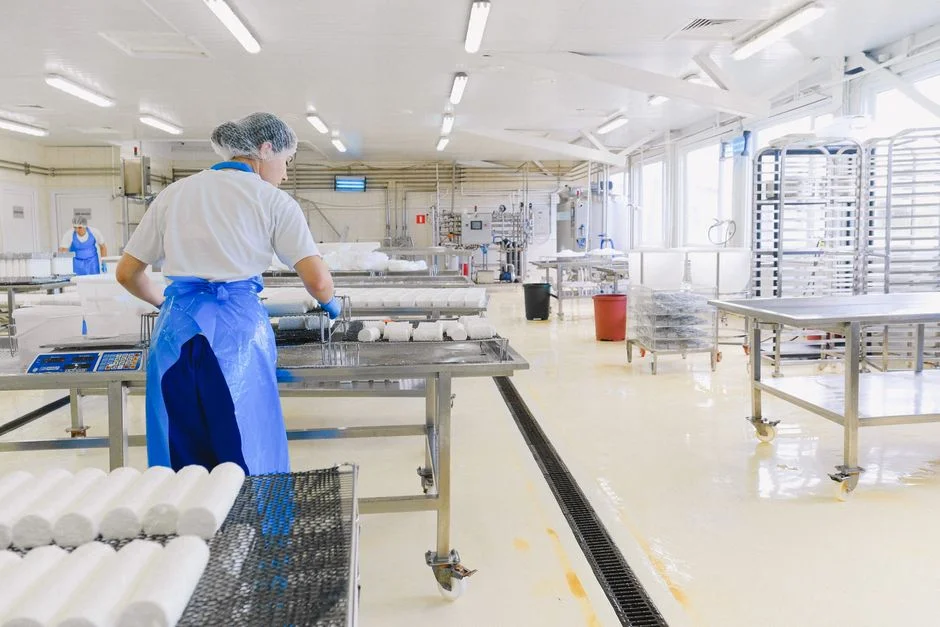
A defensible equipment selection starts with a sampling plan that captures the wastewater actually produced, not only a single laboratory sample. Define sample points before treatment and cover normal production, batch discharges, cleaning operations and maximum-flow periods. Map separate streams before combining them: incompatible pH, temperature, oil, chemicals or biological loading can change the treatment process, equalization requirement and final equipment selection.
Each proposed stream should be assessed against the final permit or reuse specification. Suspended solids and colloidal material may require clarification; free oil and grease may require oil control and DAF; biodegradable organic load may require biological treatment; and ammonia or phosphorus controls may require a biological nutrient-removal design. Chemical compatibility, toxicity, temperature and shock loading also matter because they affect biological process stability and membrane operation.
| Design condition | Treatment implication | Evidence required before specification |
|---|---|---|
| Suspended solids, colloidal matter, FOG, oil and grease | Assess DAF as a physical separation or pretreatment step. | Representative solids, oil and grease, and colloid data; flow and batch profile. |
| Biodegradable organic load | Assess biological treatment, with nutrient removal where ammonia or phosphorus controls apply. | Biological oxygen demand and chemical oxygen demand, nutrients, toxicity, pH and temperature. |
| Very low solids or a reuse-grade target | Assess MBR, followed by further polishing only if the target requires it. | Permit or reuse specification, analytical methods and proposed monitoring regime. |
| Trace contaminants or micropollutants | Assess project-specific polishing rather than assuming primary treatment is sufficient. | Target analytes, site conditions and treated-water end use. |
The supplied DAF equipment range is 4–300 m³/h across 13 models, but catalogue coverage does not establish performance for a given stream. For biological systems, the June 2024 Manila Water / NewsInfo description of Class C emphasizes eliminated ammonia and phosphorus; ordinary organic treatment alone may therefore be an incomplete basis of design.
Advanced polishing must also be tied to a water-quality objective. The University of Twente identifies nanofiltration as a method for polishing wastewater-treatment-plant effluent to EU Water Framework Directive standards for reclamation. Wageningen University and Research’s 2022 doctoral thesis examines micropollutant removal through constructed wetlands. These are research precedents, not automatic selections for a Taguig site. For industrial streams requiring physical screening or separation, an rotary mechanical bar screen may form part of the pretreatment train, but its duty depends on the stream and solids characteristics.
Require laboratory results, flow records and permit limits before issuing a guaranteed-flow or performance specification. A supplier should define the wastewater envelope that its guarantee applies to.
Compare MBR, DAF and Packaged Treatment Systems
MBR, DAF and packaged biological plants solve different treatment problems, so the correct comparison is contaminant duty versus project conditions. The supplied equipment data provide a useful screening framework, but they do not establish universal fit-for-purpose guarantees for industrial wastewater.
| System | Supplied scope | Where it fits in the train | Main engineering checks |
|---|---|---|---|
| DAF | 4–300 m³/h across 13 standard models, with automatic skimming. | Removal of suspended solids, FOG, oil and grease, and colloidal matter; possible pretreatment ahead of biological or membrane stages. | Stream characteristics, chemical conditioning, recovered sludge, skimming, odor control and downstream compatibility. |
| MBR | 10–2,000 m³/day; submerged PVDF membrane filtration below 1 μm; stated footprint is 60% less than conventional systems. | Combined activated-sludge treatment and membrane filtration where low solids and biological treatment are both required. | Influent quality, biological loading, membrane cleaning, feed quality, solids handling and acceptance testing. |
| WSZ packaged biological plant | 1–80 m³/h; integrated A/O biological contact oxidation, sedimentation and disinfection in one buried package. | Decentralized sewage or lower-complexity flows where an integrated biological package is suitable. | Flow pattern, biodegradability, required treatment stages, site conditions, access and operator capability. |
| UF | 2,000–40,000 L/h; 0.03 μm PVDF membranes; influent turbidity up to 300 ppm. | Solids-removal barrier or RO pretreatment where the specified output justifies finer filtration. | Feed turbidity, membrane condition, flux behavior, backwash, redundancy and final water-quality target. |
For an industrial stream dominated by floatable oils and solids, the DAF system for industrial wastewater pretreatment should be evaluated before downstream biological or membrane processes. Its role is physical removal and load reduction; it should not be presented as a complete biological treatment package unless the proposed design specifically provides the required stages.
Where biological treatment and very low solids are both required, an integrated MBR wastewater treatment system combines the two functions in the supplied description. For decentralized sewage or lower-complexity flows, the WSZ integrated sewage treatment plant integrates A/O contact oxidation, sedimentation and disinfection. However, sewage-origin capabilities do not automatically establish suitability for industrial contaminants.
Evaluate each option against the same project criteria: contaminant removal, verified flow range, footprint, reuse potential, automation, sludge handling, operator requirements, utilities, maintenance access and acceptance documentation. Do not assign a single technology to an industry without characterization and permit criteria.
Build a Treatment Train Around the Effluent Objective
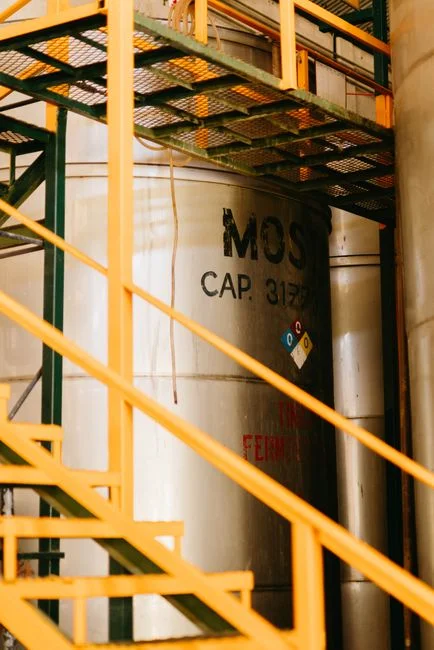
A complete treatment train follows the contaminant pathway rather than the product catalogue. Begin with source segregation and screening, then add equalization where variability requires it, contaminant-specific pretreatment, biological or physical separation, any necessary polishing, disinfection where required, and monitoring. Each stage should have a defined purpose and an outlet specification that protects the next stage.
For oil- and grease-bearing industrial streams, place DAF before downstream biological or membrane stages to reduce suspended and colloidal load. If the target is very low solids before reuse, consider an MBR train and then assess additional UF or RO polishing against the final specification. The ultrafiltration system can provide a solids-removal or RO-pretreatment barrier, but its selection should follow a defined water-quality target rather than a default assumption.
The University of Twente’s nanofiltration research supports target-driven membrane polishing of treated wastewater for reclamation. It does not show that nanofiltration can replace primary and biological treatment or that direct nanofiltration is appropriate for every industrial effluent. Similarly, Wageningen University and Research’s 2022 thesis identifies constructed wetlands as a researched approach to micropollutant removal from wastewater-treatment-plant effluent; site-specific feasibility, land, hydraulics and contaminant behavior still require project engineering.
- Segregate and screen the source streams.
- Equalize flow and load where needed to stabilize downstream treatment.
- Remove oil, grease and floatable material where necessary.
- Apply biological treatment, physical separation or both according to the contaminant profile.
- Add membrane or other polishing only where the final specification requires it.
- Apply disinfection where required by the permit or reuse assessment.
- Monitor the specified acceptance parameters.
Sludge management belongs in the same design. DAF skum, biological excess sludge and membrane rejects become concentrated residual streams. A plate-and-frame filter press may support dewatering where its capacity, cake handling and disposal route are suitable. The engineering question is not merely whether solids can be removed, but where the resulting cake will go and who will handle it.
Select, Validate and Commission the Plant
Procurement should proceed through documented design, verification and acceptance checkpoints rather than a catalogue comparison alone. The Taguig North plant’s reported compliance is useful as a monitoring benchmark, but it is not evidence that an unproven private system will achieve the same result.
- Issue a basis-of-design request covering flow data, wastewater analyses, permit limits, reuse goals, utilities, soil conditions and installation constraints.
- Confirm the treatment objective and acceptance parameters with the permit holder, receiving authority or reuse user.
- Size the proposed process against the verified design flow and peak-load conditions.
- Review the complete installed scope, including civil works, power, chemicals, sludge removal, odor control, access, redundancy and training.
- Define commissioning tests, performance guarantees, documentation, spare parts, support and warranty.
- Verify operating records and handover requirements before acceptance.
Compare the DAF range of 4–300 m³/h, MBR range of 10–2,000 m³/day and WSZ range of 1–80 m³/h only after converting the project’s flow basis to the same units and duty point. Catalogue ranges show availability; they do not prove that a system can accept the facility’s wastewater quality and peak load.
| Checkpoint | Evidence to request |
|---|---|
| Design basis | Average and peak flows, stream map, laboratory data, permit and reuse requirements. |
| Equipment suitability | Process calculations, capacity margin, contaminant loading, duty points, utilities and operating philosophy. |
| Performance acceptance | Defined test protocol, sampling points, analytical methods, acceptance criteria and remedy for failure. |
| Monitoring | Parameters measured continuously, periodically and during commissioning. |
| Residuals and site works | Sludge and skum handling, odor controls, power, drainage, access, chemical storage and training. |
| Commercial close-out | Drawings, manuals, guarantees, spare parts, support arrangements and warranty terms. |
Where suspended-solids exceedance is already a concern, diagnosing effluent TSS exceedance can help separate hydraulic, process and monitoring causes. For an MBR proposal, request the 2025 MBR effluent-quality and cost engineering analysis as one input—not as a substitute for site-specific testing or a binding guarantee.
Frequently Asked Questions
How much does an effluent treatment plant in Taguig cost?
The supplied research does not provide a defensible project price for an industrial effluent treatment plant in Taguig. The quotation depends on verified flow and peak load, wastewater analyses, treatment objective, permit conditions, footprint, utilities, civil works and residual handling. Ask each supplier for an itemized offer separating equipment, tanks or membranes, pumping, pretreatment, controls, civil works, installation, commissioning, monitoring, sludge handling, training and warranty. No equipment range should be converted into a project price without those inputs.
Should a factory in Taguig choose MBR, DAF or a packaged sewage treatment plant?
Choose DAF when oil, grease, floatable material, suspended solids or colloidal load must be removed before biological or membrane treatment. Choose MBR when the design requires biological treatment and membrane filtration for low-solids output. Consider a packaged biological plant when the stream and required treatment stages match its integrated A/O contact oxidation, sedimentation and disinfection configuration. If reuse requires further quality, evaluate UF or another polishing step against the final specification.
What flow and wastewater data should a supplier request before quoting?
Request average flow, peak flow, batch-discharge schedules, stream-by-stream flow allocation, production operating patterns and representative laboratory results. Include pH, temperature, suspended solids, oil and grease, FOG, BOD, COD, nutrients, toxicity and any process-specific contaminants. Establish sample points before treatment and cover normal production, cleaning and maximum-flow periods. Without a defined wastewater envelope, a supplier can select equipment but cannot credibly guarantee performance.
How can the plant demonstrate compliance with its Taguig discharge or reuse permit?
Translate the current permit and applicable General Effluent Standards into a parameter table containing the limit, analytical method, monitoring frequency, responsible party and required record. Confirm the issuing and receiving authorities, because the June 2024 Manila Water / NewsInfo report identifies permits issued by either EMB-DENR or LLDA depending on facility and receiving context. Define which parameters are measured continuously, periodically and during commissioning, then retain calibration records and representative laboratory results. The documented 100% April 2024 compliance score against a 95.00% target illustrates disciplined scorecard reporting, not a transferable performance guarantee.
What should a buyer verify before selecting an equipment supplier?
Verify that the supplier has defined the wastewater conditions and final permit or reuse parameters covered by its guarantee. Review process calculations, reference installations, commissioning records, operator training, maintenance access, spare-parts availability, remote or local support and warranty terms. For an MBR or other membrane process, ask how membrane cleaning, replacement, fouling and feed-quality deviations are handled. For DAF, review skimming, recovered-sludge handling and odor controls. The contract should state acceptance-test methods, remedies for non-performance, documentation deliverables and residual-disposal responsibilities.
Related Equipment
- WSZ integrated sewage treatment plant — specifications, capacity range, and technical data