Which Rules Govern Sewer Discharge Near Venters?
Mining and metals facilities near Venters that discharge to a municipal sewer comply through the Clean Water Act §307(b) pretreatment program under 40 CFR Part 403, implemented by the receiving publicly owned treatment works (POTW) through an industrial-user permit. Applicable categorical standards may also apply. The facility must identify the controlling POTW and permit, characterize its wastewater, then size treatment around pH, metals, suspended solids, flow variability, and sludge disposal. A defensible sequence commonly starts with equalization and pH adjustment, followed by precipitation, coagulation/flocculation, clarification, and filtration. Because no Venters-specific POTW limits were supplied, operators must verify jurisdiction, categorical subcategory, sampling requirements, and discharge authorization before ordering equipment. See the related mining wastewater pretreatment compliance guide for the document-gathering structure.
EPA’s Local Limits Development Guidance, dated 2021-06, states that a permit or regulation controls if it conflicts with the guidance. For an indirect discharger, obligations are determined by the POTW’s industrial-user permit or equivalent control mechanism and applicable regulatory requirements. Do not treat a generic local-limit table as a Venters requirement.
The verification sequence is:
- Identify the POTW receiving the discharge and the physical sewer outfall.
- Obtain the current sewer-use ordinance, pretreatment rules, and industrial-user permit.
- Determine whether the operation falls within 40 CFR Part 437, ore mining and dressing, or 40 CFR Part 433, metal finishing, where applicable.
- Confirm discharge prohibitions, monitoring points, sampling requirements, reporting provisions, and fee or control-mechanism terms.
- Collect historical discharge-monitoring data and clarify whether another site outfall requires a separate NPDES authorization.
| Requirement | Source | Owner | Operating effect | Evidence |
|---|---|---|---|---|
| Receiving authority and sewer jurisdiction | Current POTW documents | Environmental manager | Determines applicable approval route | Map, ordinance, written POTW confirmation |
| Industrial-user permit or equivalent mechanism | POTW | Operations and legal reviewers | Defines limits, monitoring, and reporting | Executed permit and revisions |
| Categorical subcategory | 40 CFR Part 437 or Part 433, as applicable | Compliance engineer | Defines applicable categorical requirements | Operations description and regulatory determination |
| Discharge monitoring record | Monitoring reports and laboratory data | Environmental team | Shows the operating envelope and excursions | Certified analytical records and flow logs |
Build a Site-Specific Wastewater Compliance Envelope
EPA’s local-limits process requires determining pollutants of concern, collecting and analyzing data, calculating maximum allowable headworks loadings, designating and implementing local limits, and addressing collection-system concerns. A plant can use that framework to connect permit language, flow, concentration, and loading rather than relying on a single concentration limit.
EPA identifies three sampling perspectives: at the POTW, in the collection system, and at industrial users. It also distinguishes sampling used for initial program development from sampling used for ongoing evaluation. For the mine, preserve both process knowledge and regulatory evidence: identify which streams enter each permitted outfall, how they combine, and how much each contributes to flow and pollutant loading.
The mining and metals 2026 mining and metals pretreatment requirements guide recommends a 12-month influent characterization and jar testing before sizing. Do not extrapolate equipment capacity from one short campaign or a vendor’s default chemistry. Record concentration together with discharge timing, batch volumes, duration, and operational source.
| Parameter to verify | Evidence required | Design use | Compliance record |
|---|---|---|---|
| pH | Representative influent distribution and batch-event data | Equalization and chemical-dose control | Continuous trend plus permit sampling |
| TSS | Flow-paced samples with flow records | Flocculation, clarification, and filtration | Laboratory results tied to discharge timing |
| Copper, zinc, lead, iron, arsenic, and manganese | Site-specific analyses for permit-relevant parameters | Precipitation chemistry and residual-polishing needs | Influent/effluent comparison and excursions |
| Permit-specific pollutants | Current permit and POTW correspondence | Treatment train and monitoring controls | Applicable sampling and reporting records |
| Flow profile | Continuous or validated operational logging | Equalization, peak treatment, and transfer capacity | Mass-loading calculation and event chronology |
The deliverable is a traceable envelope: each permit parameter should point to a sampling method, monitoring location, frequency, control response, and responsible operator. If that chain contains a missing input, it remains an open design issue rather than an assumed acceptance criterion.
Design the Treatment Train in the Right Order
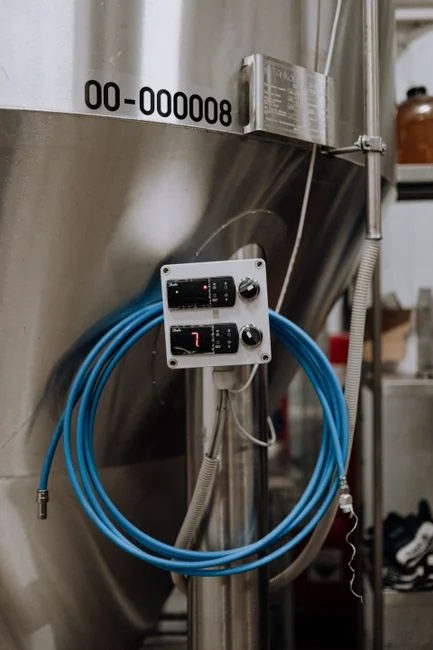
Each treatment step must prepare the wastewater for the next compliance-critical step to prevent downstream vessels from inheriting untreated variability. The process sequence follows the mining-water treatment sequence documented by Genesis Water Tech: pH adjustment, coagulation and flocculation, ancillary chemicals, and filtration, with equalization and clarification added as the hydraulic and solids-separation links.
- Equalization: Buffer batch dumps, storm-driven inflows, and mill or clean-out discharges before pH and solids loading reach treatment. Establish peak flow, batch volume, duration, and operating variability from actual records.
- pH control: Adjust pH before separation. The mining treatment guide cited by the Price-area guide explains that pH correction supports precipitation of dissolved metals such as iron, arsenic, and manganese. A PLC-controlled chemical dosing skid can coordinate reagent addition, but its control strategy must follow the verified chemistry.
- Coagulation and flocculation: Aggregate suspended material and fine metal-bearing particles into flocs that clarification and filtration can remove. Determine coagulant and polymer demand through jar testing rather than generic dosing assumptions.
- Clarification: Select DAF or lamella from the actual solids structure and hydraulic conditions. The DAF versus lamella clarifier comparison for mining wastewater provides the relevant staged selection method.
- Filtration: Use filtration as the final suspended-solids barrier before the sewer. Size the filter for the required duty, backwash demands, and differential-pressure operating envelope.
- Sludge handling: Route metal-bearing sludge to dewatering. The mining treatment guide identifies plate-and-frame filter presses as a method for producing a handleable cake; plate area, cycle requirements, and filtrate return still depend on sludge characteristics and the disposal route.
Disinfection belongs only where the POTW permit, sewer-use rules, or operating conditions require it. Ultrafiltration is similarly conditional: add it when reuse, reverse-osmosis protection, or another specified polishing objective justifies the added barrier. Do not include either step merely because it appears in a generic treatment train.
| Step | Primary purpose | Design input | Required proof |
|---|---|---|---|
| Equalization | Buffer hydraulic and quality peaks | Batch records, peak flow, duration | Level, mixing, transfer, and control review |
| pH adjustment | Create the required precipitation condition | Influent pH and jar-test chemistry | Dose-response curve and operating trend |
| Coagulation/flocculation | Form removable flocs | Suspended-solids and metals characterization | Jar tests and floc observations |
| Clarification | Separate settled or floated solids | Floc structure, flow, footprint, sludge withdrawal | Vendor sizing calculation |
| Filtration | Polish residual suspended solids | Filtrate quality, backwash and differential-pressure duty | Media selection and hydraulic review |
| Sludge dewatering | Manage concentrated metal-bearing solids | Sludge volume, solids, destination, filtrate route | Site-specific mass balance and waste characterization |
Choose DAF or Lamella Clarification Using the Influent
DAF is the stronger candidate when the stream contains oil, grease, or fine colloidal material that benefits from microbubble flotation. Lamella clarification is the stronger candidate when the principal solids are metal-hydroxide flocs, service flow is comparatively high, and installation footprint is constrained. Selection follows from influent character, hydraulic demand, sludge route, and operating constraints.
The supplied catalog information states that the DAF range covers 4–300 m³/h across 13 models. Treat that as a product-selection envelope, not proof that any model will meet the Venters permit. The lamella catalog states a 20–40 m/h surface-loading range and up to 30% chemical-consumption reduction. Final sizing still requires site chemistry, hydraulic data, and the supplier’s design calculations.
| Decision factor | Favors DAF | Favors lamella | Buyer’s required evidence |
|---|---|---|---|
| Wastewater character | Oil, grease, or fine colloidal material | Predominantly metal-hydroxide flocs | Representative analysis and jar-test results |
| Hydraulic duty | Flow and loading accepted by the selected DAF design | Higher service flow within the verified surface-loading basis | Peak-flow, duration, and vendor sizing calculations |
| Footprint | Sufficient area for the flotation train | Footprint-constrained installation | Site plan and envelope drawing |
| Sludge withdrawal | Compatible with floated sludge handling | Compatible with settled sludge withdrawal | Sludge characteristics and disposal route |
| Utilities and maintenance | Air, saturation, and skid-service requirements acceptable | Lower-shear separation and access requirements acceptable | Utility demand, maintenance plan, and controls scope |
| Commercial basis | Installed cost supports required performance | Installed cost supports required performance | Like-for-like comparison and compliance guarantee |
Require each bidder to state the design influent, required effluent, flow basis, calculation method, equipment dimensions, utilities, controls, sludge interface, maintenance assumptions, installed cost, and performance guarantee. A dissolved air flotation system for mining wastewater should be compared against a lamella design on the same documented basis.
Turn the Equipment Plan into a Compliance File
A compliant equipment selection becomes auditable only when each design basis is linked to an operating control and evidence trail. Before purchase, assemble the current POTW limits and industrial-user permit, applicable categorical standards, discharge-monitoring data, and the 12-month influent characterization. This package lets the buyer and supplier trace each equipment decision to a controlling requirement or verified site condition.
For every numerical permit limit, define the control target, monitoring point, sampling frequency, alarm action, operating response, and responsible operator. Translate permit language into equipment functions: pH limits into dosing-control requirements, solids limits into clarification and filtration duties, flow limits into equalization and transfer constraints, and monitoring requirements into sample points and data handling.
Require jar tests and supplier design calculations to support reagent assumptions, clarification selection, filter sizing, and sludge handling. During commissioning, retain startup procedures, calibration records, chemical usage, flow, pH, TSS, relevant metals, sludge volume, deviations, and corrective actions. The acceptance test should use agreed influent and effluent conditions that reflect the permitted discharge envelope.
Equipment specifications alone do not establish compliance. The final determination remains subject to the controlling permit and POTW approval, and to verified operating performance. A defensible file lets an auditor follow the chain from regulation to equipment duty, operating action, monitoring result, and corrective record.
Frequently Asked Questions
How much should a mining wastewater pretreatment system near Venters cost?
No defensible price can be given without the wastewater envelope, flow range, chemistry, target limits, utilities, selected equipment, and sludge-disposal route. Request a line-item budget covering civil work, tanks, pH and polymer dosing, clarification, filtration, controls, electrical service, installation, commissioning, chemical storage, and sludge dewatering. Also request the operating-cost basis and identify which assumptions could change the price.
How should a buyer select and size a wastewater-treatment supplier?
Ask each supplier to document mining or metals chemistry experience, design inputs, local permit understanding, commissioning support, controls capability, and performance guarantees tied to agreed influent and effluent conditions. Require a written calculation package that traces each unit’s duty to the wastewater data; do not accept a preferred clarifier or treatment sequence without
Frequently Asked Questions
What permit and limits control mining wastewater discharged to a sewer near Venters?
Mining operations in the Venters region are governed by the Department of Water and Sanitation (DWS) General Authorizations and site-specific municipal sewer discharge permits. These permits typically mandate compliance with the 2026 Wastewater Limit Standards, which often restrict Total Dissolved Solids (TDS) to below 2,000 mg/L, pH levels between 5.5 and 9.5, and heavy metal concentrations, such as Lead and Arsenic, to below 0.1 mg/L and 0.5 mg/L respectively.
How much does a mining wastewater pretreatment system cost to install?
The capital expenditure for a modular industrial pretreatment system typically ranges from R2.5 million for basic physical-chemical separation units to upwards of R15 million for integrated systems including membrane filtration or reverse osmosis. Costs fluctuate significantly based on the required flow rate, the complexity of the influent contaminant profile, and the level of automation required for 24/7 compliance monitoring.
How should I size a DAF or lamella clarifier for mine wastewater?
Sizing is determined by the peak hydraulic loading rate (HLR) and the settling velocity of the specific mineral particulates present. For lamella clarifiers, a typical design loading rate is between 0.5 and 1.5 m/h, while Dissolved Air Flotation (DAF) units are sized based on the air-to-solids ratio, usually targeting 0.01 to 0.05 ml of air per mg of suspended solids to ensure adequate buoyancy for oil, grease, and light mineral fines.
What should I ask a wastewater equipment supplier before approving a proposal?
You must request documented pilot-scale test results using actual site influent samples to verify removal efficiency for your specific mineralogy. Additionally, inquire about the expected chemical dosing consumption rates, the availability of local technical support for 24-hour breakdown response, and whether the system's Programmable Logic Controller (PLC) is compatible with your existing SCADA infrastructure for real-time compliance logging.
What is the biggest compliance risk when designing around generic pretreatment limits?
The primary risk is the failure to account for seasonal or operational variability in influent water chemistry, which can lead to "slug loads" of heavy metals or sudden pH spikes that bypass standard treatment thresholds. Relying on generic or average influent data rather than worst-case scenario testing often results in permit violations, as standard systems may lack the equalization capacity or chemical dosing flexibility required to handle periodic high-concentration discharge events.