
What Taguig sewage treatment options are available?
Domestic sewage treatment in Taguig requires matching the treatment process and package capacity to the property’s wastewater flow, land availability, sewer-connection options and effluent objectives. Arup reports that the Liwasan ng Kagitingan at Kalikasan Wastewater Treatment Plant serves Taguig and Makati, provides 75 mega-litres per day of capacity and uses an underground layout to maximize limited urban land. For developments and facilities without a practical sewer connection, a decentralized system is an alternative. The underground WSZ sewage treatment plant combines A/O biological contact oxidation, sedimentation and disinfection in one buried unit, is fully automated and covers 1–80 m³/h. Final selection requires verified flow data, site conditions and applicable discharge requirements.
Central sewer service and decentralized treatment are the two principal routes. Arup identifies the LKK Wastewater Treatment Plant as handling sewage flows between Makati South and Taguig North, while the Liwasan ng Kagitingan at Kalikasan plant serves the Taguig and Makati areas of Metro Manila. These systems demonstrate substantial centralized capacity, but they do not establish that a particular Taguig parcel has a sewer connection available, adequate capacity or permission to connect.
For properties without that route, a packaged sewage treatment plant can treat wastewater on or beneath the site. The WSZ product data identifies residential communities, hotels, hospitals, factories and rural areas as applications. The relevant decentralized sewage treatment options in the Philippines also include less conventional processes.
Constructed wetlands integrated with microbial fuel cells are a research-based treatment concept. However, the supplied IntechOpen page does not expose enough technical performance data to support a Taguig recommendation. A buyer would need design parameters, site-specific engineering and verified effluent results before selecting it.
Vermifiltration combines filtration with earthworms and can be decentralized; the supplied academic excerpt describes it as viable, efficient and requiring less expertise. That study applied the concept to domestic septic-tank sewage, but the excerpt provides no numerical efficiency values. Start selection with the required treatment outcome, available land and site constraints—not with a product name.
How does each treatment technology compare?
Buried A/O, MBR and nature-based systems serve different procurement priorities: compact below-grade deployment, membrane separation with reuse potential, or nature-integrated treatment with less conventional process equipment. Each technology requires a specific evaluation of its technical design basis.
| Technology | Process configuration | Published capacity | Deployment and application | Buyer focus |
|---|---|---|---|---|
| WSZ buried A/O package | Anoxic/aerobic biological contact oxidation, sedimentation and disinfection in one buried unit | 1–80 m³/h | Below-grade installation or trailer mounting; residential communities, hotels, hospitals, factories and rural areas | Compact integrated process and fully automated operation without an operator |
| MBR membrane bioreactor | Activated sludge combined with submerged PVDF membrane filtration | 10–2,000 m³/day | Compact installation where membrane separation and potential reuse justify the advanced process | Filtration below 1 μm and a footprint stated as 60% smaller than conventional systems |
| Constructed wetland with microbial fuel cell | Nature-based treatment concept integrated with microbial fuel-cell electricity production | Not established in the supplied excerpt | Requires project-specific technical review | Obtain complete design and performance information before considering procurement |
| Vermifiltration | Filtration combined with earthworms | Not established in the supplied excerpt | Decentralized concept applied in the cited research to domestic septic-tank sewage | Request verified design parameters, effluent results and local applicability |
The HydropureWater product catalog states that the WSZ unit is fully automated, requires no operator and can be mounted on a trailer for mobile deployment. Its integrated buried configuration suits sites where preserving surface area is prioritized.
The MBR membrane bioreactor system adds membrane separation after activated sludge. Its product information specifies submerged PVDF filtration below 1 μm, near-reuse-quality effluent and a footprint 60% smaller than conventional systems. Those claims make MBR relevant where compact installation or reuse value justifies the added process complexity.
Nature-based systems should not be treated as equal alternatives until their complete design basis and Taguig-specific performance are verified. Further comparison principles are covered in the guide to compare A/O, MBR and MBR-UF package plants.
What inputs are required to size a Taguig treatment system?
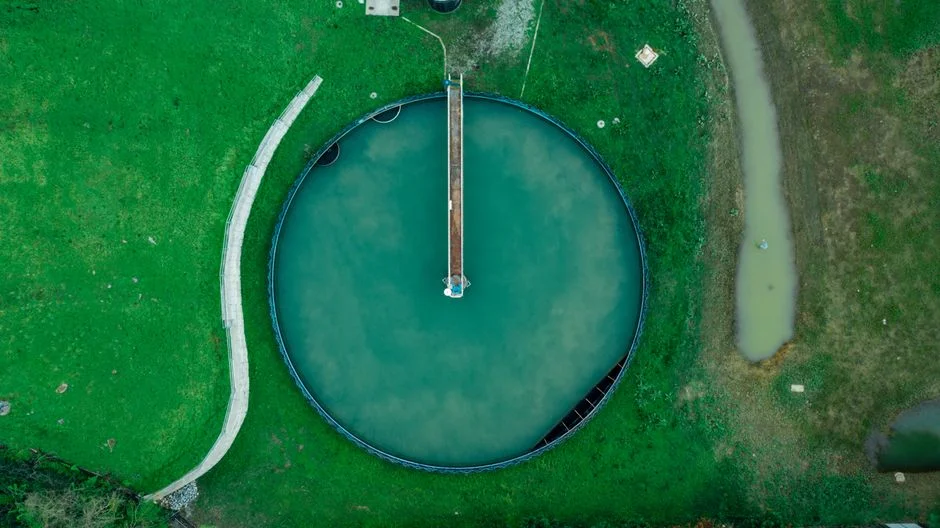
A defensible sizing decision requires verified wastewater flows, influent characteristics, effluent objectives and physical site conditions. Published capacity ranges are screening limits, not project design calculations.
| Required input | Information the buyer must obtain | Why it affects selection |
|---|---|---|
| Daily and peak flow | Occupancy- or production-based generation data, operating hours and peak factors verified for the specific property | Determines hydraulic loading and screening capacity |
| Wastewater characteristics | Domestic sewage strength plus industrial, commercial, grease, solids, rag and fibrous-debris contributions | May change pretreatment, biological loading and solids handling |
| Effluent objectives | Applicable requirements, discharge point, receiving environment and intended reuse route confirmed with the responsible authority | Sets the required treatment and reuse specifications |
| Site conditions | Footprint, excavation conditions, groundwater or flood exposure, vehicle access, installation route, utilities and landscaping constraints | Controls buried construction, logistics and civil-work scope |
| Residuals route | Sludge or solids collection, storage, transport and disposal arrangements | Completes the operating process rather than treating only the liquid stream |
| Product screen | WSZ: 1–80 m³/h; MBR: 10–2,000 m³/day | Supports initial screening only; detailed engineering determines configuration |
Calculate daily wastewater flow from verified occupancy or production, then establish the peak-hour flow. Do not select equipment from available land area alone. A small surface footprint does not establish adequate hydraulic capacity, and a published capacity does not prove that a configuration can meet the project’s loading and effluent conditions.
Obtain wastewater characteristics before finalizing the process. Grease, solids, plastics, fibrous debris or industrial contaminants can affect inlet requirements, biological treatment, membrane operation and residuals handling. If those loads are significant, pretreatment may need to be included in the procurement scope.
Confirm the applicable effluent objectives, discharge point and receiving-environment constraints with the responsible authority or sewer authority. The supplied research does not establish a current numerical Taguig discharge limit. Define whether treated water will be reused, discharged or otherwise managed, and identify who will operate and maintain the system.
Record the available footprint, excavation conditions, groundwater or flood exposure, vehicle access, installation route, utility connections and surface-use restrictions. These inputs determine whether a buried package is physically deliverable and installable. Finally, use the WSZ range of 1–80 m³/h and MBR range of 10–2,000 m³/day to screen products, then proceed to a configuration-specific engineering calculation.
How does a decentralized sewage treatment process work?
A decentralized package plant must remove biodegradable contaminants, separate solids and address residual microbial risk as one continuous process. The equipment name alone does not establish how those functions are performed.
The WSZ sequence is anoxic/aerobic biological contact oxidation, sedimentation and disinfection within a single buried package unit. In the biological stage, microorganisms break down biodegradable organic matter. Sedimentation then separates material from the treated flow, while disinfection addresses remaining microbial risk. The supplied WSZ catalog does not provide a verified log-removal or percentage-removal claim, so the proposal should identify the design basis and test method rather than rely on an unqualified performance statement.
The MBR process combines activated sludge with submerged PVDF membrane filtration. The product catalog specifies filtration below 1 μm and presents this configuration as suitable where compact treatment and potential water reuse are priorities. For either process, the solids removed from the liquid stream still require a defined management route.
Pretreatment is necessary where wastewater contains rags, plastics, fibrous debris, grease or industrial contaminants. An engineer should determine whether inlet screening, grease control or other protection is needed and whether that equipment is included in the offer.
- Characterize the influent and confirm flow, strength and contaminants.
- Select the treatment route against effluent and reuse objectives.
- Complete hydraulic and process design for the selected capacity and site.
- Coordinate excavation, foundations, utilities and equipment installation.
- Commission the complete train and verify operating controls.
- Monitor treatment performance and maintain the solids-handling route.
Equipment selection should follow the whole process sequence. A review of upstream rotary mechanical bar-screen equipment can help buyers understand where inlet protection may fit when solids or fibrous material are present.
How should a Taguig buyer evaluate suppliers and installation proposals?
Comparable proposals should state the same design inputs, process scope, performance basis and commercial exclusions so that price and delivery risk can be evaluated directly. Each proposal must be assessed against specific site and regulatory constraints.
Require each supplier to identify the design-flow basis, duty cycle, process stages, footprint, power requirements, automation scope and sludge-handling method. Ask for the proposed effluent basis, performance guarantees, acceptance tests and monitoring instruments. A guarantee without a defined test method, operating condition, sampling point and acceptance threshold is not a usable guarantee.
Separate excavation, foundations, access, installation, commissioning, training, maintenance support and spare-parts availability into identifiable proposal items. This is particularly important for buried equipment in dense urban areas, where delivery routes and lifting constraints can affect installation planning.
Ask the supplier to show how its design responds to Taguig site access and underground installation. Arup’s LKK project provides relevant urban-planning context: its fully underground layout maximizes land use in a densely populated Metro Manila setting. That project context does not replace a parcel-specific logistics and excavation review.
Request documentation that separates confirmed project inputs from assumptions. The buyer should be able to identify where survey work, authority coordination, geotechnical review or process engineering remains outstanding. The packaged sewage treatment plant comparison provides additional structure for checking alternative proposals.
Compare lifecycle cost rather than equipment price alone. The estimate should address equipment, civil works, utilities, commissioning, operation, maintenance, sludge disposal and replacement items. The supplied research contains no verified Taguig cost figures, so a responsible budget must be built from project inputs and supplier quotations rather than an assumed local price.
What is the best sewage treatment route for a Taguig project?
The best route is the one supported by confirmed sewer access, verified site constraints and an engineering-defined effluent outcome. Decision-making should prioritize technical feasibility over initial equipment footprint.
- If central sewer service is technically available, permitted and compatible with project capacity and schedule, evaluate connection to the sewerage system serving the area. Central infrastructure does not by itself establish parcel-level availability.
- If surface space is constrained and the application fits the WSZ published range of 1–80 m³/h, evaluate the compact, fully automated buried A/O package. Confirm the civil works, installation route and solids-management plan.
- If membrane separation, compact installation or potential reuse value justifies the more advanced process, evaluate the MBR system against its published 10–2,000 m³/day range. Require evidence linked to the proposed duty and effluent basis.
- If a constructed wetland, microbial fuel cell or vermifiltration concept is proposed, obtain the full design parameters, verified performance information and a site-specific engineering review before accepting it.
Before selecting a supplier, commission a site survey and wastewater audit, consult the relevant authority and obtain engineer-reviewed sizing. For hotel, resort or similar facilities, the Philippine hotel wastewater treatment options provide a useful starting point for comparing occupancy-driven flows, reuse requirements and package-plant applications.
Frequently Asked Questions
How much does domestic sewage treatment cost in Taguig?
For a package sewage treatment plant (STP) installation in Taguig, capital expenditure typically ranges from PHP 15,000 to PHP 25,000 per cubic meter of daily capacity, depending on the technology used, such as Moving Bed Biofilm Reactor (MBBR) or Membrane Bioreactor (MBR). Operational costs generally fall between PHP 5.00 and PHP 12.00 per cubic meter of treated effluent, covering electricity for aeration blowers and periodic sludge hauling services.
Should a Taguig development connect to the sewer or install a package sewage treatment plant?
Connection to the centralized sewer network managed by Manila Water is mandatory if the development is located within a service area where a sewer line is available. If the development is outside the current service coverage or the connection point is geographically inaccessible, the local government unit and the Laguna Lake Development Authority (LLDA) require the installation of an on-site package STP to ensure compliance with effluent standards.
How do I choose a sewage treatment plant supplier in Taguig?
Select a supplier that holds a valid Certificate of Conformity (COC) from the Department of Environment and Natural Resources (DENR) and has a proven track record of projects within the Laguna de Bay region. Ensure the supplier provides a comprehensive performance guarantee, local technical support for 24/7 maintenance, and spare parts availability for critical components like submersible pumps and fine-bubble diffusers.
What size sewage treatment system does a hotel or residential development in Taguig need?
System sizing is determined by the daily water consumption rate, typically calculated using the National Plumbing Code of the Philippines. For residential units, allow for 150 to 200 liters per capita per day (LPCD), while hotels require 250 to 350 liters per guest per day. A safety factor of 10-20% should be added to the total daily volume to account for peak flow variations and potential future expansion.
What discharge requirements apply to a package sewage treatment system in Taguig?
All STPs in Taguig must comply with DENR Administrative Order (DAO) 2016-08, which mandates specific water quality criteria for Class C inland waters. Key parameters include a Biological Oxygen Demand (BOD) of ≤50 mg/L, Total Suspended Solids (TSS) of ≤70 mg/L, and Fecal Coliform counts of ≤400 MPN/100mL. Systems discharging near the Laguna Lake watershed must also meet strict nutrient removal requirements for Nitrogen and Phosphorus to prevent eutrophication.