What Domestic Sewage Treatment in Makati Requires
Domestic sewage treatment in Makati should begin with the property’s wastewater route and discharge point. If an accredited sewer concessionaire connection is available, that option should be evaluated first; otherwise, the facility may need an on-site STP designed for the applicable discharge permit and receiving-water conditions. Current commercial guidance identifies DENR DAO 2021-19, the 30 CMD threshold and a 50 mg/L BOD5 requirement as key considerations, while the World Bank’s Guadalupe BLISS project provides documented Class C benchmarks, including 50 mg/L BOD5 and 100 mg/L COD. The final system must be hydraulically sized, structurally designed and approved by qualified Philippine professionals.
Domestic sewage treatment means treating wastewater generated by residential, commercial or mixed-use occupancy before lawful sewer conveyance or discharge. The property owner must establish four items: the receiving point, the applicable permit pathway, the wastewater flow and characteristics, and the required effluent quality. A septic tank alone should not be treated as a complete treatment train unless the site-specific assessment and permit conditions support that conclusion.
Wastewater Philippines states that establishments in Makati discharging over 30 CMD must operate a DENR DAO 2021-19 compliant STP or connect to an accredited sewer concessionaire line and obtain annual Discharge Permits. That threshold is current commercial guidance, not a substitute for the formal requirements applicable to the individual property.
For facilities discharging toward the Pasig River Basin, PRCMO and EMB-NCR are relevant regulatory stakeholders. Confirm the exact receiving-water classification and permit conditions with the competent authorities rather than assuming that every Makati property has the same discharge standard. Additional application-specific considerations are covered in this overview of Philippine hotel wastewater treatment options.
The owner and qualified sanitary engineer remain responsible for the design basis, equipment selection and compliance. Generic capacity charts cannot replace site-specific flow analysis, civil and structural design, permit review or commissioning tests.
Makati Discharge Context and Class C Parameters
The World Bank’s Guadalupe BLISS project is a documented Makati precedent because it combined sewer interception with an underground centralized STP serving 760 residential units and two commercial establishments. Its historical benchmark must not be mistaken for a current permit determination for every property.
The project intercepted flows from communal septic tanks and collected raw wastewater from buildings without septic tanks. Regular monitoring covered pH, 5-day BOD, COD, total coliform, suspended solids, oil and grease, with sampling at treatment stages and the discharge point. The listed effluent values below are the project’s DENR Administrative Order 34 and 35 Class C benchmark.
| Historical Class C parameter | Guadalupe BLISS benchmark |
|---|---|
| COD | 100 mg/L |
| 5-day BOD | 50 mg/L |
| Total suspended solids | 70 mg/L |
| Total dissolved solids | 7 mg/L |
| Oil and grease | 5 mg/L |
| Phenolic substances | 0.10 mg/L |
| Total coliforms | 10,000 MPN/100 ml |
| pH | 6–9 |
Separately, Wastewater Philippines cites a 50 mg/L BOD5 limit in its current DAO 2021-19 compliance discussion. The apparent overlap does not eliminate the need for permit review: each parameter and its applicable limit must be tied to the receiving-water category and the project’s formal permit.
An effluent target is also not a treatment loading. Influent quality, peak flow, process selection, hydraulic retention and sludge handling must be evaluated together. The historical Class C table provides a useful benchmark, while decentralized sewage treatment options in the Philippines explain how treatment choices are affected by operating context.
Choose Between Sewer Connection and On-Site Treatment
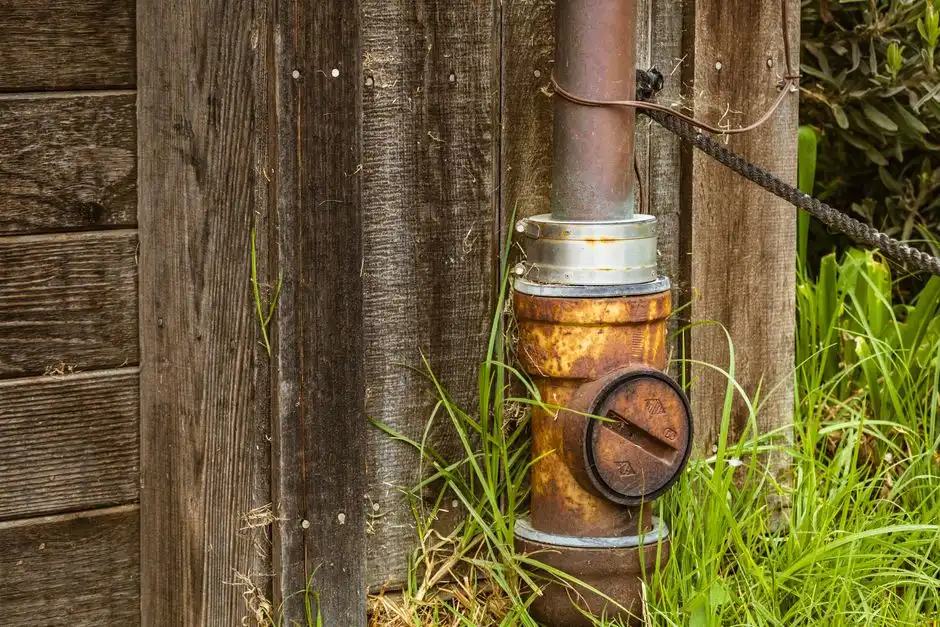
The first procurement decision is not which package unit to buy; it is whether the property has a lawful, technically feasible sewer route. Verify connection availability and terms with the accredited sewer concessionaire before developing an on-site process basis. If a connection is unavailable, assess an on-site STP. If reuse or a more stringent discharge objective applies, evaluate advanced treatment as a possible refinement.
| Decision condition | Pathway to evaluate | Items to confirm before commitment |
|---|---|---|
| An accredited sewer connection is available | Centralized sewer connection | Connection point and capacity, allowable discharge, fees, schedule, pretreatment obligations and responsibility for downstream compliance |
| No feasible sewer connection | On-site sewage treatment | Flow profile, wastewater characteristics, footprint, soil and groundwater, access, power, odor control, sludge route and receiving-water category |
| Advanced quality or reuse is required | On-site treatment with advanced process steps | Confirmed effluent requirements, reuse criteria, process train, monitoring, residuals handling and operating resources |
A sewer connection can move collection and treatment into a shared system, but it does not remove the owner’s need to understand discharge restrictions, pretreatment requirements and the concessionaire’s terms. On-site treatment gives the owner more control over installation and operation, while transferring civil works, process operation, monitoring, maintenance and sludge management to the property or its appointed contractor.
Do not select from floor area alone, and do not assume that a septic tank satisfies the permit. Restaurant grease, hotel wastewater and mixed-use flows require a defined pretreatment and equalization strategy where warranted.
The Guadalupe BLISS precedent is instructive but scale-specific: the World Bank selected sewer interception and an underground centralized STP to reduce untreated or partially treated domestic discharge reaching the Pasig River. A property should not reproduce that arrangement without its own network, land, legal and operating analysis. The equipment pathways can be compared through this guide to compare A/O, MBR and MBR-UF package plants.
Compare Buried A/O, MBR and Centralized STP Options
The primary technology comparison is hydraulic and operational: a buried A/O package plant combines treatment stages in one underground unit, an MBR adds membrane separation within a compact biological system, and a centralized STP consolidates treatment through dedicated infrastructure and a collection network.
| Option | Process and verified catalog basis | Installation implications | Operational considerations |
|---|---|---|---|
| Buried A/O package STP | The WSZ series combines anoxic/aerobic A/O biological contact oxidation, sedimentation and disinfection in one buried package unit. The catalog lists 1–80 m³/h and applications including residential communities, hotels, hospitals, factories and rural areas. | Installed below grade with landscaping above; excavation, access, groundwater and structural conditions require project design. | The catalog describes the unit as fully automated and requiring no operator. |
| MBR | The catalog describes activated sludge with submerged PVDF membrane filtration at less than 1 μm and a footprint stated as 60% smaller than conventional systems. Its listed capacity range is 10–2,000 m³/day. | Compact equipment arrangement, but building, hydraulic connections, access and ancillary systems still require detailed design. | Membrane monitoring, maintenance and eventual replacement must be included in the operating plan. |
| Centralized STP | Shared treatment, as illustrated by the Guadalupe BLISS underground STP serving a clustered development. | Requires site acquisition or dedicated infrastructure, collection works, construction and network integration. | Requires long-term project governance, staffing, monitoring and residual-management arrangements. |
A buried A/O package sewage treatment plant is relevant when the property has a constrained above-ground footprint and the design basis supports the catalog’s flow range. Its underground installation still imposes excavation, buoyancy, groundwater, access and structural requirements that the equipment name does not resolve.
An integrated MBR membrane bioreactor offers membrane separation and a smaller stated footprint, making it relevant where space is constrained or advanced effluent quality is required. It also introduces membrane-system obligations, so a lower footprint does not mean lower lifecycle responsibility.
A centralized STP can suit clustered flows and shared infrastructure, but it is a project-development route rather than an off-the-shelf equipment purchase. The technology itself does not determine permit acceptance. The confirmed receiving-water requirements, proposed process train and monitoring evidence remain the deciding criteria.
Size the Plant from Flow and Influent Data

Correct sizing starts with measured or defensibly estimated flow, not occupancy alone. The World Bank project calculated flow using 200 liters per day per capita and a 70% wastewater discharge rate. These are historical project assumptions for benchmarking, not universal Makati inputs.
The supplier must reconcile average daily flow with the hourly peak profile, including surges from occupancy schedules, restaurant service periods, laundry, backwashing or other contributing uses. Ask how the selected unit handles the actual peak and whether equalization, flow splitting or another peak-flow strategy is required.
| Historical Guadalupe BLISS influent assumption | Project value |
|---|---|
| Per-capita water demand | 200 liters per day |
| Wastewater discharge rate | 70% |
| TSS | 150 mg/L |
| BOD5 | 225 mg/L |
| COD | 400 mg/L |
| Oil and grease | 65 mg/L |
| pH | 6–9 |
These influent values should not be copied blindly into a new quotation. Hotel, restaurant and mixed-use wastewater can contain grease, solids and variable organic loads that affect pretreatment, equalization, biological treatment and sludge management. Supplier calculations should state the design flow, hydraulic retention assumptions, organic-loading basis, peak-flow strategy and future-expansion allowance.
For a WSZ proposal, require the selected operating capacity to reconcile with the catalog range of 1–80 m³/h. For an MBR proposal, reconcile the duty and peak basis with the catalog range of 10–2,000 m³/day. These ranges are selection boundaries, not evidence that every flow within them will satisfy the site’s permit.
Use the data request in this 2026 MBR design-parameter guide to structure the engineering inputs, then require site-specific calculations from the selected supplier.
Build the Supplier and Permit Checklist
A defensible purchase sequence prevents equipment selection from getting ahead of the permit and site data. Complete the following steps before accepting a commercial offer.
- Establish the wastewater basis. Obtain daily flow, an hourly peak profile, influent analysis, occupancy and use schedules, discharge points and relevant sewer information.
- Confirm the regulatory route. Coordinate with the competent Makati authorities and the sewer concessionaire to establish the applicable connection or discharge pathway and permit requirements.
- Request the engineering submission. Require a process basis, hydraulic calculations, general arrangement, civil and structural requirements, utilities demand, control philosophy and commissioning protocol.
- Map the proposed process to the permit. Require a compliance schedule linking each treatment stage to the confirmed effluent parameters, test methods, sampling points and acceptance criteria.
- Allocate lifecycle responsibilities. Identify operator attendance, laboratory support, preventive maintenance, spare parts, remote monitoring, sludge extraction or dewatering and emergency response.
- Close installation and handover gaps. Confirm site conditions, commissioning tests, document handover, warranty boundaries and the supplier’s role in supporting permit documentation.
Independent review by a licensed sanitary engineer is appropriate for the design and permit basis. A vendor’s general compliance statement is not project approval. Structural and installation details are also material to equipment risk; where filtration or residuals handling enters the scope, review the relevant duty and maintenance information for plate-and-frame filter presses.
For facilities considering staged compliance measures, this assessment of sewer-limit compliance for industrial facilities near Bolivar illustrates why discharge points and receiving-water context must be resolved rather than inferred.
Frequently Asked Questions
How much should a Makati property budget for domestic sewage treatment?
No verified Makati equipment price or installation quotation was supplied, so a defensible budget cannot be stated from the available research. Request itemized quotations based on the same measured flow, peak profile, influent analysis, confirmed permit limits, civil works, utilities, controls, commissioning, O&M and sludge-removal scope. Compare complete lifecycle scopes rather than package-unit prices alone.
What capacity should an on-site sewage treatment plant be selected for?
Capacity cannot be selected from floor area or population alone. The supplier needs daily flow, hourly peak flow, wastewater characteristics and confirmed effluent requirements. Require the proposal to state its design flow, hydraulic retention assumptions, organic-loading basis, peak-flow strategy and how the selected duty falls within the applicable WSZ or MBR catalog range.
Which supplier documentation should be checked before paying for an STP?
Request project-specific hydraulic calculations, a process basis, a permit-compliance matrix, installation and structural requirements, utilities demand, commissioning criteria and O&M responsibilities. Also verify membrane or mechanical maintenance support, spare-parts arrangements, sludge handling, document handover and warranty boundaries. These deliverables should be assessed by a licensed sanitary engineer.
Is the Class C benchmark the current permit limit for every Makati property?
No. The Class C values cited here come from the historical World Bank Guadalupe BLISS project and its references to DENR Administrative Order 34 and 35. They are not a site-specific permit determination. Confirm the current requirements through the competent authorities and a licensed sanitary engineer using the exact receiving-water category, discharge point and permit status; commercial guidance is not a formal permit.
For further regulatory context, review this 2026 Philippine wastewater treatment compliance guide.