Separate the Waste Streams Before Choosing Equipment
A data center in Santo Domingo Oeste needs two coordinated treatment trains because sanitary sewage and cooling blowdown have different contaminants, objectives, and likely destinations. Sanitary wastewater from offices, cafeterias, and staff facilities generally requires biological treatment, solids separation, and disinfection before sewer discharge or approved reuse. Cooling-tower blowdown is the controlled purge used to prevent dissolved solids, scale-forming minerals, suspended matter, and residual treatment chemicals from accumulating in the circulating loop.
The reference configuration discussed in the HydropureWater 2026 Santo Domingo guide is KIO SDO-1, a Tier IV-design facility with 2N cooling and electrical redundancy. That configuration is a reference case, not evidence that every Santo Domingo Oeste facility has the same load or redundancy. Equipment sizing must instead follow the facility’s measured flows, chemistry, staffing, cooling configuration, and operating strategy.
Install separate metering for blowdown, sanitary wastewater, evaporation, makeup water, and emergency dumps. Without those measurements, the water balance cannot show where losses occur, whether recovery is performing as designed, or whether an emergency discharge has distorted the operating baseline.
| Stream | Primary contaminants and duties | Normal treatment logic | Design basis |
|---|---|---|---|
| Sanitary wastewater | Organic matter, suspended solids, pathogens, and variable peak flows | Biological treatment, solids separation, and disinfection; additional polishing where reuse requires it | Staff population, fixture flow, generation rate, peak demand, and reuse destination |
| Cooling-tower blowdown | TDS, hardness, silica, alkalinity, suspended solids, biocides, inhibitors, dispersants, and treatment chemicals | Characterization, filtration, membrane pretreatment, RO where justified, and concentrated-brine management | Measured blowdown flow and chemistry, cycles of concentration, intake temperature, permit limits, and reuse target |
Keep the two packages physically and operationally distinct. An integrated MBR treatment system addresses the sanitary train, while an industrial RO system for cooling-blowdown reuse addresses the separate mineral-treatment duty. A combined package should not be accepted unless the supplier demonstrates that the sanitary and blowdown flows can remain isolated without cross-contamination, incompatible chemistry, or incompatible controls.
Characterize the Blowdown and Confirm the Permit Triggers
Genesis Water Tech’s cooling-blowdown benchmark places typical 4-CoC discharge at 1,200–6,000 mg/L TDS and 10–50 mg/L suspended solids, with elevated hardness, silica, alkalinity, and accumulated treatment chemicals. These values are a preliminary screening envelope, not Santo Domingo site data. The design feed must come from representative samples collected across normal cooling operation, chemical-program changes, high-load periods, and emergency events.
The laboratory and online-monitoring program should cover conductivity, TDS, hardness, calcium, alkalinity, silica, suspended solids, pH, temperature, and chlorine. It must also identify residual corrosion inhibitors, scale inhibitors, dispersants, biocides, and phosphate. Where the cooling program has used legacy chromate or high-phosphate chemistry, document its history and test for relevant constituents; otherwise, the RO feed chemistry may be incomplete.
The Santo Domingo design-envelope intake temperature of 25–30°C is particularly important because warmer water lowers silica solubility and makes conservative calcium-carbonate and silica controls necessary. The HydropureWater 2026 guide, citing IDE, reports that conventional brackish-water RO commonly reaches only about 75–80% recovery before silica, calcium carbonate, and calcium sulfate scaling becomes dominant. That figure is a reference limit, not a guaranteed recovery target for this site.
- Obtain written confirmation of sewer TDS and other constituent limits.
- Confirm biocide, phosphate, and treatment-chemical restrictions.
- Identify permitted carriers and any brine haul-off restrictions.
- Clarify storm-water handling during hurricane conditions.
- Obtain current discharge fees and available sewer capacity.
Freeze these answers in the permit basis before issuing the P&ID. Genesis Water Tech cites sub-1,500 mg/L TDS limits and discharge fees of US$5–15 per 1,000 gallons for some jurisdictions. Neither is a confirmed Santo Domingo legal requirement; both are triggers to investigate through the free-trade-zone discharge permit and sewer authority.
| Permit or operating question | Evidence to obtain | Effect on equipment selection |
|---|---|---|
| Discharge chemistry | Written constituent limits, sampling frequency, and acceptance methodology | Determines whether RO reuse alone is sufficient or concentrate treatment is required |
| Brine management | Approved carriers, route restrictions, collection points, and handling charges | Determines whether partial ZLD has a viable disposal route |
| Storm water | Rules for cooling towers, process water, containment, and bypasses | May affect segregation, storage, and emergency operating logic |
| Tariffs | Current sewer discharge, transport, and treatment charges | Provides the avoided-cost basis for comparing reuse and discharge |
An automatic chemical-dosing system should use controlled, metered dosing linked to the measured feed chemistry. Its control narrative must identify the chemicals, injection points, high/low interlocks, and response to abnormal oxidant, biocide, or inhibitor residuals; otherwise, it cannot protect the downstream membranes.
Select a Pretreatment Train That Can Protect High-Recovery RO
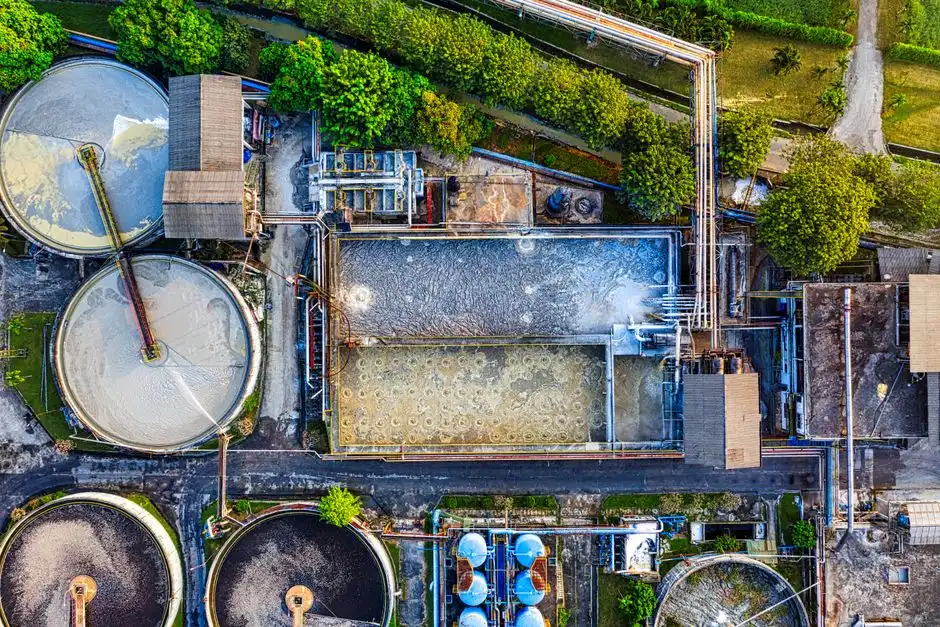
High-recovery RO is a consequence of controlled pretreatment, not a recovery figure that can be placed safely on the drawings without feed testing. The train should remove suspended solids and colloids, limit scale formation, control residual oxidant, and provide enough operating margin for membrane cleaning without creating excessive backwash or concentrate.
The HydropureWater 2026 guide describes a self-cleaning side-stream filter with a 10–25 µm screen and cites Genesis Water Tech’s installed benchmark of US$50,000–200,000 for typical data-center side-stream installations. That benchmark applies to the cited installation scope; it is not a Santo Domingo quotation. Multi-media filtration can then reduce suspended solids, turbidity, and colloids ahead of UF, but the final filter train should follow pilot testing and the selected membrane manufacturer’s feed limits.
The research envelope for hollow-fiber UF is 0.01–0.1 µm, 10–30 psi, and 90–95% recovery. HydropureWater’s commercial UF specification is more specific: 0.03 µm PVDF membranes, 2,000–40,000 L/h throughput, turbidity up to 300 ppm, automatic backwash, and air scour. These values describe the cited commercial equipment envelope; they do not establish the required flow or recovery for the project.
After filtration, apply controlled antiscalant and pH adjustment immediately before RO. Validate the chemical program against the complete feed analysis, including silica, calcium, alkalinity, sulfate, residual oxidant, dispersants, and biocides. PLC-controlled dosing with redundant metering pumps gives the system a defensible response to abnormal chemistry. The multi-media pretreatment filter and hollow-fiber UF pretreatment for the RO train should be selected only after their hydraulic duty and concentrate-management requirements are fixed.
Disinfectant control must prevent residual oxidant from reaching membranes that are not approved for that exposure. A higher RO recovery target should not substitute for biological control, antiscalant, pH management, or cleaning capability. Set recovery through pilot or vendor projection using the measured feed, not only the preliminary 1,200–6,000 mg/L envelope.
| Stage | Cited specification or benchmark | Design verification required |
|---|---|---|
| Self-cleaning side-stream filter | 10–25 µm screen; cited installed cost US$50,000–200,000 | Side-bleed flow, solids loading, cleaning frequency, and installation scope |
| Multi-media filtration | Used to reduce suspended solids, turbidity, and colloids | Media specification, backwash demand, pressure loss, and pretreatment duty |
| Hollow-fiber UF | Research envelope: 0.01–0.1 µm, 10–30 psi, 90–95% recovery; commercial system: 0.03 µm PVDF, 2,000–40,000 L/h | Feed chemistry, flux, backwash waste, recovery, and membrane compatibility |
| Chemical conditioning | Controlled antiscalant and pH adjustment | Validated dose, residual limits, metering accuracy, and redundant pumping |
Choose Between RO Reuse, Partial ZLD, and Full ZLD
The decision is permit-gated: use RO for cooling-makeup reuse when sewer discharge is permitted but economically unattractive; add MVC to the RO concentrate when discharge restrictions make residual liquid unacceptable or difficult to manage; and reserve full ZLD for an absolute discharge prohibition or a water-scarce site. The cited performance figures are reference benchmarks, not guaranteed project outputs.
For cooling-makeup reuse, Genesis Water Tech reports 60–85% recovery and identifies reuse as the default where municipal makeup is available and discharge is not economically attractive. For industrial RO, the research cites 50–85% recovery, 10–50 mg/L permeate TDS, and 95–99% dissolved-solids rejection. A conservative 50–75% band should be used where scaling is the binding constraint, subject to site-specific analysis.
Partial ZLD applies RO followed by MVC on the concentrate. The research cites 95–98% MVC recovery, distillate below 10 mg/L TDS, and energy use of 15–25 kWh per 1,000 gallons. The same source describes an RO-plus-MVC configuration at 50–75% RO recovery and approximately 95% MVC recovery on the concentrate, producing an overall 85–95% system recovery with minimal liquid discharge. Full ZLD adds a solids-management step and should follow only where liquid discharge is prohibited or reuse economics independently justify it; cited full-ZLD economics are US$3–8 million CAPEX and US$5–15 per 1,000 gallons OPEX.
Nanofiltration is a conditional alternative when hardness, rather than total TDS, is the binding reuse or discharge constraint. The cited NF envelope is 75–150 psi and 70–85% recovery. It should not be selected merely because it operates at lower pressure; dissolved-salt rejection, silica behavior, concentrate chemistry, and reuse requirements still govern the decision.
For a specific RO architecture, the industrial RO system for cooling-blowdown reuse must be evaluated as part of the concentrate train, not as an isolated product. Membrane replacement, pretreatment, controls, and chemical compatibility should be reviewed with the RO and UF membrane elements, while any chlorine-dioxide demand must remain separate from the membrane feed.
| Option | Discharge objective | Typical recovery cited | Permeate or distillate cited | Brine output | Cited cost benchmark | Operational trigger |
|---|---|---|---|---|---|---|
| RO reuse | Replace freshwater cooling makeup; discharge residual concentrate | 60–85% for reuse; 50–85% for industrial RO | 10–50 mg/L TDS permeate | RO concentrate | No complete local quotation in the research | Municipal makeup is available and discharge is permitted but costly |
| Partial ZLD: RO plus MVC | Minimize liquid discharge | 85–95% overall in the cited configuration | MVC distillate below 10 mg/L TDS | Small residual brine requiring removal | No complete local quotation in the research | Discharge chemistry or brine haul-off restrictions make RO-only reuse insufficient |
| Full ZLD | No liquid discharge | 95–99% cited | Requires a liquid-plus-solids treatment design | Concentrated brine and solid residues require management | US$3–8 million CAPEX; US$5–15 per 1,000 gallons OPEX | Absolute discharge prohibition or demonstrable water-scarcity case |
| NF where applicable | Target hardness where TDS is not the binding limit | 70–85% | Not supplied as a fixed permeate TDS in the research | NF concentrate | No benchmark supplied | Hardness is confirmed by analysis as the controlling constraint |
Treat Sanitary Wastewater for Permit-Compliant Reuse or Disposal
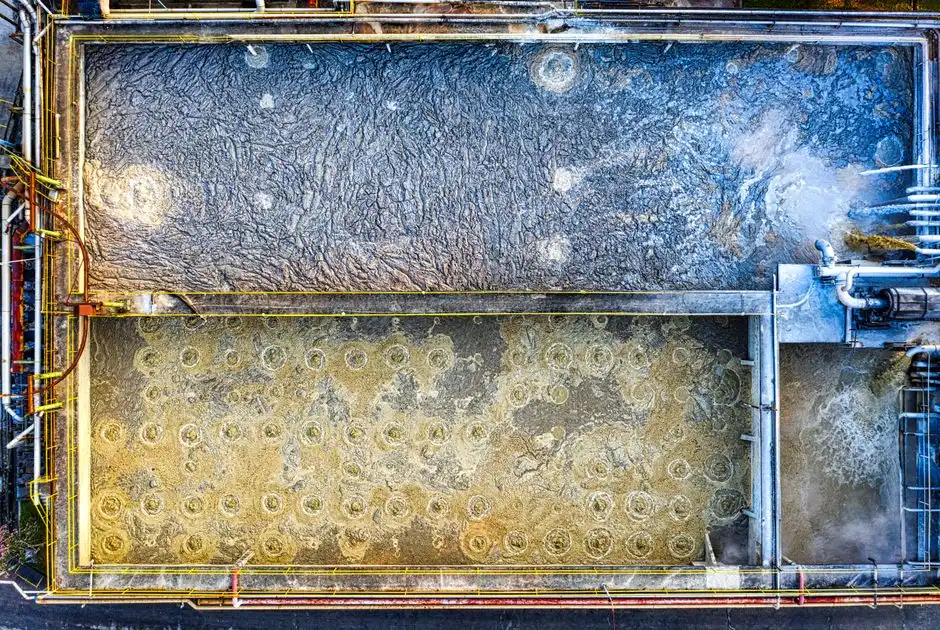
Sanitary treatment should be sized independently of IT load. Start with the staff population, fixture flow, wastewater-generation rate, and peak demand, then identify the reuse endpoint. A plant selected for toilet flushing is not automatically suitable for landscape irrigation, and neither should be assumed acceptable for sewer discharge without the applicable permit and receiving-system requirements.
The HydropureWater MBR option uses submerged PVDF membranes below 1 µm and is commercially specified for 10–2,000 m³/day. The 2026 Santo Domingo guide describes it as a near-reuse-quality option for sanitary effluent and limited reuse applications. Capacity must still be selected from the sanitary flow model, including operating redundancy, peak factors, downtime, and the treatment objectives agreed with the authority or reuse user.
For smaller flows where unattended operation and a below-grade footprint are priorities, the cited WSZ underground A/O package covers 1–80 m³/h with integrated disinfection. The integrated MBR treatment system and the underground integrated sewage treatment package therefore represent different capacity and packaging decisions, not interchangeable product labels.
Add UV or chlorine-dioxide polishing only when the reuse or discharge objective requires additional disinfection control. A UV UV sterilizer for water-treatment polishing needs a specified dose-validation basis, while a chlorine-dioxide system needs controlled generation, storage, dosing, and residual monitoring. The sanitary objective must also address nutrients, solids, visible impacts, and reuse-contact requirements; the supplied research does not establish Santo Domingo’s current numeric permit limits.
| Sanitary option | Cited capacity or specification | Best-fit decision | Evidence to request before ordering |
|---|---|---|---|
| MBR | 10–2,000 m³/day; submerged PVDF membranes below 1 µm | Larger flows or near-reuse-quality objectives where the cited product envelope fits | Average and peak flows, reuse quality, redundancy, sludge handling, and odor controls |
| Underground A/O | 1–80 m³/h with integrated disinfection | Smaller flows where unattended operation and below-grade installation are priorities | Subsurface conditions, access, ventilation, flooding, power, and permit basis |
| UV or chlorine-dioxide polishing | Not given as a universal capacity or dose in the research | Additional disinfection control for the agreed reuse or discharge objective | Required dose or residual, hydraulics, fouling rate, and redundancy |
Operate the sanitary and blowdown plants in one integrated SCADA view. The display should connect sanitary flow, blowdown flow, makeup, evaporation, conductivity, chemical dosing, alarms, and power status so operators can manage the complete site water balance rather than two systems that drift out of phase.
Build a Procurement and Reliability Checklist Before Ordering
A defensible quotation must state the design basis, delivery scope, local landed cost, and operating assumptions. Require line-item pricing for every treatment stage, including local freight, duties, installation, commissioning, membranes, chemicals, controls, hurricane-rated enclosures, and generator interfaces. An equipment price without those inputs is not a comparable installed cost.
Genesis Water Tech cites a 50,000 GPD CTBD RO train at US$250,000–500,000 installed, with US$1.50–3.00 per 1,000 gallons operating cost. It also cites a 10,000–30,000 GPD MVC stage at US$1–3 million CAPEX. These are benchmarks from the cited source, not Santo Domingo quotations. Require each bidder to show the flow, recovery, pressure, flux, antiscalant dose, energy rate, duty allocation, and membrane-life assumptions underlying its price.
Ask for a vendor projection specifically covering 1,200–6,000 mg/L TDS at 25–30°C. The projection should include scaling calculations, concentrate chemistry, normalized membrane flux, cleaning frequency, and sensitivity to silica and hardness. A claim that the system can reach a selected recovery without showing the calculation is not sufficient.
Reliability requirements should cover redundant critical pumps, chemical-dosing skids, PLC/SCADA capabilities, local-language support, and documented ride-through for generator operation. The HydropureWater 2026 guide describes the SDO-1 reference design as using two 450 kW generators with seven days of diesel autonomy on a 2N electrical topology. That is a reference configuration, not a design basis that can be copied to another facility.
| Procurement check | Supplier evidence required | Buyer decision |
|---|---|---|
| Landed cost | Stage-by-stage quote with freight, duties, installation, commissioning, consumables, and exclusions | Compare complete installed and operating costs on one basis |
| Recovery basis | Calculation for 1,200–6,000 mg/L TDS at 25–30°C, including scaling and flux assumptions | Accept only a recovery supported by the proposed feed chemistry |
| Hurricane and generator readiness | Enclosure documentation, electrical load list, ride-through sequence, and fuel-independent auxiliary requirements | Verify safe operation through the site’s actual utility outage scenario |
| Redundancy and controls | Critical-equipment duty/standby arrangements, PLC architecture, alarms, historian, and local-language interface | Confirm maintainability without depending on remote intervention |
| Local service and parts | Named service partner, response commitment, spare-parts list, inventory, and customs procedure for Las Americas free-trade-zone delivery | Validate response time and logistics before assigning the scope |
| Reference performance | Tropical or brackish-water sites, realistic acceptance tests, membrane-flux data, and a complete site water balance | Reject references that do not resemble the actual service environment |
Use the treatment parts, valves, and filter-media schedule to identify accountable suppliers, compatible materials, stocked spares, and replacement lead times. The final purchase package should also define membrane cleaning, membrane replacement, chemical supply, analytical testing, and contingency for a failed unit or restricted discharge route.
Frequently Asked Questions
Should the facility prioritize cooling-makeup reuse, sewer compliance, or a discharge-independent zero liquid discharge design?
Start with the permit and business objective. Choose RO reuse when sewer discharge is permitted but costly, partial ZLD when discharge chemistry or brine logistics restrict residual liquid, and full ZLD only when discharge is prohibited or water scarcity independently justifies it. Do not purchase the most complex system before confirming those conditions in writing.
What cost inputs are needed for a defensible Santo Domingo Oeste budget?
Request a line-itemized landed quote covering freight, duties, installation, commissioning, membranes, chemicals, controls, hurricane-rated enclosures, spares, disposal, power, and labor. The cited RO, MVC, side-stream filtration, and full-ZLD figures are benchmarks, not a complete local quotation; use them only as comparison points until current bids and tariffs are obtained.
Should MBR, packaged A/O, UF, and RO be selected as one universal package?
No. MBR and packaged A/O serve the sanitary stream; UF and RO serve defined filtration and blowdown-reuse duties. Select each unit from measured chemistry, hydraulic flow, reuse quality, footprint, staffing, permit requirements, and redundancy needs rather than from a single data-center package label.
What site data must be collected before final sizing?
Obtain operating-season feed and effluent data, a signed discharge permit, the completed site water balance, storm-water rules, carrier constraints, and current tariff information. Include blowdown chemistry across chemical-program and load changes, sanitary peak flows, emergency-dump history, and generator operating requirements. These inputs determine the treatment objective and equipment duty.