
Start by separating pulp and paper wastewater streams
EPA’s historical review shows that pulp and paper mills produce materially different wastewater across wood preparation, groundwood pulping, neutral sulfite semi-chemical pulping, Kraft and soda pulping, acid sulfite pulping, pre-hydrolysis, pulp bleaching, deinking, paper manufacture, paperboard manufacture, and miscellaneous pulp production. The engineering consequence is simple: specify primary treatment by stream and treatment objective, not by facility name. EPA’s April 1973 review also established that clarification could remove the bulk of suspended solids from most mill effluents, while finely dispersed pigments and debris from filled-paper, coated-paper, and waste-paper-reclamation operations remained difficult to treat.
Build separate sampling plans for fiber-rich white water, bark and wood-preparation waste, bleaching streams, deinking wastewater, coating and filler losses, and cooling or seal water. For each stream, request flow, TSS, settleable solids, fiber and filler content, particle or floc characteristics, pH, temperature, and seasonal production data. The most dilute stream is not automatically the best dissolved air flotation feed, and the most heavily loaded stream is not automatically the best clarifier feed.
Start with mechanical screening for fiber-rich wastewater only after confirming what the mill already recovers. Wood preparation and paper-machine streams can contain material with a different recovery objective from cooling or seal water, while bleaching and deinking streams may bring different dissolved loads and chemical conditions. EPA’s review is useful process evidence, but it is not a current Mishawaka permit or a substitute for source-specific characterization.
| Mill stream | Material to characterize | Decision question |
|---|---|---|
| Bark and wood preparation | Wood debris, fibers, suspended solids | Can the material be screened or recovered before primary clarification? |
| Fiber-rich white water | Wood fiber, fillers, TSS, settleable solids | Is rapid fiber capture or recovery more valuable? |
| Bleaching wastewater | Fiber carryover, pH, color, soluble organics | What must be removed before biological treatment? |
| Deinking wastewater | Finely dispersed material, debris, fillers, color | Will clarification alone address the residual dispersed fraction? |
| Coating and filler losses | Filler size distribution, adhesion, dispersion | Are the particles light, colloidal, or readily settleable? |
| Cooling and seal water | Flow, temperature, suspended solids, contaminants | Should the stream be segregated from process wastewater? |
How DAF and gravity clarification remove mill solids
Dissolved air flotation is a process in which air is dissolved under pressure, released as microscopic bubbles in a flotation tank, attached to suspended particles, and removed as float; gravity sedimentation allows solids to settle and be withdrawn as bottom sludge. A lamella clarifier adds stacked inclined plates to improve separation within a compact structure. These are different capture mechanisms: flotation makes low-density material buoyant, while clarification depends on the solids having dependable settling behavior and the tank receiving suitable hydraulic loading.
The distinction between these mechanisms determines the effectiveness of solids removal in pulp mill white water. Fibers, fillers, and colloids with densities close to water may be poor sedimentation targets even when they are easy to float. The commercial DAF literature describes dissolved air flotation as especially useful for particles with densities similar to water. It also identifies suspended solids and colloidal matter among the contaminants addressed by a pulp and paper DAF system. Conversely, readily settleable material is a more natural candidate for gravity separation.
Material fate also affects the decision. DAF float may support wood fiber recovery or concentrate fillers for further use, provided the mill has a viable recovery process. Clarified sludge is primarily a handling stream unless a specific recovery route exists. Neither process directly removes dissolved color, soluble organics, BOD, or COD; the EPA review treats biological and advanced treatment as separate functions.
A practical treatment train begins with screening or fiber recovery, then primary clarification or DAF, followed by biological, tertiary, or reuse treatment as required. A lamella clarifier for pulp mill wastewater may fit the gravity-separation stage, but the upstream and downstream treatment objectives still determine whether it is the correct primary device.
Compare DAF and clarifiers for pulp and paper applications
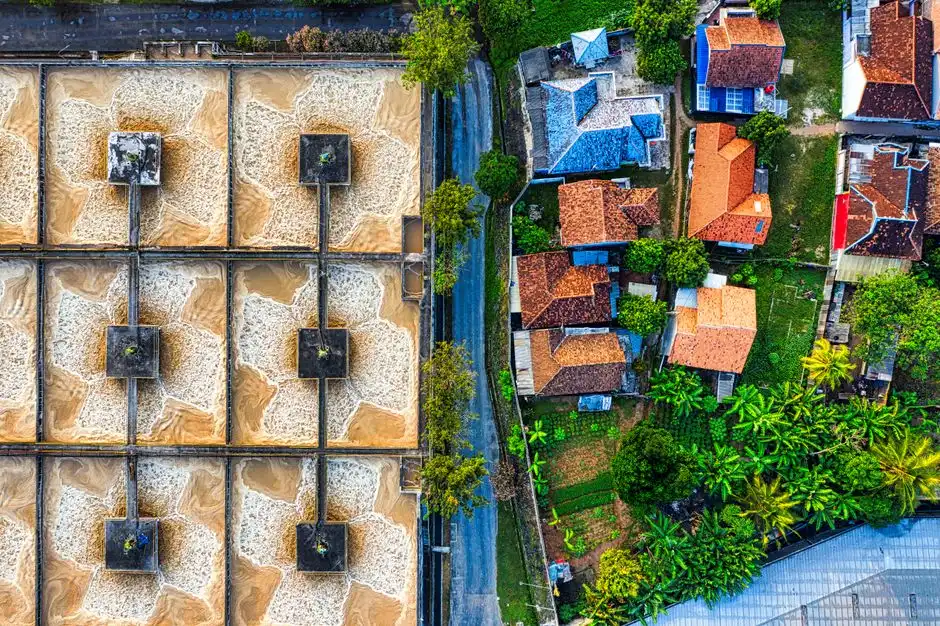
The strongest equipment fit follows from the solids that must leave the water and what happens next: flotation is favored for light or recoverable material, while gravity clarification is favored for dependable settling and high-volume bulk-solids removal. The comparison below is qualitative unless a number is expressly identified as a verified catalog specification.
| Criterion | Dissolved air flotation | Clarifier |
|---|---|---|
| Separation mechanism | Micro-bubbles attach to particles; float is skimmed | Solids settle; bottom sludge is withdrawn |
| Strong application | Low-density fibers, fillers, colloids, and recoverable solids | Readily settleable solids with reliable sedimentation behavior |
| Key process controls | Bubble generation, recycle saturation, conditioning, skimming | Hydraulic distribution, settling characteristics, sludge withdrawal, solids inventory |
| Main operating burdens | Compressor, recycle pump, pressure-system maintenance, skid controls | Sludge collection, maintenance, and possible chemical conditioning |
| Solid recovery potential | Float may support fiber recovery | Sludge normally proceeds to handling or disposal |
| Verified equipment specification | HydropureWater catalog: 4–300 m³/h across 13 standard models | HydropureWater catalog: 20–40 m/h lamella surface loading |
HydropureWater’s verified DAF catalog covers 4–300 m³/h across 13 standard models and specifies automatic skimming and treatment of suspended solids, colloidal matter, FOG, oil and grease, and related contaminants. Those are equipment capabilities and catalog ranges, not demonstrated pulp-and-paper removal results for a Mishawaka mill. No comparable DAF footprint value is established by the supplied research, so footprint comparison should remain qualitative until vendors submit a common design basis.
The commercial comparison states that clarifiers generally have lower operating costs, while DAF can be more cost-effective for specific contaminants such as oils. That finding does not by itself establish the economic choice for fibers or fillers. Pulp and paper suitability depends on particle behavior, recovery value, chemical use, sludge handling, and the required endpoint. Do not transfer the commercial guide’s oil-removal and sediment-removal examples into expected mill performance; the supplied evidence does not establish them for pulp and paper wastewater.
Match the equipment to the factory’s treatment objective
Choose DAF when the immediate objective is rapid removal of low-density fibers or fillers, float recovery has a defined destination, or a compact solids-removal step is needed before reuse or biological treatment. Choose a clarifier when settleable solids dominate, the objective is straightforward bulk-solids removal, high flow and simple gravity operation are priorities, and the bottom sludge can be handled economically. These conditions describe treatment objectives, not automatic equipment guarantees.
Consider a hybrid arrangement when the wastewater contains recoverable light material and heavier settleable solids. The supplied industrial comparison confirms that clarifiers and DAF can be combined, although it does not establish a universal mill configuration. In a hybrid train, clarify which fraction each device captures, where each recovered stream goes, and whether the downstream biological or reuse stage can accept the resulting water.
Primary solids removal does not replace biological treatment where BOD and soluble organics are present. Fine residuals may require tertiary filtration or other controls when the reuse specification is more demanding than the discharge permit. For reuse applications, evaluate the combined train rather than treating DAF or clarification as the final step.
There is also a compliance-risk boundary: historical EPA documents cannot be treated as current Mishawaka discharge limits. Before final selection, obtain the mill’s current discharge permit, sewer limits, and applicable local-agency requirements. Sample across representative production periods because product mix, recycled material, raw-material changes, and operating conditions can alter wastewater composition.
Integrate sludge handling early. EPA’s 1973 review treats sludge handling, treatment, and disposal as a separate mill problem. If the chosen process increases captured solids, evaluate pulp mill sludge dewatering press suitability, disposal compatibility, and operating labor rather than treating dewatering as an afterthought.
Pilot-test the selected duty before buying equipment
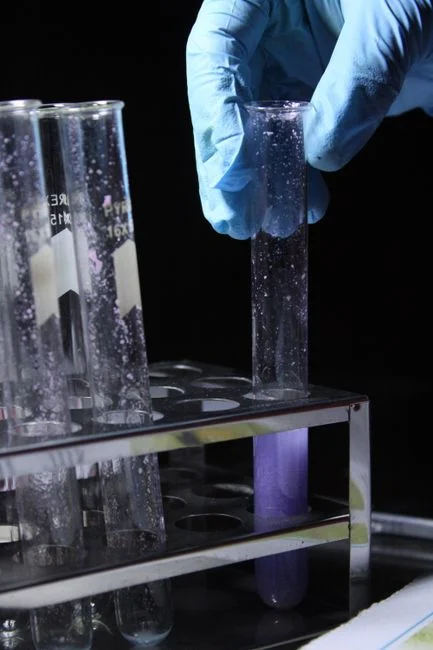
Pilot testing should use representative mill wastewater because the central risk is a mismatch between selected equipment and actual stream behavior. Collect composite and time-composite samples from each relevant stream during representative production. Measure flow, TSS, settleable solids, pH, temperature, BOD, COD, color, fiber and filler content, and the particle properties that affect flotation or settling. Include conditions associated with normal startup, stable production, shutdown, cleaning, and production changes.
Run a bench or pilot trial of the candidate train using the mill’s actual chemical-conditioning program. Document solids capture, float or sludge yield, clarified-water appearance, and any effect on downstream biological or reuse operations. Treat these as trial outputs to be measured, not removal guarantees to be copied from another industry.
The comparison should also include sludge volume, solids concentration, dewatering behavior, chemical demand, equipment fouling, and operator workload. Use an automatic chemical dosing system in the trial scope if conditioning is part of the candidate train, and evaluate dosing reliability rather than assuming a fixed dose will work throughout production variability.
Final sizing should follow verified hydraulic and solids-loading data from the selected stream. Catalog flow ranges can support an initial modular screen, but they cannot establish mill capacity. If a trial does not reproduce representative variability, record the limitation and obtain further data before releasing equipment for purchase.
| Pilot step | Required record | Decision output |
|---|---|---|
| Source characterization | Flow, solids, particle behavior, pH, temperature, organics, color | Qualified wastewater basis |
| Conditioning trial | Chemical type, dose, mixing, solids capture | Operating recipe and residual load |
| Separation trial | Float or sludge yield, water quality, fouling | Verified unit suitability |
| Downstream check | Biological or reuse effects | Treatment-train compatibility |
| Residuals check | Sludge volume, concentration, dewatering behavior | Handling and disposal plan |
| Variability check | Startup, shutdown, product and production changes | Design envelope and final sizing |
Build a defensible DAF-versus-clarifier decision record
A defensible decision compares both options against the same measured wastewater and the same disposal or reuse endpoint. Create a weighted evaluation covering solids removal, recovery value, footprint, energy, operator labor, chemical use, sludge handling, maintainability, capital cost, and lifecycle cost. Set the weights from the mill’s treatment objective rather than allowing an equipment catalog to define the evaluation.
Require each supplier to define the guaranteed treatment objective, design basis, test protocol, duty limits, skid or civil scope, controls, and included ancillaries. Also require training, control interlocks, maintenance access, wearing-part availability, and compatibility with the downstream sludge-disposal system. These scope items often determine whether a quoted system can be operated safely and economically.
HydropureWater’s DAF catalog, with 4–300 m³/h across 13 standard models, is an initial modular screen rather than evidence that every model suits pulp and paper wastewater. Request comparable operating data, define what the proposed guarantee means, and require pilot or full-scale evidence under comparable conditions.
| Evaluation item | Evidence required | Decision consequence |
|---|---|---|
| Treatment objective | Specific solids, recovery, disposal, or reuse endpoint | Defines which option is technically relevant |
| Design basis | Measured flow, solids loading, variability, conditioning | Establishes fair sizing and comparison |
| Guarantee | Parameter, test method, sample point, and duty conditions | Allocates performance risk |
| Scope | Civil, skid, controls, ancillaries, installation, and training | Prevents omissions from the budget |
| Operations and maintenance | Energy, labor, chemicals, fouling, wear parts | Supports lifecycle-cost comparison |
| Residuals | Yield, concentration, dewatering, disposal route | Confirms treatment-train compatibility |
Record unresolved assumptions explicitly. Do not release a purchase order until they are closed by pilot testing, comparable operating data, or full-scale confirmation. The final record should show why the selected option matches the mill’s actual objective, not merely why it passed a generic demonstration.
Frequently Asked Questions
Which equipment is cheaper: DAF or a clarifier?
Clarifiers generally have lower operating costs, while DAF may be justified when it captures more
Frequently Asked Questions
Is DAF cheaper to operate than a clarifier for pulp and paper wastewater?
In most pulp and paper applications, Dissolved Air Flotation (DAF) systems have higher electricity consumption due to air saturation pump requirements, typically ranging from 0.5 to 1.5 kWh/m³ of treated water. However, DAF units often produce sludge with 3% to 5% solids content compared to the 0.5% to 2% achieved by primary clarifiers, which significantly reduces downstream sludge dewatering and disposal costs.
While clarifiers have lower energy demands, their operational cost advantage is often offset by the need for higher chemical dosages—specifically coagulants and polymers—required to achieve comparable Total Suspended Solids (TSS) removal efficiency in high-flow, low-density fiber applications.
How do I size a DAF or clarifier for a Mishawaka pulp mill?
Sizing for a Mishawaka-based facility must account for the specific hydraulic load and the high variability of fiber loading characteristic of regional paper production. For clarifiers, design engineers typically utilize an overflow rate of 0.5 to 1.0 m³/m²/h, while DAF systems are sized based on hydraulic loading rates ranging from 5 to 10 m³/m²/h depending on the surface area and recycle ratio.
You must perform a bench-scale jar test or a pilot study using a representative effluent sample from your specific pulp process to determine the rise velocity of the suspended solids. This data, combined with your peak hourly flow rate and local seasonal temperature fluctuations, will dictate the required surface area for either unit.
Should a pulp and paper factory use DAF and a clarifier together?
Yes, many modern mills utilize a two-stage treatment approach where a primary clarifier is used for bulk solids removal, followed by a DAF unit for polishing. This configuration is highly effective for facilities with high-strength effluent, as the clarifier removes heavy settleable solids while the DAF effectively captures lighter, colloidal fibers and oils that bypass the gravity settling process.
This combined approach allows the DAF unit to operate with a lower solids load, increasing its efficiency and reducing the frequency of cleaning cycles. It also provides redundancy, ensuring that discharge limits are maintained even if one system requires maintenance or experiences a process upset.
Can DAF or a clarifier alone meet pulp mill discharge requirements?
Whether a single unit can meet discharge requirements depends entirely on the mill's specific effluent parameters and local NPDES permit limits. A well-optimized clarifier can typically remove 80% to 90% of settleable solids, whereas a DAF unit is generally more effective at removing 90% to 98% of emulsified fats, oils, and finely dispersed fibers.
If your discharge permit mandates strict limits on Chemical Oxygen Demand (COD) or Biochemical Oxygen Demand (BOD), neither a clarifier nor a DAF alone will likely suffice, as both are primarily physical separation technologies. In these cases, they must be integrated into a broader treatment train that includes biological treatment, such as activated sludge or moving bed biofilm reactors (MBBR).
What should I ask a wastewater equipment supplier before ordering a DAF system?
You should request specific performance guarantees regarding the expected TSS and oil/grease removal efficiency based on your mill's historical influent data. It is critical to ask for the required air-to-solids ratio (A/S ratio) for your specific effluent and to obtain a detailed list of materials of construction to ensure they are compatible with your process chemicals, such as bleaching agents or pH adjustment acids.
Additionally, ask the supplier to provide data on the expected sludge concentration, the power consumption per unit of flow, and the availability of local field service support. Finally, verify the system's ability to handle shock loads of fiber, which are common in pulp mill startups and grade changes, and ensure they provide a comprehensive spare parts list for the air saturation system and skimmer mechanisms.