Start With the Wastewater, Not the Reactor
An anaerobic digester can treat biodiesel wastewater and recover biogas, especially where the stream contains biodegradable crude glycerol and wash-water organics, but the reactor should follow characterization, pretreatment, and pilot validation rather than selection by COD alone. A 2025 review identifies crude glycerol, washing wastewater, and seed cakes as recoverable biodiesel-industry feedstocks. In a 50 L industrial-wastewater study, optimum operation used a 21-day HRT, pH of 7.01, and 0.42 g/L magnetite, achieving over 85% contaminant removal from industrial sewage and over 60% from sugar-refinery wastewater. These are study-specific results, not guaranteed plant performance. Commercial viability also depends on biogas use, scale, capital cost, and solids handling.
A biodiesel treatment train begins by separating streams that should not be assumed interchangeable. The Springer 2025 review identifies crude glycerol, biodiesel washing wastewater, and seed cakes as residues or byproducts with potential for biogas production, but each brings different constraints. Crude glycerol is biodegradable and may support co-digestion; washing wastewater may contain wash chemicals and oil; seed cakes contribute nutrients and solids. The same review reports that crude glycerol amounts to 10% of total biodiesel production, equivalent to 10 kg of crude glycerol for every 100 kg of biodiesel produced.
Characterize each stream for COD, oil and grease, suspended solids, pH, alkalinity, temperature, salinity, C/N ratio, and relevant contaminants. Use a week-long or campaign-representative sampling program rather than one grab sample, because production, washing, and batch operations can change the composition. The Durban University of Technology results for sugar-refinery, oil-refinery, municipal, and industrial sewage do not directly establish performance for biodiesel washing wastewater.
| Stream | What must be established | Design consequence |
|---|---|---|
| Crude glycerol | Concentration, COD, pH, soluble contaminants, and variability | Assess co-digestion and loading rate rather than treating it as a standalone stream |
| Biodiesel washing wastewater | Oil and grease, solids, wash chemistry, COD, and alkalinity | Determine whether oil and solids removal is required before digestion |
| Seed cakes | Soluble COD, volatile solids, nutrients, and pretreatment needs | Evaluate mixing, solids handling, and nutrient balance |
Where recoverable oil, suspended solids, or colloidal material could overload the digester, evaluate a DAF system for biodiesel wastewater pretreatment. Its place in the train depends on characterization, not on a rule that all biodiesel wastewater requires flotation.
How Anaerobic Digestion Converts Biodiesel Waste into Biogas
Anaerobic digestion converts biodegradable organics through four linked stages: hydrolysis releases soluble compounds, acidogenesis forms smaller acids, acetogenesis converts those acids into acetate and hydrogen, and methanogenesis produces methane and carbon dioxide. The reactor must support all four; a favorable batch test can be undermined by poor mixing, inadequate retention, nutrient imbalance, or a loading step that shifts the process toward acidification.
The Springer 2025 review describes biogas as containing 55–65% methane, 25–45% carbon dioxide, a small amount of water vapor, and other impurities. Actual methane concentration depends on feedstock, operating stability, and gas treatment, so it should be measured rather than assumed from the review.
pH, alkalinity, organic loading, C/N balance, and pretreatment determine whether methanogens can maintain conversion. The Springer review identifies substrate characteristics and digester design as major influences on performance. This matters for biodiesel plants because a high-COD glycerol feed may increase gas production while depressing pH, shifting the process toward inhibitory long-chain fatty acid accumulation.
Magnetite is a conductive additive studied to improve interspecies electron transfer. In the Durban study, it shortened the lag phase from 9 days to 3 days, but the optimum of 0.42 g/L was specific to that 50 L reactor and its wastewaters. COD removal should also be separated from actual biogas conversion: the sugar-refinery stream had the highest measured biochemical methane potential, yet achieved only 62.8% COD removal, indicating that much of its organic content remained undegraded.
Build the Treatment Train Around Digestion
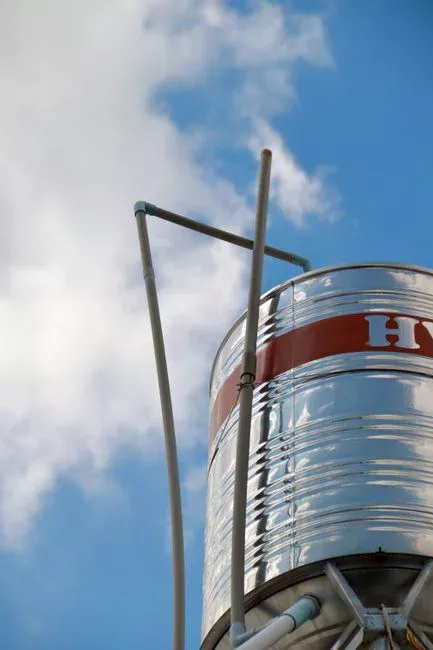
The defensible process flow is source segregation, equalization and characterization, oil and solids control, anaerobic digestion, biogas capture and use, solids separation, and final effluent treatment. Each unit has a distinct role. Equalization reduces shock loading; pretreatment removes material that can inhibit or float the reactor; the digester converts biodegradable organics; gas handling captures the energy; and dewatering makes the residual solids operationally manageable.
Use oil and solids control when characterization identifies recoverable oil and grease, suspended solids, or colloidal matter that could overload the digester. A DAF system for biodiesel wastewater pretreatment can recover floatable material before biological treatment. Where the process requires controlled pH adjustment or nutrient conditioning, an automatic chemical dosing system provides metered dosing rather than relying on uncontrolled manual additions. The choice and dose must follow the site chemistry and pilot results.
Biogas utilization is part of the wastewater design, not a downstream afterthought. The American Biogas Council’s September 2026 survey found electricity or combined heat and power was the primary biogas use at 55% of surveyed wastewater facilities, while 89% of generated electricity was used on site. The same survey found heat was the primary use at 26%. These municipal wastewater data indicate possible use patterns, not biodiesel-plant design values.
Route separated digestate or residual sludge to dewatering. A plate and frame filter press for digestate dewatering should be selected against measured solids characteristics, filtrate quality, operating cycle, and cake-discharge requirements. Final polishing and discharge compliance remain site-specific; anaerobic digestion alone should not be treated as evidence that a discharge permit will be met.
| Process stage | Primary decision | Evidence required before purchase |
|---|---|---|
| Source segregation and equalization | Which streams are combined? | Campaign-representative flow and chemistry |
| Oil and solids control | Is DAF needed upstream? | Oil, grease, solids, and colloid data |
| Controlled dosing | Is pH or nutrient conditioning required? | Alkalinity, nutrients, dosing response, and pilot criteria |
| Anaerobic reactor | What HRT, loading, mixing, and heating are justified? | Pilot stability and gas results |
| Biogas utilization | Electricity/CHP, heat, flaring, or another route? | Gas quality, demand profile, and lifecycle economics |
| Digestate dewatering | Which solids-handling configuration fits? | Solids characterization and filtrate-quality data |
Set Reactor Parameters From Evidence, Not Defaults
The Durban study’s 50 L optimum provides a useful pilot reference: 21-day hydraulic retention time, pH 7.01, and 0.42 g/L magnetite. It does not establish a universal design standard for biodiesel wastewater. The feedstock, reactor configuration, heating, mixing, and mixing of crude glycerol with washing wastewater can all change the acceptable operating window.
The study recorded a lag phase before methane production stabilized. Adding magnetite reduced that lag from 9 days to 3 days. At 0.4–0.6 g/L, reported biogas rates were 23 mL/day and 20 mL/day between days 9 and 12. At 0.8 g/L, catalyst overloading inhibited microbial activity and production fell to 2 mL/day after day 9. This is a warning against increasing additive loading without testing its effect on the active biomass.
Organic loading also produced a tradeoff. Increasing organic content from 4,320 mg/L to 18,770 mg/L increased biogas production by 30%, but contaminant removal declined by more than 40%. The study attributed that decline to falling pH and the accumulation of inhibitory long-chain fatty acids. A supplier therefore cannot justify performance from gas yield alone; it must demonstrate that treatment performance and process stability remain acceptable at the proposed loading.
Under the optimized conditions, the Durban unit achieved more than 85% contaminant removal from industrial sewage and more than 60% from sugar-refinery wastewater. Those matrices were not biodiesel washing wastewater. During pilot testing, monitor pH, alkalinity, COD reduction, methane fraction, gas flow, volatile solids, and upstream loading, with predefined recovery actions for excursions.
| Parameter | Durban 50 L study result | How to use it |
|---|---|---|
| HRT | 21 days at the reported optimum | Pilot reference, not a plant default |
| pH | 7.01 at the reported optimum | Define alarm, intervention, and recovery criteria |
| Magnetite | 0.42 g/L at the reported optimum | Test its effect on lag and gas production in the actual wastewater |
| Removal | More than 85% for industrial sewage; more than 60% for sugar-refinery wastewater | Use as matrix-specific evidence, not a biodiesel guarantee |
| Organic-loading response | 30% higher biogas production but more than 40% lower contaminant removal as COD rose from 4,320 to 18,770 mg/L | Require stability limits and long-chain-fatty-acid controls |
Choose Equipment and a Supplier Through Pilot Acceptance
A supplier comparison should begin with the applicable wastewater, not the reactor’s nominal volume. Ask whether washing wastewater and crude glycerol were tested separately or together, what mixture was used, and what operating conditions produced the quoted result. Require the proposed HRT, organic loading rate, mixing method, pH and alkalinity controls, heating strategy, gas-handling capacity, and solids-retention arrangement.
The pilot plan needs measurable acceptance criteria for COD removal, methane production, process stability, pH recovery, and digestate handling. Include a defined loading ramp and a test of recovery after an upset. This is particularly important where falling pH can permit long-chain fatty acids to accumulate, as observed in the Durban study.
Price comparison should cover the whole project: pretreatment, heating, mixing, gas treatment, power, maintenance, sludge handling, and the assumed value or use of biogas. Excluding these items can make a reactor look economical while the complete treatment train does not meet the business case.
Scale must also be considered. The American Biogas Council’s September 2026 survey found that more than 75% of surveyed U.S. wastewater facilities treating over 30 MGD use anaerobic digestion, while 103 facilities below 1 MGD also operate digesters. These municipal data show that readiness depends on scale and local conditions; they do not transfer directly to a biodiesel project.
| Supplier question | Required response | Procurement check |
|---|---|---|
| What was tested? | Feedstock identity, mixture, characterization, and matrix-specific results | Reject results based only on total COD |
| What is the design basis? | HRT, organic loading, mixing, heating, gas handling, and solids retention | Compare each parameter to pilot evidence |
| How is stability controlled? | pH, alkalinity, loading, inhibition detection, and recovery procedure | Make the method part of the acceptance test |
| What is included? | Equipment, instruments, exclusions, installation, commissioning, and training | Align the scope with the treatment train |
| What does the project cost? | Lifecycle cost with gas utilization and residual-solids handling | Test sensitivities, not only the base case |
Assess Biogas Value and Commercial Viability
The intended biogas use changes both the revenue and cost profile. On-site electricity or combined heat and power can offset plant demand; heat may support sludge processing or other processes; flaring provides no energy recovery; upgrading introduces additional equipment and operating requirements. Define the destination and expected operating profile before selecting gas equipment.
The American Biogas Council’s September 2026 survey provides market context rather than biodiesel design values: average capture was 504.1 scfm at renewable natural gas facilities, 191.9 scfm at electricity/CHP facilities, 87.6 scfm at heat facilities, and 19.4 scfm at venting facilities. These averages come from surveyed U.S. wastewater facilities and should not be inserted into a biodiesel plant model without local evidence.
The Durban study demonstrates why treatment success and investment success must be separated. Its optimized 50 L system produced annual operating costs above annual revenue, net cash flow of -R8,506, net present value of -R121,016, a benefit-cost ratio of 0.4, and payback of 19.03 years. Reported paybacks for the 1 L, 5 L, and 10 L systems were 24.8, 21.9, and 25.3 years. The study concluded that scale beyond 50 L would be needed to increase revenue and achieve a benefit-cost ratio of 1 or above.
Those academic figures should not be transferred to a commercial biodiesel facility. Request a site-specific techno-economic model using local energy prices, confirmed gas utilization, feed composition, operating availability, capital cost, and digestate handling. Test the effect of conservative gas yields and delayed commissioning.
| Economic input | Evidence needed | Decision use |
|---|---|---|
| Biogas production | Pilot-derived gas yield and methane fraction | Size gas utilization rather than credit theoretical energy |
| Energy value | Local electricity, heat, or gas prices and on-site demand | Separate avoided cost from saleable revenue |
| Capital cost | Quoted reactor and full treatment-train cost | Compare alternatives on the same scope |
| Operating cost | Heating, mixing, chemicals, gas treatment, power, maintenance, and sludge handling | Identify which assumptions drive the return |
| Scale | Site flow, loading, and selected reactor arrangement | Test whether scale improves utilization and economics |
Frequently Asked Questions
Can biodiesel wastewater be treated anaerobically?
Yes, when the stream contains sufficiently biodegradable material and the process is designed around its chemistry. Crude glycerol, wash-water organics, and seed cakes are distinct feedstocks with different risks. Characterize oil, solids, pH, alkalinity, and loading before choosing a reactor, and use pretreatment where inhibitory or solids-rich fractions would otherwise destabilize digestion. The 2025 Springer review supports the treatment potential of biodiesel byproducts, but it does not guarantee plant performance.
How should an anaerobic digester be sized for a biodiesel plant?
Establish campaign-representative flow, COD, solids, pH, alkalinity, temperature, and loading characteristics first. Then use pilot-derived hydraulic retention time and organic-loading criteria, with the mixing, heating, and solids-retention arrangement included in the test. The Durban 50 L study’s 21-day HRT is a study-specific reference, not a standard for every biodiesel reactor.
What determines the total cost?
Total cost is not the reactor price alone. It includes upstream pretreatment, equalization, heating, mixing, pH and nutrient conditioning, gas treatment, electrical demand, maintenance, final effluent treatment, and digestate or residual-sludge handling. The economic case also depends on the selected use of biogas and the amount actually captured. Request a site-specific lifecycle model rather than a unit-price comparison.
How should suppliers be compared?
Compare each supplier against the same acceptance criteria: wastewater-specific test evidence, a stated feedstock basis, proposed HRT and organic loading rate, mixing and heating method, pH and alkalinity control, inhibition recovery, sensor scope, digestate handling, and turnkey exclusions. Require pilot acceptance criteria for COD removal, methane production, stability, pH recovery, and solids handling. Commercial guarantees should state which matrix and operating conditions apply.
Does anaerobic digestion establish discharge compliance?
No. Anaerobic digestion can reduce COD and recover energy, but the required final effluent quality depends on the applicable permit and site conditions. Any polishing, solids removal, disinfection, or other controls must be selected against local limits. The treatment train should therefore be designed and procured around both permit obligations and residual-solids handling, not around digester performance alone.
Related Equipment
- DAF system for biodiesel wastewater pretreatment — specifications, capacity range, and technical data