Start with the obligation attached to the discharge point
An effluent treatment plant in Dong Nai must satisfy the obligation attached to the final discharge point: direct environmental discharge, acceptance by an industrial park’s centralized network, or factory pretreatment for internal reuse. The World Bank’s Nhon Trach 3 case identifies a 2,000 m³/day common effluent treatment plant, but that centralized capacity does not size an individual factory. Module 1 results show COD from 80 to 32 mg/L, BOD5 from 31 to 11 mg/L and TSS from 58 to 20 mg/L; these are benchmarks, not universal design inputs. Equipment selection should follow the applicable permit and the industrial park’s connection or input standard.
Three acceptance points must remain separate in every proposal:
| Design basis | What must be demonstrated | Evidence to obtain before selection |
|---|---|---|
| Direct discharge | Compliance at the permitted final discharge point under the currently applicable regulation and permit. | Current permit, applicable Vietnamese regulation, receiving-water category, sampling method and monitoring conditions. |
| Industrial-park connection | Compliance where factory effluent enters the park sewer or centralized effluent treatment plant. | Written industrial park input standard, drainage agreement, prohibited discharges, sampling location and rejection or disconnection rules. |
| Internal reuse | Water quality appropriate to the intended process, including treatment steps and operational controls. | Reuse specification, end use, health and process requirements, monitoring frequency and responsibility for regeneration. |
The World Bank Nhon Trach wastewater treatment document identifies industries with pretreatment systems and industries without them, including food processing, textiles, chemicals, metals, paper and garments. That distinction matters because the same factory effluent can be acceptable for biological treatment but unacceptable for a pretreatment step intended to remove oil, suspended solids, metals or toxic compounds. The park’s written input standard—not a generic sector description—must therefore drive the preliminary equipment selection. Vietnam industrial wastewater due-diligence requirements provide a useful starting point for collecting those documents.
The same World Bank document references QCVN 40:2011/BTNMT Column B with Kq=1.1 and Kf=1.0. That historical reference does not establish the rule currently applied in 2026. Require the supplier to identify the currently applicable regulation, factory permit and receiving-water category, and to state separately whether its guarantee applies after factory pretreatment, at the park connection or at the permitted final discharge point.
Characterize the wastewater before choosing an ETP process
A supplier cannot size an industrial effluent treatment plant credibly from daily wastewater volume alone; the design must use representative flow and pollutant-load data. The World Bank Nhon Trach 3 case illustrates why both average and peak flow matter: the cited Module 2 passage reports 780 m³/day average flow and 1,169 m³/day peak flow. Its Module 1 influent benchmark—COD 80 mg/L, BOD5 31 mg/L, TSS 58 mg/L and ammonia nitrogen 12.9 mg/L—can structure a bid document, but it cannot substitute for analysis of the factory’s own discharge.
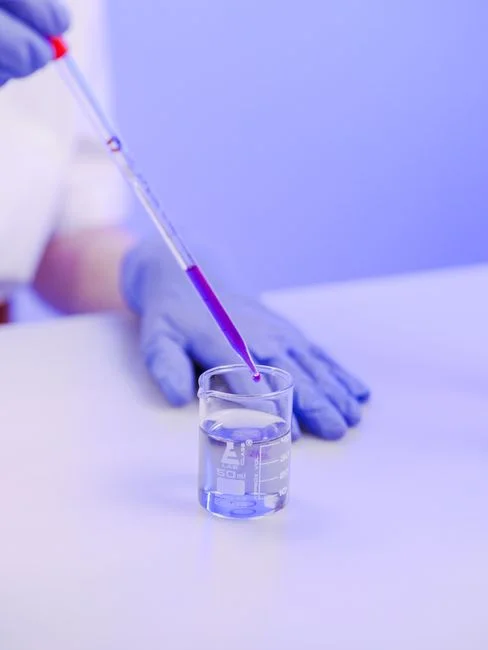
Request representative sampling across normal production, cleaning, shutdown and abnormal periods. The analysis should cover COD, BOD5, TSS, ammonia nitrogen, pH, temperature, dissolved oxygen, color and nutrients, then add FOG, oil, heavy metals, toxicity or refractory compounds where relevant to the process. The sampling record should identify the date, production condition, flow used to calculate each load and laboratory method.
| Input required | Minimum decision use | Proposal requirement |
|---|---|---|
| Representative flow profile | Average, peak and intermittent discharge; equalization and peak treatment capacity. | Continuous-flow measurement record and documented operating schedule. |
| COD and BOD5 | Organic-load calculation and biological or physicochemical sizing. | Influent and treated-water values, test methods and sampling conditions. |
| TSS and settleable solids | Solids capture, clarification and sludge production. | Solids balance and expected sludge yield. |
| Ammonia nitrogen and nutrients | Nitrification, denitrification and nutrient limits. | Design load and guaranteed removal at the stated flow. |
| FOG, oil, pH and temperature | DAF, equalization, chemical dosing and biological suitability. | Equipment-specific design values and operating controls. |
Also record whether the factory operates continuously, intermittently, seasonally or in campaigns. An intermittent discharge may require equalization and standby treatment, while a stable discharge may support a simpler train. Automatic chemical dosing equipment should be proposed only where characterization and process controls justify pH adjustment, coagulation or flocculation.
Follow the treatment train from headworks to monitored effluent
The Nhon Trach 3 treatment train provides a defensible process model because every major step protects the next one: screening, pumping, grit removal, grease trap, flotation, primary clarification, equalization, flocculation, aeration, clarification, disinfection and monitoring. This sequence belongs to the centralized plant described by the World Bank document; it should not be copied uncritically into a factory package.
Screening should precede pumps and biological treatment to capture rags, plastics and fibrous debris. A mechanical screen such as this rotary mechanical bar screen must be selected for the factory’s debris character and flow regime. Grit removal limits abrasive solids exposure, while a grease trap captures material that could obstruct piping or interfere with treatment. If FOG and colloidal material are the dominant pretreatment challenge, evaluate an industrial DAF system for FOG and suspended-solids pretreatment.
Equalization should precede biological treatment when flow or load varies. Coagulation and flocculation belong where the characterization supports them, while pH correction may be required before biological processes. Assess an automatic chemical dosing system against measured flow, required dose and tank-level interlocks; chemical consumption should be a reported operating cost rather than an unstated assumption.
| Process step | Primary function | Supplier evidence |
|---|---|---|
| Screening, grit removal and grease trap | Remove debris, abrasive grit and separated grease before downstream equipment. | Screen aperture, extraction method, grit and FOG handling, maintenance access and bypass controls. |
| Flotation and clarification | Remove floatable or settleable solids before equalization or biological treatment. | Hydraulic loading, solids capture arrangement, sludge withdrawal and cleaning method. |
| Equalization, dosing and flocculation | Stabilize flow and load; control pH and condition solids where justified. | Working volume, mixing, retention basis, control logic, chemical storage and dosing range. |
| Aeration and clarification | Remove biodegradable organics and settle biological solids. | Design load, oxygen and air calculations, sludge-return arrangement and standby provisions. |
| Disinfection and monitoring | Reduce pathogens and verify treated-water performance. | Disinfection basis, flow meter, pH, DO, TSS, COD and temperature monitoring, alarms and data records. |
| Sludge stabilization and dewatering | Control residual solids and prepare sludge for an identified disposal route. | Sludge balance, storage, stabilization, dewatering selection, cake handling and disposal documentation. |
The World Bank monitoring scope includes flowrate, pH, dissolved oxygen, TSS, COD and temperature. The factory should add any site-specific parameters required by its permit or park operator. Sludge capture, stabilization and dewatering belong inside the process boundary, not in a supplier’s excluded scope.
Advanced polishing remains project-specific. A University of Twente thesis supports nanofiltration for polishing WWTP effluent and evaluating effluent reclamation, while Wageningen University research addresses constructed wetlands for micropollutant removal. Neither source establishes that either option is required for a Dong Nai factory; selection depends on the reuse specification, residual pollutants, footprint and operation.
Match DAF, MBR and membrane polishing to the treatment objective
DAF, MBR and UF solve different problems, so placing them in one unspecified “treatment package” makes proposals incomparable. Select the primary contaminant and the required endpoint first, then ask each bidder to identify which unit supplies each function. Membrane filtration alone should not be credited with removing dissolved COD; biological treatment and appropriate upstream controls remain necessary where organic loading is the target.
| Option | Primary role | Stated range or configuration | Key procurement check |
|---|---|---|---|
| DAF | Suspended solids, FOG, oil and colloidal-material pretreatment. | HydropureWater specifies 4–300 m³/h, micro-bubbles, automatic skimming and 13 standard models. | Ask for removal guarantees against characterized TSS and FOG, plus hydraulic loading, skimming and sludge yield. |
| MBR | Combined biological treatment and membrane separation in a compact package. | Specified range 10–2,000 m³/day, filtration below 1 μm and a supplier-stated footprint 60% smaller than conventional systems. | Require design flow, organic and solids loads, membrane area, cleaning method, redundancy and clarified-effluent guarantee. |
| UF | Removal of bacteria, colloids and suspended solids, including polishing or RO pretreatment. | Specified range 2,000–40,000 L/h, 0.03 μm PVDF membranes, automatic backwash and air scour. | Define feed quality, permeate target, recovery, cleaning frequency and chemical compatibility. |
| Underground package sewage plant | Compact biological treatment for domestic or comparable flows. | Specified range 1–80 m³/h. | Verify that the factory’s industrial contaminants and flow profile are within the demonstrated application. |
Use DAF when solids, FOG, oil or colloidal material are the immediate pretreatment constraint. For an integrated biological package, compare the integrated MBR wastewater treatment system against the identified organic load and treatment endpoint. Use UF where bacteria, colloids and suspended solids are the targets, especially as a polishing or RO-pretreatment step.
For industrial wastewater reuse, set the required permeate quality by the end use. Biological treatment and filtration may form the base train, while RO or advanced polishing is a separate decision. An industrial UF system for solids and colloid control should be sized on feed quality and recovery rather than selected as a generic reuse guarantee. The industrial ETP versus DAF selection framework is useful for keeping pretreatment and final treatment objectives separate.
Size the plant around flow, load and acceptance tests
A comparable equipment proposal must state design flow, peak flow, hydraulic-retention assumptions and the calculation behind every tank and membrane area. Daily volume alone is insufficient: COD, BOD5, TSS, ammonia nitrogen and FOG loads determine whether equalization, biological capacity, flotation and solids handling are adequate.
Use the World Bank Module 1 result set as a benchmark for proposal format, not as an acceptance test for another factory. The reported results were COD 80→32 mg/L, BOD5 31→11 mg/L, TSS 58→20 mg/L, ammonia nitrogen 12.9→0.98 mg/L, and total nitrogen 15.7 mg/L influent to undetected at 0.01 mg/L in the reported test. Each bidder should instead guarantee performance against the factory’s characterized influent and the confirmed connection or discharge criterion.
| Acceptance item | Information the bidder must state | Buyer verification |
|---|---|---|
| Hydraulic design | Average and peak flow, operating pattern, equalization volume, retention assumptions and redundancy. | Reconcile calculations with measured flow and production schedule. |
| Pollutant loading | COD, BOD5, TSS, ammonia nitrogen and FOG concentrations and mass loads. | Trace each calculation to representative laboratory results. |
| Treatment guarantee | Guaranteed throughput and effluent values at the defined compliance point, with test methods and sampling procedure. | Specify whether the guarantee applies after pretreatment, at park connection or final discharge. |
| Operating resources | Chemical consumption, power demand, cleaning frequency, sludge yield and maintenance assumptions. | Compare like-for-like resource and disposal commitments. |
| Operational readiness | Availability, redundancy, alarms, chemical storage, odor control, access, power and sludge disposal. | Include them in commissioning and acceptance tests. |
| Monitoring | Automatic measurement, alarms and records for permit- and park-required parameters. | Confirm sensor range, calibration, data output and responsibility for maintenance. |
Require bidders to submit throughput, effluent values, chemical consumption, power demand, sludge yield and maintenance assumptions separately; a bundled statement such as “complies with QCVN” cannot be tested consistently. Add sludge-dewatering performance to the scope. A plate-and-frame filter press for sludge dewatering should be assessed against the expected sludge characteristics and required cake form, not selected by filter area alone.
Acceptance testing should define the sampling point, flow condition, analytical methods, test frequency and treatment of invalid data. Otherwise, one supplier may be demonstrating final discharge while another is demonstrating only factory pretreatment.
Build a compliance and procurement checklist
The compliance file must show which obligation applies at each point: the factory permit, applicable Vietnamese discharge regulation, industrial-park drainage agreement, park input standard, sampling method and inspection or monitoring requirements. Confirm whether compliant pretreatment permits discharge into a permitted centralized system or whether a standalone final discharge authorization is required. Pretreatment compliance does not automatically establish compliance at the receiving outfall.
- Permit basis: current wastewater permit, applicable regulation, receiving-water category, limits, sampling points and reporting obligations.
- Connection basis: industrial park input standard, prohibited constituents, metering arrangement, sampling method, rejection rules and disconnection conditions.
- Design basis: representative wastewater analysis, flow profile, production schedule and reuse specification.
- Supplier records: laboratory influent and effluent data, calibration records, control narratives, electrical schematics, O&M manuals, spare-parts lists and training scope.
- Performance records: guaranteed throughput, compliance-point values, test methods, chemical use, power demand, sludge yield and maintenance assumptions.
- Residuals: sludge handling and disposal route, chemical storage, odor control, spent media, membrane cleaning waste and rejected-water arrangements.
Confirm the sludge route before award. HydropureWater states plate-and-frame filter-press options from 1 to 500 m², with manual, hydraulic and fully automatic PLC operation. These are supplier configurations, not a disposal approval; the final route must match the waste classification and receiving facility’s requirements.
Residual-risk review must extend beyond bulk COD and TSS. A 2023 Environmental Engineering Research review reports that more than 90% of microplastics can be removed in wastewater treatment plants, but notes that even small residual concentrations matter because discharge volumes are large. That finding supports sampling and control review; it does not create a project-specific limit without site data and current regulatory confirmation.
Every performance number remains conditional on the final wastewater characterization, flow profile, receiving standard and test protocol. Before approval, request the missing permits, park input standard, analyses and operating records rather than accepting a generic guarantee.
Frequently Asked Questions
Does a factory in Dong Nai need a complete ETP or only pretreatment?
It depends on the discharge point. A factory discharging directly must demonstrate the applicable final environmental requirements. A factory connecting to an industrial park must meet the park’s input or connection standard, with pretreatment scope determined by that document and the centralized plant’s acceptance criteria. Internal reuse adds a separate water-quality specification. Ask each bidder to state which obligation its equipment addresses.
What evidence should a supplier provide for sizing and compliance?
Require design and peak flow, characterized pollutant concentrations and loads, calculations for tanks and membranes, guaranteed throughput, compliance-point effluent values, analytical methods, chemical consumption, power demand and sludge yield. Also request representative laboratory data, operating assumptions, control narratives and commissioning tests. Do not accept a generic COD guarantee without identifying the sampling point and flow condition.
What is the cost difference between DAF, MBR and UF?
No reliable price can be stated without the wastewater analysis, flow profile, pretreatment target and required final quality. DAF is principally for suspended solids and FOG pretreatment; MBR combines biological treatment with membrane separation; UF addresses bacteria, colloids and suspended solids and may precede RO. Request itemized capital cost, installation, commissioning, chemical and power consumption, membrane replacement, sludge handling and maintenance for each alternative.
How should a buyer select and size a supplier’s treatment package?
Select the supplier only after obtaining the current permit, park input standard, representative analysis and flow data. Then compare bids using one acceptance schedule: throughput, guaranteed effluent values, test methods, redundancy, monitoring, chemicals, power and sludge disposal. Historical QCVN 40:2011/BTNMT references and Nhon Trach results cannot be treated as universal 2026 limits or site-specific sizing inputs.
Which inputs are still missing before a reliable equipment proposal can be produced?
The essential missing items are the current discharge permit, applicable regulation, receiving-water category, park drainage agreement and input standard, representative laboratory analysis, flow record, operating schedule and any reuse specification. Obtain those before asking for firm capacity or acceptance values. For a park connection, verify any proposed pretreatment performance against the operator’s documented acceptance and sampling procedure.