What an Effluent Treatment Plant in Nha Trang Must Achieve
An effluent treatment plant in Nha Trang should be selected only after the wastewater flow, pollutant profile, discharge route and reuse target are confirmed. Industrial streams may require source control and pretreatment before biological treatment, while dissolved-air flotation (DAF) is suited to oil, grease, suspended solids and colloidal matter. An MBR can provide compact biological treatment with membrane filtration below 1 μm and is available from 10–2,000 m³/day. UF can polish suitable flows at 2,000–40,000 L/hour using 0.03 μm PVDF membranes. Final design must be checked against the applicable Vietnamese permit, sewer conditions and receiving-water requirements.
The plant’s function must be defined before equipment is selected. An ETP may treat wastewater before discharge to a permitted receiver, or prepare it for a defined reuse application. Those are different design obligations: a discharge permit usually sets the receiving route and applicable effluent limits, while reuse requires a water-quality specification for the intended use. An industrial ETP planning guide provides a broader process-selection framework, but the permit and site data remain controlling documents.
One technology should not be assumed to satisfy every industrial effluent. Final biological or centralized treatment can be followed by membrane polishing where the required effluent standard justifies it. The University of Twente’s research on direct nanofiltration found that membrane technology, especially nanofiltration, could polish wastewater treatment plant effluent to EU Water Framework Directive standards and produce effluent suitable for agricultural or direct/indirect potable use. That research establishes a polishing concept, not a Nha Trang design specification; local feasibility and regulatory review remain necessary.
Vietnam-specific design must also reflect the factory’s actual activities. The Green Industry Platform’s report, Eco-Industrial Parks Viet Nam, observes that wastewater volume and pollutant composition vary with industrial activity and process, including garment washing, chemical production, plating, plastic washing and cooling water. The first procurement question is therefore not “Which unit is best?” but “Which streams require which treatment, and what result must the plant deliver?”
Build the Project Brief from the Wastewater
A defensible project brief starts by separating streams that differ in pollutant composition, flow pattern or discharge route. The Green Industry Platform report identifies washing, cooling and plating wastewater as materially different industrial streams, and also describes combined domestic and industrial wastewater. Treating them as one undifferentiated flow can produce oversized equipment, ineffective process conditions and unreliable compliance.
- List domestic wastewater, cooling water, washing water, plating streams, production losses and clean stormwater separately.
- Record whether each stream is continuous, intermittent or campaign-based, and whether it can be segregated at the source.
- Establish flow, pollutant loads and variability from representative sampling rather than one laboratory result.
- Define the receiver and intended reuse before selecting the treatment train.
- Identify which streams require industrial pretreatment before entry to a municipal or centralized wastewater treatment plant.
Sampling should cover normal production, shifts, cleaning cycles and relevant rainfall effects. Ask the prospective supplier to state its design basis and whether the proposed hydraulic and pollutant loads are measured, calculated or assumed. The project brief should also state the pH range, temperature, oil and grease, COD, BOD, TSS, nitrogen, phosphorus, salinity and any relevant toxic compounds. The final analytical list should follow the applicable permit and laboratory scope rather than substituting a generic panel for site-specific requirements.
| Project input | Information to establish | Why it changes selection |
|---|---|---|
| Stream inventory | Domestic, cooling, washing, plating, production-loss and clean-stormwater flows | Determines whether streams can be segregated and which unit operations are necessary |
| Flow and variation | Representative average, diurnal and seasonal peaks; shift, campaign and cleaning cycles | Sets hydraulic basis, equalization and standby requirements |
| Pollutant profile | Permit-relevant parameters, oil and grease, nutrients, salinity and site-specific toxics | Maps contaminants to pretreatment, biological treatment or polishing |
| Discharge or reuse | Permitted receiver, sewer agreement, receiving-water conditions or end-use quality specification | Defines the required effluent quality and final treatment step |
| Site constraints | Available footprint, elevation, power, drainage and flood exposure | Controls equipment arrangement, hydraulics and resilience provisions |
Treatment and pretreatment should not be confused. Treatment establishes an effluent outcome at the plant. Industrial pretreatment prepares a factory’s stream for acceptance by a municipal or centralized system, as described in the US EPA’s framework for industrial wastewater discharges to municipal sewage treatment plants. A mechanical preliminary device such as a rotary mechanical bar screen may protect downstream equipment, but it does not replace the required industrial pretreatment process.
Select the Treatment Train by Pollutant
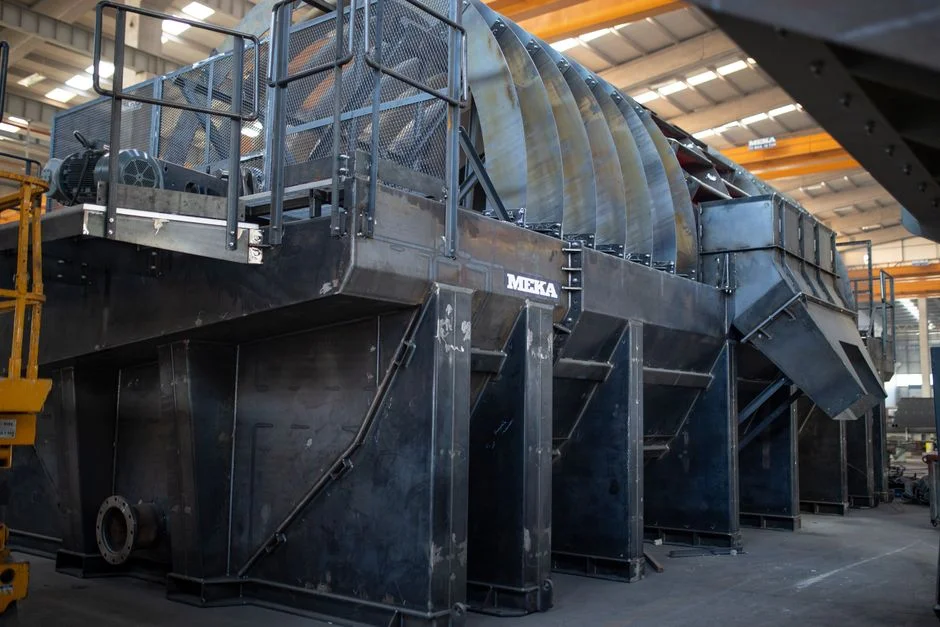
A practical treatment train follows the contaminant sequence: remove or isolate problematic streams at source, screen and equalize the selected flow, adjust pH where necessary, remove floatable and suspended material, treat biodegradable organics biologically where required, polish or disinfect where required, and manage the resulting sludge.
DAF is a physical separation step rather than biological treatment. The specified industrial DAF pretreatment system is intended for oil and grease, FOG, suspended solids and colloidal matter, with catalog capacity from 4–300 m³/hour across 13 models. It is therefore relevant where the main objective is to recover floatable material or remove suspended solids before biological treatment, equalization or a municipal pretreatment requirement.
An integrated MBR wastewater treatment system combines biological treatment with membrane separation. Its catalog capacity is 10–2,000 m³/day, with filtration below 1 μm. This makes MBR a candidate where biodegradable organics require biological treatment and the project also needs a compact, membrane-based solids separation stage. The supplier must still demonstrate that the wastewater is biologically treatable and that the proposed membrane system can accommodate the actual flow, load and operating conditions.
UF has a different role. The specified ultrafiltration system for wastewater polishing uses 0.03 μm PVDF membranes, automatic backwash and air scour, with catalog capacity of 2,000–40,000 L/hour. It should be evaluated as a membrane barrier and polishing step for suitable flows, not automatically as the primary biological treatment process.
| Process stage | Primary role | Indicative catalog evidence | Key selection question |
|---|---|---|---|
| DAF | Remove floatable material, oil and grease, FOG, suspended solids and colloidal matter | 4–300 m³/hour across 13 models | Are the required removals physical, and can recovered material and sludge be handled? |
| MBR | Integrate biological treatment and membrane separation | 10–2,000 m³/day; filtration below 1 μm | Is the wastewater biodegradable, and are membrane cleaning and replacement provisions included? |
| UF | Polish a suitable flow through a membrane barrier | 2,000–40,000 L/hour; 0.03 μm PVDF membranes | What upstream quality is required, and does backwash, air scour and recovery fit the reuse objective? |
For reuse, the final train may include additional membrane treatment. The University of Twente research supports nanofiltration as a technology for polishing wastewater treatment plant effluent for agricultural or direct/indirect potable applications. It does not establish that every Nha Trang project needs nanofiltration or that membrane pore size alone proves suitability. Site-specific contaminant removal, concentrate handling, energy demand and local approval must be evaluated.
Compare DAF, MBR, UF and Packaged Biological Treatment
DAF, MBR, UF and packaged biological systems are not interchangeable equipment categories. The correct comparison starts with the treatment function and the wastewater context, then checks catalog capacity, physical arrangement, reuse potential and operating obligations.
DAF is strongest as primary physical pretreatment for floatable and settleable material. It does not substitute for biological treatment of biodegradable dissolved organics. MBR combines a biological reactor with membrane solids separation and can therefore address both organic load and clarified effluent in a compact arrangement. UF is principally a polishing barrier and requires suitable upstream wastewater; it does not by itself provide the biological conversion of dissolved biodegradable organics.
The specified WSZ underground integrated sewage treatment system serves residential communities, hotels, hospitals, factories and rural areas. It combines underground anoxic and aerobic treatment, sedimentation and disinfection, with catalog capacity from 1–80 m³/hour. Its process arrangement may suit a mixed or predominantly sanitary flow, but a factory should verify whether contaminants are compatible with the biological package and whether local pretreatment is needed.
| Option | Treatment role | Suitable context | Catalog capacity | Questions before selection |
|---|---|---|---|---|
| DAF | Physical removal of floatables and suspended material | Oil, grease, FOG, solids and colloidal pretreatment | 4–300 m³/hour across 13 models | What contaminant removal is required, and how will recovered scum and sludge leave the site? |
| MBR | Integrated biological treatment and membrane separation | Biodegradable wastewater requiring membrane solids separation | 10–2,000 m³/day; filtration below 1 μm | Are biological loading, fouling, cleaning and replacement assumptions credible? |
| UF | Polishing through a membrane barrier | Suitable flows requiring clarified or polished effluent | 2,000–40,000 L/hour; 0.03 μm PVDF | What feed quality, recovery, backwash and concentrate arrangements are required? |
| Packaged biological treatment | Integrated anoxic, aerobic, sedimentation and disinfection | Residential, hotel, hospital, factory or rural applications with compatible wastewater | 1–80 m³/hour | Does the wastewater profile fit the package, and are pretreatment, odor control and sludge removal included? |
Footprint cannot be compared from equipment envelopes alone. Installation depth, access roads, equalization, chemical storage, odor control, sludge dewatering, drainage and maintenance clearances affect the site. Cost likewise requires a project-specific total comparison covering civil works, chemicals, sludge, energy, membranes and maintenance. A lower equipment quotation may not produce a lower compliant lifecycle cost.
Size the Plant and Test Reliability
Preliminary sizing should compare the supplier’s documented peak treatment capacity with the required flow and permitted discharge condition. A catalog maximum is not a guaranteed design rate. The design basis must state whether capacity relates to average flow, peak flow, hydraulic loading, pollutant loading or more than one of these constraints.
Require the supplier to explain the sizing method, equalization strategy, bypass provisions, standby-power arrangement, controls, alarm setpoints and maintenance access. Ask how the plant responds to a power interruption, high-strength slug, pump outage, excessive tank level, membrane fouling or floodwater. These provisions belong in the process narrative and electrical/instrument drawings, not only in a sales schedule.
The Green Industry Platform’s Eco-Industrial Parks Viet Nam provides direct evidence that treatment reliability must be treated as a design issue. In its surveyed industrial zones, 82% of respondents ranked wastewater volume exceeding treatment-plant operating capacity as the leading potential accident risk associated with effluent and emission treatment. For the causes of wastewater-treatment incidents, 47% identified pumps not working as the highest-priority cause. For natural-disaster risks, 58% identified flooding as the leading risk, which can overflow chemical and wastewater tanks, sewers and surrounding areas.
These survey results are not a Nha Trang site model, but they justify three specific procurement checks: provide treatment and storage capacity for verified peaks; define redundancy and standby power for critical pumps; and establish flood protection, drainage isolation and emergency response. A chemical dosing system should be evaluated within the complete control and containment system. Sludge handling must also be priced and designed, including dewatering equipment where the waste characteristics justify it, as well as chemical dosing, odor control, membrane cleaning and maintenance access.
Verify Permits, Discharge Conditions and Reuse Claims
Technical selection must not outrun permitting. Before committing equipment, confirm the applicable Vietnamese environmental permit, discharge point, receiving-water conditions, sewer agreement, pretreatment limits and any reuse requirements with the responsible authorities. The project should identify whether the factory discharges directly, connects to a centralized wastewater treatment plant, or prepares water for a defined application.
The US EPA’s Effluent Guidelines can be used only as an example of regulatory structure. It states that national guidelines address wastewater discharges to surface waters and municipal sewage treatment plants and are organized by industrial category according to treatment and control technologies. Those US categories do not replace Vietnamese permit conditions or sewer agreements in Nha Trang.
Wastewater reuse requires an end use and a water-quality specification. Membrane filtration capability alone does not prove suitability for irrigation, process-water reuse, potable use or direct/indirect potable reuse. The supplier should state which contaminants must be removed, how performance will be demonstrated and how the complete treatment train will be monitored.
Research can inform available options without establishing local approval. Wageningen University and Research investigated constructed wetlands for micropollutant removal from wastewater treatment plant effluent in a PhD thesis published on 23 September 2022. That work is relevant to the technology concept, not proof of performance under Nha Trang conditions.
Each compliance claim should therefore be classified by its evidence: supplier test data, local reference operating under comparable conditions, or a project-specific design document. A performance statement without a method, condition and acceptance criterion is not enough. This discipline also protects reuse procurement from confusing filtration, disinfection and full water-reclamation requirements.
Build a Supplier Comparison and Procurement Checklist
A supplier comparison becomes meaningful when every bidder answers the same design questions. Request a process proposal, equipment data sheets, P&ID, preliminary civil and equipment layout, control philosophy, commissioning plan, O&M manual, training plan and warranty scope. These deliverables expose omissions that a headline capacity cannot reveal.
| Procurement item | Information every bidder must state | Buyer check |
|---|---|---|
| Design basis | Exact wastewater, flow basis, pollutant load, treatment objective and discharge or reuse target | Reject generic offers that do not identify exclusions or assumptions |
| Technical scope | Process description, P&ID, equipment list, layout, controls, alarms and utilities | Check that equalization, sludge, odor control and drainage are included |
| Lifecycle inputs | Civil works, power, chemicals, membranes, sludge handling, labor, spares, monitoring and replacement intervals | Compare total operating obligations, not equipment price alone |
| Implementation | Commissioning boundaries, delivery schedule, training, acceptance tests and warranty | Attach measurable performance criteria and responsibilities to the contract |
| Evidence | Comparable references, test data and local operating experience | Do not treat a generic catalog capacity as proof of local suitability |
Each bidder should identify the exact design wastewater, flow basis, required treatment objective, discharge or reuse target and exclusions. References must be comparable in wastewater characteristics and operating conditions, not merely in nominal capacity. Contract documents should also cover treatment-system valves, filter media and replacement parts, including availability, compatibility and recommended replacement intervals.
Make acceptance testing, performance guarantees, document language, commissioning boundaries, delivery schedule and spare-parts availability explicit contractual items. If the proposal relies on local installation, site preparation, power supply or disposal routes outside the supplier’s scope, identify those interfaces in writing. This prevents an equipment price from being mistaken for an implementable plant price.
Frequently Asked Questions
What is the cheapest suitable effluent treatment plant for a factory in Nha Trang?
There is no defensible generic price from the supplied research. The lowest compliant option depends on process match and lifecycle scope. Compare civil works, power, chemicals, sludge handling, membrane replacement, operator labor and maintenance using the same wastewater and discharge basis. Request a quotation with those items separated, plus any exclusions for installation, commissioning, chemical supply and waste disposal.
Should a factory in Nha Trang choose DAF, MBR or UF?
Choose by function. DAF is for floatable oil, grease, FOG, suspended solids and colloidal pretreatment. MBR combines biological treatment with membrane separation for compatible biodegradable wastewater. UF is a polishing step for suitable flows. Verify the selected process against representative pollutant data and the complete treatment train rather than selecting from nominal capacity alone.
How is an industrial ETP in Nha Trang sized?
Size it from representative flows and pollutant loads, verified peaks, the treatment objective, the applicable permit and calculated process requirements. Do not size from the maximum catalog capacity alone. Ask each bidder to state its design basis, equalization strategy, redundancy, controls and treatment guarantees so assumptions can be compared consistently.
Can the treated water be reused in Nha Trang?
It may be reusable if the application and required water quality are defined, local rules permit it and the complete treatment train demonstrates compliance. Filtration capability alone does not establish suitability for irrigation, process-water reuse or potable use. Confirm the receiving requirements, test protocol, monitoring and responsible operator before treating reuse as a design assumption.
How do I compare ETP suppliers in Vietnam?
Use one design basis and require the same deliverables: process proposal, data sheets, P&ID, preliminary layout, control philosophy, O&M scope, commissioning plan, comparable references and contractual performance criteria. Then compare lifecycle inputs and exclusions. Ask each supplier to identify which compliance claims are supported by test data, local references or project-specific documents.