Which Process Fits the Factory's Wastewater?
Choose dissolved air flotation when the wastewater contains significant FOG, product-loss organics, phosphorus, light solids, or particles that do not settle reliably. Choose a lamella clarifier when the solids are predominantly settleable, the required outcome does not need broad flotation capture, and lower operating energy is the priority. DAF can achieve 90% oil removal, according to Hermann Hahn’s 2010 academic review, while a 2026 Clean Technology Post article reports more than 95% FOG removal and 40–60% BOD reduction before biological treatment for food and beverage applications. Those figures are application evidence, not guarantees. Final selection requires site-specific flow, TSS, FOG, BOD/COD, pH, temperature, and CIP peak-flow data.
Start with screening and flow equalization. Hahn’s 2010 review identifies equalization as a way to stabilize variable wastewater characteristics and improve treatment efficiency. Do not size either process from average flow alone: the 2026 beverage DAF design source requires both hourly average flow and peak hourly flow during CIP cleaning.
A hybrid train may be the better answer when one process leaves a material gap. DAF can recover buoyant FOG before biological treatment; clarification can precede filtration or another polishing step. Use the automatic-skimming DAF system when flotation is selected, or the lamella clarifier when the load is mainly settleable solids.
| Factory condition | Initial selection | Required proof |
|---|---|---|
| Material FOG, product-loss organics, phosphorus, or light solids | DAF, potentially followed by biological treatment | Site-specific jar or pilot testing and removal guarantees |
| Mostly settleable solids; reuse or discharge target does not require broad flotation capture | Lamella clarification | TSS and FOG relationship at design flow and wastewater characteristics |
| CIP and batch-production peaks dominate the design | Equalization followed by the selected clarification process | Hourly average flow and peak hourly flow during CIP cleaning |
| FOG recovery plus dissolved organic removal is required | Hybrid DAF and biological treatment | Whole-train pilot results, including biological compatibility |
How DAF and Lamella Clarification Separate Wastewater
DAF separates particles by flotation, while lamella clarification separates them by gravity and density. In DAF, compressed air is saturated into recycle water; the resulting micro-bubbles attach to conditioned particles or droplets and carry the float to the surface for skimming. Clarified water leaves from the lower part of the tank. Clean Technology Post, published in August 2026, describes DAF micro-bubbles as typically 10–100 µm in diameter.
A lamella clarifier combines sludge recirculation, flocculation, and inclined-plate separation in a compact structure. HydropureWater’s catalog unit lists surface-loading rates of 20–40 m/h. That figure belongs to the catalog unit’s design and must not be substituted for a wastewater-specific guarantee. The vendor’s automatic chemical dosing system also matters because both technologies normally need controlled coagulation and flocculation to create separation-friendly particles.
The 2026 beverage design source identifies coagulation and flocculation before flotation and notes that fragile floc may require polyelectrolyte aid. Sugar, surfactant, or detergent carry-over can make floc fragile, so the chemical program must be tested rather than copied from another beverage stream.
| Feature | DAF | Lamella clarification |
|---|---|---|
| Separation mechanism | Air bubbles attach to floc or droplets, which rise | Density-driven settling through inclined plates |
| Conditioning | Coagulation and flocculation; polymer aid may be required for fragile floc | Chemical conditioning and flocculation required for the selected design |
| Solids withdrawal | Surface float plus a path for sinking sludge | Engineered bottom-sludge path |
| Principal auxiliary demand | Air compression and recycle pumping | Sludge recirculation; no air-compression step |
| Main selection risk | Non-floating solids and incomplete float capture | Poor settling or buoyant FOG that does not capture efficiently |
For an outside review of beverage pretreatment, use the food and beverage pretreatment compliance guide to check permit and reuse assumptions, not to select equipment without site data.
Performance, Energy and Operating-Cost Trade-Offs
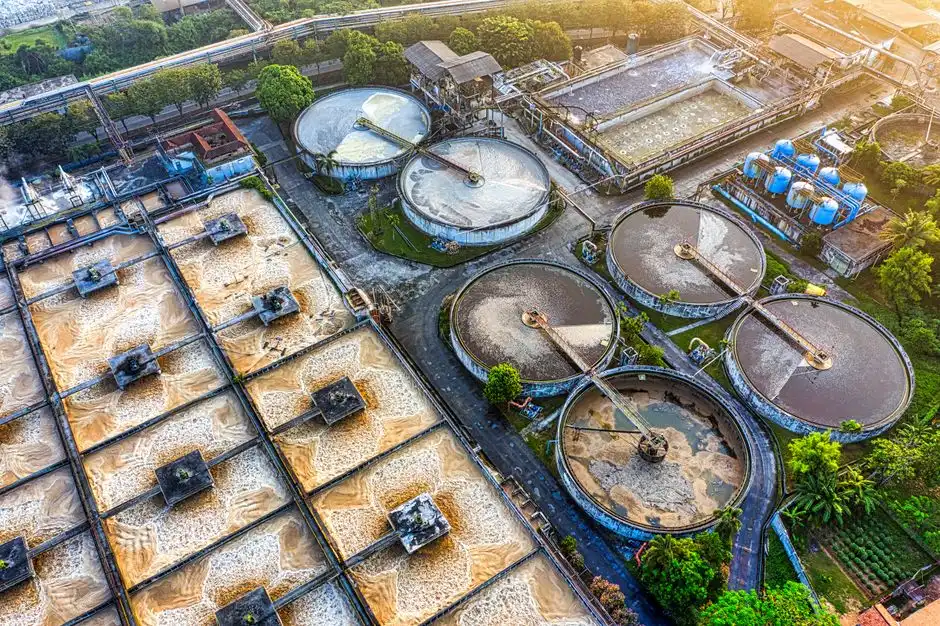
DAF earns its higher operating-energy demand when reliable capture of buoyant or light contaminants materially reduces downstream loading or supports reuse. Hahn’s 2010 academic review reports 90% oil removal for DAF, supporting its suitability for oily industrial streams. Clean Technology Post reports more than 95% FOG removal and a 40–60% BOD reduction before biological treatment for food and beverage service. Neither figure guarantees the performance of a Florence plant; influent composition, conditioning chemistry, hydraulic loading, and operating control determine the actual result.
The commercial comparison must include more than electricity. For DAF, price air compression, recycle pumping, chemical use, float and sinking-sludge handling, maintenance, and operator attention. The 2026 beverage source states that DAF uses more energy than sedimentation because it has no air-compression step for sedimentation. A lamella clarifier therefore has a potential operating-energy advantage, although the supplied research provides no plant-specific cost or quotation from which to calculate payback.
Evaluate the downstream consequences. Clean Technology Post reports that DAF sludge typically contains 2–6% solids, compared with the less dense separation produced by sedimentation. The actual float concentration depends on influent solids and coagulant dose, so it must be matched to the selected dewatering equipment rather than accepted as a guarantee. For a downstream equipment interface, review the plate-and-frame filter press and obtain the required feed characteristics.
| Evaluation item | DAF | Lamella clarifier |
|---|---|---|
| Published energy comparison | Higher because air is compressed | Lower because there is no air-compression step |
| Chemical demand | Coagulant and possible polymer aid, set by testing | Coagulant and flocculant demand, set by testing |
| Slides handling | Surface float and possible sinking sludge | Concentrated settled sludge from the bottom |
| Reuse value | Potentially valuable where FOG, phosphorus, or light solids must be recovered | Potentially sufficient where settled solids are the principal target |
| Cost basis | Request vendor energy and consumption inputs | Request vendor power, chemical, and sludge assumptions |
For reuse-value assessment, compare the required clarified-water quality with the additional treatment and operating cost. The broader zero-liquid-discharge engineering explanation is useful only when reuse constraints justify a more extensive train.
Size the System for CIP Surges and Variable Loads
A defensible size requires written hourly average flow, CIP peak hourly flow, TSS, FOG, BOD/COD, pH, and temperature. The 2026 beverage design source specifically requires both average and peak CIP flow. A useful sizing record should also distinguish production wastewater, washdown, and concentrated product-loss streams before assigning them to one design flow.
Clean Technology Post reports that DAF systems use a recycle system generally operating at 10–50% of forward flow. Require each bidder to quote the recycle ratio rather than adopting that published range. The same source gives a hydraulic-loading range of 5–30 m³/m²·h depending on application, up to 40 m³/m²·h for high-rate DAF with plate packs or lamella settlers, and up to 50 m/h for some plate-pack configurations. These DAF loading values are not interchangeable with the 20–40 m/h surface-loading rate listed for HydropureWater’s lamella catalog unit.
For DAF, require hydraulic loading, air-to-solids ratio, recycle rate, flocculation retention time, skimmer details, and float-thickening geometry in writing. The air-to-solids requirement should be a performance curve at the design solids loading. For lamella clarification, require surface loading at design flow and wastewater characteristics, sludge-recirculation performance, plate configuration, and a guaranteed TSS/FOG relationship.
| Sizing item | DAF requirement | Lamella requirement |
|---|---|---|
| Design flow | Hourly average and CIP peak hourly flow | Hourly average and CIP peak hourly flow |
| Hydraulic basis | Quoted loading at design TSS and flow | Quoted surface loading at design flow and wastewater characteristics |
| Recycle | Percentage of forward flow; include recycle pump and saturation power | Sludge-recirculation rate and power |
| Separation aid | Air-to-solids curve at design solids loading | Plate configuration and sludge behavior |
| Conditioning | Flocculation retention time and chemical dose | Flocculation conditions and chemical consumption |
| Solids removal | Skimmer and float-thickening arrangement | Bottom-sludge withdrawal arrangement |
Compare hydraulic treatment, air saturation, recycle pumping, and chemical consumption as one system. The automatic-skimming DAF system catalog range is 4–300 m³/h across 13 models, while the lamella clarifier should be compared using its quoted surface loading and project flow. Neither catalog envelope establishes the final size without the site design basis.
Build and Validate the Treatment Train
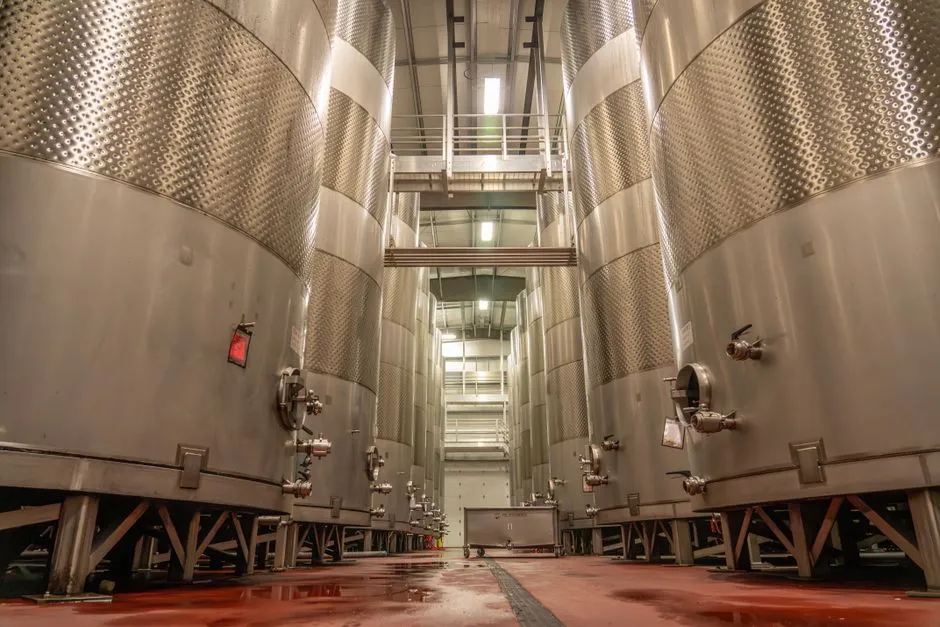
A beverage DAF train normally follows a defined sequence: screening and equalization, coagulant dosing, flocculation, saturated recycle-water introduction, micro-bubble attachment, float skimming, and collection of clarified effluent. Add an engineered bottom-sludge withdrawal path because chemicals and non-floating particles can form a sinking layer, as noted in the 2026 beverage design source.
Use automatic chemical dosing for multi-shift operation and size the system from jar-test results with documented turndown. The recommended matrix uses three coagulants selected from alum, poly aluminum chloride, poly aluminum sulfate, ferric chloride, bentonite, and organic polymers, crossed with at least one polymer at three dose levels each. This is a test matrix, not a default chemical recipe.
Clean Technology Post reports that monomeric aluminum performed better for TSS and soluble COD removal, while polymeric and colloidal aluminum performed better for soluble silica removal. Monomeric aluminum is therefore a documented starting point for sugar-and-organic beverage streams, not a universal choice. Confirm the coagulant, dose, mixing sequence, and flocculation conditions on actual wastewater.
| Train element | Design requirement | Validation |
|---|---|---|
| Bar screen and equalization | Remove debris and smooth flow and load peaks | Confirm peak-flow and equalization performance |
| Chemical dosing | Automated, interlocked control with documented turndown | Jar test and dose-response records |
| Flocculation | Defined mixing and retention conditions | Confirm floatability, settling, and skimming behavior |
| DAF or lamella unit | Selected from the site design basis | Pilot testing under representative CIP-spiked flow |
| Float and sludge handling | Surface float and bottom-sludge paths | Measure solids concentration and dewatering response |
| Biological treatment, where required | Compatibility with residual organics, salt, and chemicals | Whole-train assessment |
The automatic chemical dosing system should follow the tested chemistry. The rotary mechanical bar screen can protect downstream equipment from debris, but its selection requires the actual waste profile. Match float and settled solids to the plate-and-frame filter press. For saline streams, DAF can provide physicochemical pretreatment before biological treatment, but salinity, corrosion, and biological compatibility require separate evaluation.
Use a Vendor RFQ That Compares Bids Fairly
An RFQ becomes fair only when every bidder answers the same design basis. Issue the average flow, CIP peak hourly flow, influent and target TSS, FOG, BOD, phosphorus and nitrogen, discharge or reuse requirements, pH, and temperature. State whether the plant operates continuously and identify the operating scenarios that create the maximum load.
For DAF bidders, request hydraulic loading, air-to-solids curves, recycle percentage, flocculation retention time, skimmer type, sludge interface, and PLC scope. For lamella bidders, request surface loading, sludge recirculation, plate configuration, chemical-consumption assumptions, and the guaranteed TSS/FOG relationship. Do not accept a single air-to-solids test point; the curve must cover the design solids loading.
Request written guarantees for the removal targets relevant to the permit or reuse specification. Ask for food-and-beverage references with comparable wastewater characteristics and operating schedules rather than relying on generic industrial references. Beverage influent, CIP chemistry, and product-loss events are not interchangeable with refinery or metalworking wastewater.
| RFQ line | Required response | Commercial implication |
|---|---|---|
| Design basis | One agreed flow, load, chemistry, and target schedule | Prevents bids based on different assumptions |
| DAF performance | Hydraulic loading, air-to-solids curve, recycle, flocculation retention, skimmer details | Defines the performance and utility basis |
| Clarifier performance | Surface loading, sludge recirculation, plate arrangement, TSS/FOG relationship | Defines gravity-separation capacity |
| Treatment guarantees | Relevant TSS, FOG, organics, phosphorus and nitrogen targets | Creates an enforceable performance baseline |
| Commercial scope | Installation, SAT, training, spares, support, sludge interface, and PLC scope | Prevents exclusions from distorting comparison |
| Validation | Bench or pilot data for the actual wastewater and CIP-spiked flow | Links the guarantee to realistic site conditions |
Require site acceptance testing, operator training, and spare-parts support in the commercial schedule. Use bench or pilot testing to validate site-specific hydraulic loading and chemical doses before accepting the performance guarantee. Include the automatic-skimming DAF system in the same response template whenever DAF is a candidate, so its air, recycle, skimming, and solids-handling assumptions remain visible.
Frequently Asked Questions
Is DAF usually more expensive to operate than a lamella clarifier for a food and beverage plant?
DAF usually has the greater energy demand because it includes air compression, while sedimentation does not. A lamella clarifier may therefore have an operating-energy advantage, but DAF can provide better capture of FOG, light solids, and phosphorus. Compare total operating cost against the required effluent quality and reuse value. Ask each bidder for its compressor, recycle-pump, chemical, and sludge-handling assumptions; the supplied research contains no site-specific quotation for a Florence plant.
What flow information does a food and beverage factory need before ordering DAF equipment?
Provide both hourly average flow and peak hourly flow during CIP cleaning, together with TSS, FOG, BOD/COD, pH, and temperature. Do not size from average flow alone. Identify the operating schedule and obtain written hydraulic-loading and recycle assumptions from shortlisted vendors, then validate them against bench or pilot data.
Which references should a Florence factory request from equipment suppliers?
Request food and beverage installations with comparable wastewater characteristics, product-loss events, CIP practices, and operating schedules. Verify the proposed hydraulic and air-loading conditions with the reference owner rather than accepting the project name alone. General industrial references can establish vendor capability but do not demonstrate performance on beverage wastewater.
Does DAF eliminate the need for sludge dewatering?
No. The treatment train must remove surface float and any sinking sludge, then match those solids to a thickener or downstream plate-and-frame press. The 2–6% DAF sludge-solids range reported by Clean Technology Post in August 2026 is an indicative source figure, not a site guarantee; final float concentration depends on influent and coagulant dose.
Can DAF and a clarifier be combined?
Yes. A hybrid train can use DAF for buoyant FOG and product-loss organics before biological treatment, or use clarification before additional polishing. The correct sequence depends on wastewater characterization, treatment targets, salinity, and pilot results. The plate-and-frame filter press should be specified only after the float and settled-solids characteristics have been established.