What the Microsoft–CREW Carbon Agreement Does and Does Not Change
A Microsoft acquisition of a German plant does not create automatic wastewater requirements, and Microsoft’s agreement with CREW Carbon does not establish a German permit or discharge standard. The buyer must review the site’s German authorizations, groundwater approvals, indirect-discharge or pretreatment agreements, monitoring records, treatment performance and contamination files. For each instrument, determine whether it continues, transfers, requires notice or consent, or must be reissued. Technical due diligence must reconcile segregated wastewater streams, flow, pollutant mass loads, production changes and residual handling with the applicable German authorization or sewer terms before selecting treatment equipment.
The supplied research does not identify a Microsoft acquisition of a German plant. This article is therefore a transaction framework, not a site-specific permit determination. The distinction matters because a corporate carbon-removal purchase and a plant acquisition create different legal and technical workstreams.
Microsoft’s agreement with CREW Carbon covers up to 23,602 metric tons of durable carbon removal, according to Carbon Herald’s report on the deal. CREW’s wastewater alkalinity enhancement process changes wastewater chemistry so that biogenic carbon dioxide can be converted into stable bicarbonate ions.
That offtake agreement does not authorize an acquisition, consent to a permit transfer, establish a German discharge limit or replace the plant’s existing approvals and sewer requirements. It also should not be used as a proxy for the acquiring company’s compliance record at a German facility. A separate review of parallel Germany acquisition and export-control review is needed for the transaction-specific work.
Microsoft’s other disclosed wastewater relevance is corporate carbon procurement, not site regulation. ESG Dive reported that Microsoft’s CREW agreement followed carbon-removal agreements involving companies including JPMorgan Chase, Google, Stripe and Autodesk through Frontier. Those agreements do not change the permit status or treatment obligations of a hypothetical German target.
Build a Wastewater Legal Map Before Signing
A German plant’s wastewater obligations must be mapped by discharge route and controlling instrument, not inferred from the buyer’s identity or business description. The legal register should become the index to the data room, with each entry linked to the relevant authorization, agreement, drawing, report and change-of-control clause.
Start with wastewater and groundwater authorizations, indirect industrial-discharge or pretreatment agreements, monitoring plans, compliance reports, discharge-point drawings and regulator correspondence. Classify each stream by its actual destination: direct discharge to a receiving water, indirect discharge through a public sewage-treatment works, or a separate treatment and discharge route.
| Discharge route | Controlling evidence | Diligence question |
|---|---|---|
| Direct discharge | Authorization, monitoring plan, discharge drawings and regulator correspondence | Do the entity, site, production lines, chemical inventory, discharge points, reserved capacity and planned changes fall within the approved scope? |
| Indirect discharge | Latest sewer agreement, amendments, annexes, surcharge rules and enforcement correspondence | What limits, sampling duties, monitoring points, capacity contributions and excess-load consequences apply to the successor? |
| Separately regulated streams | Groundwater, stormwater, overflow, firewater and project approvals | Are the streams segregated, separately permitted or treated in a common train? |
For direct discharge, test whether the authorization covers the acquiring entity, the site, relevant production lines, chemical inventory, discharge points, reserved capacity, present operations and planned changes. An authorization issued to the former owner may not establish the successor’s authority to operate without the required assignment, notification, qualification or reapplication.
For indirect discharge, obtain the latest sewer agreement and every amendment, annex, surcharge rule, monitoring duty, sampling point and excess-load consequence. A compliance summary is not enough: the buyer needs the operative contractual text and enforcement history. More detail on this approach appears in German plant-acquisition wastewater requirements.
Determine whether groundwater, stormwater, stormwater overflow, firewater, process wastewater and expansion projects are segregated, separately permitted or included in a common treatment train. Drawings and operating narratives must match the analytical and compliance records.
Do not infer German numerical discharge limits without the site’s authorization and the current applicable rule text. The same principle applies to groundwater, sewer acceptance criteria and residual disposal.
Assign Every Approval a Change-of-Control Status
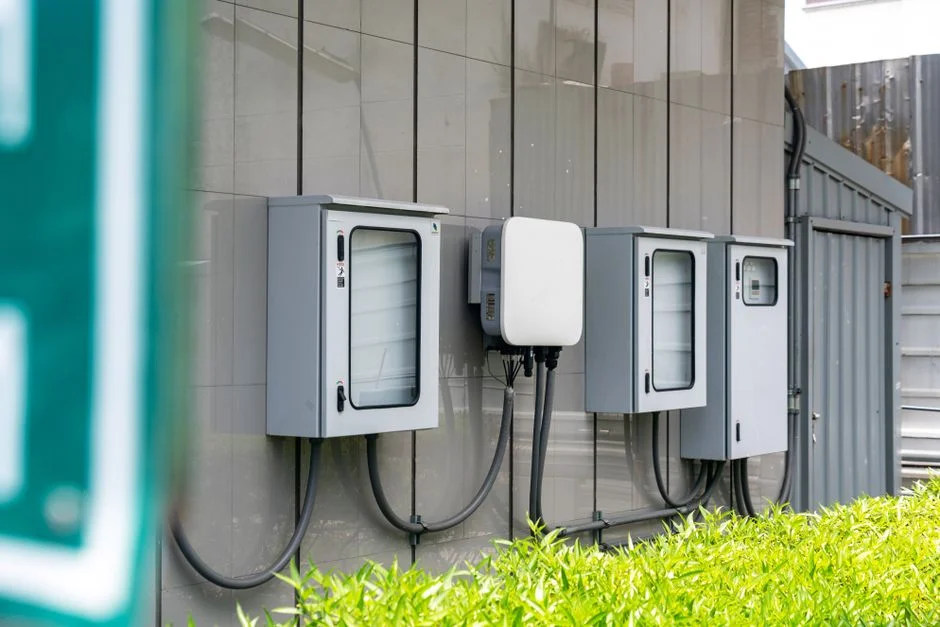
Each German authorization, approval, declaration, consent and sewer agreement must receive its own change-of-control classification. A transaction-wide assumption that all approvals “transfer with the site” is not an adequate legal conclusion.
Use four status classes. First, determine whether an instrument permits assignment or continued operation by a successor. Second, identify instruments transferable after written notice. Third, identify those requiring reapplication, qualification or a successor-operator process. Fourth, classify any instrument with an ambiguous clause, missing document or conflicting authority position as unresolved.
| Status | Required evidence | Closing treatment |
|---|---|---|
| Assignment or continued operation by a successor | Executed assignment, qualification evidence or written authority confirmation | Confirm entity, site and operational scope match the transaction |
| Transferable after notice | Clause, notice deadline, receipt and regulator confirmation | Assign an owner and retain proof of timely filing |
| Reapplication, qualification or successor-operator process | Application, regulator engagement, schedule and operating constraints | Make material timing or approval risk a condition where warranted |
| Ambiguous, missing or conflicting | Complete document set and specialist interpretation | Treat as a closing risk; do not rely on contractual allocation alone |
For every instrument, record the entity name, site, operational scope, expiry, renewal milestones, reserved capacity, compensation and environmental-load constraints. Identify who will sign, file, implement and evidence each action before signing.
Missing documents, ambiguous change-of-control clauses, expired approvals and conflicting authority positions require specialist confirmation. Escalate overdue monitoring, unresolved exceedances, missing baseline studies, incomplete closure documentation and outstanding regulator conditions.
The acquisition agreement can allocate liability between buyer and seller, but it cannot replace a regulator or sewer-operator process. The review should follow the evidence framework in German industrial wastewater acquisition due diligence, while making clear that the target’s own documents control.
Test Treatment Capacity Against Real Wastewater Loads
Inherited treatment capacity is adequate only if the installed system can meet the controlling requirements across the target’s verified operating envelope. Nominal flow, historic compliance samples and supplier capacity claims are not enough.
Require representative sampling by segregated stream and operating condition. Each record should identify sampling dates, methods, flow volumes, detection limits, exceedances, pollutant mass loads and the production conditions that produced the result. Reconcile pH, alkalinity, fluoride, ammonia and nitrogen, metals, suspended solids, oils and greases, PFAS indicators and site-specific chemicals with the authorization or sewer agreement.
| Engineering check | Evidence required | Decision test |
|---|---|---|
| Hydraulic segregation | Water balance, flow records, equalization data and batch-production records | Can peak batches and expansion flows be received, equalized and treated without an untreated bypass? |
| Pollutant loading | Concentrations, flow, mass loads, variability and representative sampling | Does the verified load remain within the authorized or contracted envelope? |
| Treatment controls | Control narratives, calibration, alarms, diversion tests and performance records | Do automatic controls maintain compliance during abnormal operation? |
| Resilience | Power, chemical supply, redundancy, maintenance and spare-parts records | Can the system recover from credible utility, sensor and dosing failures? |
| Residual handling | Waste characterization, storage, chain of custody and disposal contracts | Are sludge, spent media and filter cake lawfully and physically manageable? |
For production changes, acquisitions, chemical substitutions and production forecasts, identify every new pollutant or load that could exceed an inlet or discharge condition. Reconcile the water balance, wastewater flow, analytical results and forecasts to establish headroom for peak batches and expansion.
Check equalization, segregation, flow measurement, automatic diversion, continuous monitoring, sampling reliability, bypass restrictions, power, chemical supply, alarms, redundancy, maintenance and spare-parts availability. Evaluate biological or membrane-intensive applications against the verified load envelope rather than nominal throughput.
Micron’s disclosed methods—membrane filtration, ion-resin adsorption, precipitation, bio-oxidation and neutralization—provide a screening list, not evidence that the German installation contains those units. Confirm the actual train through drawings, performance tests, control narratives and maintenance records.
A DAF system for industrial wastewater pretreatment may address a verified solids or oil-removal bottleneck. An integrated MBR wastewater treatment system may suit a verified biological and solids-separation duty. Neither should be selected without mass loads, treatment objectives, residual handling and site integration. A broader wastewater treatment data review can support the technical checklist, but German site data remain decisive.
Screen PFAS Without Turning Virginia Data into a German Limit
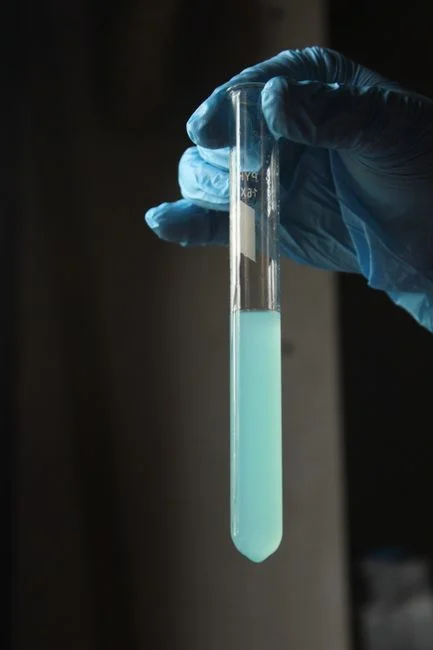
PFAS findings from another semiconductor site should trigger source-control and monitoring questions, not create a German discharge requirement. The relevant legal limits must come from the German site’s authorization, sewer terms and current applicable rules.
The supplied 2026 research reports 20 PFAS compounds in Micron’s Virginia wastewater and approximately 68% of measured PFAS consisting of short-chain PFCAs, which the cited research describes as especially difficult to treat. The same Virginia dataset reports an average total PFAS concentration of 1,419 ng/L across 16 quarterly datasets received from 2022 to 2026, with average PFBA of approximately 496 ng/L, PFOA of 57 ng/L and PFNA of 32 ng/L. These are Virginia monitoring results, not German discharge limits.
Ask whether fluorinated chemicals enter each segregated stream, whether the monitoring plan can detect the relevant compounds, and whether source substitution or dedicated treatment is warranted. The inventory should connect chemical use to process steps and wastewater destinations rather than rely on a plant-wide chemical list.
The cited research says EPA Method 1633 detects less than 10% of the total organic fluorine of environmental concern. Use that finding to assess whether total-fluorin screening should accompany compound-specific analysis; it does not establish a German monitoring obligation.
Keep discharge-quality risk separate from residual risk. Spent membranes, ion-exchange resin, precipitation sludge, filter cake and PFAS-bearing adsorption residues require documented characterization, storage, handling and disposal. A treatment proposal is incomplete without a destination for each residue stream. The broader wastewater and cooling-blowdown treatment review can help organize this source-to-residue chain.
Close on Evidence, Capacity and Allocated Risk
A German plant acquisition should close only when material legal gaps and capacity uncertainties are either resolved or expressly allocated. The transaction record should distinguish a condition precedent from a post-closing covenant or an engineering recommendation; the three are not interchangeable.
Make material permit gaps, expired approvals, unresolved exceedances, unknown contamination, incompatible sewer terms and unresolved export-control classifications explicit closing conditions where the risk is material. Assign each remediation, upgrade, monitoring or permit action an owner, cost estimate, evidence requirement and deadline.
| Workstream | Required deliverable | Decision gate |
|---|---|---|
| Legal and authority | Instrument register, change-of-control status, regulator and sewer-operator evidence | Authority confirms the required transfer, notification or successor process |
| Contamination and liability | Environmental files, baseline assessment, remediation scope and cost estimate | Unknown or material liability is allocated and funded |
| Treatment capacity | Stream-by-stream mass balance, verified operating envelope and residual plan | Existing or proposed equipment demonstrates required performance |
| Procurement | Like-for-like bids, performance guarantee and written schedule | Scope, acceptance test, utilities, commissioning and consumables are clear |
| Export control | Separate classification review for equipment, software and technical support | Licensing or restrictions are resolved before affected transfers or services |
Specify treatment systems against verified flow, pollutant mass load and operating variability, with guaranteed outlet performance within a defined operating envelope, auxiliary-consumption guarantees and bypass restrictions. Request like-for-like quotations separating equipment, civil works, utility connections, installation, commissioning, monitoring, training and long-term consumables.
Keep German wastewater permitting separate from export-control review covering treatment equipment, software, installation services, remote support and training. A German permit does not authorize an otherwise restricted transaction or transfer. The transaction architecture can be compared with plant-acquisition wastewater closing controls, but the German instruments and applicable export rules must be assessed independently.
During the first 100 days after closing, prioritize permit notifications, regulator engagement, missing baseline sampling, flow-meter verification, chemical-inventory reconciliation, operator training and recurring compliance reporting. Put long-term capital improvements into a dated post-closing plan only after the legal and operating evidence establishes what is required.
Frequently Asked Questions
What wastewater requirements apply when Microsoft acquires a plant in Germany?
The applicable requirements are those governing the target’s discharge routes, treatment systems and residual streams. Review each German authorization, groundwater approval, indirect industrial-discharge agreement or pretreatment permit for assignment, notification, successor-qualification and reissue provisions. The acquisition itself establishes no general transfer rule or new numerical limit.
What must be resolved before the transaction closes?
Resolve material permit gaps, expired approvals, unresolved exceedances, unknown contamination and incompatible sewer terms. Also confirm export-control classifications for any affected equipment, software, installation services, remote support or training. If a required authority step cannot be completed before closing, document the operating restriction, responsible owner, deadline, cost estimate and contractual allocation.
How should treatment capacity be sized?
Size treatment from verified flow, concentrations, pollutant mass loads and variability for each segregated stream. Include production forecasts, peak batches, chemical-inventory changes, reuse objectives, failure scenarios and residual destinations. Require pilot evidence where needed, guaranteed outlet performance within a defined operating envelope, auxiliary-consumption guarantees and bypass restrictions. Do not select equipment from nominal throughput alone.
How much will the wastewater work cost?
The supplied research contains no Microsoft German plant flow, capital cost, operating cost or quotation, so a defensible price cannot be stated. Request current site-specific bids separating equipment, civil works, utilities, installation, commissioning, monitoring, training and long-term consumables. Include remediation, residual disposal, sewer contributions and operating costs as separate categories so the buyer can compare alternatives consistently.
Which supplier and schedule commitments should close the gap?
Evaluate suppliers against the demonstrated application, verified mass balance, pilot results, guaranteed performance, documented operating envelope, references and proposed key personnel. Require written commitments for regulatory steps, fabrication, installation, commissioning and performance demonstration rather than accepting a generic lead time. Check service and spare-parts availability for membranes, pumps, blowers, controls and dosing equipment. The broader acquisition wastewater decision checklist provides a useful comparison structure.